What you are looking at
The Panthéon
5th
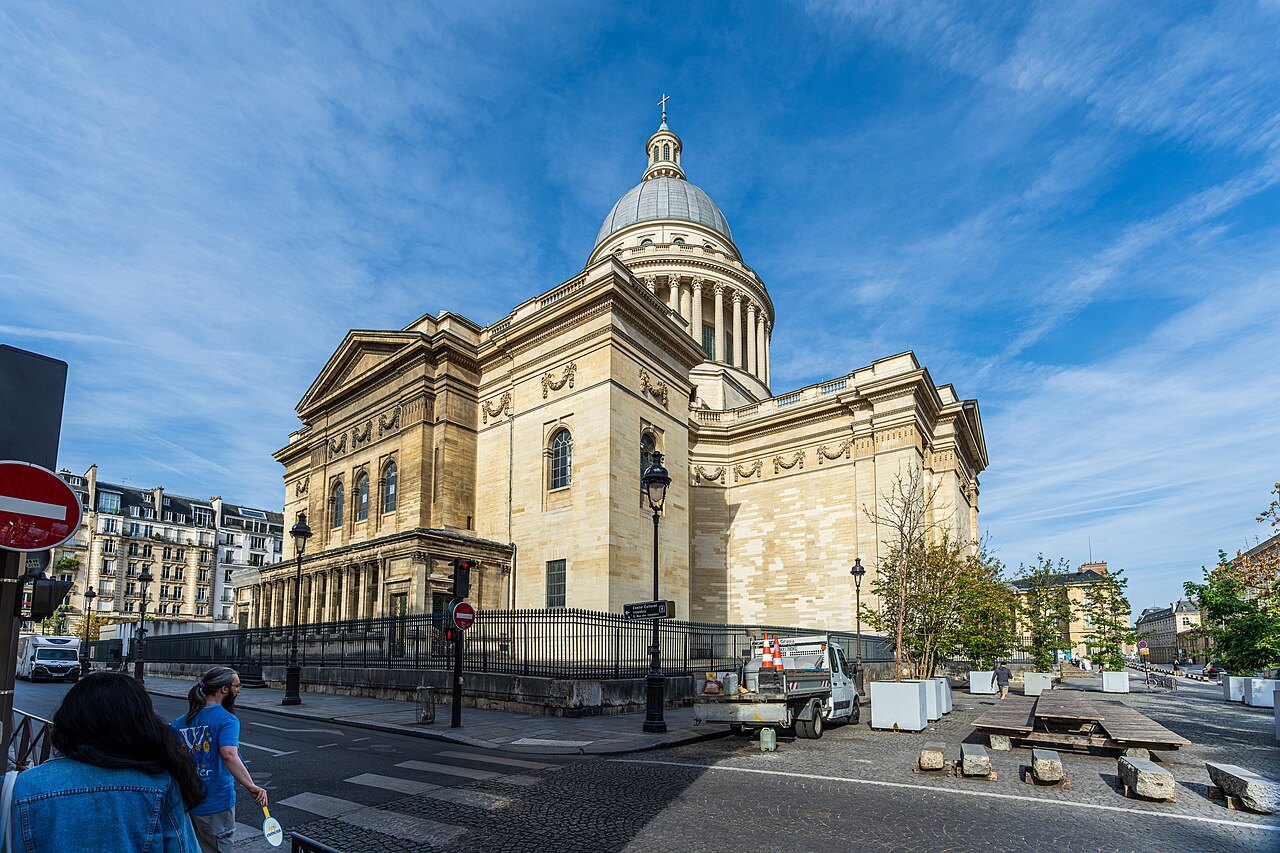
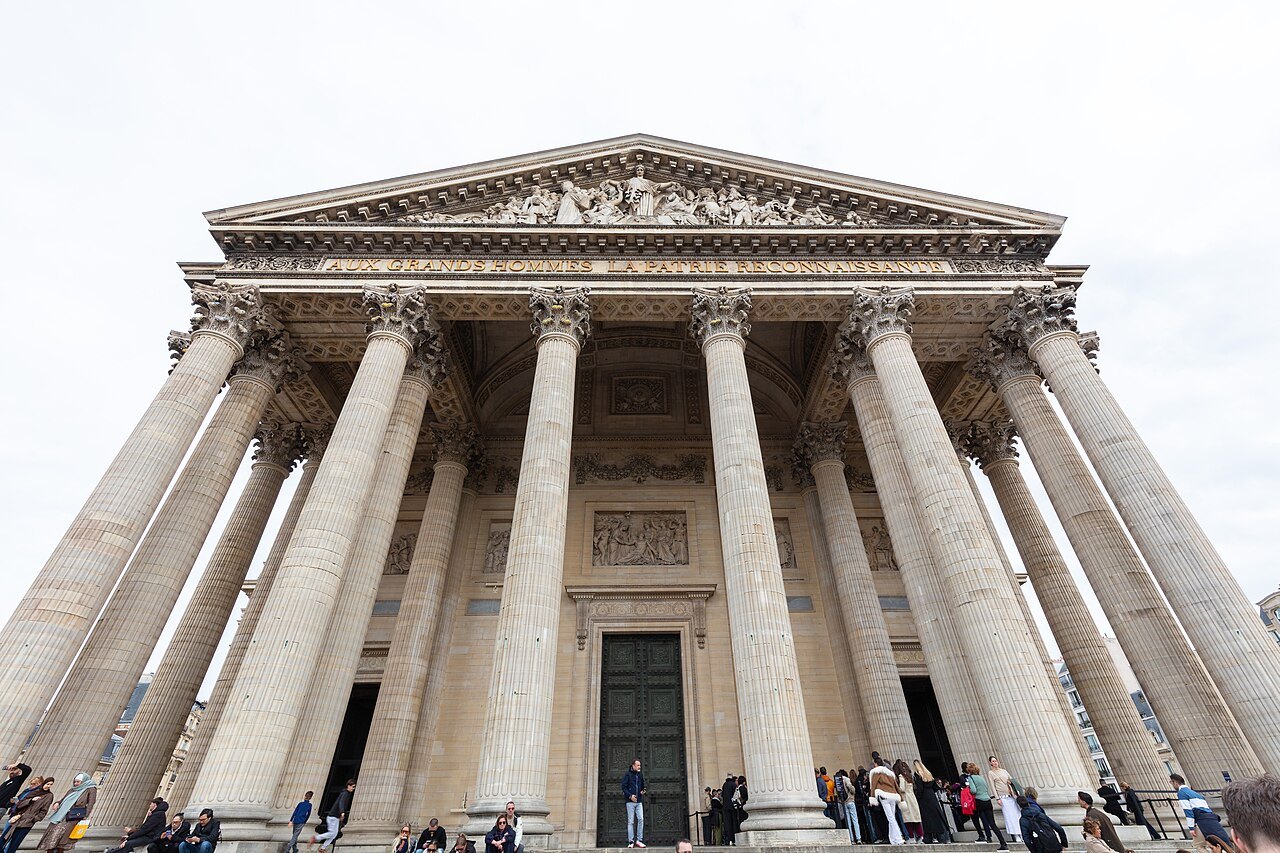
- 1The porticoCorinthian columns under a pediment of the Nation handing out crowns, with the words to great men.
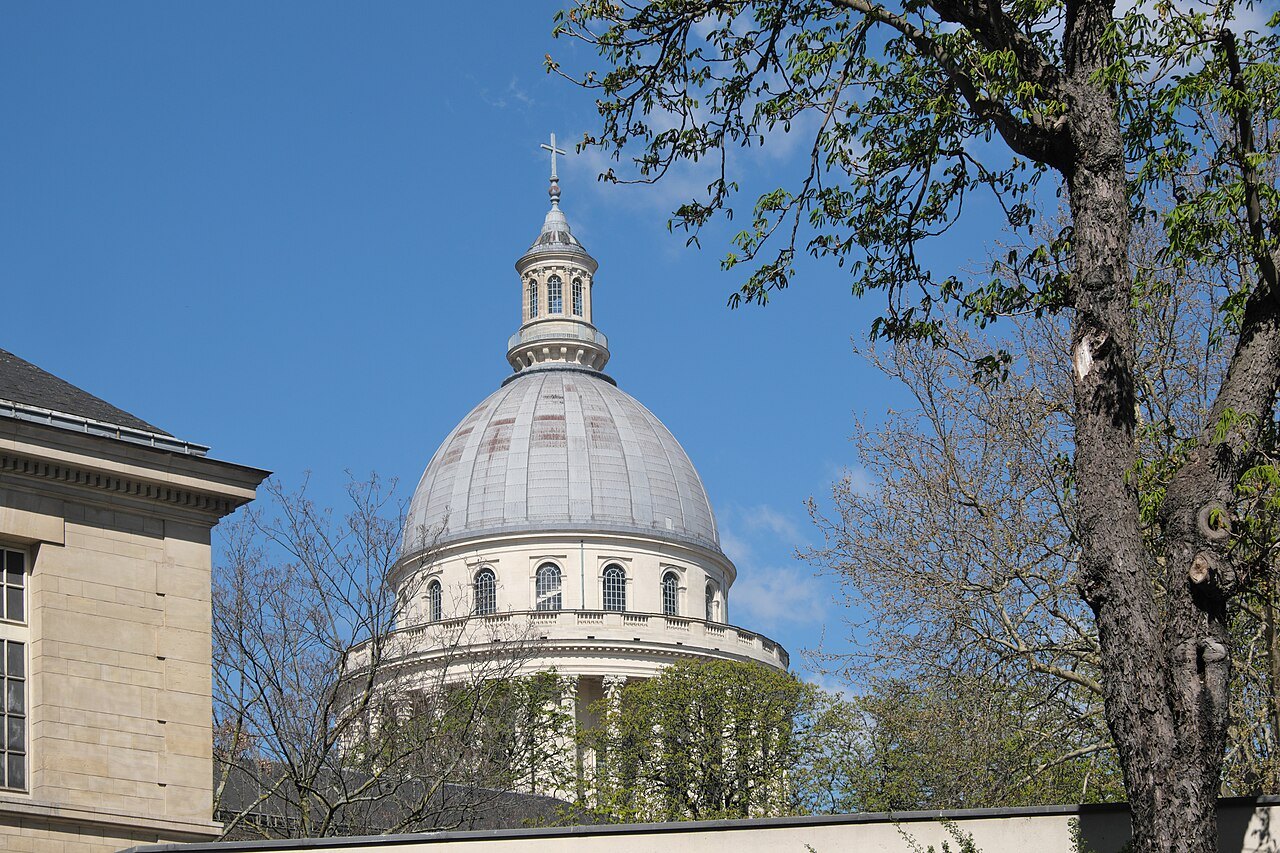
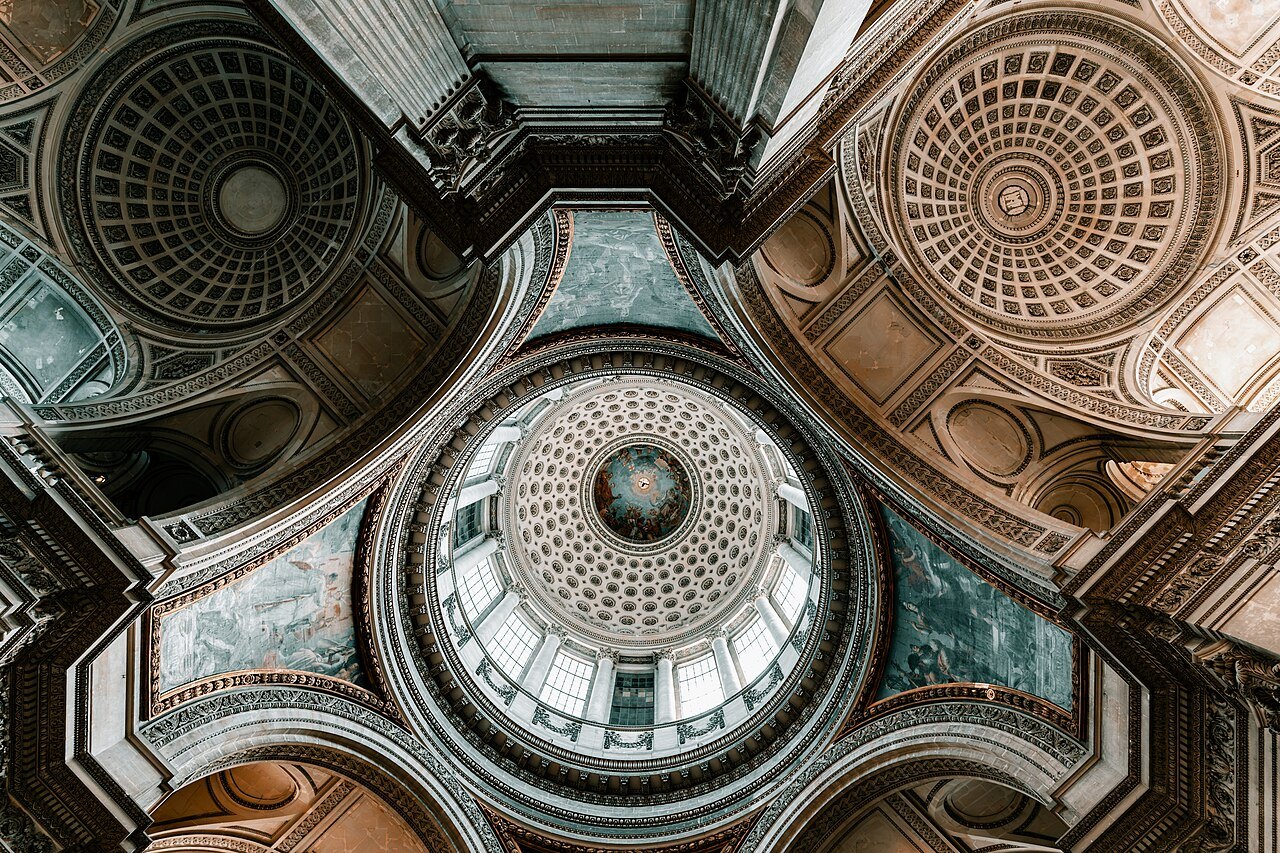
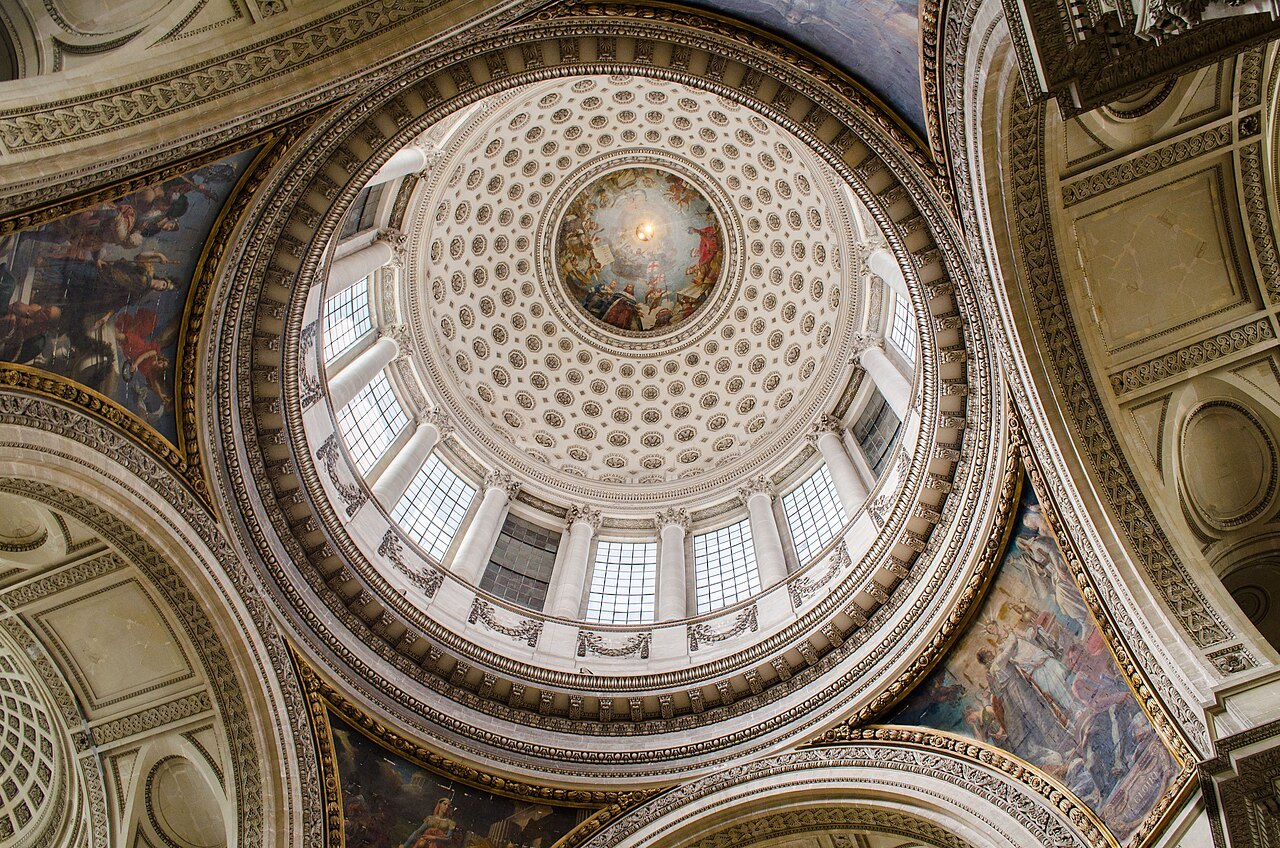
- 2The domeThree domes one inside another, all of stone, 272 feet high above the Latin Quarter.
- 3Foucault's pendulumA copy of the pendulum that showed the Earth turning, swinging under the dome since 1851.
- 4The painted wallsNineteenth-century murals of the life of Saint Genevieve and the history of France.
- 5The cryptLong vaulted galleries holding the tombs of writers, scientists and heroes of the Resistance.
The sight in full
Reading the place
Why it matters
The Panthéon stands at the top of the Montagne Sainte-Geneviève, the hill of the Latin Quarter in the 5th arrondissement, closing the view up the Rue Soufflot from the Luxembourg Gardens. It was built between 1758 and 1790 as a church for Saint Genevieve, the patron saint of Paris, and became instead the nation's mausoleum, where France buries the men and women its parliament chooses to honor.
Across the pediment runs the inscription that explains the building: Aux grands hommes la patrie reconnaissante, to the great men, from a grateful nation. The list has grown beyond that wording. Marie Curie was the first woman buried here on her own merit, in 1995, and the singer and Resistance agent Josephine Baker was inducted in 2021.
From church to mausoleum
Louis XV vowed to rebuild the old abbey church of Saint Genevieve after falling gravely ill while with his armies, and commissioned the architect Jacques-Germain Soufflot to design it. Soufflot wanted to combine the lightness of a Gothic cathedral with the columns and proportions of classical architecture, and drew a Greek cross of four equal arms with a great dome over the crossing. Neither he nor the king lived to see it finished.
By the time it was complete, the Revolution had begun. In 1791 the National Constituent Assembly voted to make the church a mausoleum for distinguished French citizens, on the model of the Pantheon in Rome. The first to be buried was the orator Mirabeau, whose remains were removed again a few years later. Some of the windows were walled up to make the interior darker and more solemn, which is why it feels heavier than Soufflot intended.
In the nineteenth century the building was returned to the church twice, and each regime changed the pediment and the top of the dome to suit itself. The funeral of Victor Hugo in 1885, and his burial in the crypt, settled its purpose, and in 1881 the Third Republic had already decreed it would be a mausoleum only.
What you see: the dome and the pendulum
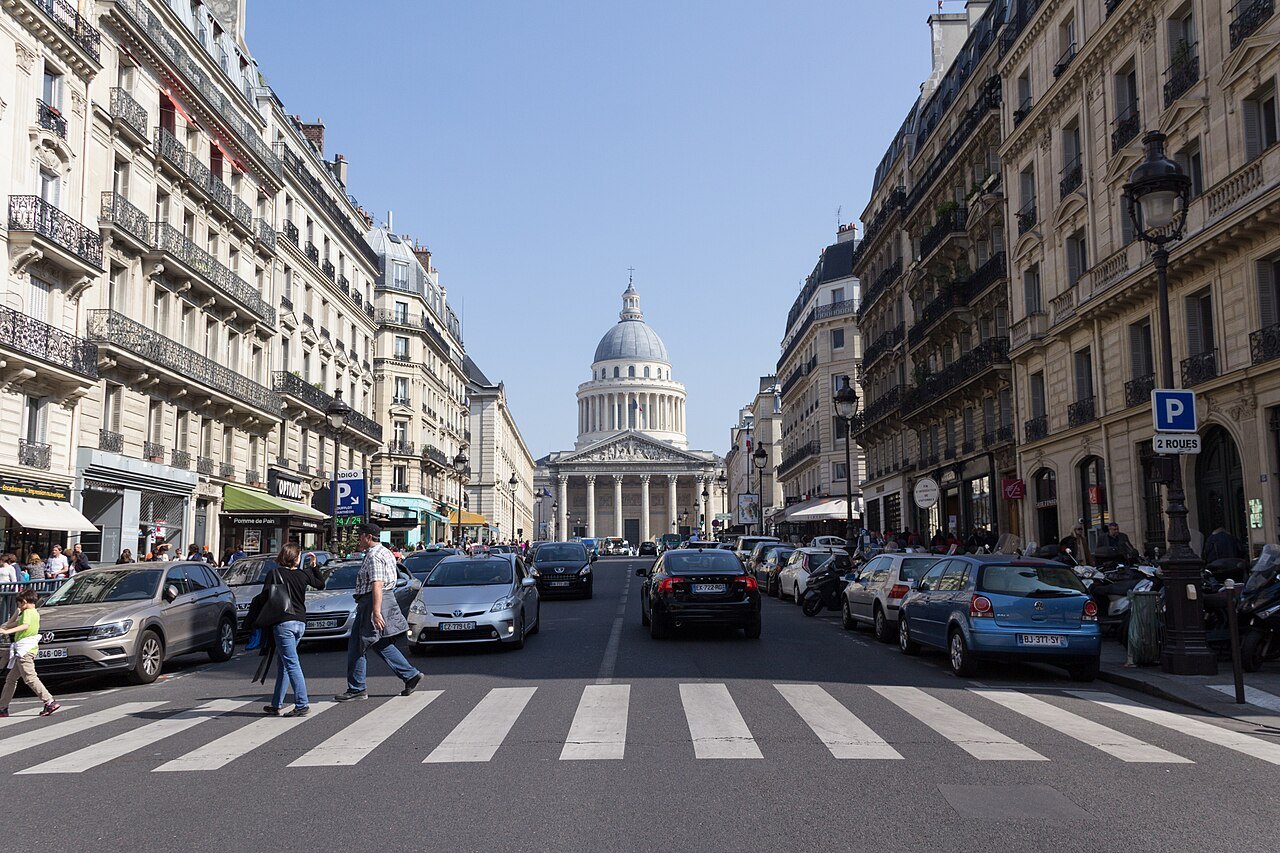
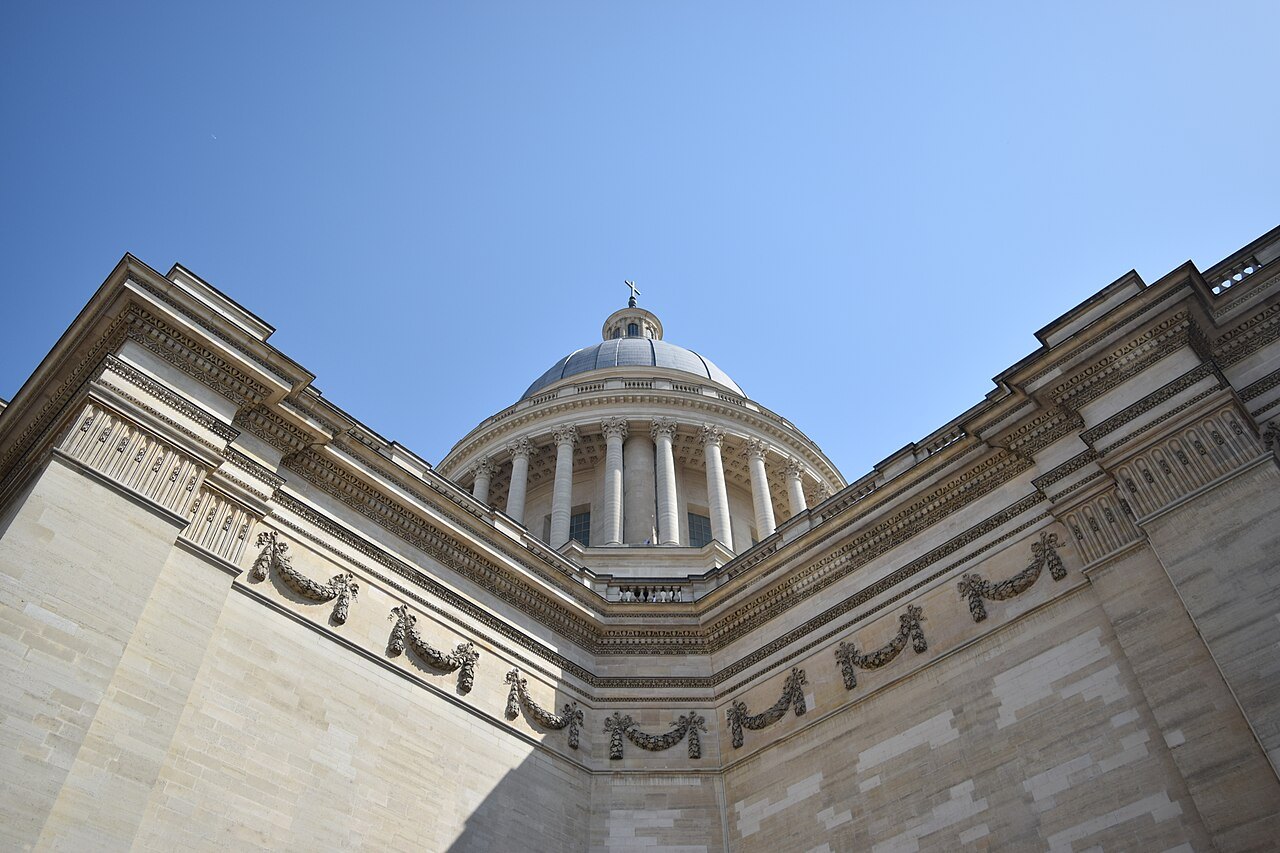
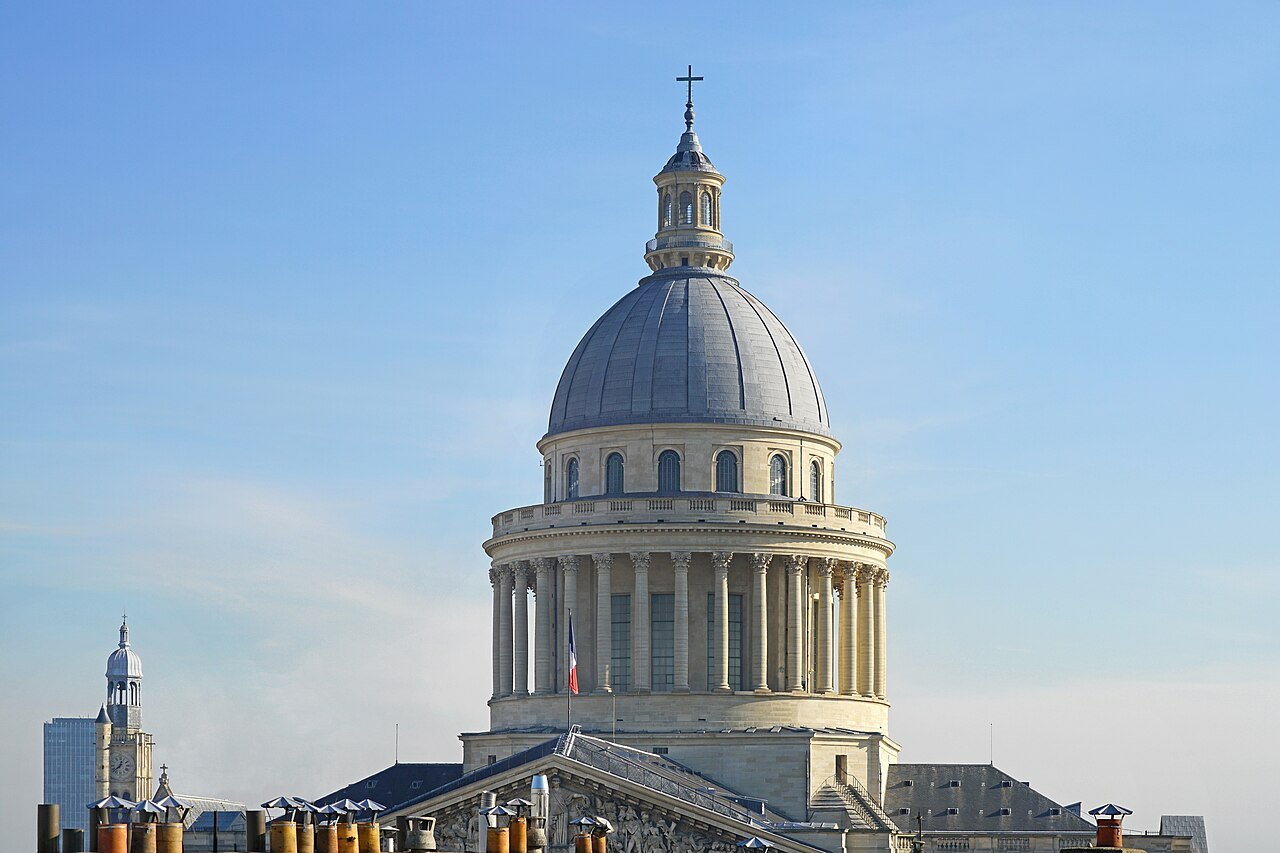
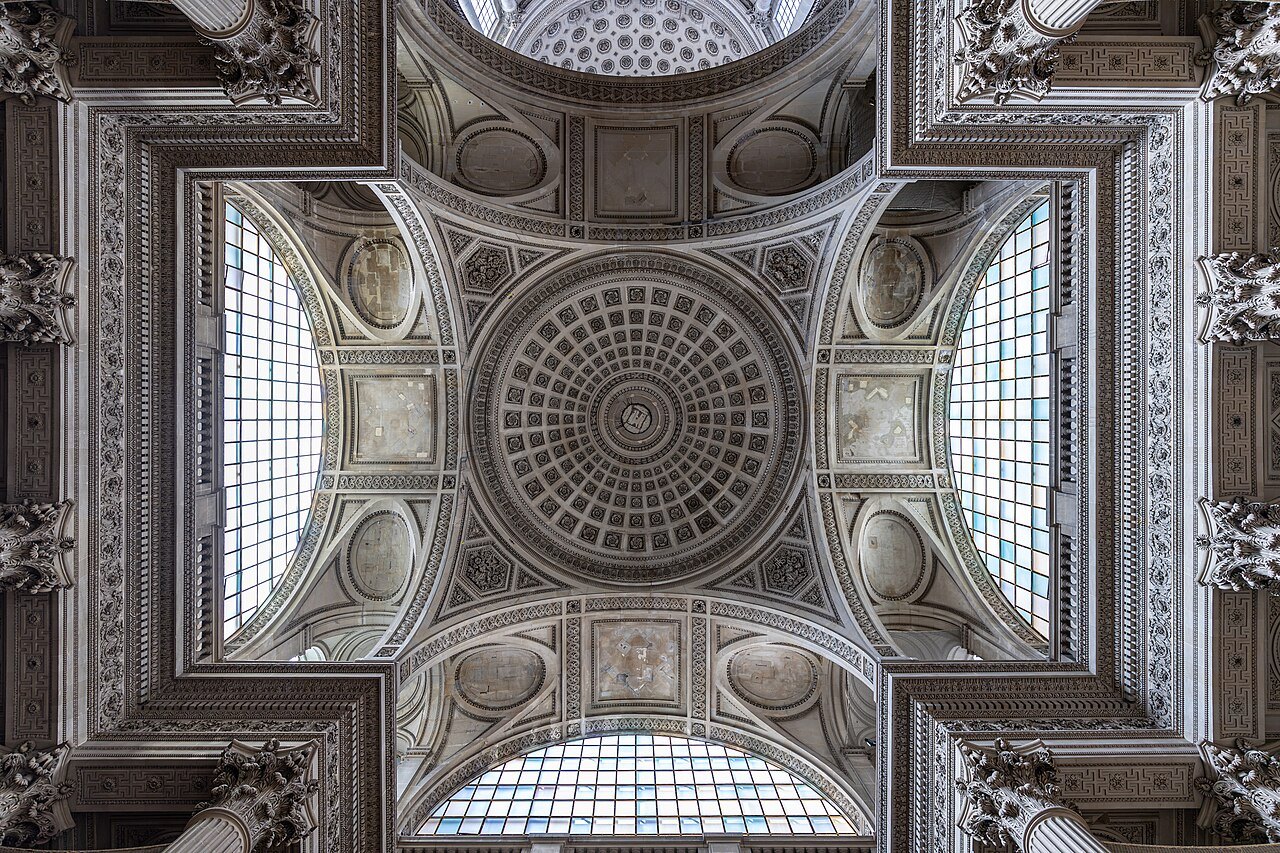
The dome is actually three domes, one inside another, and unlike the dome of Les Invalides, which has a timber frame, it is built entirely of stone. From outside it rises 272 feet. Stand under the crossing and look up through the opening in the lowest dome to see Antoine-Jean Gros's painting of the apotheosis of Saint Genevieve on the one above.
The three shells each have a job. The outer dome is stone covered in bands of lead and carries the lantern and the cross; the lowest is a coffered dome opened at its center by a round oculus, resting on the drum at the level of the outer colonnade; and between them a third, hidden dome does the structural work.
Hanging from the dome is a copy of Foucault's pendulum. In 1851 the physicist Léon Foucault hung a heavy sphere here on a wire about 220 feet long to demonstrate the rotation of the Earth: as the pendulum swings, the floor turns slowly beneath it, and the line of its swing appears to drift around the circle. The original is in the Musée des Arts et Métiers; the one here performs the same experiment.
What you see: the walls
Around the nave, the walls are covered with large paintings of the late nineteenth century telling the life of Saint Genevieve, who is said to have protected Paris from Attila, and scenes from French history, among them Joan of Arc. The murals of the saint's life by Pierre Puvis de Chavannes, pale and calm, are the best known.
At the east end, where Soufflot planned the altar, stands François Sicard's monument to the National Convention of the Revolution, completed in 1920, a reminder of which of the building's two purposes won.
The crypt
The crypt runs under the whole building in long, bare, vaulted galleries, each opening into small cells of tombs. Burial here requires an act of parliament. Among those who lie here are the philosophers Voltaire and Rousseau; the novelists Victor Hugo and Émile Zola, whose transfer here in 1908 set off violent arguments; Louis Braille, the inventor of the reading system for the blind; the socialist leader Jean Jaurès; the Resistance leader Jean Moulin; Marie and Pierre Curie; and Soufflot himself, brought here in 1829.
The most recent interments show how the idea of the great has changed. Two women of the Resistance, Geneviève de Gaulle-Anthonioz and Germaine Tillion, were brought here in 2015, Simone Veil in 2018 with her husband beside her, and the novelist Alexandre Dumas in 2002, carried in by the Republican Guard.
How to visit
An hour is enough for the nave, the pendulum and the crypt; allow more if you want to read the names in each vault. The square in front is a good place to start a walk through the Latin Quarter, and the Luxembourg Gardens are at the bottom of the Rue Soufflot, a few minutes downhill.
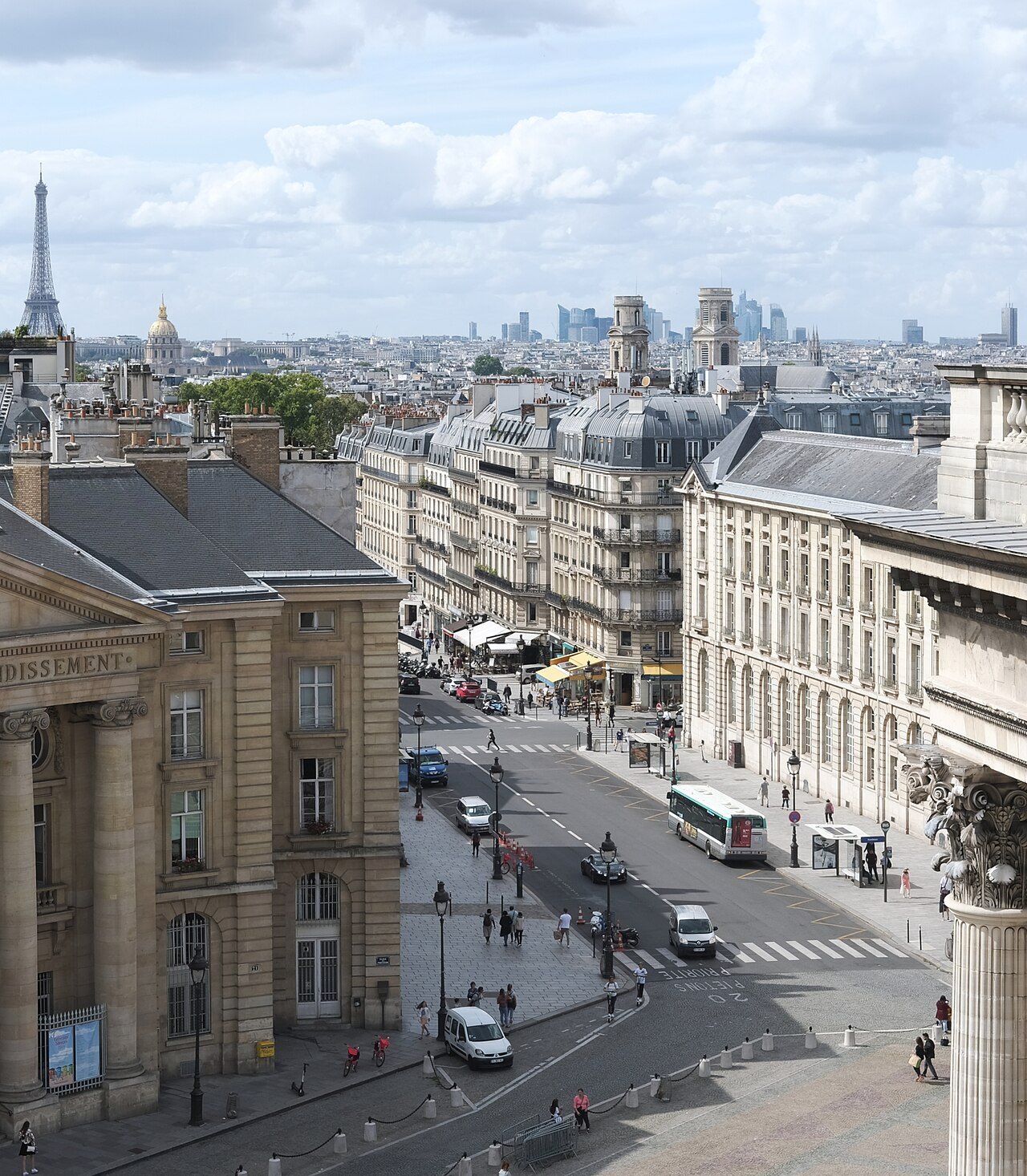
The Panthéon is run by the national monuments agency, the same body that runs the Sainte-Chapelle and the Arc de Triomphe; its site has the visiting details on the day. For the monuments that sell timed tickets, see booking ahead.
Myths worth setting aside
Voltaire's remains were not stolen. A story spread that religious fanatics had taken his bones from the crypt in 1814 and thrown them on a rubbish heap; the rumors grew until the coffin was opened in 1897 and he was found still in it.
And the building was never meant as a copy of the Pantheon in Rome. Soufflot designed a church, and only the name, and the idea of honoring the dead, came from Rome.
Where to go next
Nearby
- Nearby · 6thThe Luxembourg GardensMarie de' Medici's palace garden of 1612, now 56 acres of lawns, chestnut walks and terraces around an octagonal pool, owned by the French Senate and open to everyone.Read the page →
- Nearby · 4th · Île de la CitéNotre-Dame de ParisThe Gothic cathedral begun in 1163 on the island where Paris began, burned in April 2019 and reopened in December 2024: two square towers, three great rose windows, and a roof of new French oak.Read the page →
- Nearby · 6thSaint-Germain-des-PrésThe oldest church in Paris, founded as an abbey in 558, and around it the quarter of cafés, bookshops and publishers where Sartre and Beauvoir held court after the war, with Saint-Sulpice a few streets south.Read the page →