Home · Getting Here
Every way in
Two airports and the great stations
Charles de Gaulle
The main international airport, about fourteen miles northeast. The RER B runs from its two stations to the Gare du Nord and on through the center.
Orly
About eight miles south. Since June 2024, Métro Line 14 runs from the airport straight into the center; the Orlyval shuttle links it to the RER B.
Beauvais
Branded as a Paris airport but about 43 miles north-northwest, used by low-cost airlines. A coach runs to Porte Maillot in the 17th.
Gare du Nord
The busiest station in Europe, in the 10th: Eurostar from London and Brussels, and trains from the north.
Gare de l'Est
Next door to the Gare du Nord, the terminus for Strasbourg and the east.
Gare de Lyon
In the 12th: high-speed trains to the south of France, Switzerland and Italy.
Montparnasse
On the Left Bank, in the 14th and 15th: trains to Brittany, Nantes and Bordeaux.
Saint-Lazare and Austerlitz
Saint-Lazare, the oldest, for Normandy; Austerlitz, in the 13th, for the center and southwest.
In full
Getting Here
The shape of arrival
Paris has two main airports and a ring of great railway stations, and knowing which one you are using tells you most of what you need. Charles de Gaulle, the main international airport, lies northeast of the city; Orly lies south. The railway termini stand around the edge of the old center, each one the head of the lines to its own part of France and Europe, and every one of them is on the Métro.
Once you arrive, you rarely need a car. The rail links from both airports run into the center, and the stations are connected to the Métro and the regional trains, the RER. See getting around for how the network works, and where to stay for which part of the city to aim for.
Charles de Gaulle
Charles de Gaulle, also called Roissy, opened in 1974 about fourteen miles northeast of the center. It is the hub of Air France and the busiest airport in the European Union: more than seventy million passengers passed through it in 2024. It is large, with three terminals, and Terminal 2 alone is divided into several halls lettered from A to G, so give yourself time to find your way.
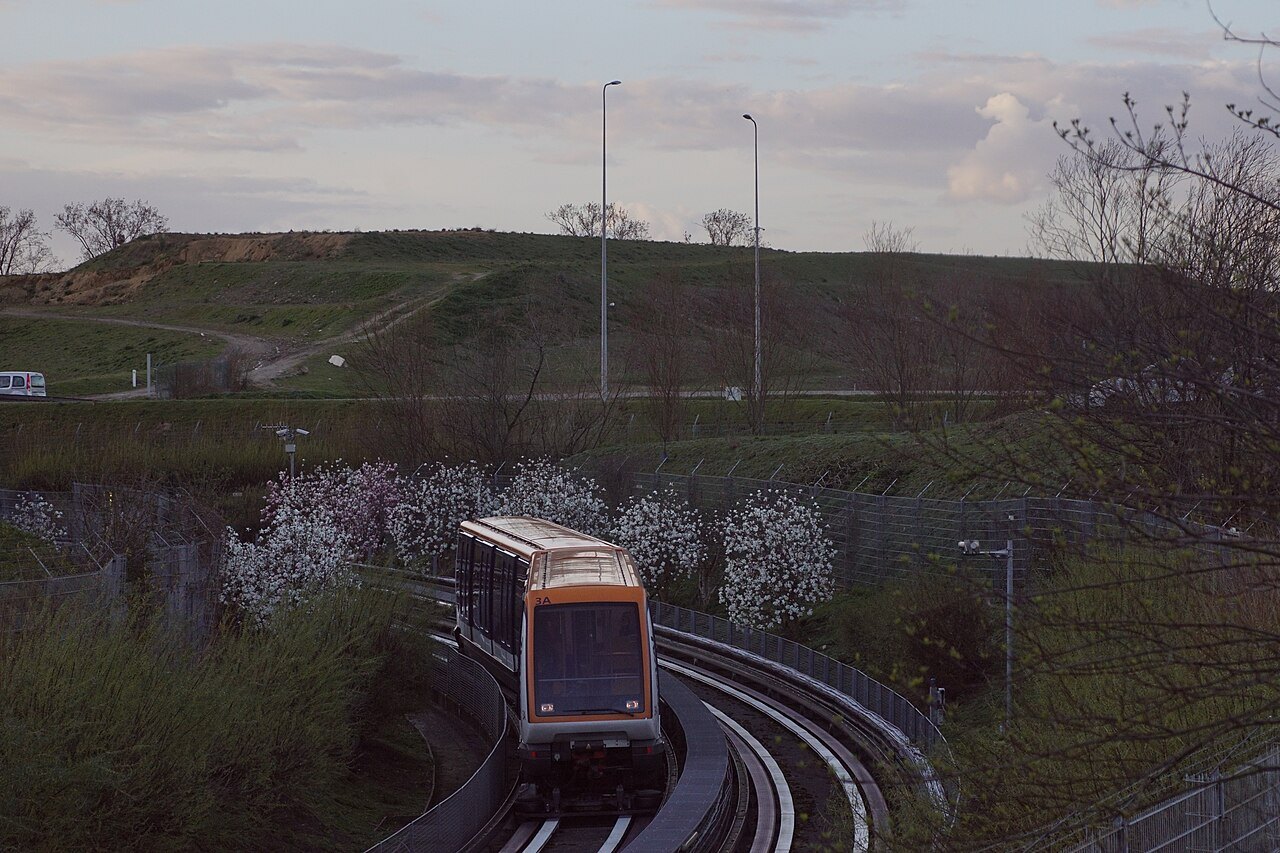
A free automated shuttle, the CDGVAL, links the terminals with the airport's two railway stations. From both, the RER B runs into Paris. At most times some trains run non-stop from the airport to the Gare du Nord, and others stop at every station; once in the city, the line crosses the center, stopping at Châtelet–Les Halles and continuing south to the Luxembourg Gardens on the Left Bank. The RER B is a commuter line as well as an airport link, and it is often crowded.
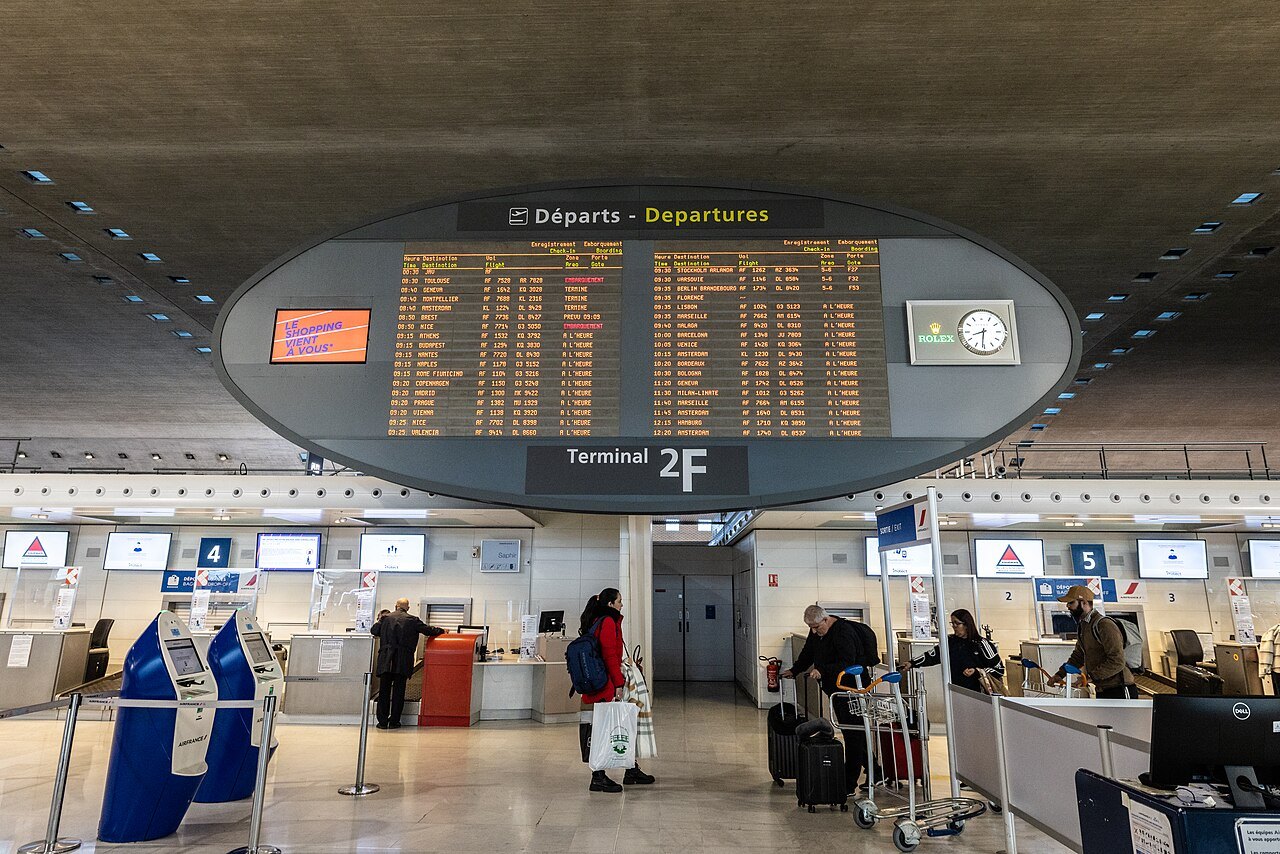
Terminal 2 also has a station for high-speed trains, from which TGV and Eurostar services run to other French cities and to Belgium and the Netherlands, so you can go straight from a flight to a train without entering Paris at all.
Orly
Orly lies about eight miles south of the center. Before Charles de Gaulle opened, it was the main airport of Paris; it is still the second busiest airport in France and the busiest for domestic flights, with routes across Europe and beyond.
Getting into the city from Orly became much simpler in June 2024, when Métro Line 14 was extended to the airport. The ride to Châtelet–Les Halles, in the heart of Paris, takes about twenty-five minutes, with stops at the Gare de Lyon on the way. There are other ways in: the Orlyval, an automated shuttle, links the terminals to the RER B at Antony, and the T7 tram runs to the Métro at Villejuif.
Beauvais, which is not in Paris
Low-cost airlines sell flights to Paris–Beauvais. The name is a brand: the airport is near the town of Beauvais, about 43 miles north-northwest of the city, in another region altogether. A coach connects it with Paris, taking about an hour and a quarter to the Porte Maillot, near the Arc de Triomphe in the 17th arrondissement. Allow for this when you compare fares and flight times.
The great stations
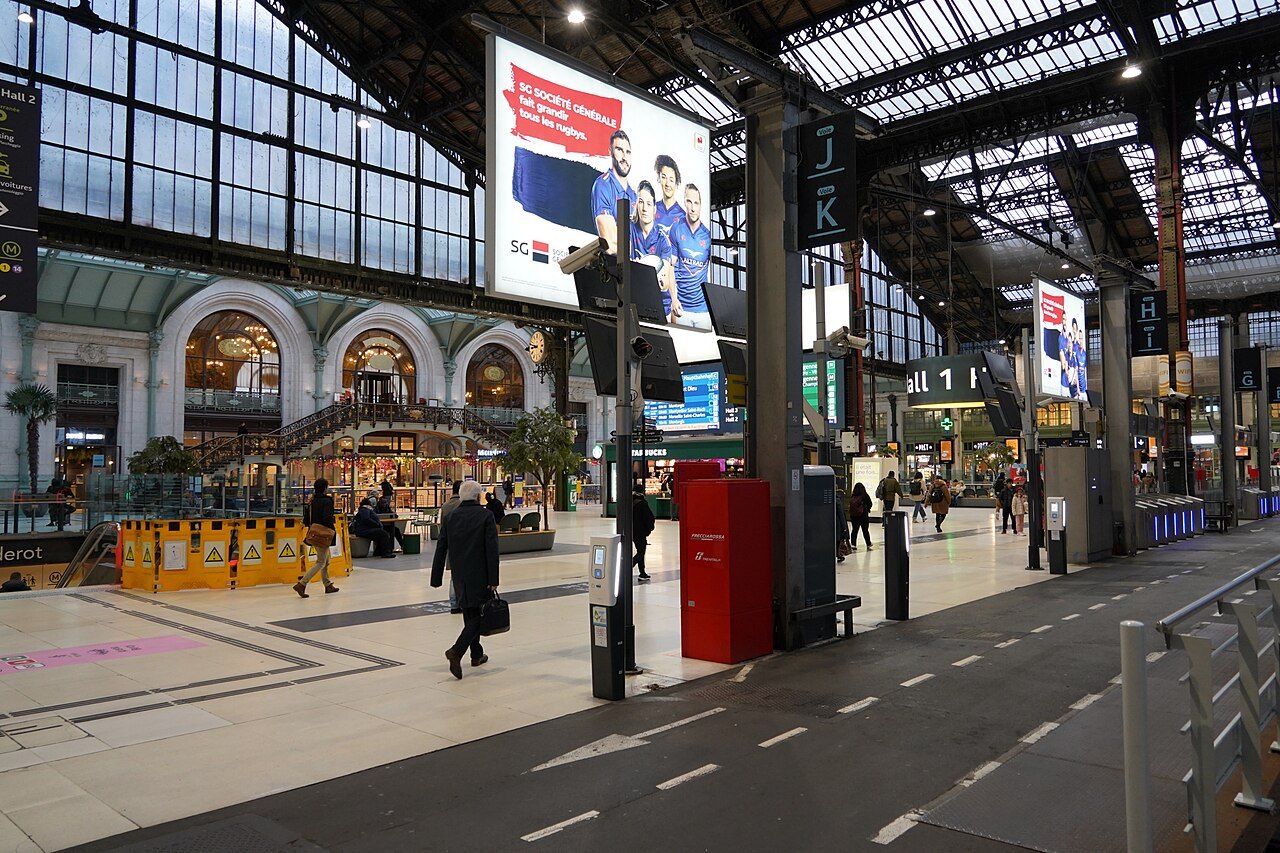
The Gare du Nord, in the 10th arrondissement, is the busiest railway station in Europe. It is the Paris terminal of Eurostar, from London and Brussels, and of trains from northern France, Belgium, the Netherlands and Germany. Its stone front, designed by Jacques Ignace Hittorff and built between 1861 and 1864, is worth a look as you leave. The Gare de l'Est stands a few minutes' walk away and serves Strasbourg and the east.
The Gare de Lyon, in the 12th, is the head of the line to Marseille, with high-speed trains to the south of France, Switzerland and Italy. If Paris is the start of a longer journey through France, the same station leads on to Lyon and down to the Mediterranean coast; see Access Lyon and Access Nice. Across the river in the 13th, the Gare d'Austerlitz serves central and southwestern France. The Gare Montparnasse, in the 14th and 15th, serves Brittany, Nantes and Bordeaux, and is the only main terminus not directly on the RER; for those cities, see Access Bordeaux and Access Nantes. The Gare Saint-Lazare, the first station built in Paris, opened in 1837, serves the western suburbs and Normandy.
By train from London and the north
Since 1994 Eurostar has run through the Channel Tunnel between London and Paris, and, since its merger with Thalys, it also runs the high-speed trains linking Paris with Belgium, the Netherlands and Germany; a record twenty million passengers traveled with it in 2025. All of these trains arrive at the Gare du Nord. Travelers between Britain and France pass through border controls at the station before boarding, so arrive at the departure station in good time, and walk straight out into the city on arrival.
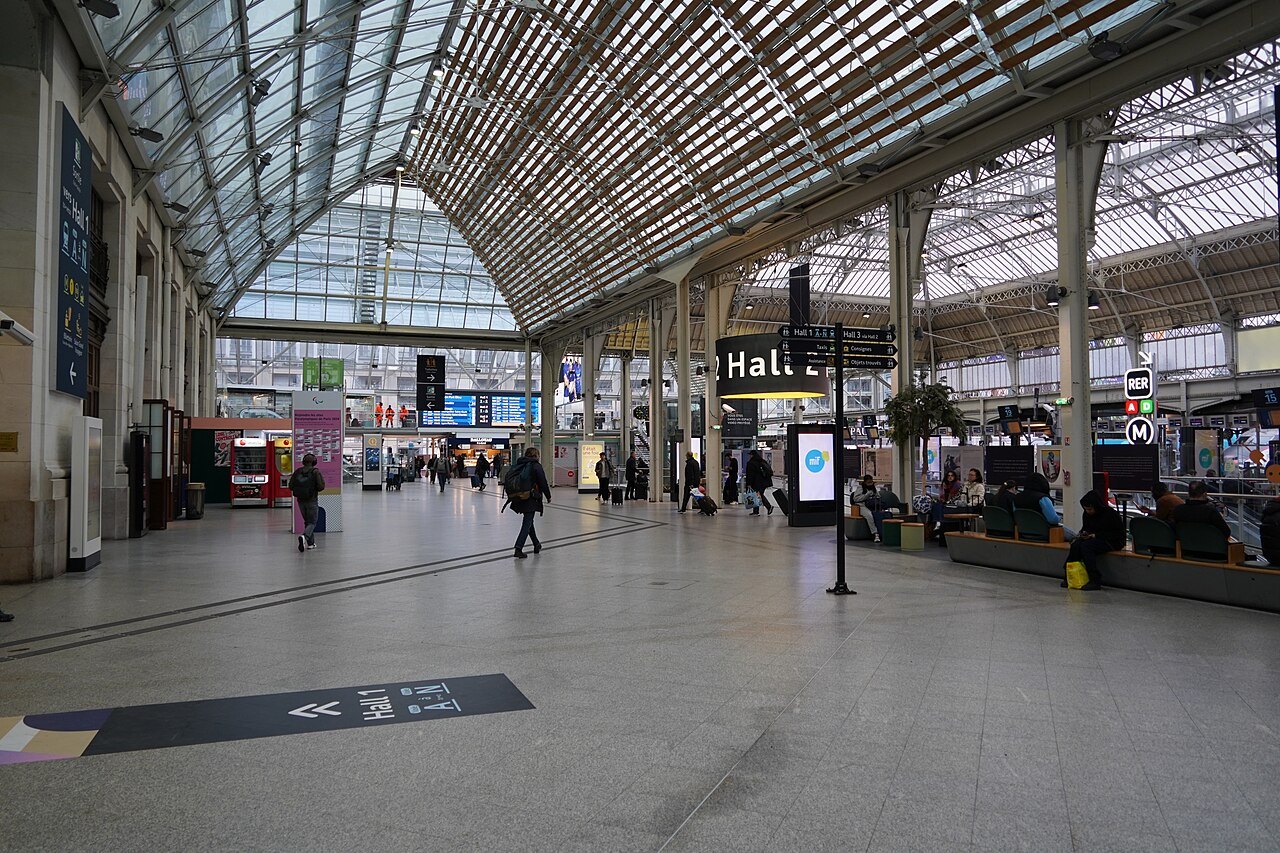
From the Gare du Nord, the RER and several Métro lines fan out across Paris, and the Gare de l'Est is a few minutes' walk down the street.
Stations worth a look
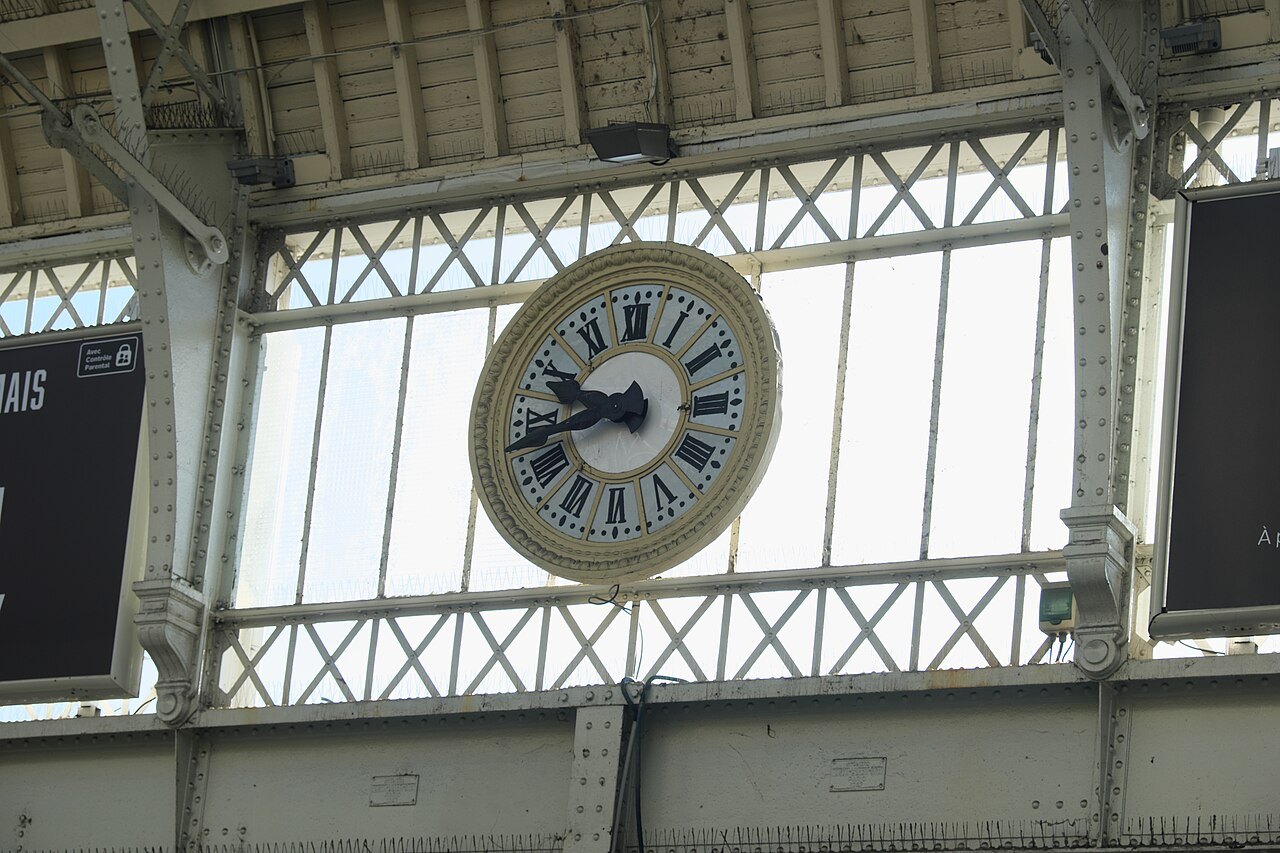
The great stations are sights in their own right. The Gare de Lyon has a tall clock tower on one corner, and upstairs, Le Train Bleu, a restaurant that has served travelers in gilded, painted rooms since 1901. The Gare Saint-Lazare is the station Claude Monet painted over and over after he rented a studio nearby in 1877, and Édouard Manet, who lived close by on the Rue de Saint-Pétersbourg, showed his painting of it, The Railway, at the Salon of 1874. The Gare d'Austerlitz, on the Left Bank, has been a listed historic monument since 1997.
Arriving well
Check which station your train arrives at, and which terminal your flight uses, before you travel; they are far apart, and the Métro connection differs for each. From a station, most hotels in the center are a short Métro ride away. Buy a ticket or load a travel card before you reach the barriers, and keep your luggage with you on crowded trains.
For a smoother arrival with bags, a private transfer can meet you at the airport or the station, and luggage storage can hold your cases between checking out and a late flight or train. See booking ahead for what else to arrange before you leave home, and when to come for the busiest seasons.
Seen on the way
More photographs

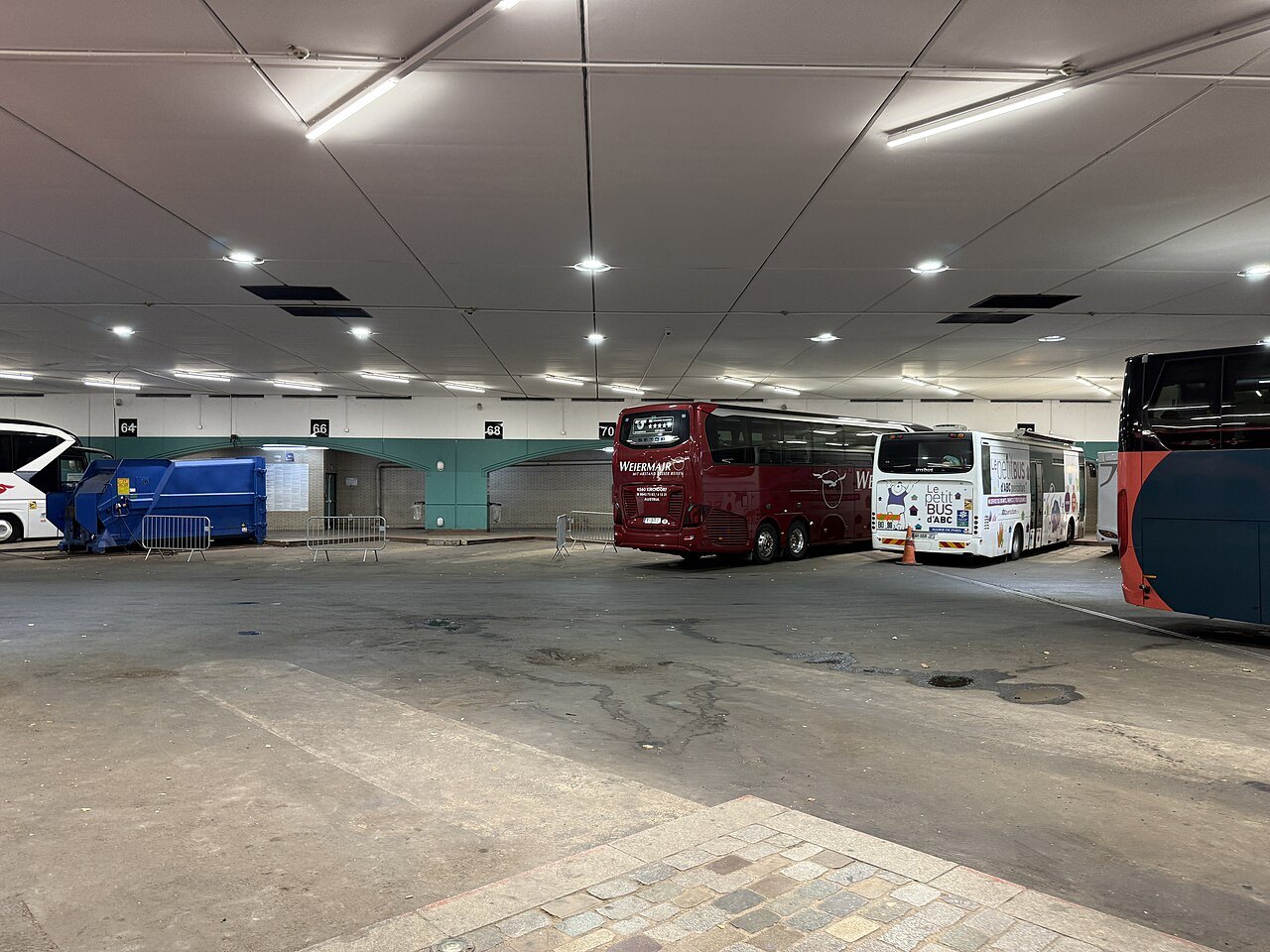
Coaches lined up inside the Bercy coach stationBenoît Prieur, Wikimedia Commons, CC0 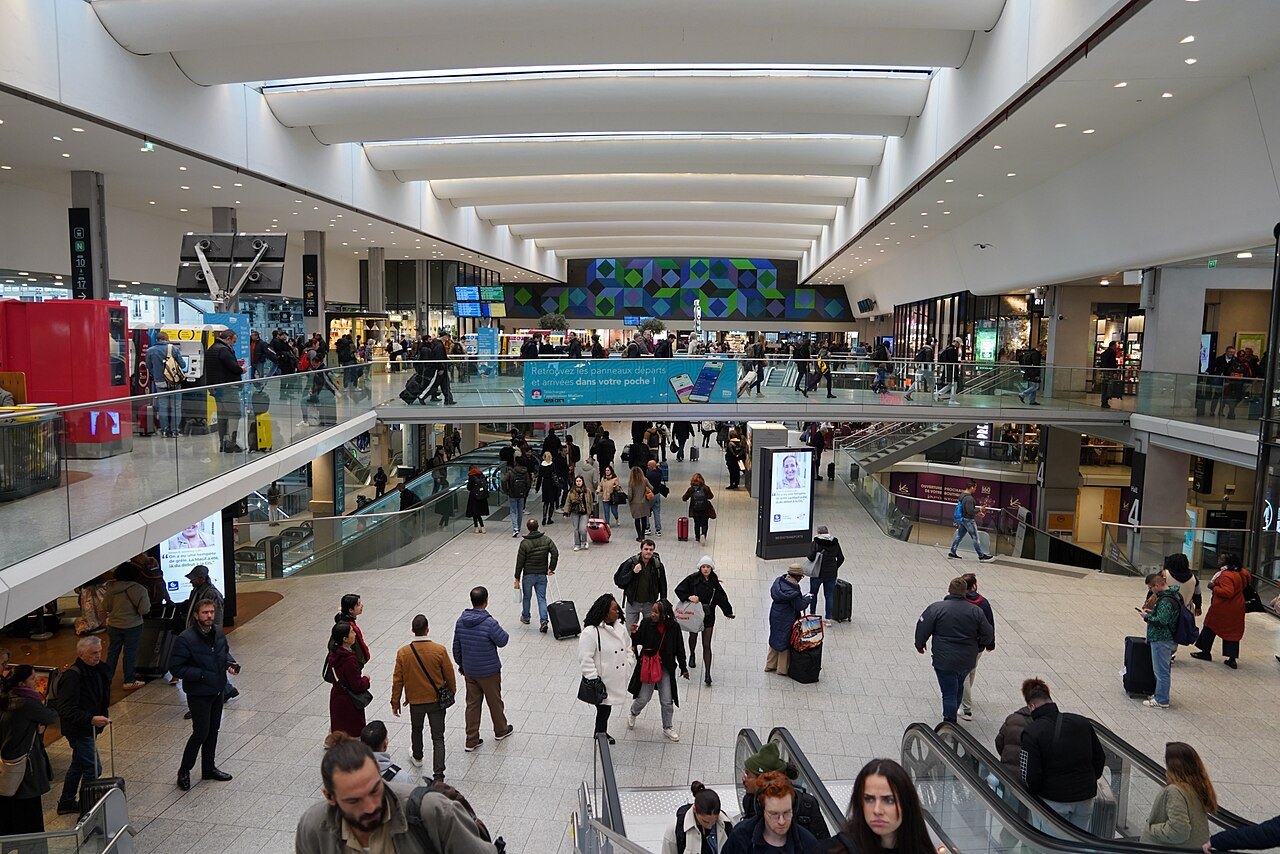
Travelers on the escalators in the main hall of the Gare MontparnasseRemontees, Wikimedia Commons, CC BY-SA 4.0 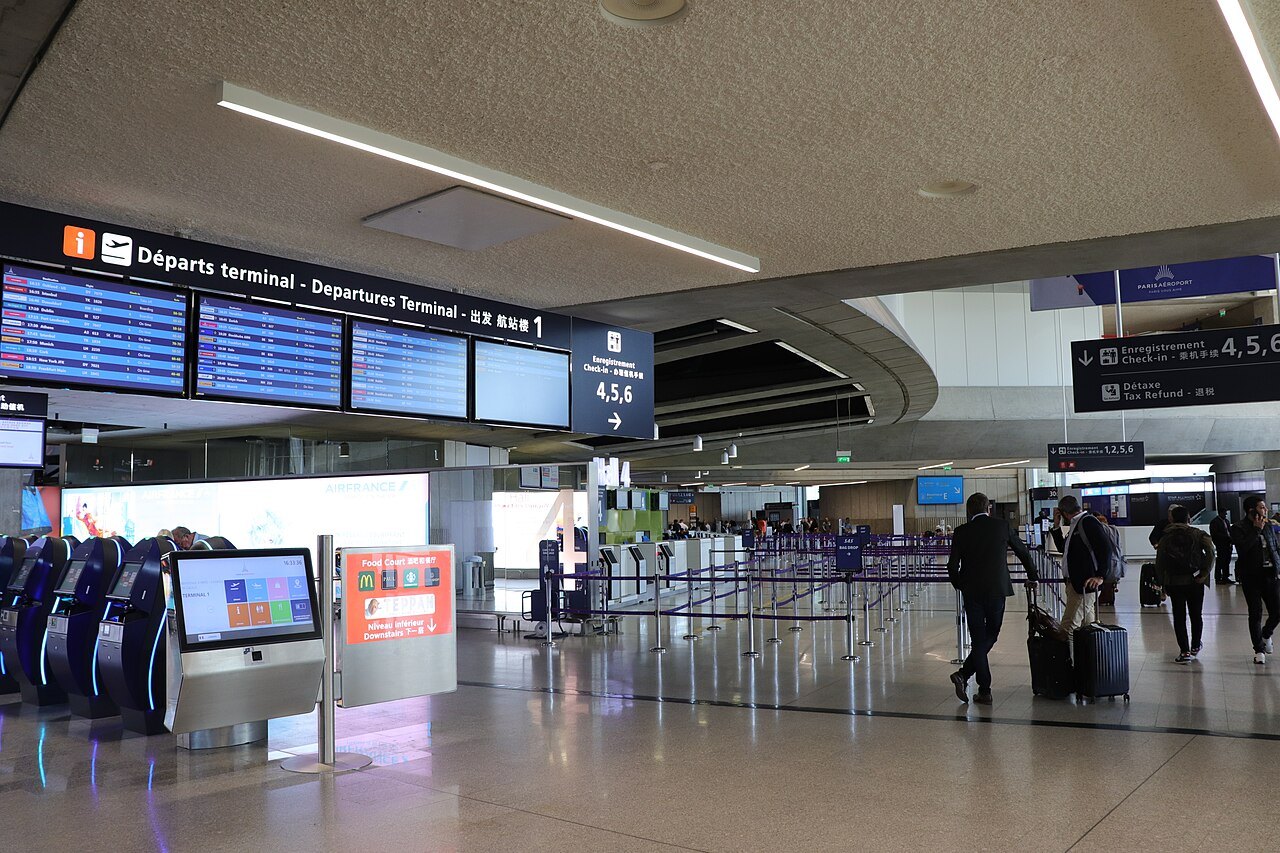
The departures hall of Terminal 1 at Charles de GaulleAndrzej Otrębski, Wikimedia Commons, CC BY-SA 4.0