Home · The Spiral
Before you read an address
Six rules of the spiral
- 1It turns clockwiseThe 1st is beside the Louvre on the Right Bank; the numbers wind outward like a snail shell, and the 20th is on the eastern edge.
- 2The postcode tells youAddresses in the city carry a postcode from 75001 to 75020: the last two digits are the arrondissement.
- 3Say it as a numberParisians say le sixième, the sixth, and street signs often write it in Roman numerals: VIe, Xe, XXe.
- 4The first four are oneSince 2020 the 1st, 2nd, 3rd and 4th share a town hall and a mayor, under the name Paris Centre.
- 5Low numbers, old cityThe outer districts took in eleven villages annexed in 1860, from Montmartre and Belleville to Passy and Vaugirard.
- 6Each has a name tooEvery arrondissement also has a name, often from a monument: the 5th is Panthéon, the 9th Opéra, the 20th Ménilmontant.
In full
The Spiral
Why a spiral
The arrondissements are the city's administrative districts, and there are twenty of them, arranged in a clockwise spiral that is often likened to a snail shell. The spiral starts in the middle of the city, on the Right Bank, with the 1st beside the Louvre, and winds outward: the 2nd, 3rd and 4th complete the first turn around the center; the 5th, 6th and 7th cross to the Left Bank; the numbers sweep back north across the river and on around the edge of the city until the 20th, on the eastern hills.
The spiral is more than a curiosity. Because the numbers start in the old center and grow as they go outward, an arrondissement's number tells you roughly how far from the center it lies, and which bank it is on. Every sight on this site carries its arrondissement for this reason; see the sights.
How it came to be
In 1795 the Revolution divided Paris into twelve arrondissements, numbered from west to east, the first nine on the Right Bank and the last three on the Left. In 1859, under Napoleon III and Baron Haussmann, a law extended the city out to its fortifications, taking in the villages and suburbs around it, such as Montmartre, Belleville, Passy, Vaugirard and Grenelle; the change took effect in 1860, and the twelve old arrondissements were replaced by twenty new ones.
The annexation took in eleven communes whole, Auteuil, Batignolles-Monceau, Montmartre, La Chapelle, Passy, La Villette, Belleville, Charonne, Bercy, Grenelle and Vaugirard, along with pieces of other towns. Their names survive as the names of quarters, streets and Métro stations, and some of them still feel like the villages they were, especially on the hills of Montmartre and Belleville, where the streets climb and twist away from the straight lines of Haussmann's boulevards.
The spiral has a story. Parisians used to joke that unmarried couples who lived together had married at the town hall of the 13th arrondissement, because there was no 13th. When Haussmann's first plan put the wealthy village of Passy in the new 13th, its residents objected, and Passy's mayor proposed numbering the districts in a spiral instead. That put Passy in the 16th, the Louvre and the imperial palaces in the 1st, and the Gobelins area in the 13th.
Reading an address
Every Paris address carries the arrondissement in its postcode: 75001 for the 1st up to 75020 for the 20th. Street signs often give the number in Roman numerals, and in conversation Parisians use the ordinal: she lives in the sixth, le sixième. Each arrondissement also has a name, often taken from a monument: the 5th is also called Panthéon, the 14th Observatoire, the 20th Ménilmontant.
Each arrondissement has its own town hall and mayor, and is divided into four smaller quarters. In 2020 the four smallest, the 1st, 2nd, 3rd and 4th, merged their administrations under the name Paris Centre, with a shared town hall in the 3rd, though the numbers are still used in addresses. The 2nd is the smallest of all, at about 245 acres; the 15th, on the Left Bank, has the most people, more than two hundred thousand of them.
The first turn
The 1st takes in the Louvre, the Tuileries and the western tip of the Île de la Cité; the 2nd, the smallest, is the old business district around the former stock exchange, and holds most of the city's surviving nineteenth-century covered arcades. The 3rd and 4th are the Marais and the islands, with Notre-Dame, the Hôtel de Ville and the Place des Vosges. Together they are the oldest part of Paris, and the place most visitors start; see the Place des Vosges and the Marais.
The Left Bank and the Right Bank's arc
The 5th, 6th and 7th are the Left Bank that visitors know: the Latin Quarter and the Panthéon in the 5th, Saint-Germain-des-Prés and the Luxembourg Gardens in the 6th, and in the 7th, one of the wealthiest districts in France, the Musée d'Orsay, the Invalides and the Eiffel Tower.
The spiral then crosses back to the Right Bank. The 8th, called Élysée, is centered on the Champs-Élysées; the 9th, called Opéra, has the Palais Garnier and the great department stores of the Boulevard Haussmann; the 10th has the Gare du Nord, the Gare de l'Est and the Canal Saint-Martin. The 11th, Popincourt, between the Place de la République, the Bastille and the Place de la Nation, is one of the most densely populated districts in Europe and has more Métro stations than any other.
The outer turn
From the 12th the spiral runs around the edge of the city. The 12th, the easternmost and the largest by area, takes in the Bois de Vincennes; the 13th, on the Left Bank, has the city's main Asian quarter and the national library; the 14th holds most of Montparnasse and the Catacombs; the 15th, called Vaugirard, is the most populous, with the Montparnasse tower on its edge.
The 16th, the westernmost, is a byword for wealth, with the Trocadéro, the stadium of Roland Garros and the Bois de Boulogne beside it; the 17th, Batignolles-Monceau, is largely residential. The 18th is Montmartre; the 19th has the Parc des Buttes-Chaumont on its hill and the Parc de la Villette where two canals meet; and the 20th, the last, holds Ménilmontant, Belleville and the Père Lachaise cemetery. See where to stay for the quarters best suited to a visit.
Using the numbers
For a visitor, the arrondissements are a practical tool. A hotel in the 1st to the 7th puts you within walking distance of most of the great sights; the 9th, 10th and 11th are central and well connected, with more ordinary city life around them; the outer districts are quieter and residential, with a Métro ride to the center. When you read that a restaurant, a museum or a hotel is in the 6th or the 18th, you now know roughly where it is on the map, and how long it will take to reach. See getting around for the Métro.
Seen on the way
More photographs
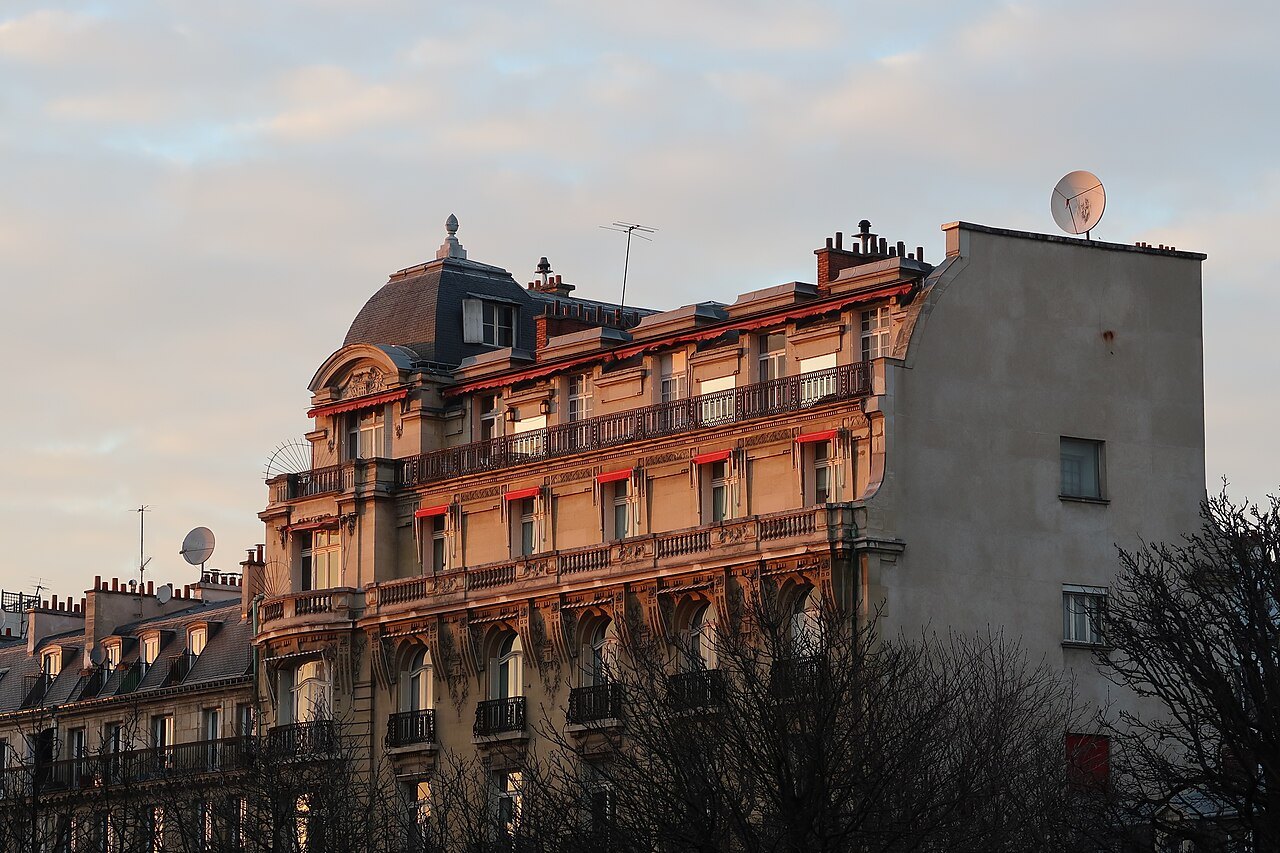
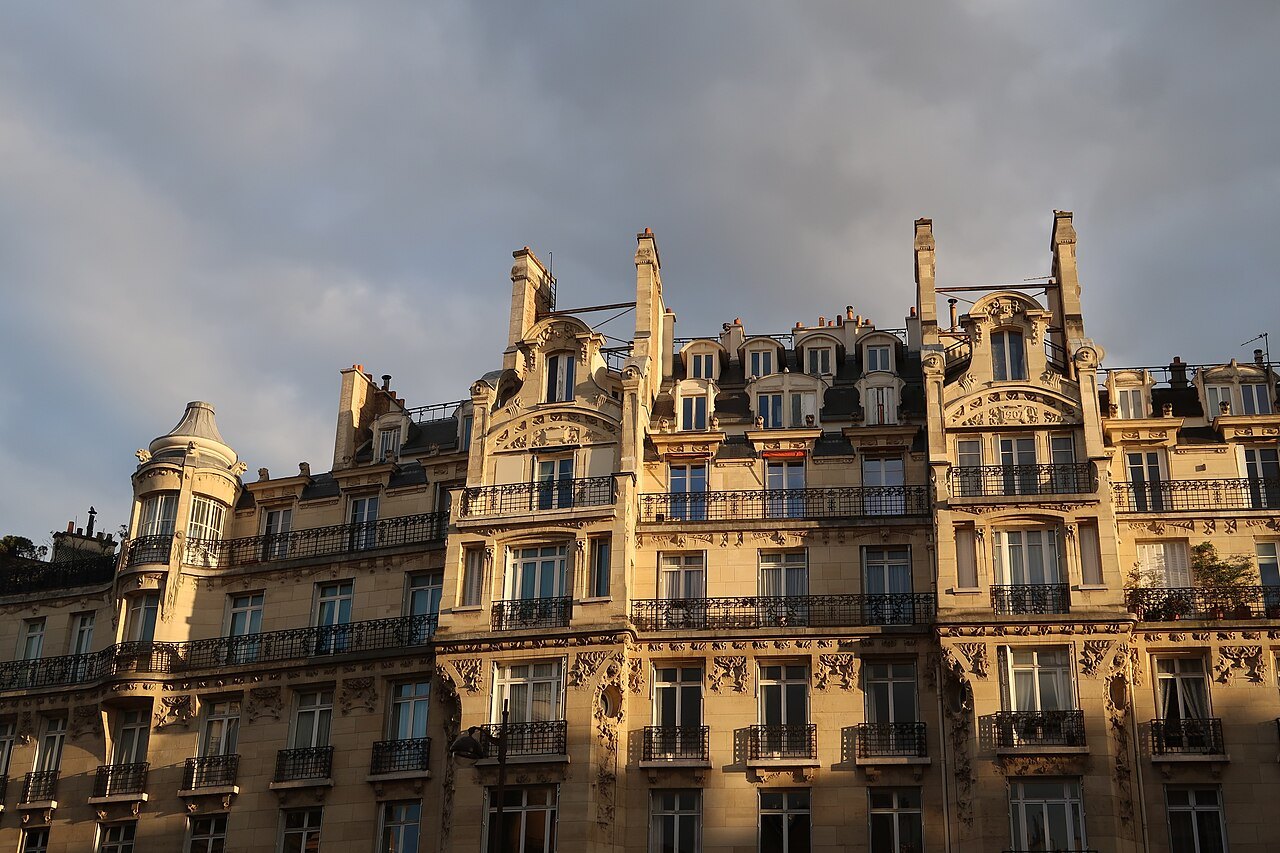
A turn-of-the-century apartment house glowing in evening light on the Avenue Georges-MandelPolymagou, Wikimedia Commons, CC BY-SA 4.0 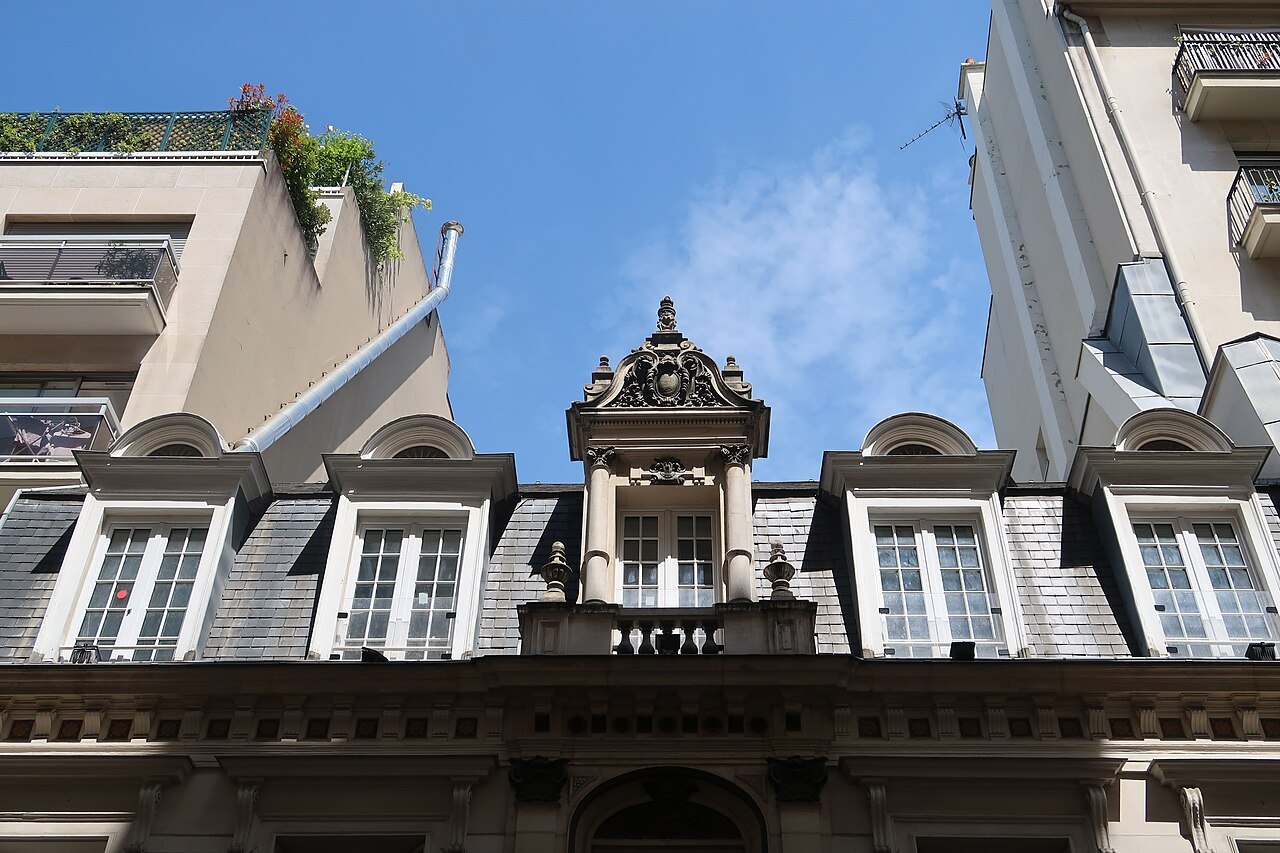
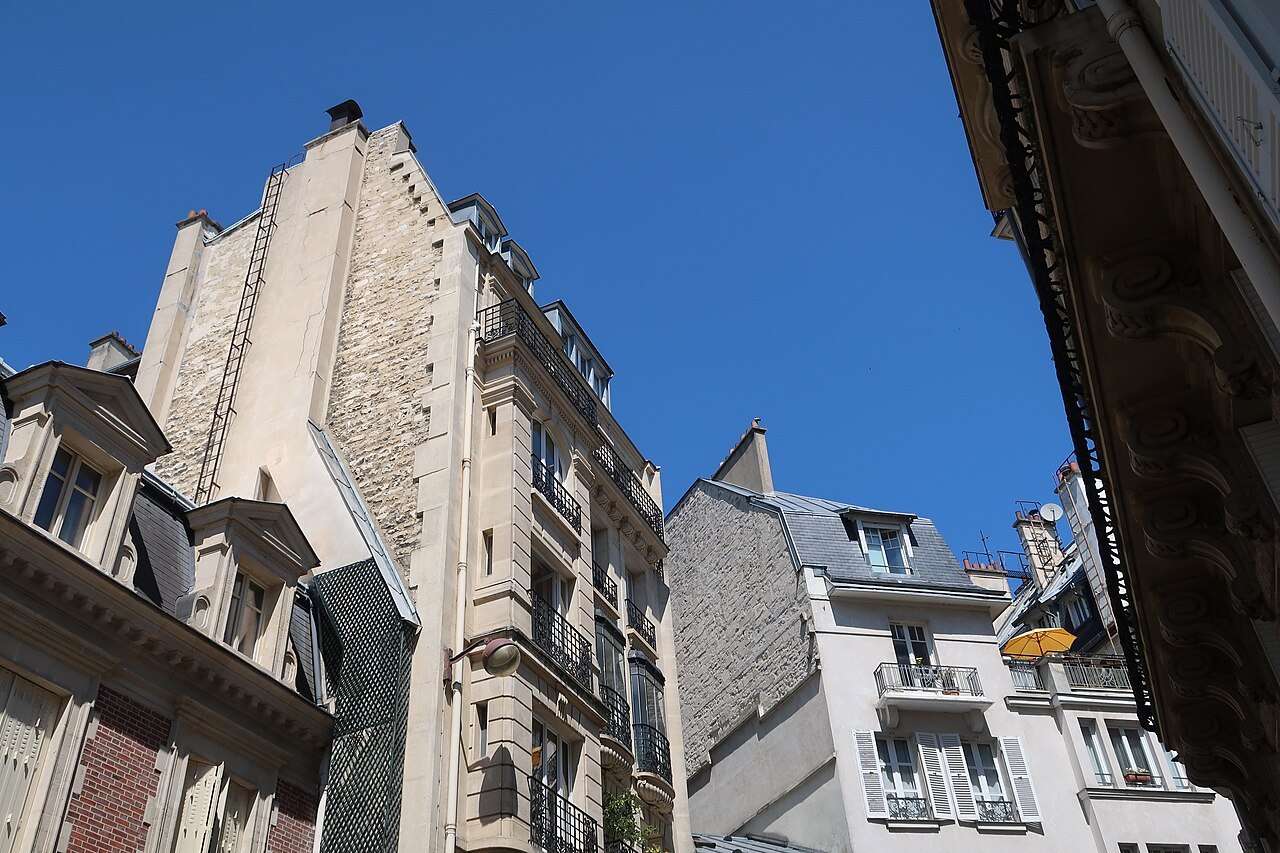
A carved dormer and balustrade on an apartment house on the Rue Nicolo in the 16thPolymagou, Wikimedia Commons, CC BY 4.0 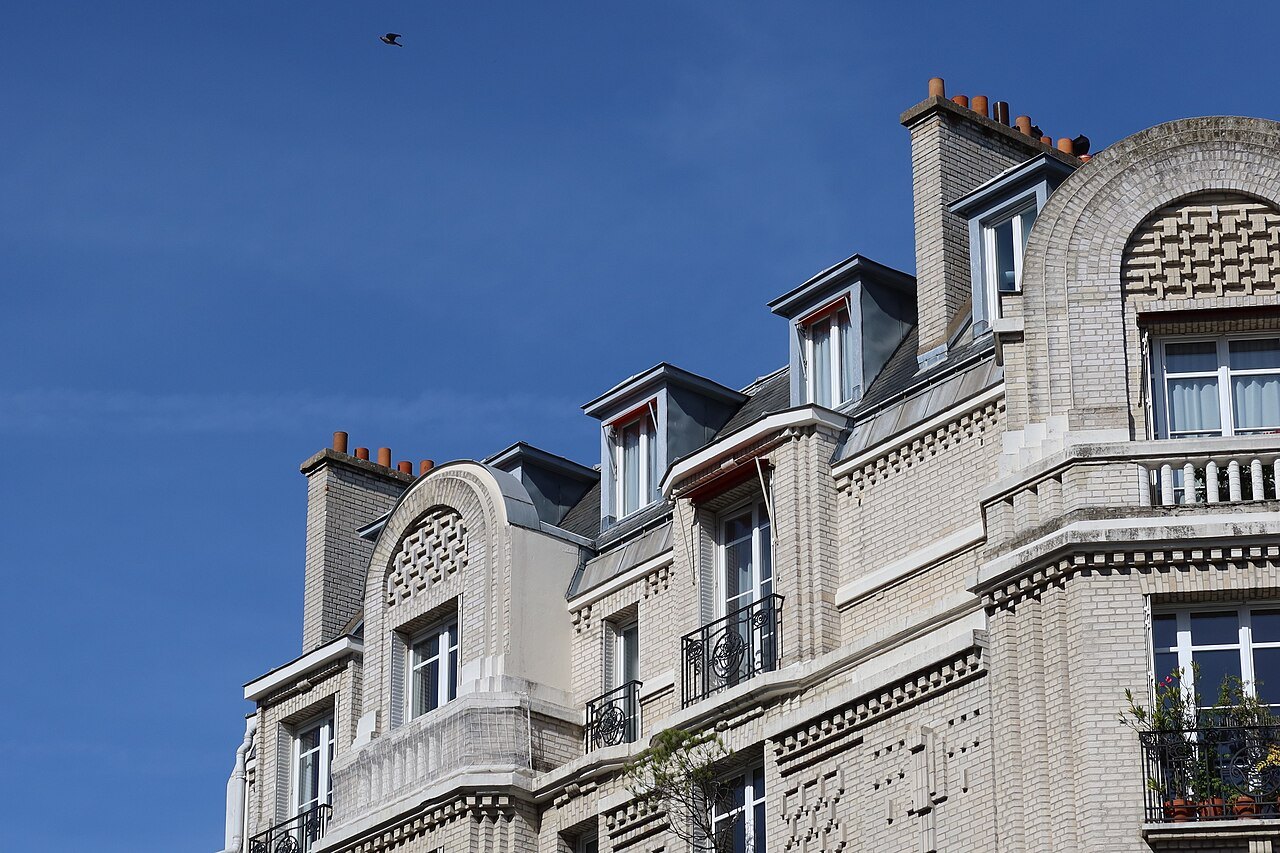
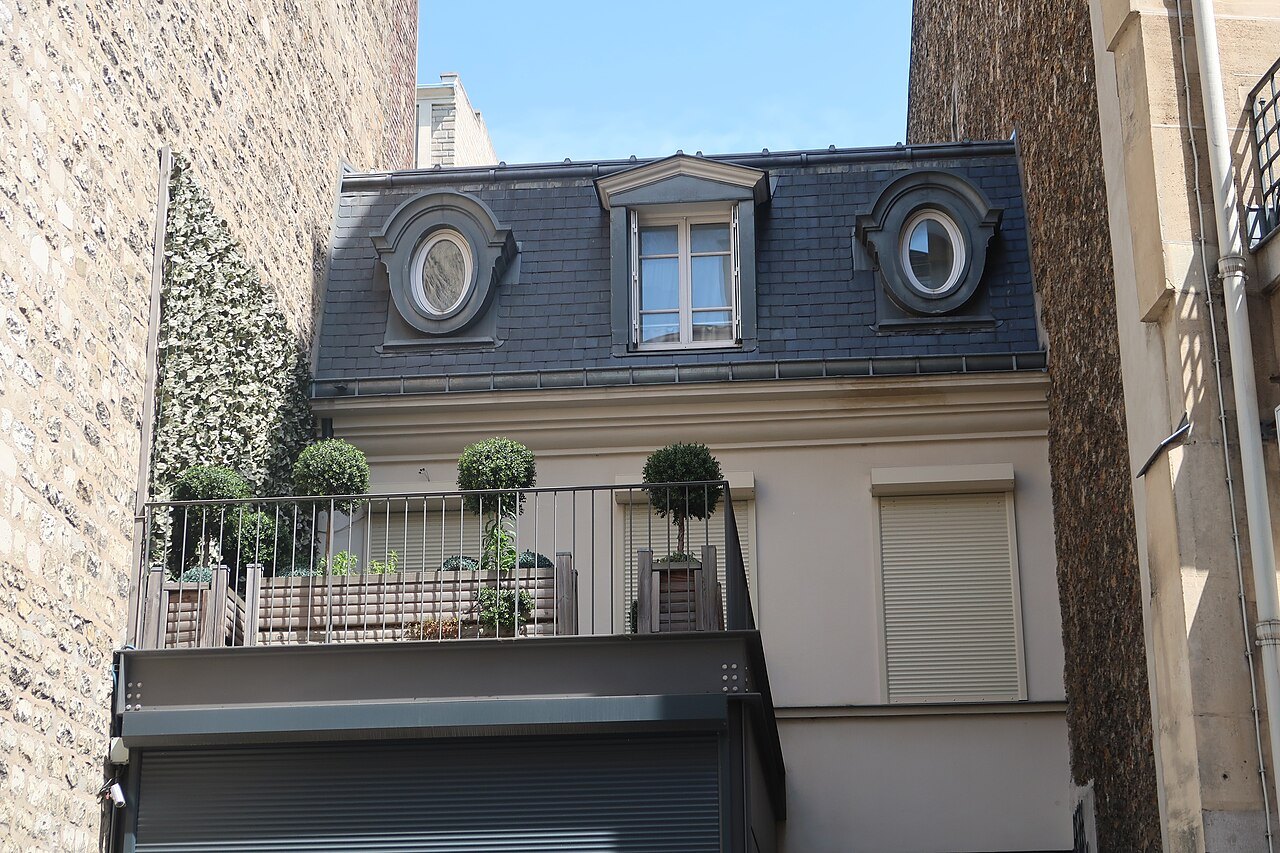
Stone apartment façades with iron balconies and tall chimneys on the Rue de l'AssomptionPolymagou, Wikimedia Commons, CC BY-SA 4.0