Home · Sights · The Sainte-Chapelle and the Conciergerie
What you are looking at
The Sainte-Chapelle and the Conciergerie
Île de la Cité
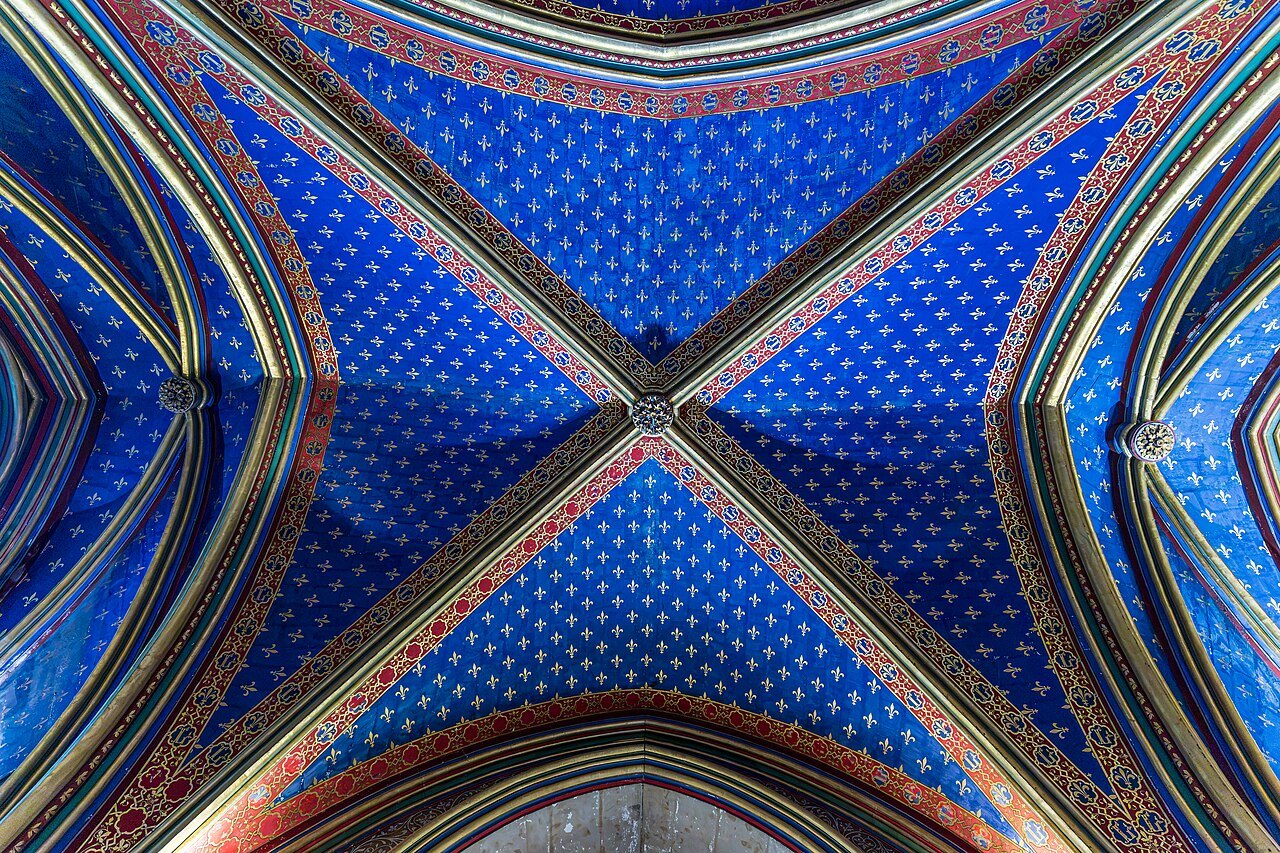
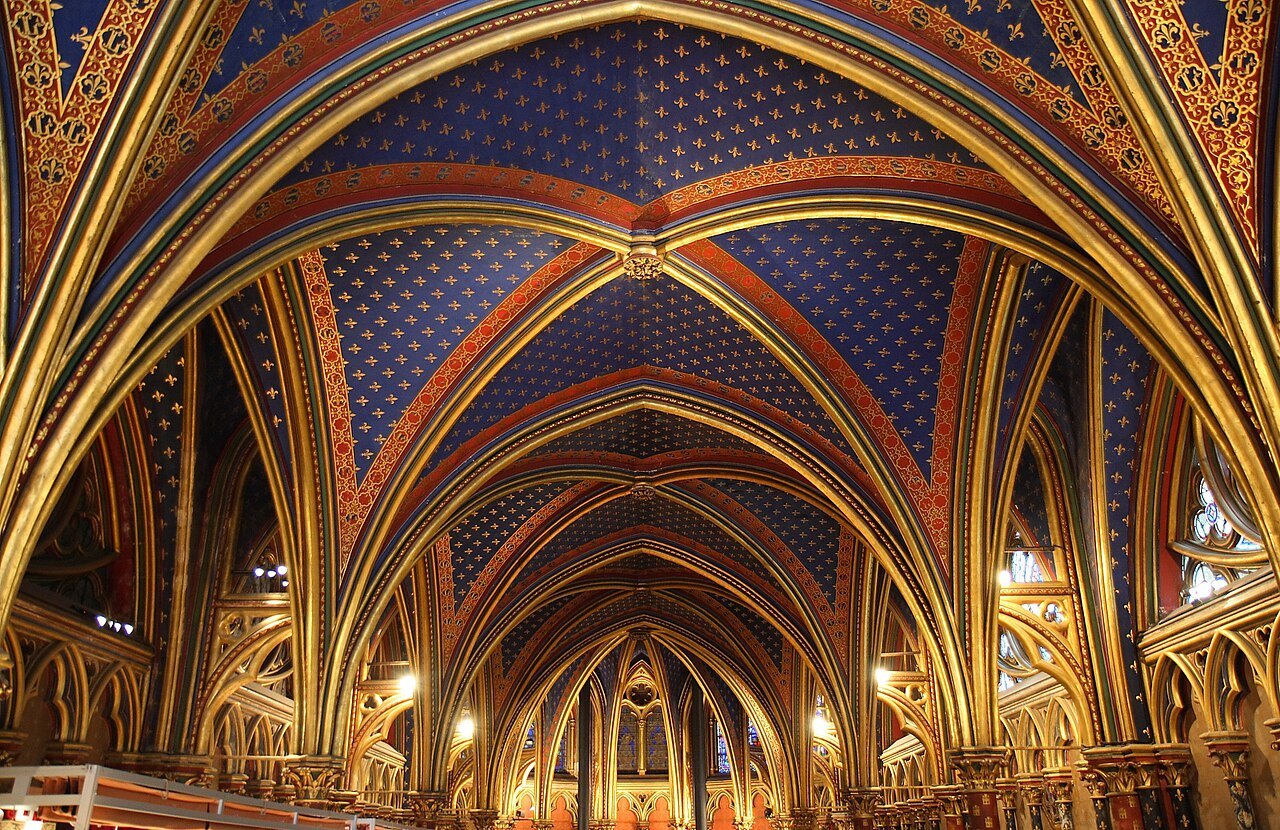
- 1The lower chapelA low, painted chapel for the palace staff, gold fleurs-de-lis and castles on blue and red.
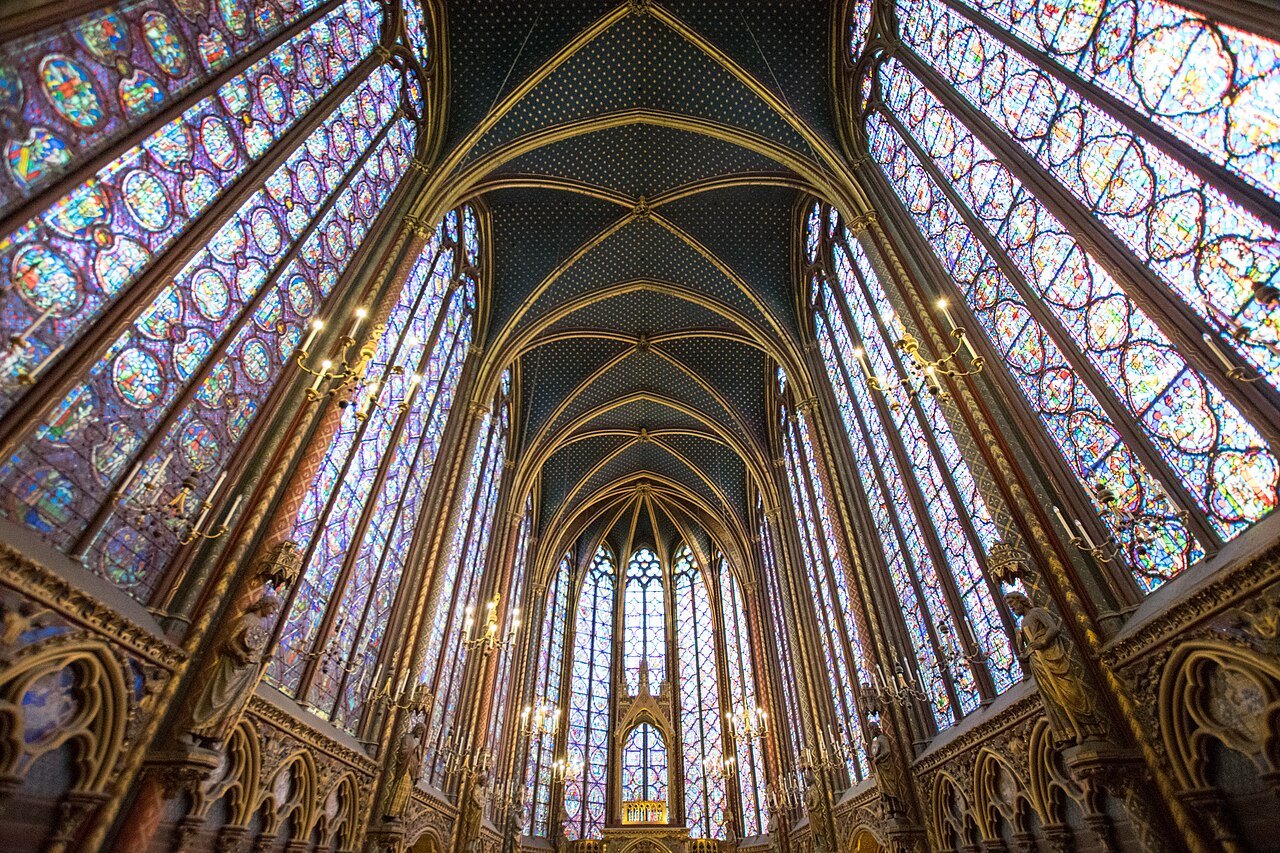
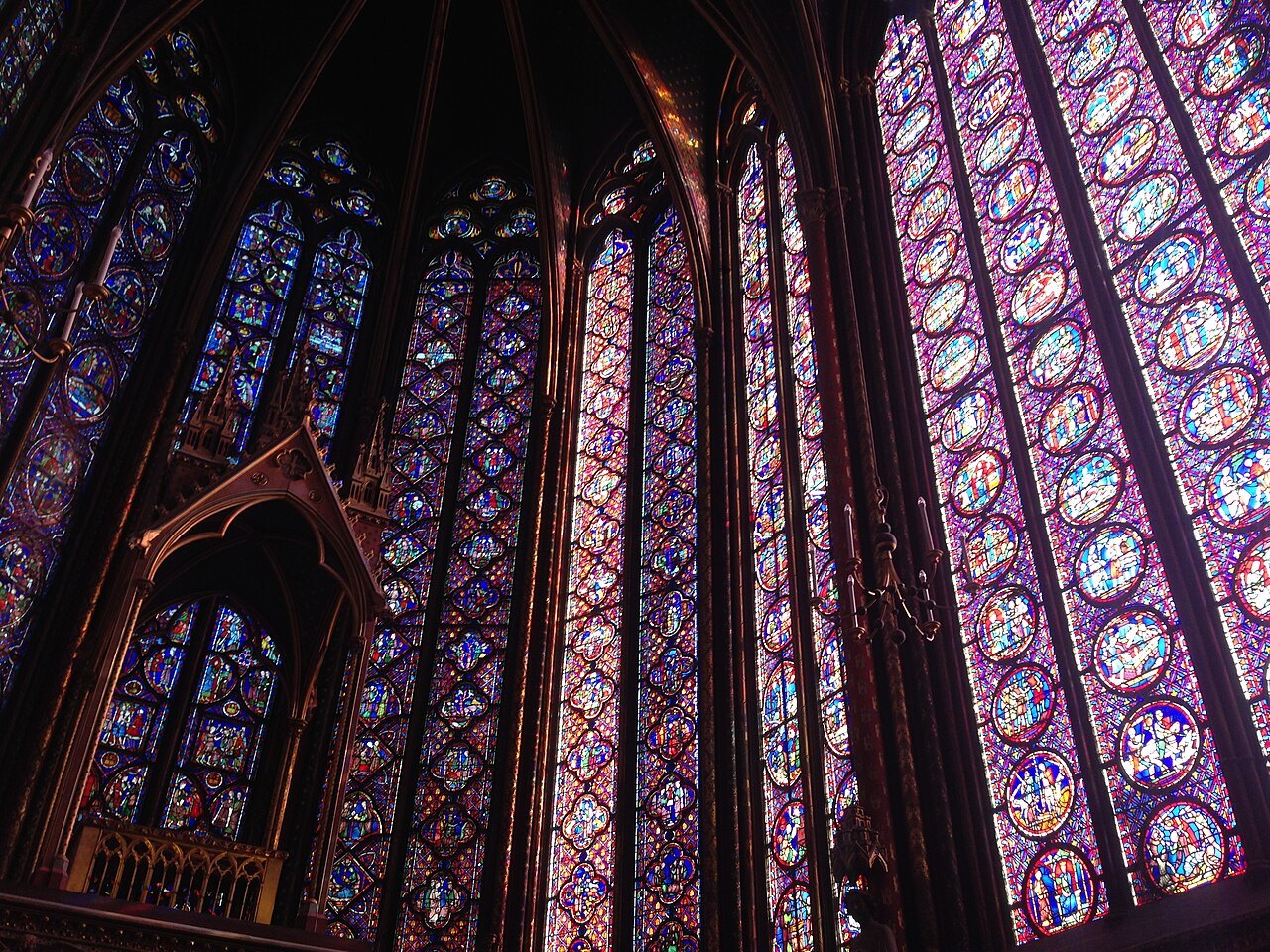
- 2The upper chapelFifteen windows of thirteenth-century glass, 7,200 square feet of it, rising almost to the vault.
- 3The west roseA fifteenth-century rose of eighty-nine panels telling the Apocalypse, in the curling flamboyant style.
- 4The Hall of the Men-at-ArmsA four-aisled Gothic hall of the early fourteenth century, some two hundred feet long.
- 5The Queen's chapelA small memorial chapel on the site of Marie Antoinette's cell, lit by a single window.
The sight in full
Reading the place
Why it matters
Before the Louvre, the kings of France lived on the Île de la Cité, in the Palais de la Cité at the western end of the island. Two parts of that palace survive inside the walls of today's Palais de Justice. One is the Sainte-Chapelle, the royal chapel consecrated on 26 April 1248, which has one of the largest collections of thirteenth-century stained glass anywhere. The other is the Conciergerie, whose great Gothic halls became, in the Revolution, the prison from which the condemned went to the guillotine.
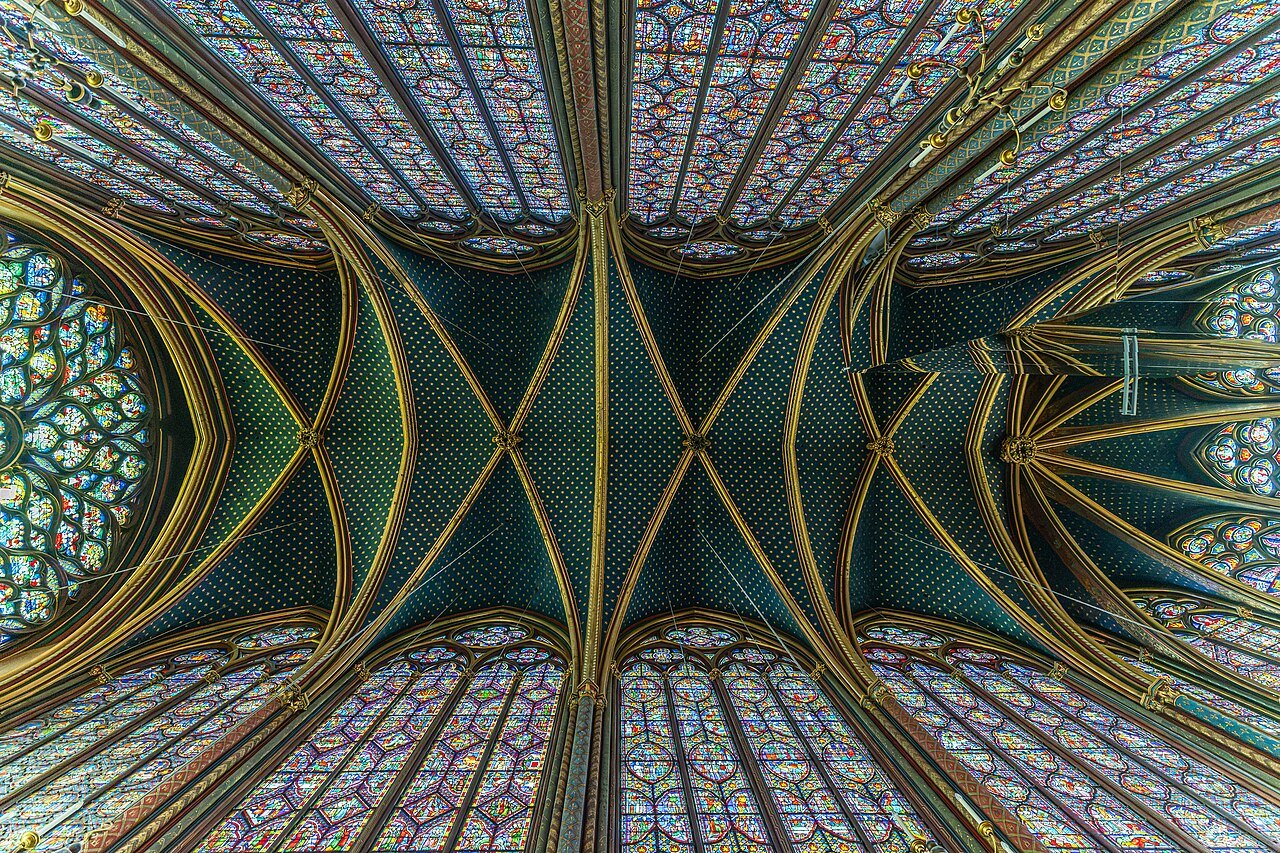
The chapel is one of the high points of the Rayonnant phase of Gothic building, when masons learned to reduce walls to a thin cage of stone and fill the rest with glass. From the outside it gives little away. Inside, on a bright day, the upper chapel is one of the most extraordinary rooms in Europe.
A reliquary built by a king
King Louis IX, later Saint Louis, built the chapel to house the relics of Christ's Passion he had acquired, above all the Crown of Thorns. He bought the relics from Baldwin II, the Latin emperor at Constantinople, for 135,000 livres, and spent a further 100,000 on a silver chest to hold them. The whole chapel, by comparison, cost 40,000 livres to build and glaze.
Construction began sometime after 1238, and most of the windows were in place between 1242 and 1248. No builder's name survives in the records. The relics were kept here for centuries; the Crown of Thorns later passed to Notre-Dame, where it survived the fire of 2019.
The Revolution stripped the chapel. Between 1803 and 1837 the upper chapel served as a store for court archives, and the lowest six or seven feet of glass was taken out so the clerks could see. A restoration began in 1840 and lasted twenty-eight years, with the young Eugène Viollet-le-Duc among the architects; the glass was restored between 1846 and 1855, and about a third of it, lost pieces and later additions, was replaced with medieval glass from elsewhere or new glass in the Gothic manner.
What you see: the lower chapel
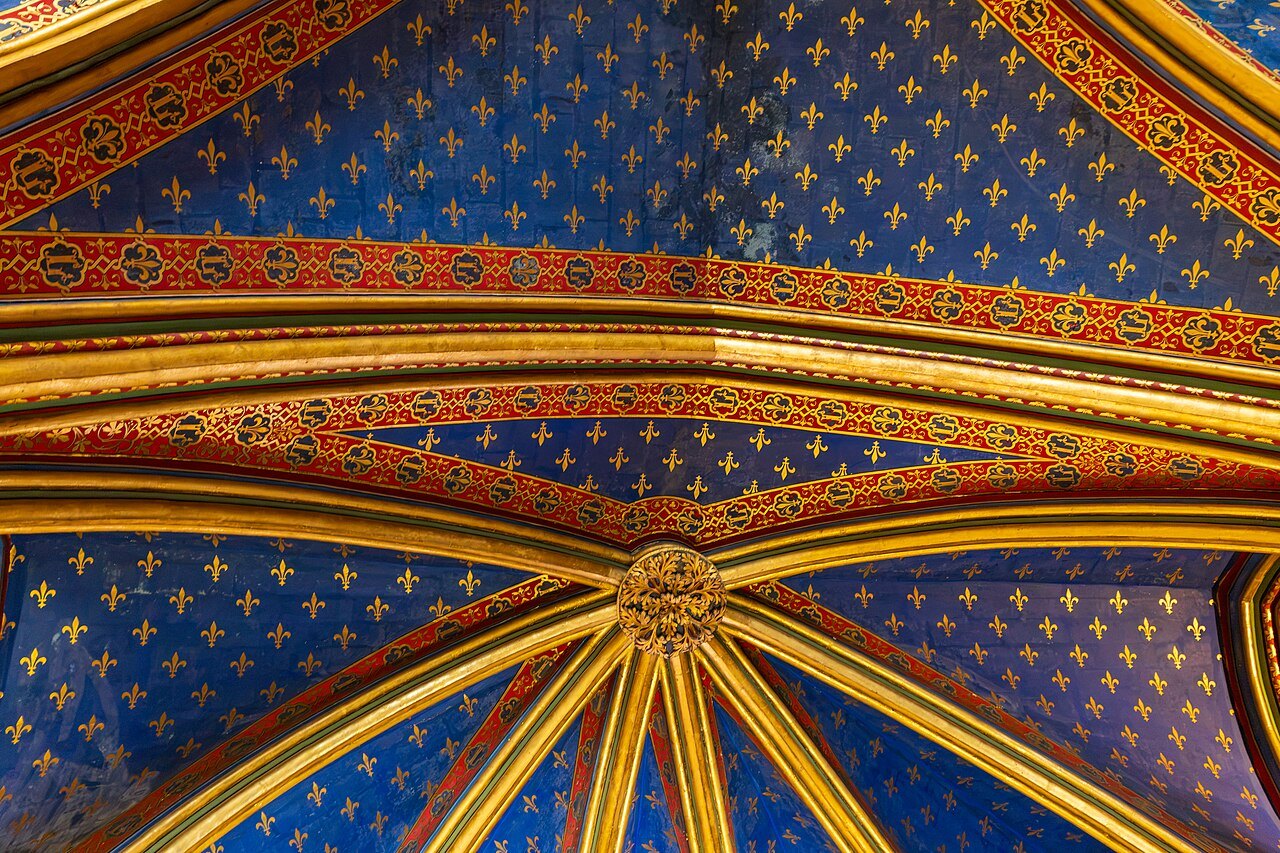
Visitors come in at the lower level, the chapel of the Virgin, which served the ordinary inhabitants of the palace. It is only about 22 feet high, a wide central aisle between two narrow ones, and almost every surface is painted: the fleur-de-lis of Louis IX and the castle of his mother, Blanche of Castile, in gold on blue and red. The colors are from the nineteenth-century restoration; the capitals of the columns, carved with acanthus leaves, are from the thirteenth.
It is a beautiful room in its own right, and many people rush through it. Take a moment: the low ceiling is part of the design, the compression before the release upstairs.
What you see: the upper chapel
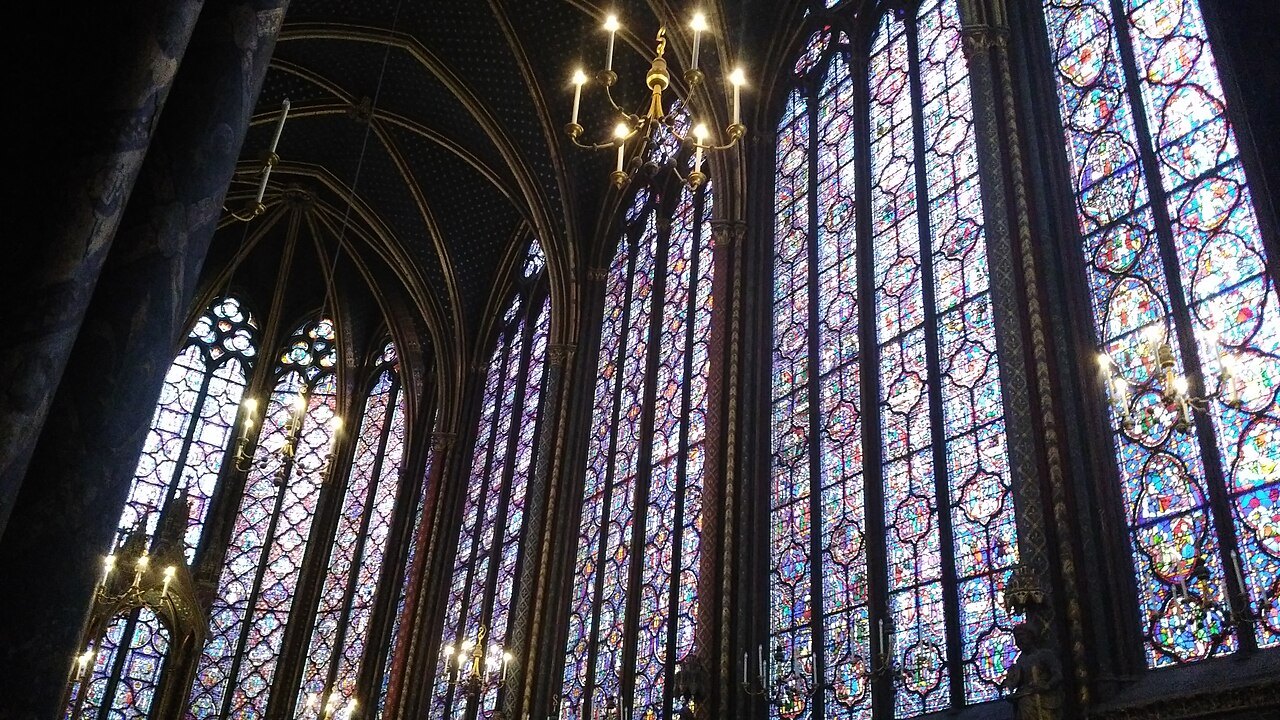
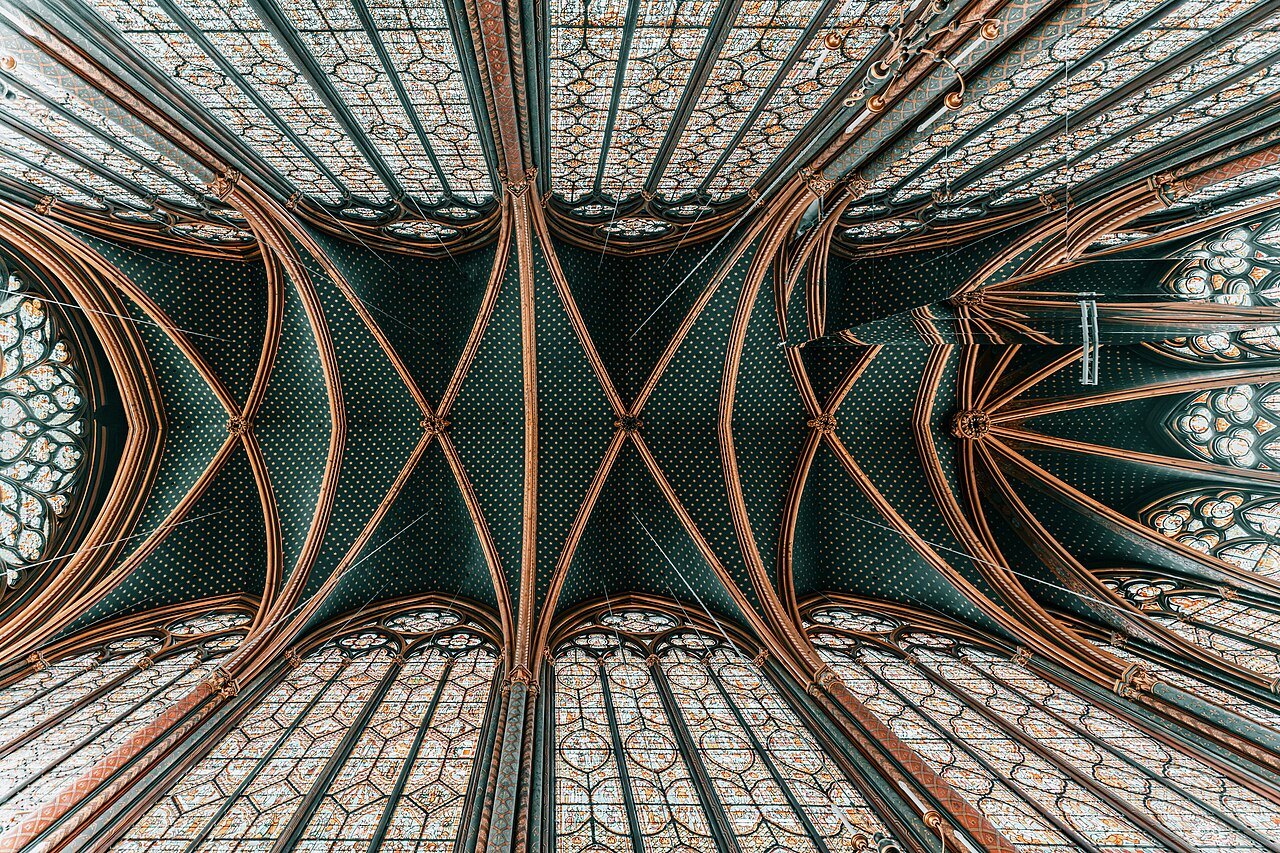
Narrow spiral stairs lead up into the royal chapel, a single room about 108 feet long and 35 wide, with vaults some 68 feet above the floor. The walls seem to be made almost entirely of glass: about 7,200 square feet of it in fifteen great windows, not counting the rose. The trick is structural. Each stone support between the windows is clustered from seven slender shafts, so it looks thinner than it is, and two belts of iron chain, hidden behind the bars that hold the glass, brace the walls from outside.
The windows are read from the left of the entrance around the apse and back, and tell the story of the Bible from Genesis to the arrival of the relics in Paris, in thousands of small scenes in deep blue and red. Three different workshops made them; the art historian Louis Grodecki told their hands apart by the shapes of the figures and the fall of their robes.
Turn around to face the entrance for the west rose, added in the late fifteenth century. It is about thirty feet across, and its eighty-nine panels show the Apocalypse. Its painters used silver stain, a newer technique that let them shade and color the glass itself; it was cleaned in 2014 and 2015 and is very bright.
The Conciergerie
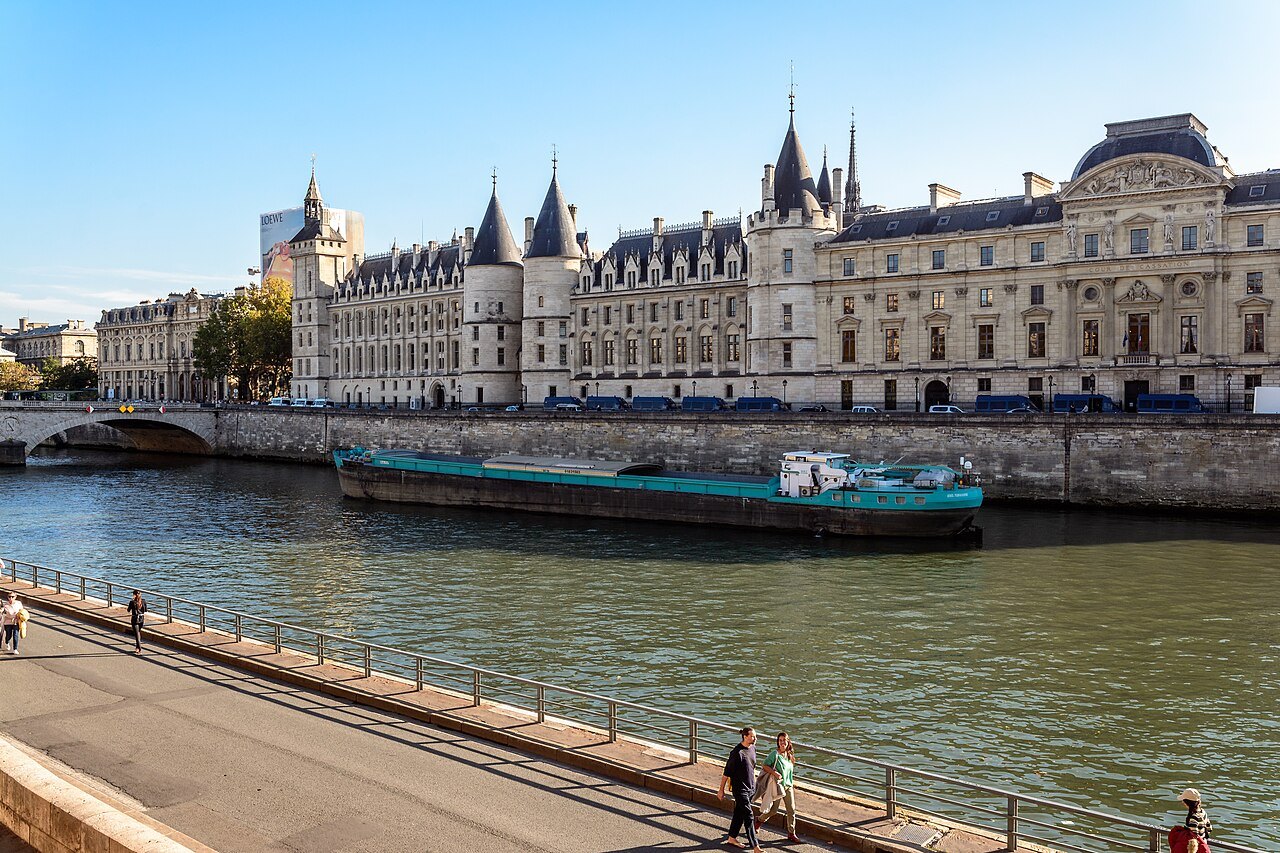
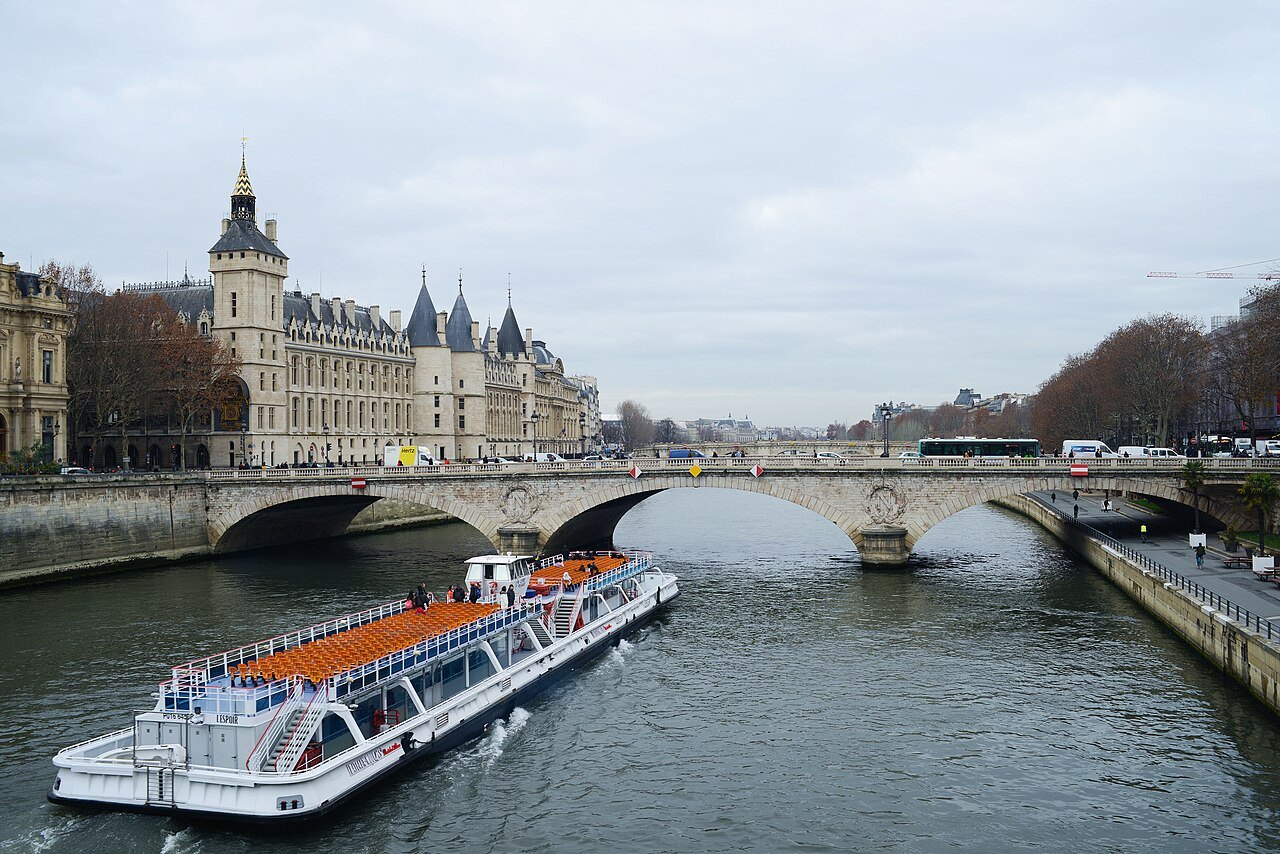
Around the corner, on the quay, the Conciergerie keeps two great halls built for King Philip IV early in the fourteenth century. The Hall of the Men-at-Arms, a forest of columns in four aisles, is about two hundred feet long and one of the largest secular Gothic halls in Europe; it fed and housed the palace's guards and servants, who numbered between one and two thousand.
When the kings moved to the Louvre, parts of the palace became a prison. During the Revolution 2,781 prisoners, Marie Antoinette among them, were held, tried and sentenced here before being taken to the guillotine. A hall of names lists more than four thousand people condemned by the Revolutionary Tribunal, and a small memorial chapel commissioned by Louis XVIII in 1815 stands on the site of the queen's cell.
How to visit
The Sainte-Chapelle is inside the courthouse complex, so entry is through a security check at the palace gate, and the checks are strict and slow. Large bags, suitcases and scooters are not allowed, and knives, scissors and glass bottles are confiscated, so leave them at your hotel. The monument itself strongly recommends buying a ticket for a time slot in advance, since at busy times visitors without one may wait a very long time or not get in; see booking ahead. The chapel and the Conciergerie are run together by the national monuments agency, and a combined visit takes about two hours.
Choose a bright day if the forecast gives one; the glass changes from hour to hour with the light. The chapel is a few minutes' walk from Notre-Dame, and the Pont Neuf is at the western tip of the island.
Myths worth setting aside
The Sainte-Chapelle is often called a jewel box, as if it were small. It is not: the upper chapel is taller than many parish churches are long. The effect of lightness comes from the proportions and the glass.
Nor is all the glass untouched. Most of it is genuinely thirteenth-century, but about a third was restored or replaced in the nineteenth century, and eighteen original panels are now in the Musée de Cluny.
Where to go next
Nearby
- Nearby · 4th · Île de la CitéNotre-Dame de ParisThe Gothic cathedral begun in 1163 on the island where Paris began, burned in April 2019 and reopened in December 2024: two square towers, three great rose windows, and a roof of new French oak.Read the page →
- Nearby · 1stThe LouvreA medieval fortress, then the palace of the kings of France, and since 1793 a public museum: the largest in the world, entered through a glass pyramid in its main courtyard.Read the page →
- Nearby · 6thSaint-Germain-des-PrésThe oldest church in Paris, founded as an abbey in 558, and around it the quarter of cafés, bookshops and publishers where Sartre and Beauvoir held court after the war, with Saint-Sulpice a few streets south.Read the page →