Home · Eating & Drinking
The city's own
What to order
On the slate
- The baguetteThe long, crisp loaf, its dough and size set by French law; Paris names its best baker every year.
- The croissantButtery laminated dough in a crescent, from the Viennese bakery that opened in Paris around 1839.
- Pain au chocolatThe same dough folded around one or two bars of dark chocolate; breakfast with a coffee.
- Jambon-beurreHam and butter in a split baguette, also called a parisien: France's favorite sandwich.
- Croque monsieurA hot ham and cheese sandwich; its name means, roughly, crunch mister.
- Onion soupOnions slowly cooked in stock under a lid of bread and melted cheese, the dish of the old Les Halles market.
- Steak fritesSteak, often rib eye, pan-fried rare, with fries: the brasserie classic.
- The macaronTwo almond meringue discs around ganache, buttercream or jam, first made in this form in Paris.
- Paris–BrestA wheel of choux pastry filled with praline cream, created in 1910 for a bicycle race.
In full
Eating & Drinking
How Paris eats
Food in Paris is organized around a few kinds of place, each with its own rhythm. The bakery, the boulangerie, sells bread and pastries from early morning; the café serves coffee, drinks and simple food all day; the brasserie serves full meals, often from the same menu from lunch until late; and the market streets and covered markets sell everything else. Knowing which is which is most of what a visitor needs.
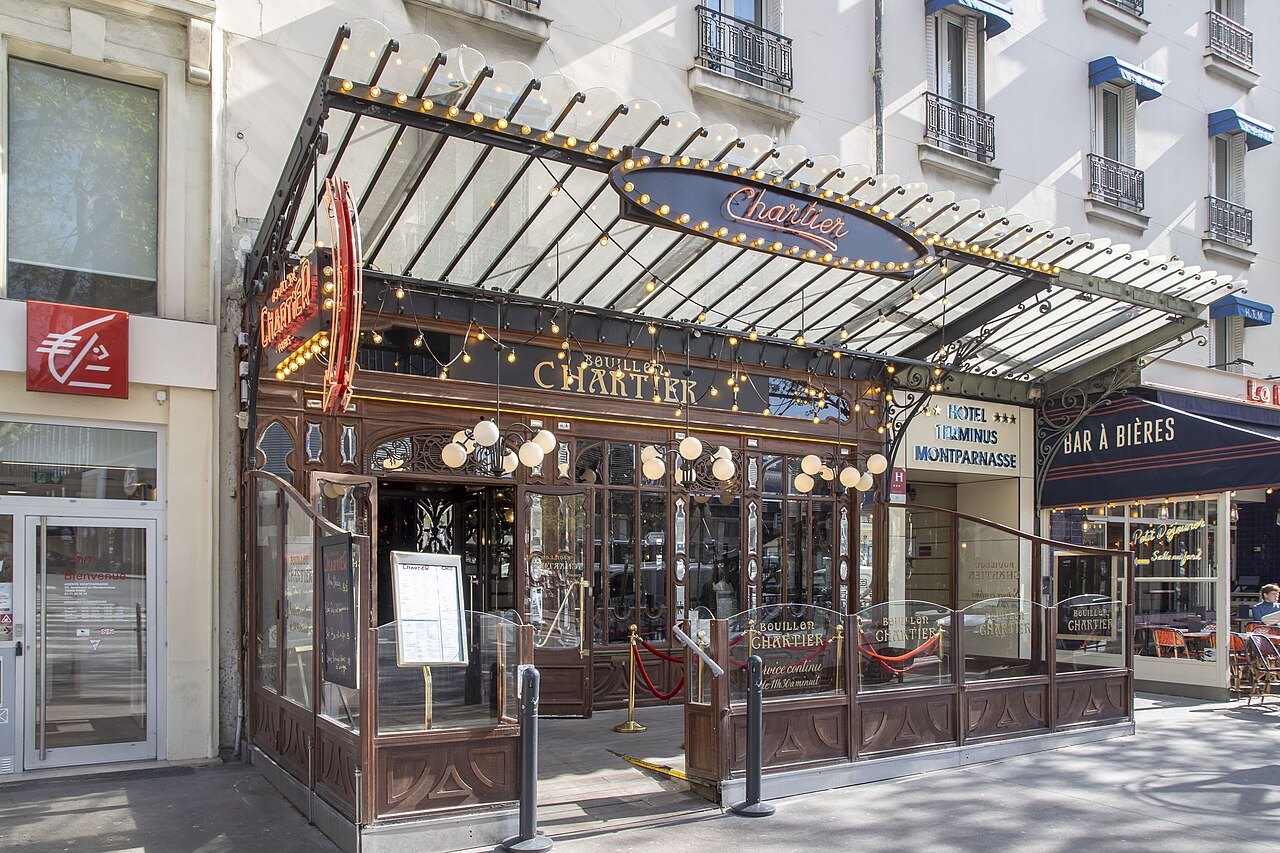
You do not need a reservation for a café or for most brasseries; for well-known restaurants, especially for dinner, booking ahead is wise. See where to stay for the quarters with the liveliest food streets.
The bakery
The baguette is the city's everyday bread: a long, thin loaf with a crisp crust, about two feet long, its dough and dimensions defined by French law. In 2018 the craft and culture of making it was added to France's national inventory of intangible heritage, and in 2022 it was inscribed on UNESCO's list. Every year since 1994, the city of Paris has awarded a prize for the best traditional baguette in the city, and bakeries that win it say so proudly in their windows.
The croissant is younger than it seems. In 1838 or 1839 an Austrian officer, August Zang, opened a Viennese bakery on the Rue de Richelieu in Paris; its crescent-shaped kipferl and Vienna loaves became popular and inspired French imitators, and the flaky, butter-layered croissant grew from them. Its cousins, the pain au chocolat and the other breakfast pastries, are known as viennoiseries for this reason. The jambon-beurre, ham and butter in a split baguette, is the sandwich of the city; more than three million are sold in France every day.
The café
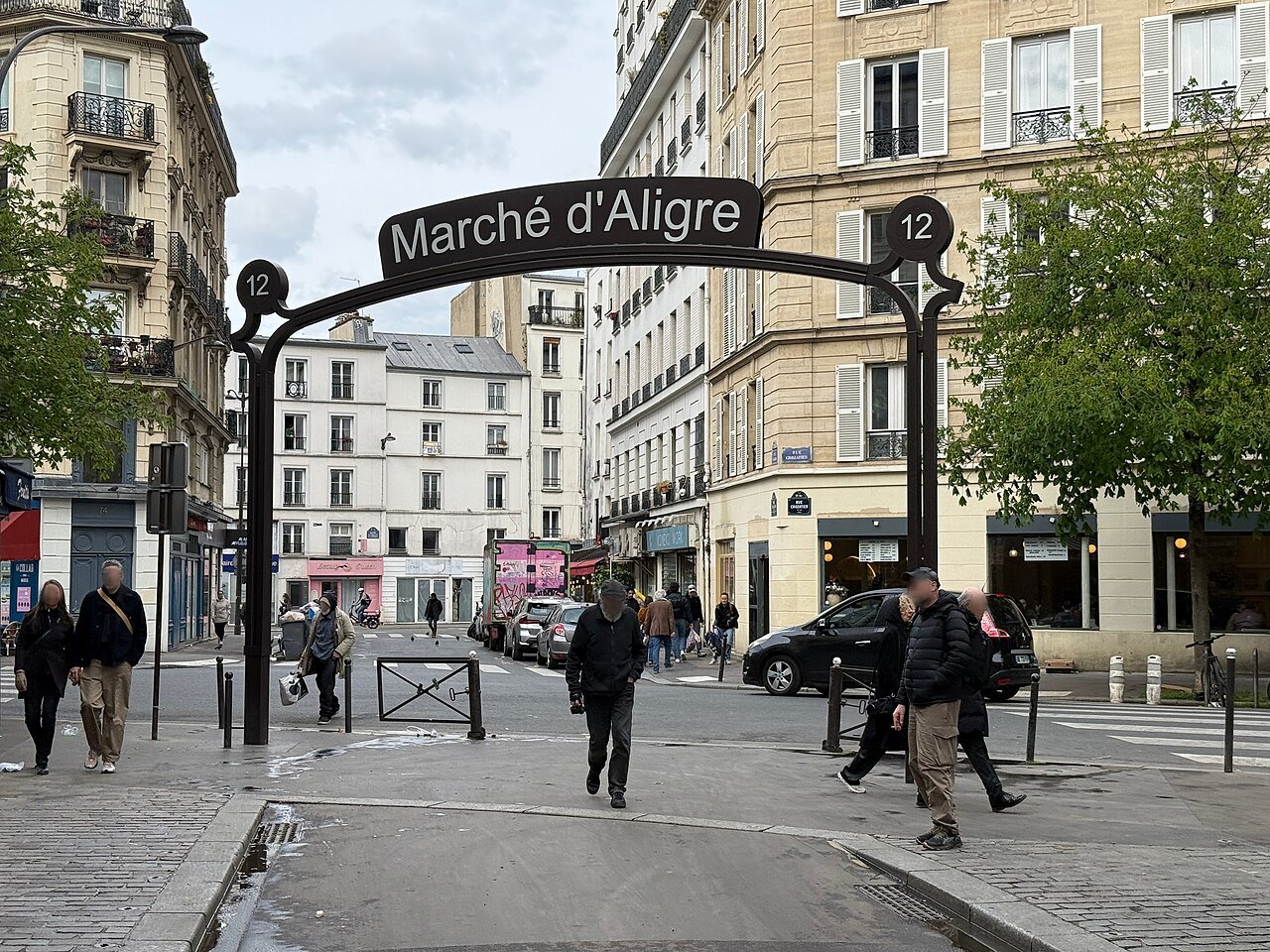
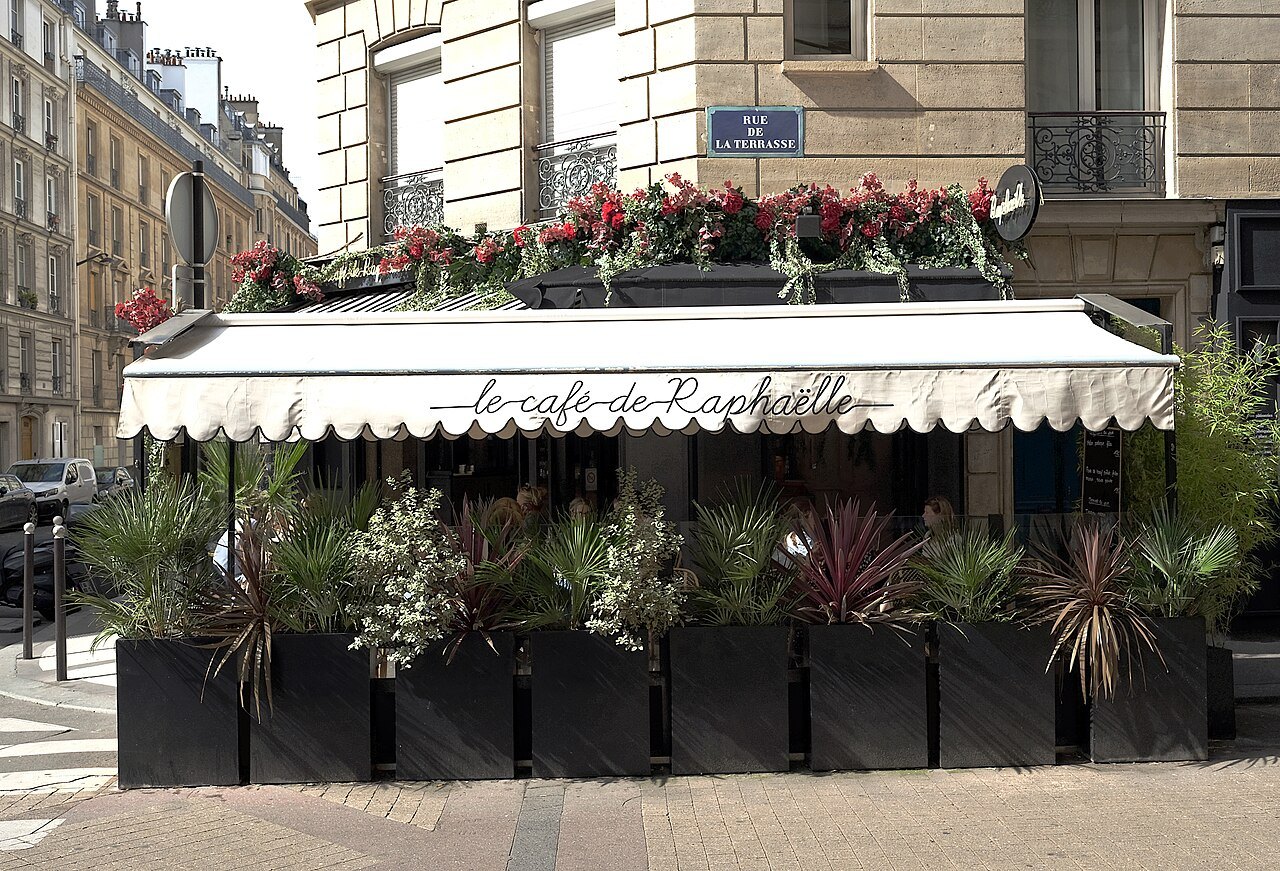
The café is the city's living room. Many have a terrace, seats and tables on the sidewalk, and sitting on one with a coffee or a glass of wine, watching the street, is one of the pleasures of Paris. A café serves drinks at the counter and at the tables all day, with simple food: a croque monsieur, the hot ham and cheese sandwich, an omelet, a salad.
The café has long been where Paris talks. The Café de Flore opened in the 1880s, and it and its neighbor Les Deux Magots became the meeting places of the Surrealists and of Jean-Paul Sartre, Simone de Beauvoir and Albert Camus in the 1940s and 1950s. Both still award literary prizes: the Deux Magots has given its prize to a French novel every year since 1933.
Some cafés are institutions. On the Boulevard Saint-Germain, the Café de Flore and Les Deux Magots, where writers and philosophers once met, are now famous destinations of their own; see Saint-Germain-des-Prés.
Brasseries and bouillons
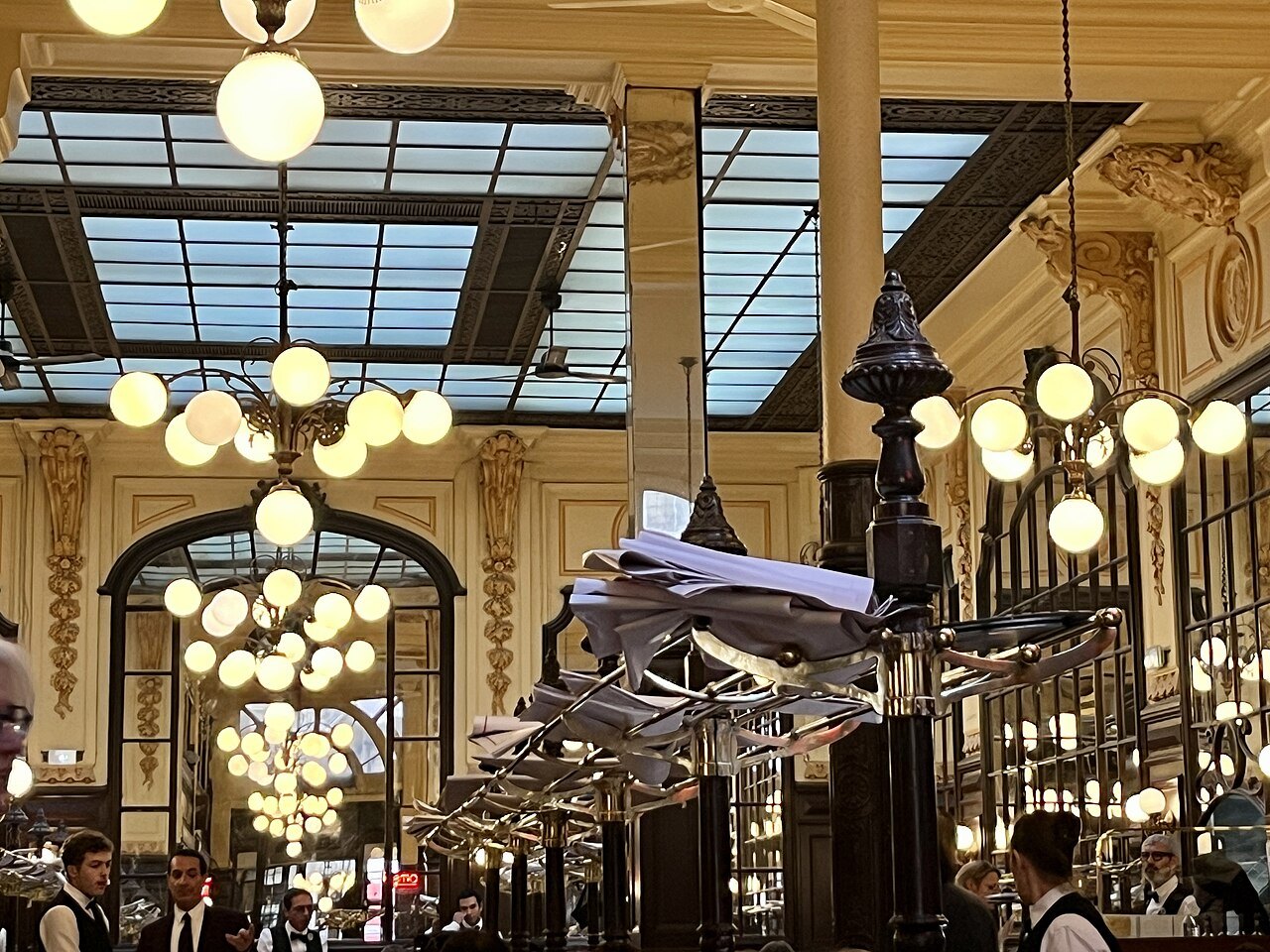
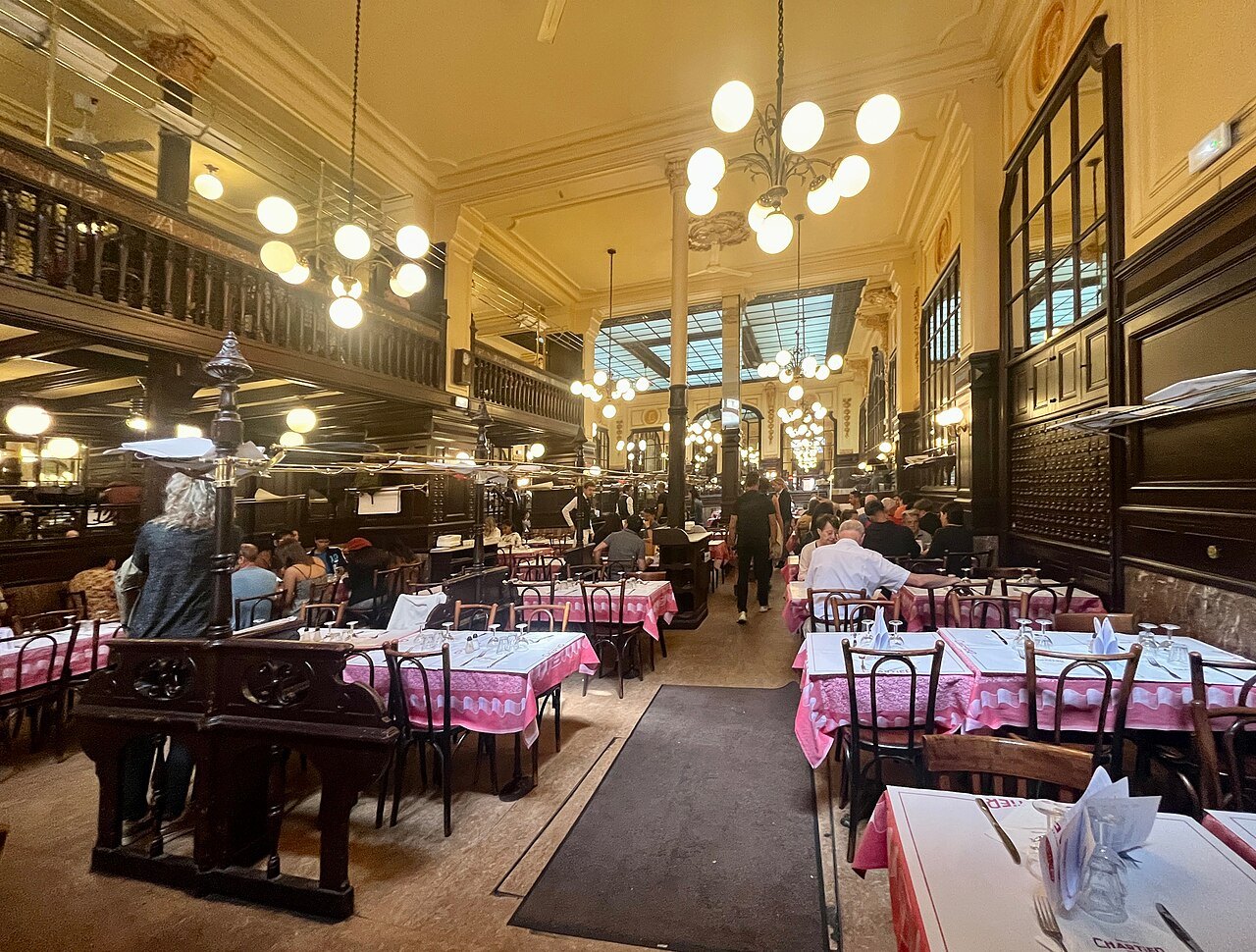
A brasserie, a word that means brewery, is a relaxed restaurant with professional service, printed menus and often white tablecloths. It is typically open every day and serves the same menu all day, classics such as onion soup and steak frites, with a long list of wines and beers.
The bistro, in its original Paris form, is smaller: a modest local restaurant serving simple meals at moderate prices, often with a short menu written on a board. The difference matters mostly for what you expect. A brasserie is the place for a large, lively meal at almost any hour; a bistro, for a simpler dinner with the neighborhood.
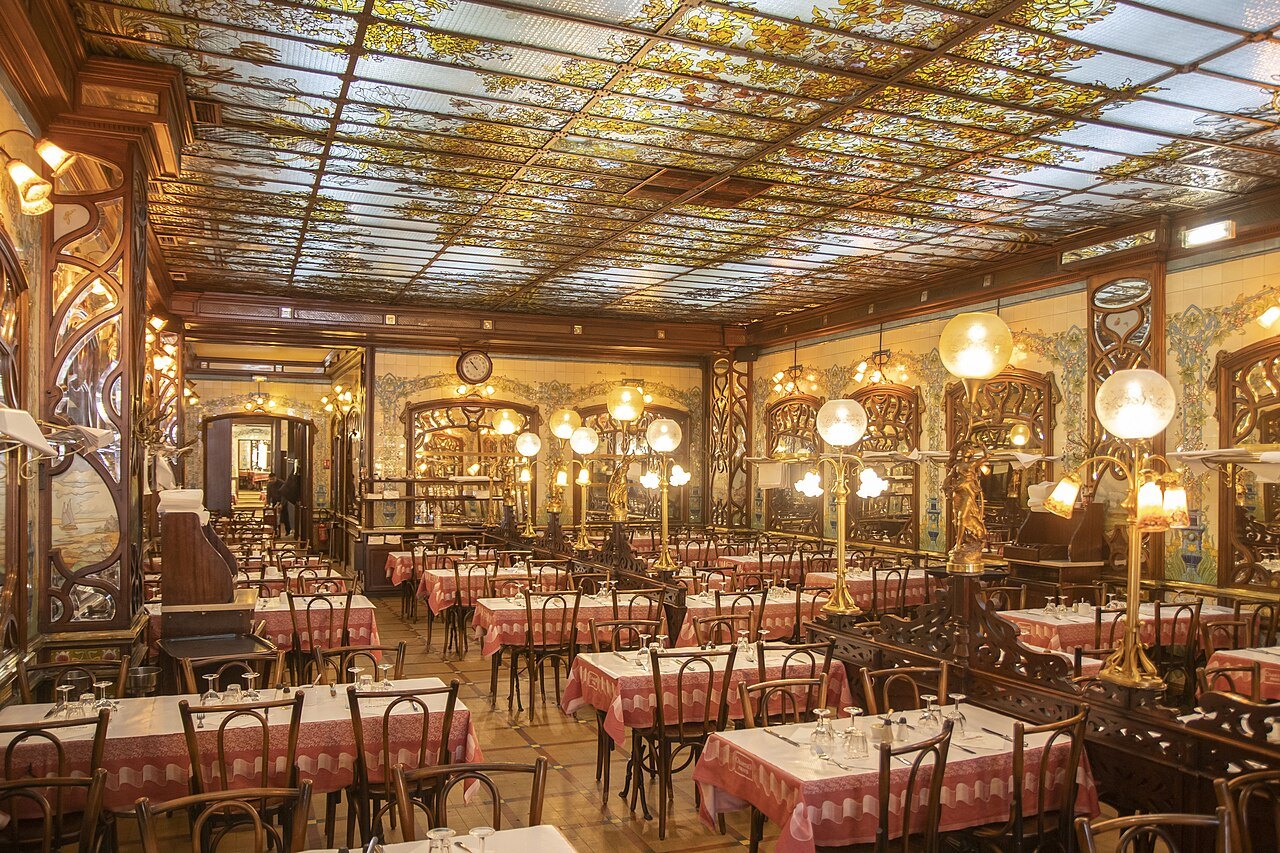
The bouillon is an older Paris invention: a large, handsome dining room of the late nineteenth or early twentieth century, serving traditional French food quickly and at low prices. The idea was revived in 1854 by a butcher, Adolphe-Baptiste Duval, whose chain of dining rooms was, in effect, the first restaurant chain. Since 2017 the bouillons have enjoyed a revival, and their long lines of hungry diners, waiting for a table under the mirrors and brass, are part of the experience.
Onion soup and the old market
Onion soups have been eaten in France since the Middle Ages; a recipe appears in a household book of Paris written in 1393. The version familiar today, with its crust of bread and melted cheese, dates from the middle of the nineteenth century and is linked with Les Halles, the great central food and flower market of Paris, where it was eaten by market workers and late-night revelers alike. The fruit, flower and vegetable markets left in 1969 for Rungis, south of the city, and the old market halls were demolished in 1973, but the soup is still a brasserie standard.
Markets and food streets
The Marché des Enfants Rouges, in the Marais, is the oldest covered market in Paris, established in 1628 and named for a nearby orphanage whose children were dressed in red. It sells fruit, vegetables, flowers and bread, and has stalls where you can eat a cooked meal. On the Rue Montorgueil, near Les Halles, bakeries, fish shops, cheese shops, wine shops and cafés line a street where Parisians do their daily shopping; the Rue Mouffetard, in the 5th, runs down to a permanent open-air market at the Square Saint-Médard.
Market streets are best in the morning, when the stalls are full. They are also the easiest place to put together a picnic for a garden or the quays: bread, cheese, fruit, something from the charcuterie. See the Seine for where to sit.
Sweet things
The pastry shops of Paris are an attraction in themselves. The macaron as it is known today, two almond meringue discs filled with ganache, buttercream or jam, was created in Paris and was once called the Paris macaron. The Paris–Brest, a ring of choux pastry filled with praline cream and scattered with almonds, was created in 1910 to commemorate the Paris–Brest–Paris bicycle race, which is why it is shaped like a wheel.
Practical notes
Restaurants and cafés differ in their hours: many restaurants serve lunch and dinner and close in between, while cafés and brasseries keep going all day. When you go into a shop or a café, begin with bonjour; it is the start of every exchange in Paris, and leaving it out is noticed. See booking ahead for what else to reserve.
Seen on the way
More photographs
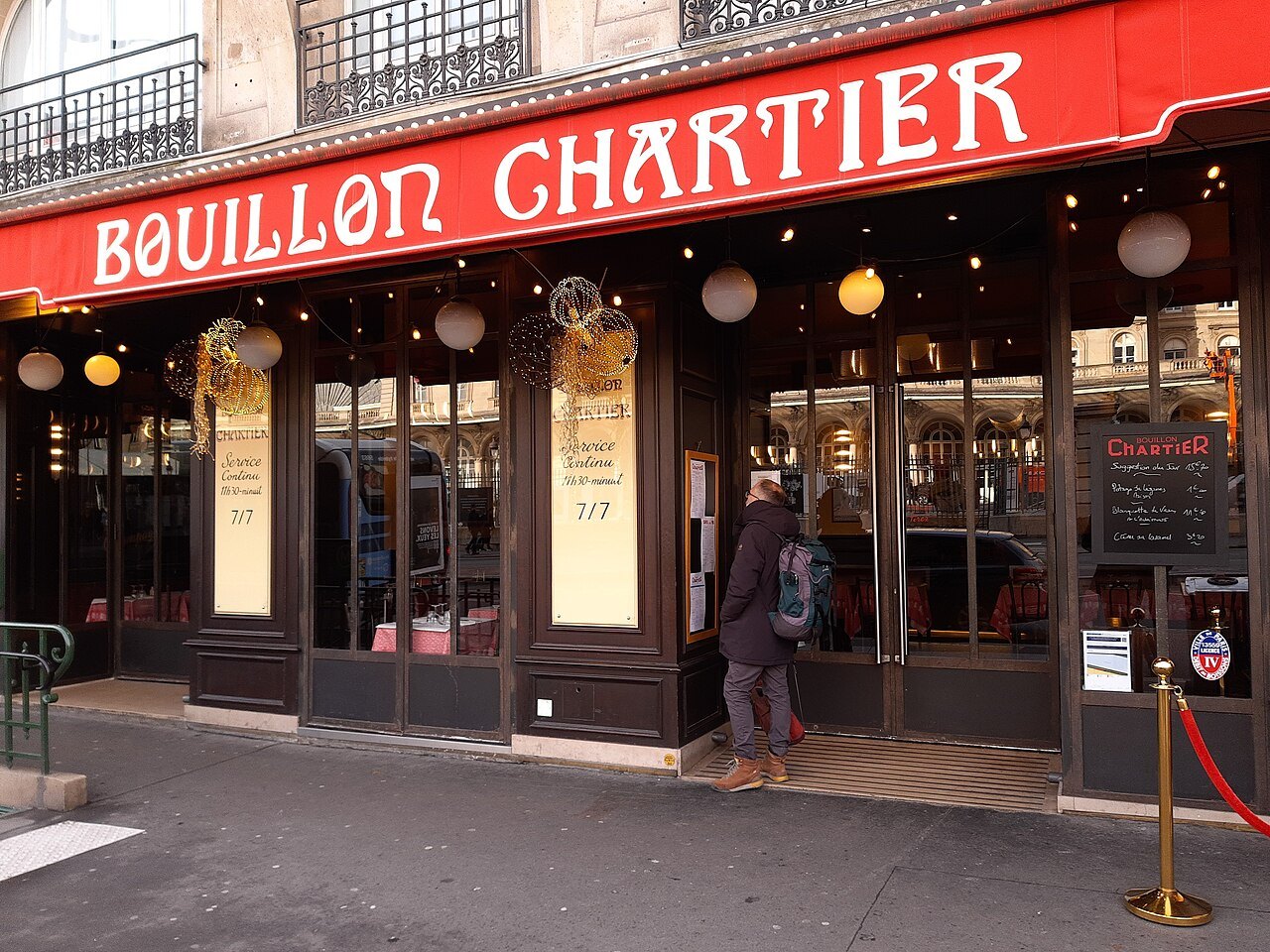
The red sign of a bouillon near the Gare de l'EstGerda Arendt, Wikimedia Commons, CC0 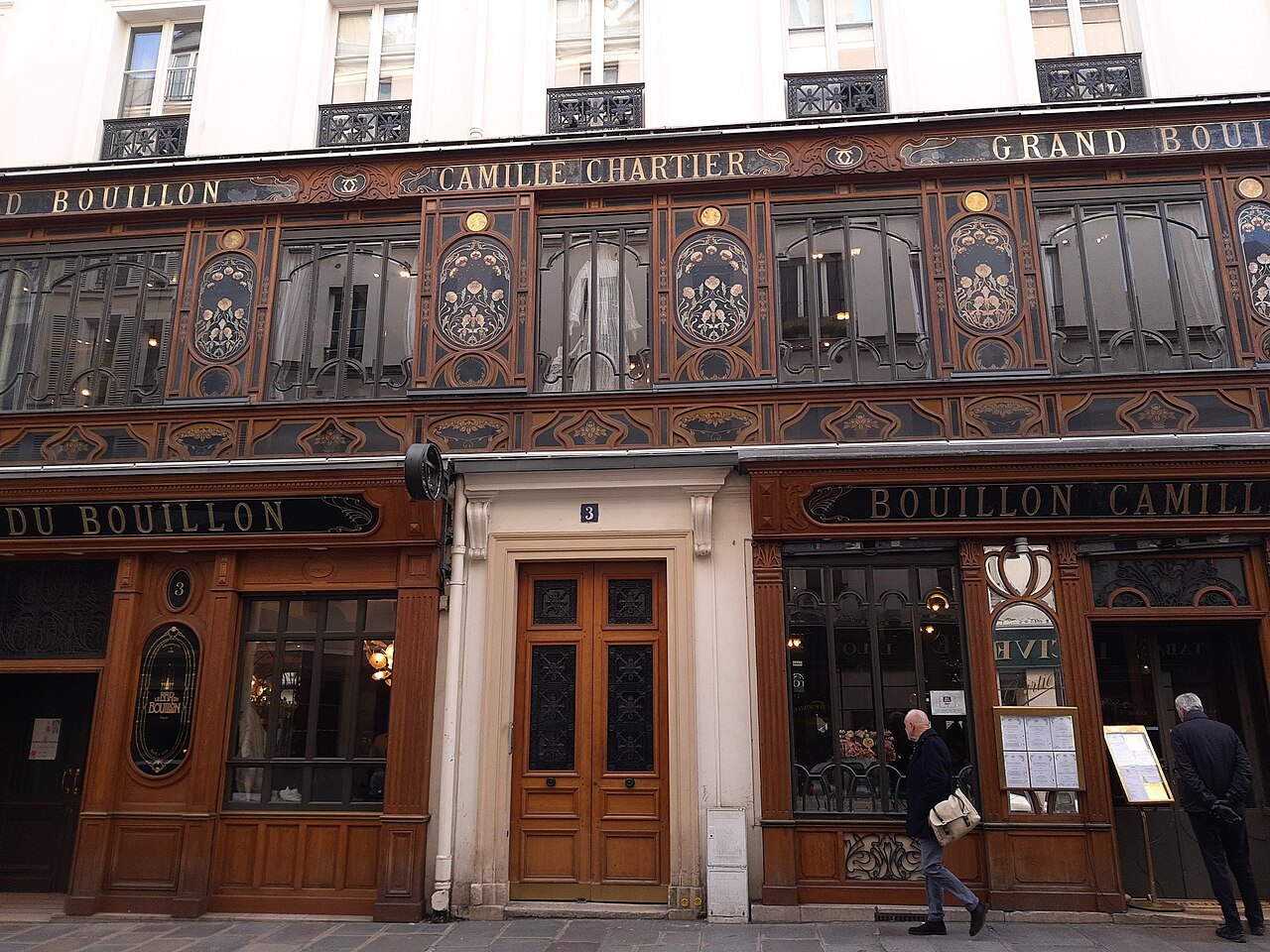
The carved wooden shopfront of an old bouillon on the Rue RacineGerda Arendt, Wikimedia Commons, CC0 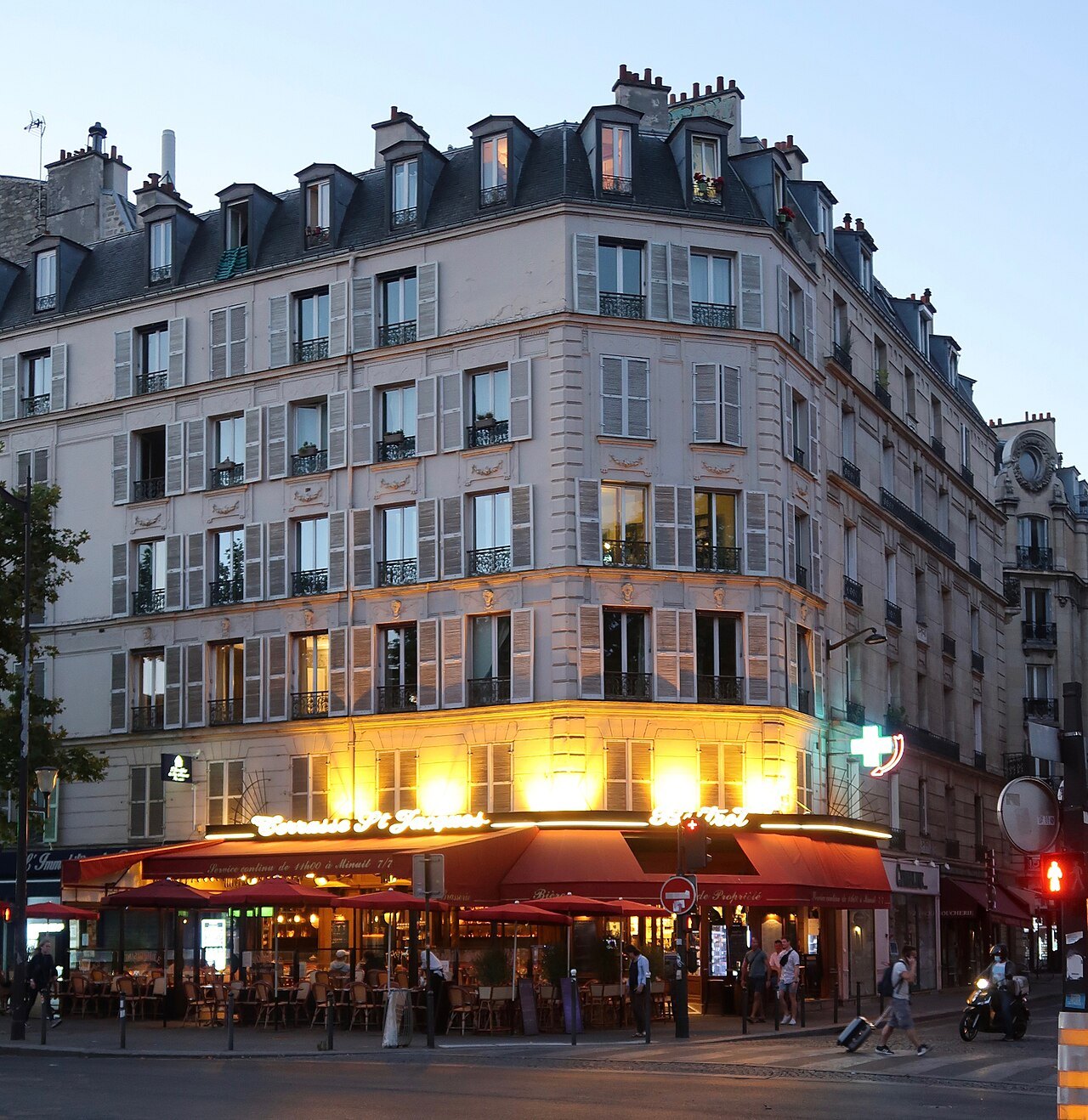
A corner café's red awning lit at dusk on the Boulevard de Port-RoyalThank you to indicate this credit line next to the image in case of reuse: Credit: Polymagou - CC BY-SA I'd appreciate if you could send a message on my user talk page if you use this picture out of the Wikimedia project scope ., Wikimedia Commons, CC BY-SA 4.0