Home · Sights · The Musée d'Orsay
What you are looking at
The Musée d'Orsay
7th
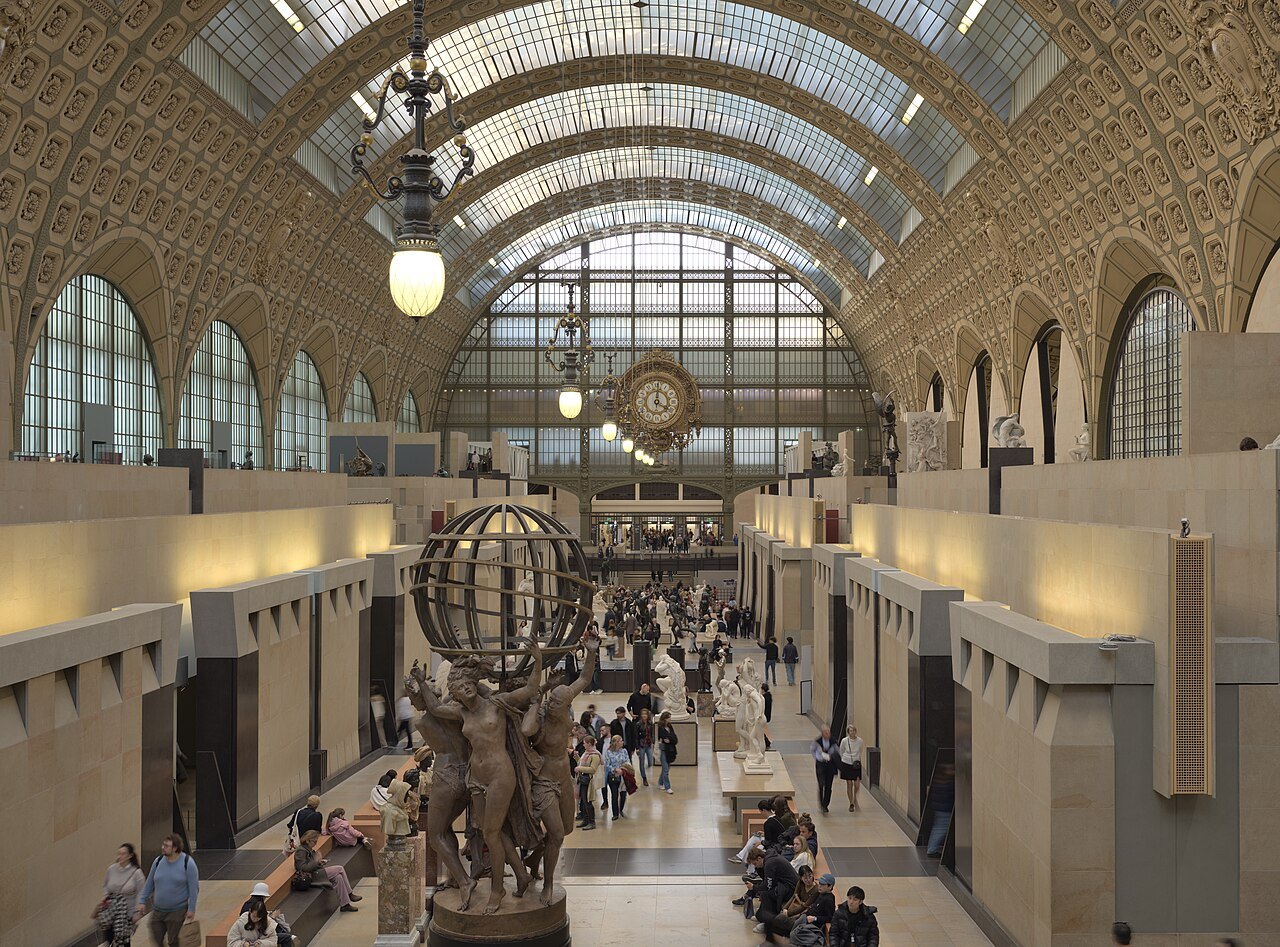
- 1The naveThe old station hall, a vault of glass and iron over a sculpture-lined central aisle.
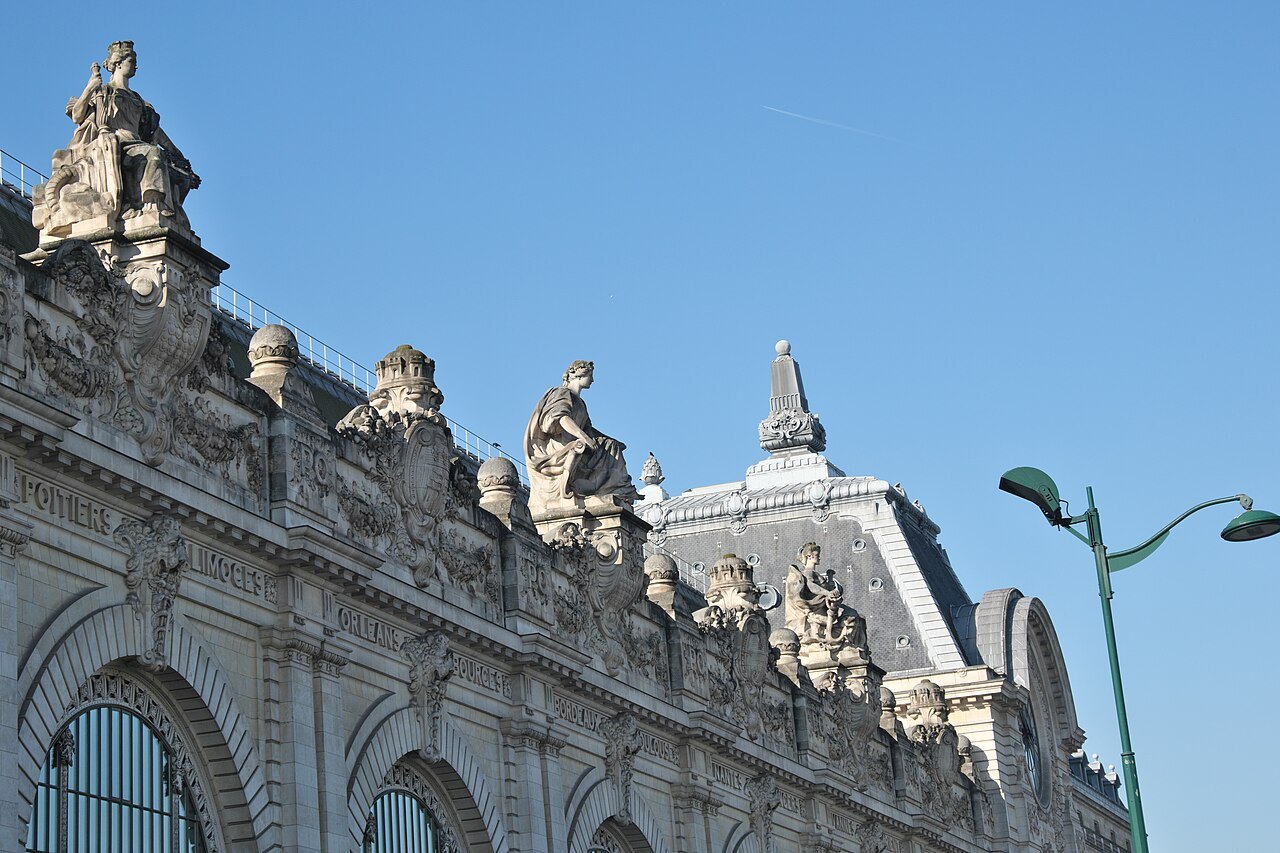
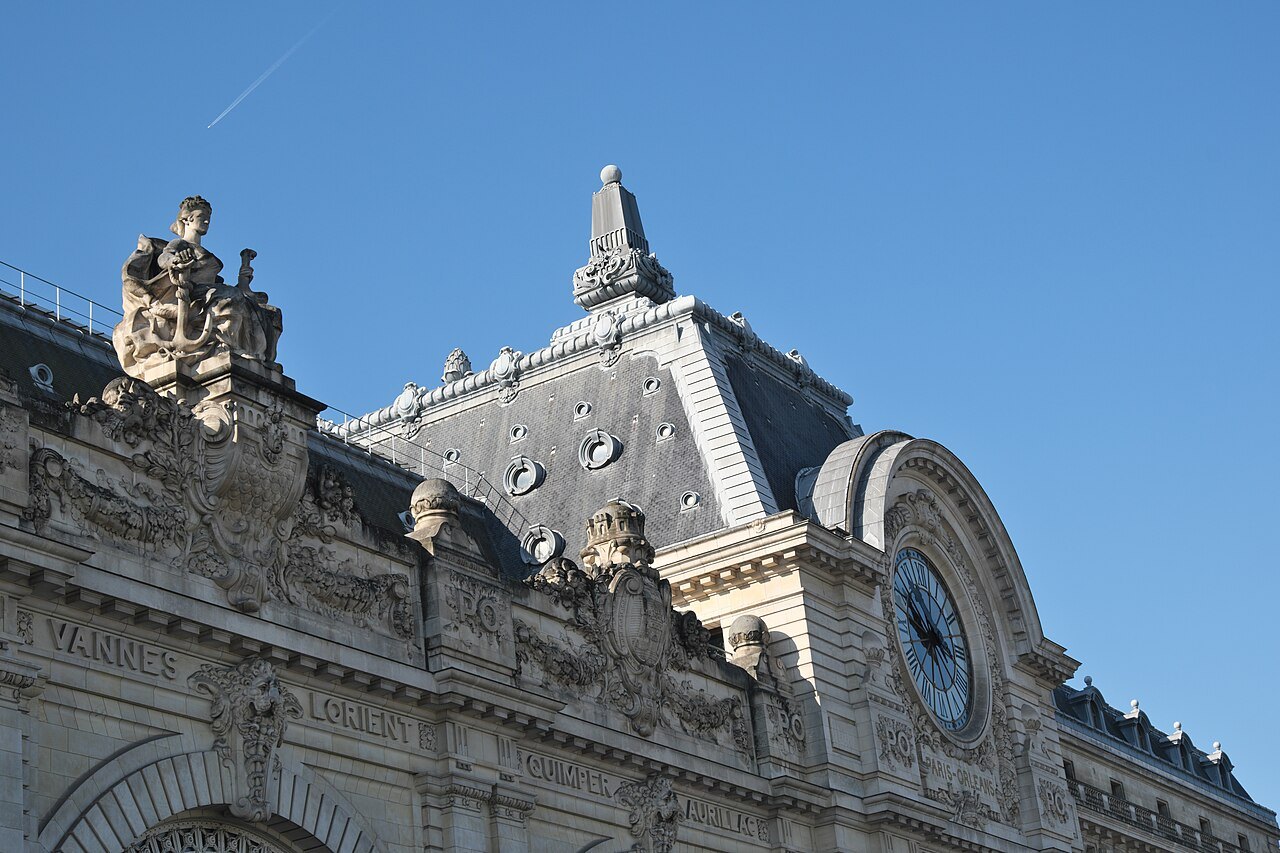
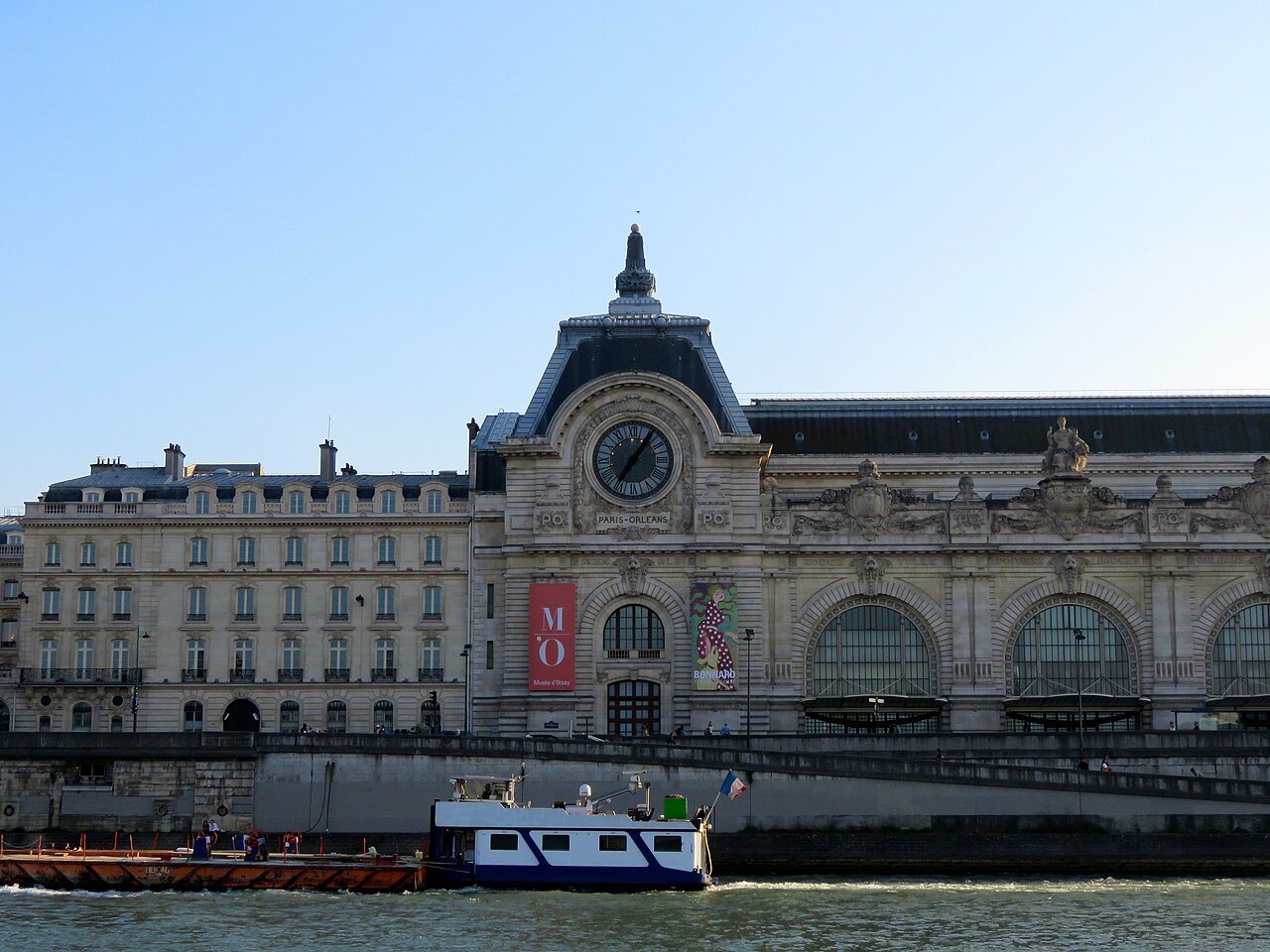
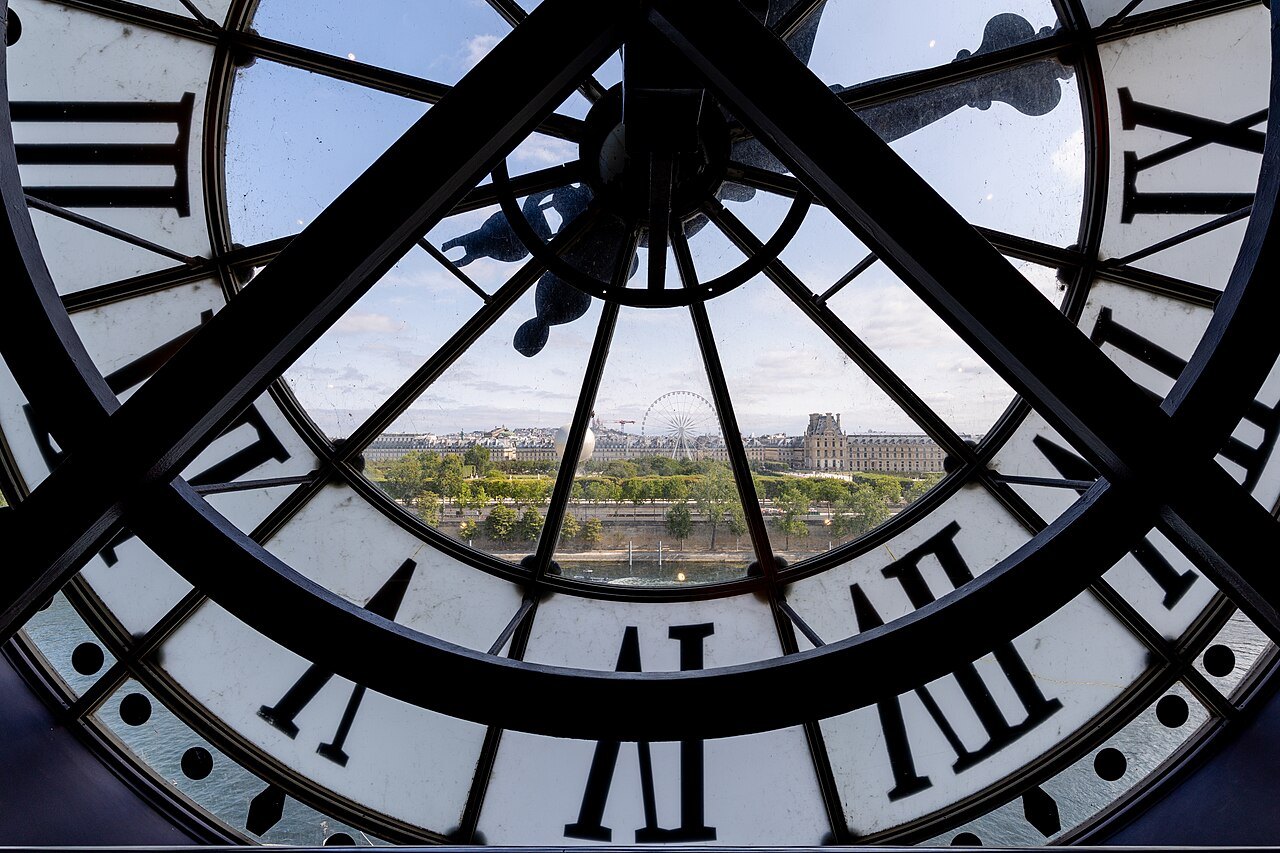
- 2The clocksTwo great station clocks on the river front, one of them seen from inside as a window on the city.
- 3The Impressionist galleryThe top-floor rooms of Monet, Renoir, Degas and Pissarro, lit from the roof.
- 4Van Gogh and GauguinThe Post-Impressionists, among them Starry Night Over the Rhône and a gallery of Van Gogh.
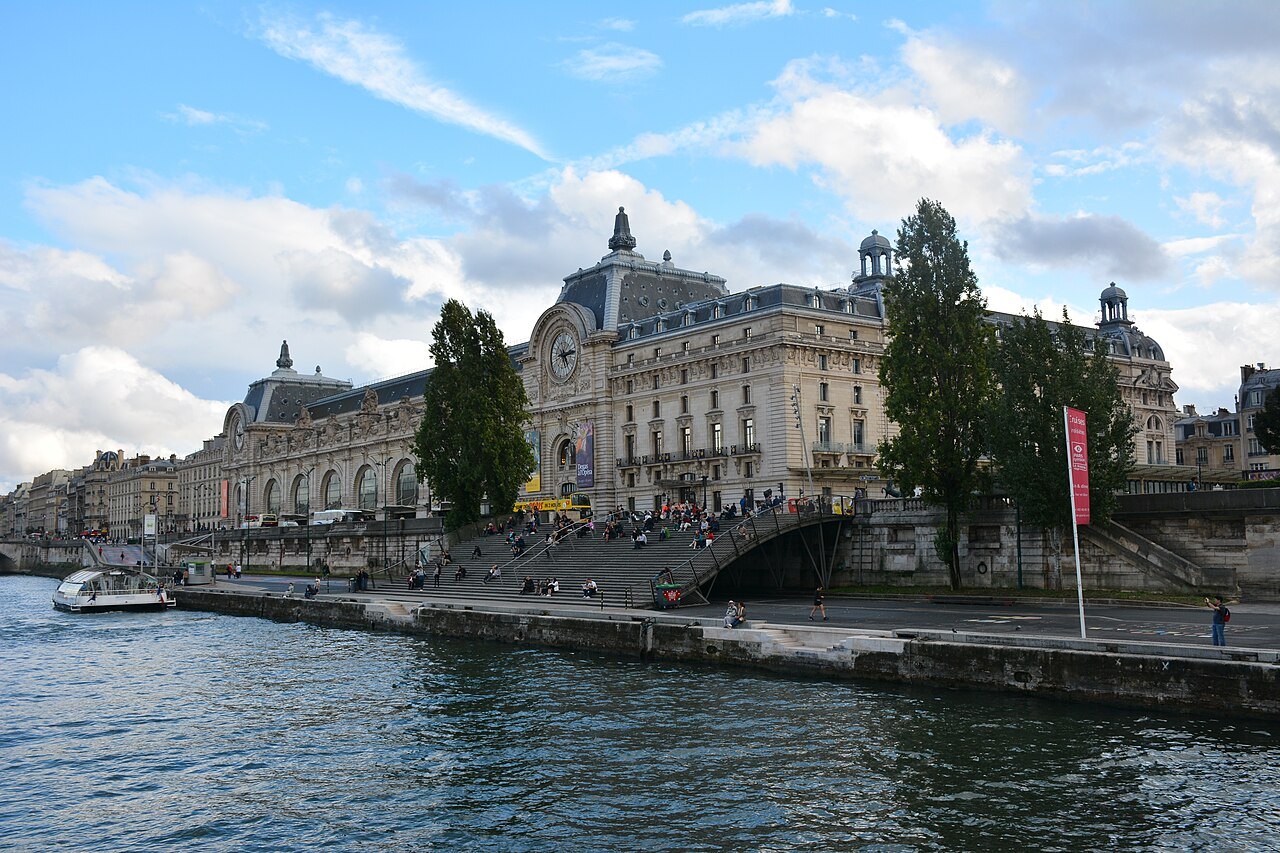
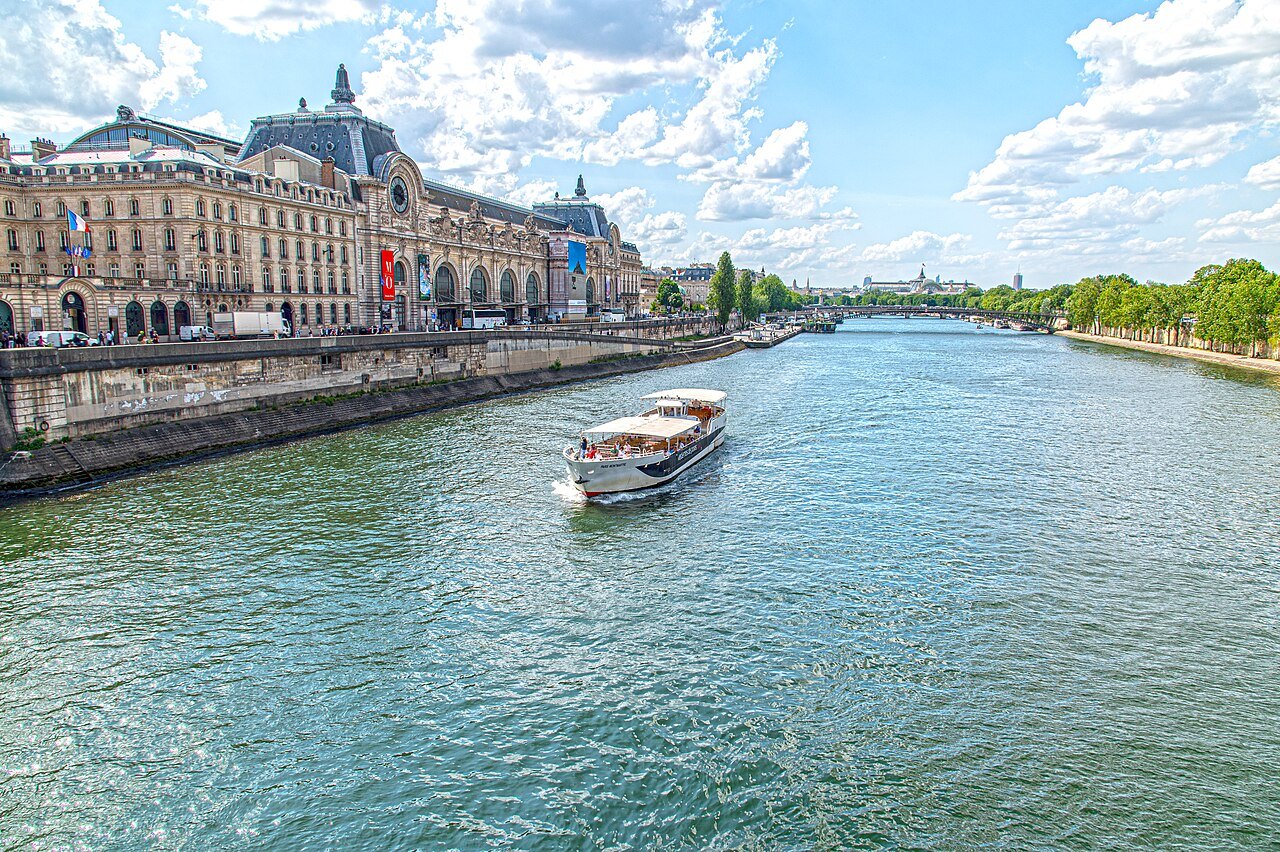
- 5The river frontA long stone façade on the quay, with statues of six continents on the forecourt.
The sight in full
Reading the place
Why it matters
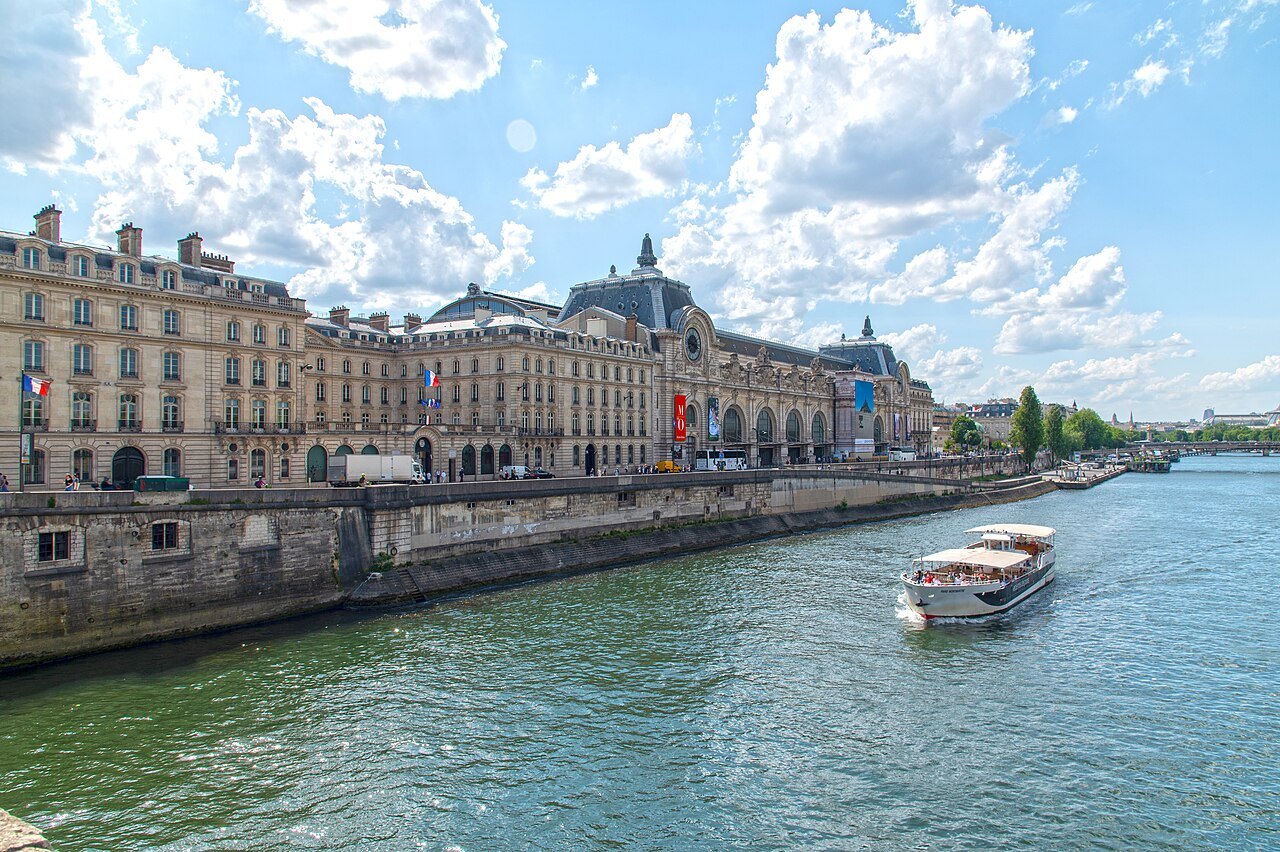
The Musée d'Orsay stands on the Left Bank of the Seine in the 7th arrondissement, across the river from the Tuileries. It is housed in the former Gare d'Orsay, a railway station finished in 1900, and it shows French art from 1848 to 1914: painting, sculpture, furniture, decorative arts and photography.
Its fame rests on one part of that span. The museum holds the largest collection of Impressionist and Post-Impressionist masterpieces in the world, by Berthe Morisot, Claude Monet, Édouard Manet, Edgar Degas, Pierre-Auguste Renoir, Paul Cézanne, Georges Seurat, Alfred Sisley, Paul Gauguin and Vincent van Gogh, and many of the best-known paintings of modern art hang here. In 2022 it was the second-most visited art museum in France, after the Louvre.
A palace, a ruin, a station
The site first held the Palais d'Orsay, begun in 1810, which housed the Council of State and the Court of Audit and was burned in 1871 during the Commune. Its ruins stood for nearly thirty years. Then the Paris-Orléans railway company built a new terminus on the site, finished in time for the Universal Exposition of 1900, convenient for travelers arriving in the heart of the city. The architect, Victor Laloux, working with Lucien Magne and Émile Bénard, hid a modern iron train shed behind a stone façade and a hotel so that it would suit its grand neighbors along the river.
By the 1970s its main-line role was long over, and a tunnel was being dug beneath it for the new RER line C. Permission was given to demolish it in 1970, but the culture minister refused to allow a new hotel on the site, and in 1978 the building was listed as a historic monument. President Valéry Giscard d'Estaing decided to turn it into a museum of nineteenth-century art. A team of young architects adapted the building, the Italian designer Gae Aulenti fitted out the interior, and President François Mitterrand opened the museum in December 1986.
What you see: the building
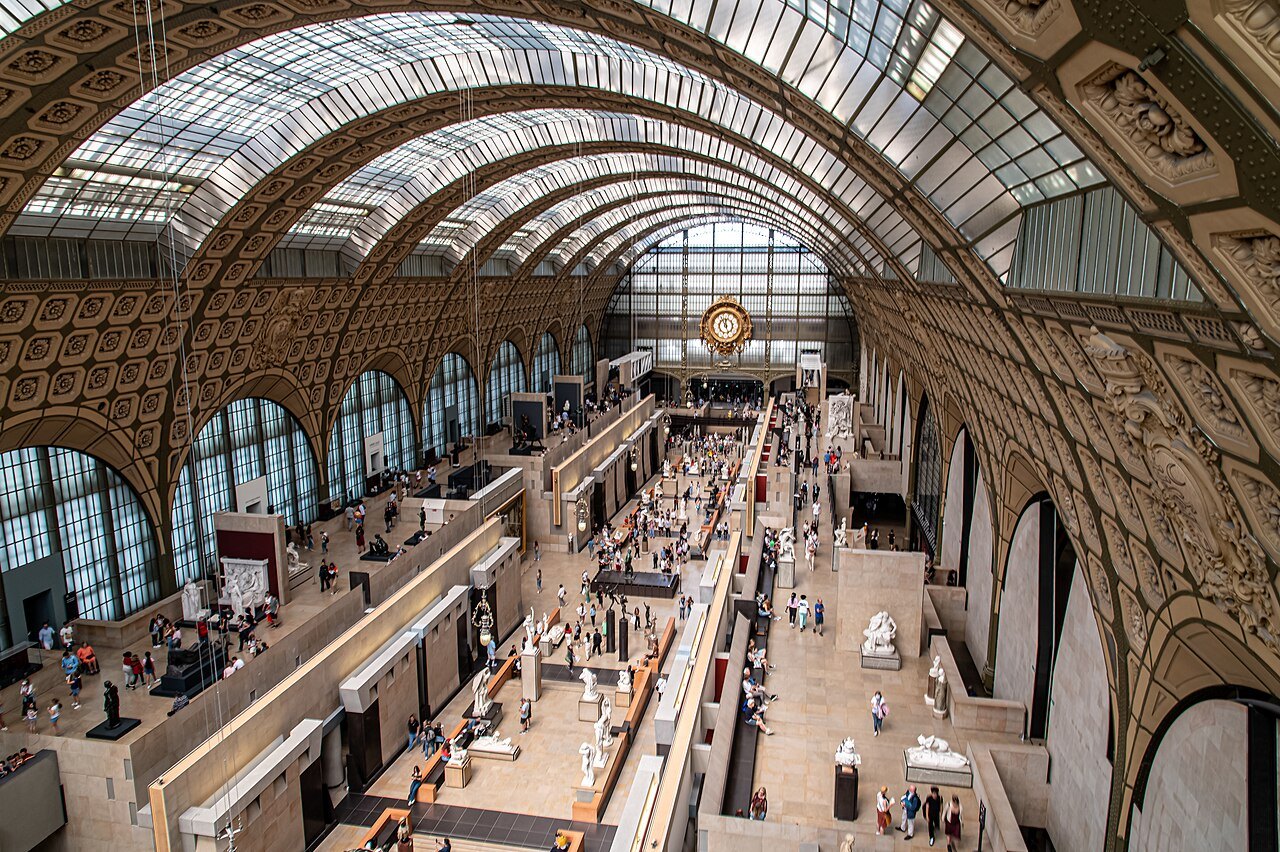
Come in and the station is still there. The great nave, the old train hall, runs the length of the building under a curved roof of glass and iron. Sculpture of the nineteenth century stands along the central aisle, whose stone terraces were once the train platforms, and the galleries open off terraces on either side.
At the river end of the top floor, the museum's two great clocks face the Seine. From inside, the glass face of one of them makes a window: through the numerals you look across the river to the Tuileries, with the hill of Montmartre on the skyline. Beside it is the museum's café, redesigned by the designers Fernando and Humberto Campana.
What you see: the paintings
The Impressionists are on the top floor, in rooms lit from above: the museum's eighty-six Monets, among them the Saint-Lazare station in steam, the Rue Montorgueil hung with flags, the poplars and Rouen Cathedral in changing light; Degas's L'Absinthe and his dancers; Renoir's Bal du moulin de la Galette, crowded with dancers under the trees in Montmartre. On the ground floor, along the nave, are the paintings that led to them and argued with them: Manet's Olympia and his Déjeuner sur l'herbe, both scandals in their day, Courbet's huge Burial at Ornans, Millet's Gleaners, and Whistler's portrait of his mother, bought by the French state in 1891. Courbet's Artist's Studio, a vast allegory of his own life as a painter, fills a wall of its own.
The Post-Impressionists follow, with Cézanne, Seurat, Gauguin's paintings of Tahiti, and a room of Van Gogh, including his Starry Night Over the Rhône, painted at Arles in September 1888 and shown in Paris in 1889, and his Bedroom in Arles. The museum also has one of the great collections of Art Nouveau furniture and decorative art, and a large collection of early photography.
The numbers give a sense of the depth: eighty-one paintings by Renoir, fifty-six by Cézanne, including one of his Card Players, forty-eight by Courbet, forty-six by Pissarro, forty-three works by Degas, thirty-four by Manet, twenty-four each by Van Gogh and Gauguin, and nineteen by Seurat, including The Circus. Few visitors see more than a fraction of it in a single morning.
How to visit
Two to three hours is a good first visit. If time is short, go straight up to the Impressionist gallery on the top floor, then come down through the Post-Impressionists and finish in the nave. The top-floor rooms are the most crowded, so they are best seen early or late in the visit rather than in the middle of the day.
The entrance is on the square by the river. For timed tickets and what else to book, see booking ahead. The Orangerie, with Monet's Water Lilies, is across the river by the footbridge from the quay, and the Musée Rodin is a short walk west, on the Rue de Varenne.
Myths worth setting aside
The Orsay is not a museum of Impressionism only. Its collection runs from 1848 to 1914, and much of it, the academic painting and sculpture of the Second Empire, is exactly the art the Impressionists were rebelling against. Seeing both side by side is part of the point.
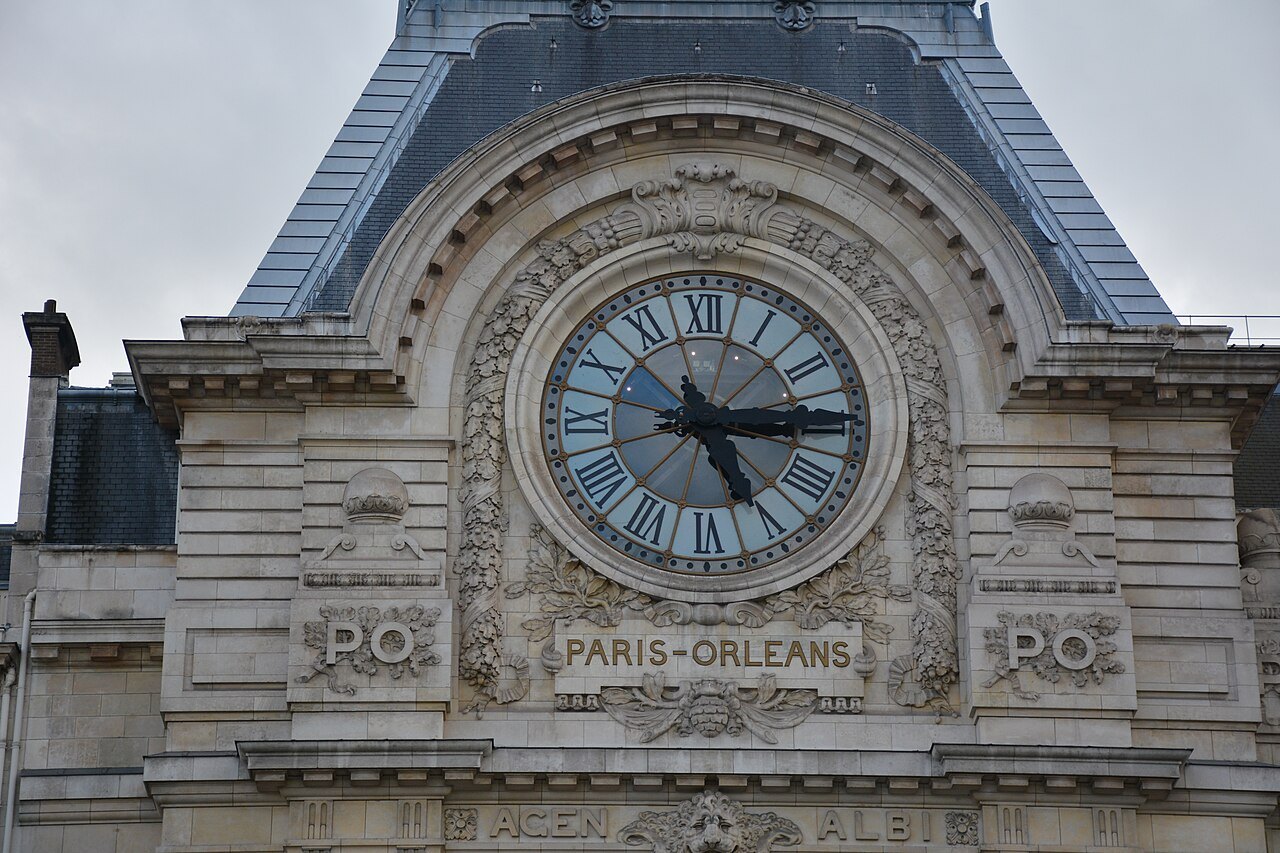
Nor was the station ever meant to be ugly and industrial. Laloux designed it to look like a palace from the river, so that it would sit comfortably opposite the Louvre and the Tuileries; the stone front on the quay was designed to answer the palaces across the water, and eighty years after it opened, the station became a palace of art in fact.
Where to go next
Nearby
- Nearby · 1st · 8thThe Tuileries, the Orangerie and the Place de la ConcordeA queen's palace garden of 1564, redrawn by Le Nôtre and opened to the public in 1667, running from the Louvre to the largest square in Paris, with Monet's Water Lilies on its western terrace.Read the page →
- Nearby · 7thThe Musée RodinThe eighteenth-century Hôtel Biron, Rodin's workshop from 1908 and a museum of his work since 1919, with The Thinker, The Gates of Hell and The Burghers of Calais in its garden.Read the page →
- Nearby · 6thSaint-Germain-des-PrésThe oldest church in Paris, founded as an abbey in 558, and around it the quarter of cafés, bookshops and publishers where Sartre and Beauvoir held court after the war, with Saint-Sulpice a few streets south.Read the page →