Home · Sights · The Palais Garnier
What you are looking at
The Palais Garnier
9th
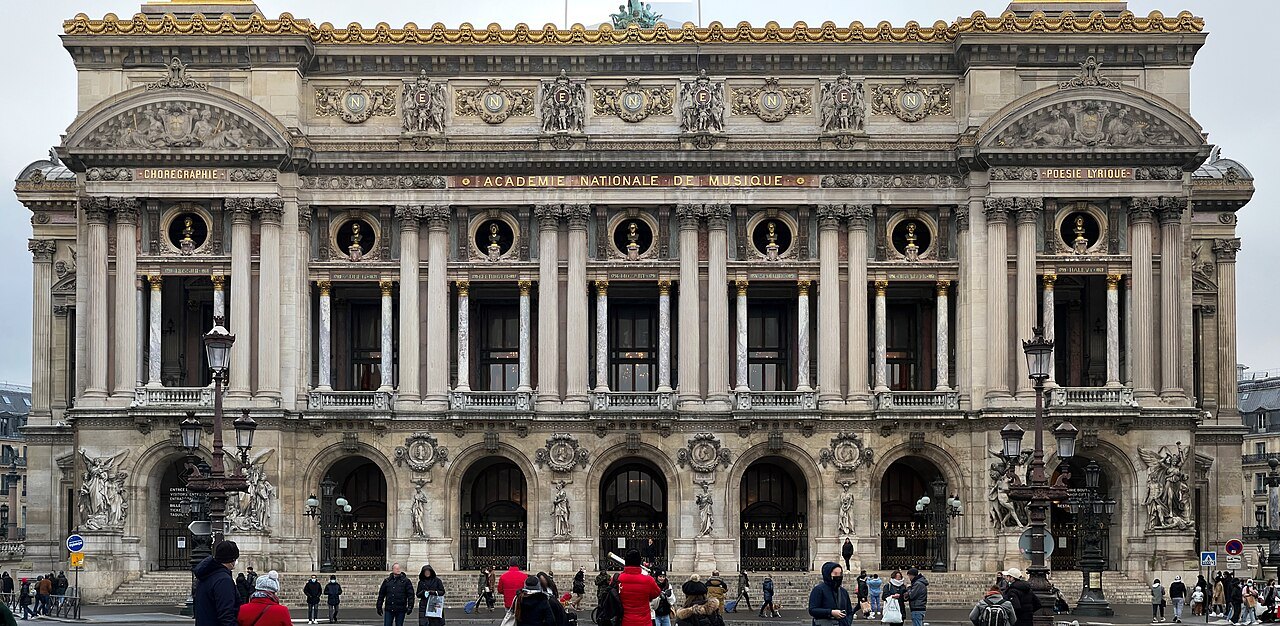
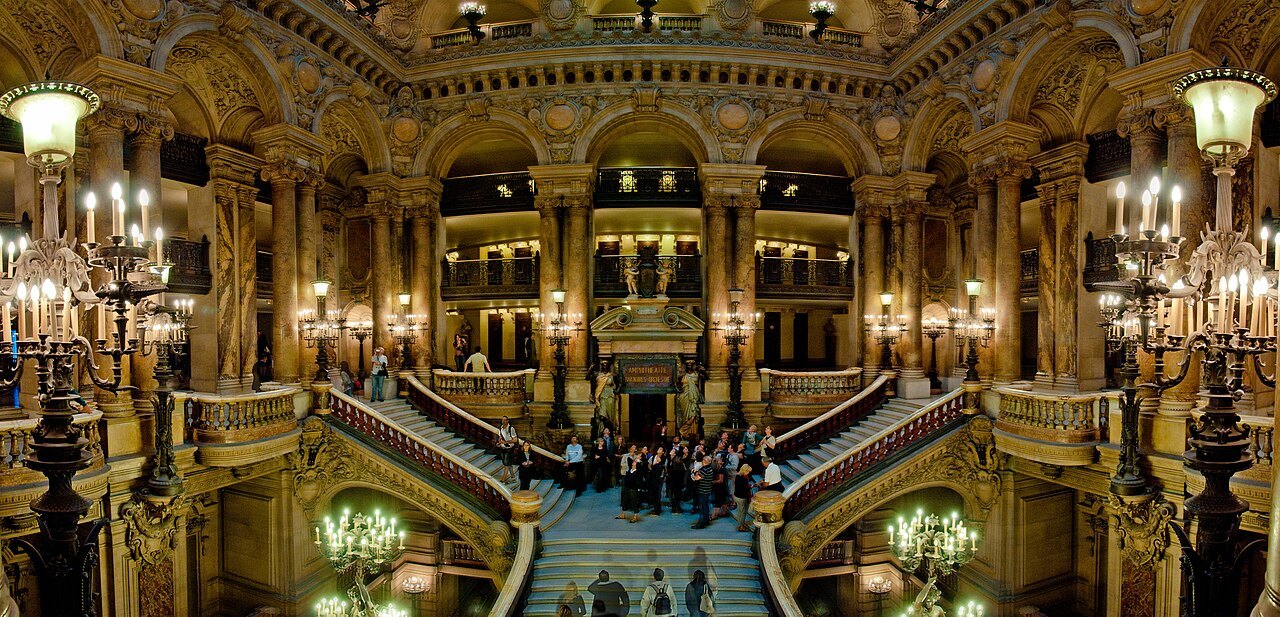
- 1The grand staircaseWhite marble with a balustrade of red and green marble, dividing into two flights toward the foyer.
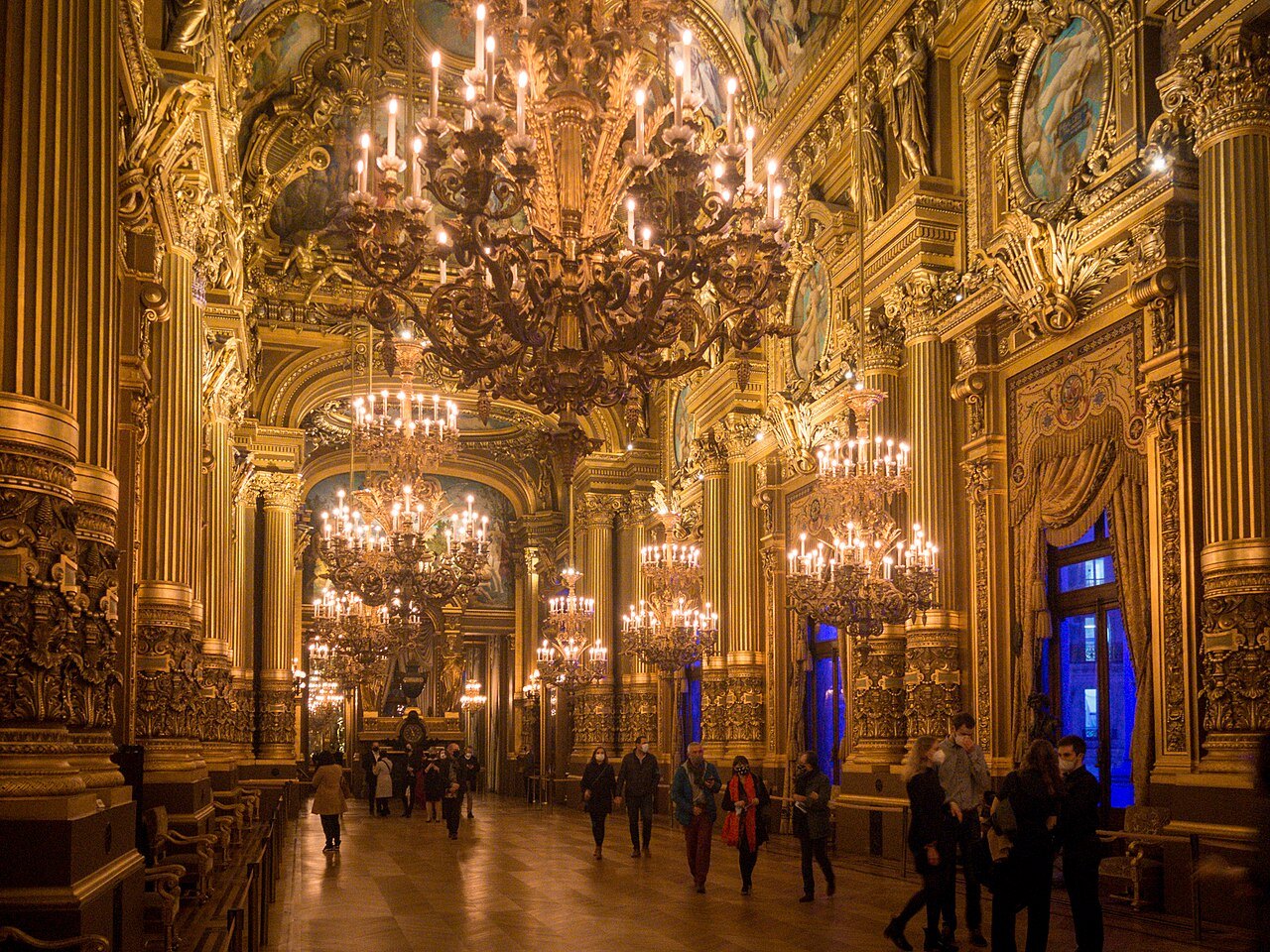
- 2The Grand FoyerA gilded hall 177 feet long, built as a drawing room for Paris society.
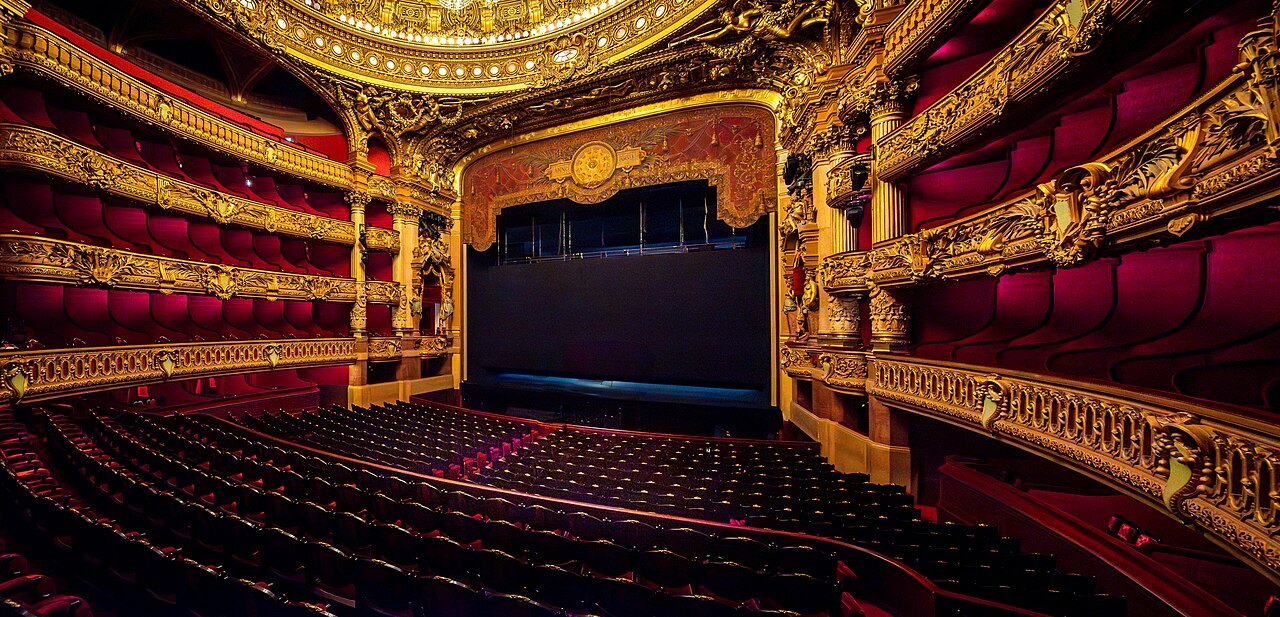
- 3The auditoriumA red and gold horseshoe of 1,979 seats around one of the largest stages in Europe.
- 4The Chagall ceilingScenes from fourteen composers' works, painted in 1964 over the original ceiling.
- 5The great chandelierSeven tons of bronze and crystal, designed by Garnier and first lit in December 1874.
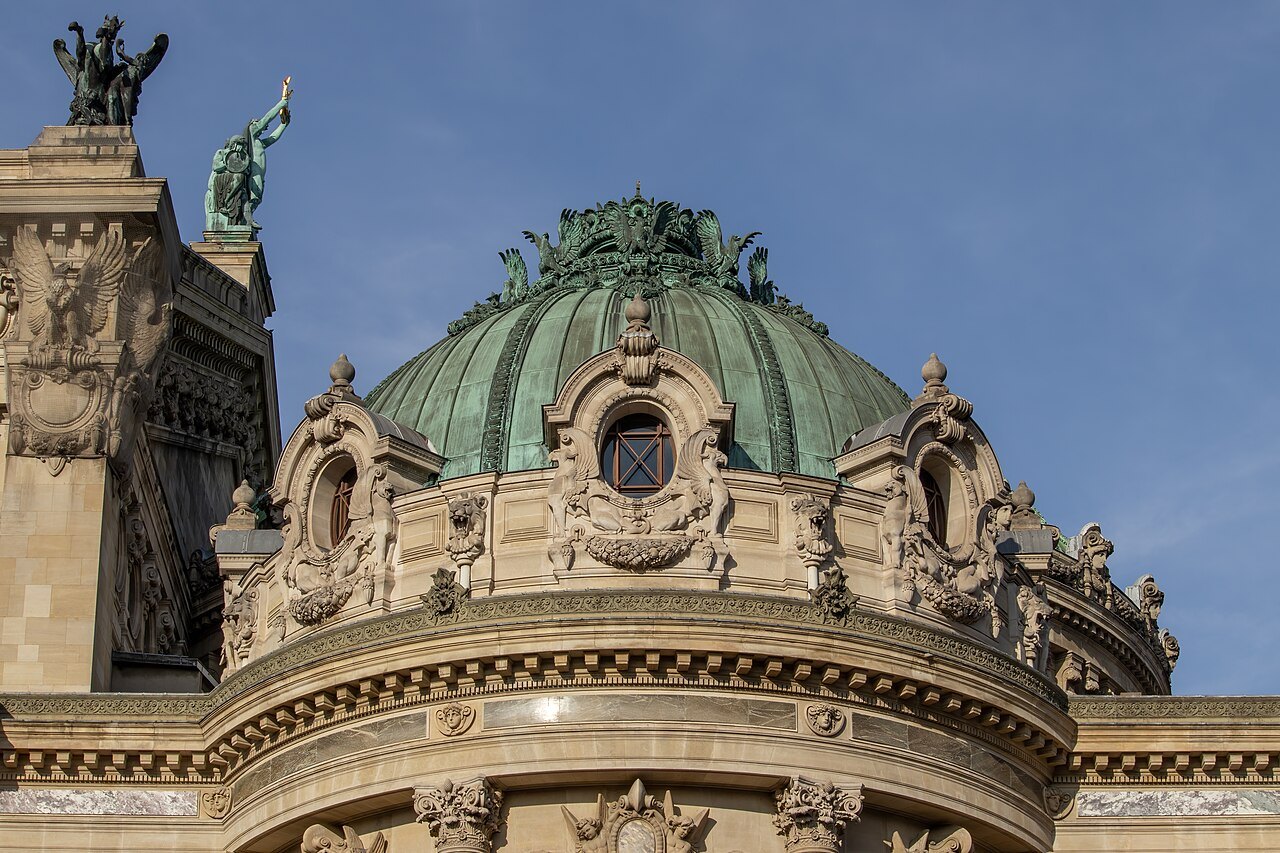
- 6The façadeSeventeen kinds of stone and marble, gilded groups on the roof and Carpeaux's Dance at its foot.
The sight in full
Reading the place
Why it matters
The Palais Garnier stands at the head of the Avenue de l'Opéra, on the Place de l'Opéra in the 9th arrondissement. It was built for the Paris Opera from 1861 to 1875 at the wish of Emperor Napoleon III, and it has been called probably the most famous opera house in the world. Among all the buildings of the Second Empire it was the most expensive, and it is often described as the only one that is unquestionably a masterpiece.
It was the main house of the Paris Opera and its ballet until 1989, when a new opera house opened at the Bastille; today it is used mainly for ballet. Its fame owes a good deal to fiction: it is the setting of Gaston Leroux's novel The Phantom of the Opera, published in 1910, and of the films and the musical that followed. Even without a performance, the building itself is one of the great sights of Paris.
An emperor's opera house
In 1858 there was an attempt to assassinate Napoleon III at the entrance to the old opera house on the Rue Le Peletier, whose narrow street left the head of state exposed on arrival. The attack gave new urgency to plans for a permanent, state-funded opera house, on a site that Baron Haussmann chose off the Boulevard des Capucines, at the heart of his new boulevards.
The competition to design it was announced on 30 December 1860, and about 170 architects entered. Charles Garnier, then thirty-five, a young architect who had not yet proved himself on a large project, placed fifth in the first round, was one of seven finalists, and on 29 May 1861 won, over far more famous names. His motto for the competition, borrowed from the Italian poet Tasso, was: hope for much, expect little. When the Empress Eugénie is said to have asked him what style the building was in, he told her it was Napoleon III.
Building it
Digging began in August 1861, and the builders soon struck groundwater far higher than expected. Eight steam pumps ran day and night for months without drying the site, so Garnier designed a double foundation around an enormous concrete cistern, which both relieved the pressure of the water on the basement walls and served as a reservoir in case of fire. From it grew the persistent legend that the opera house stands over an underground lake, the lake across which Leroux's Phantom would row.
Work stopped during the siege of Paris in 1870 and 1871, when the unfinished building served as a food warehouse and a hospital, and during the Commune that followed. The empire that commissioned it fell before it was finished; the Third Republic borrowed money to complete it, and the new opera house was inaugurated with a gala on 5 January 1875, attended by the President of the Republic, the Lord Mayor of London and the King of Spain. The emperor's own entrance pavilion, with its double ramp for his carriage, was never completed, and some of its stonework was left rough.
What you see: the façade and the staircase
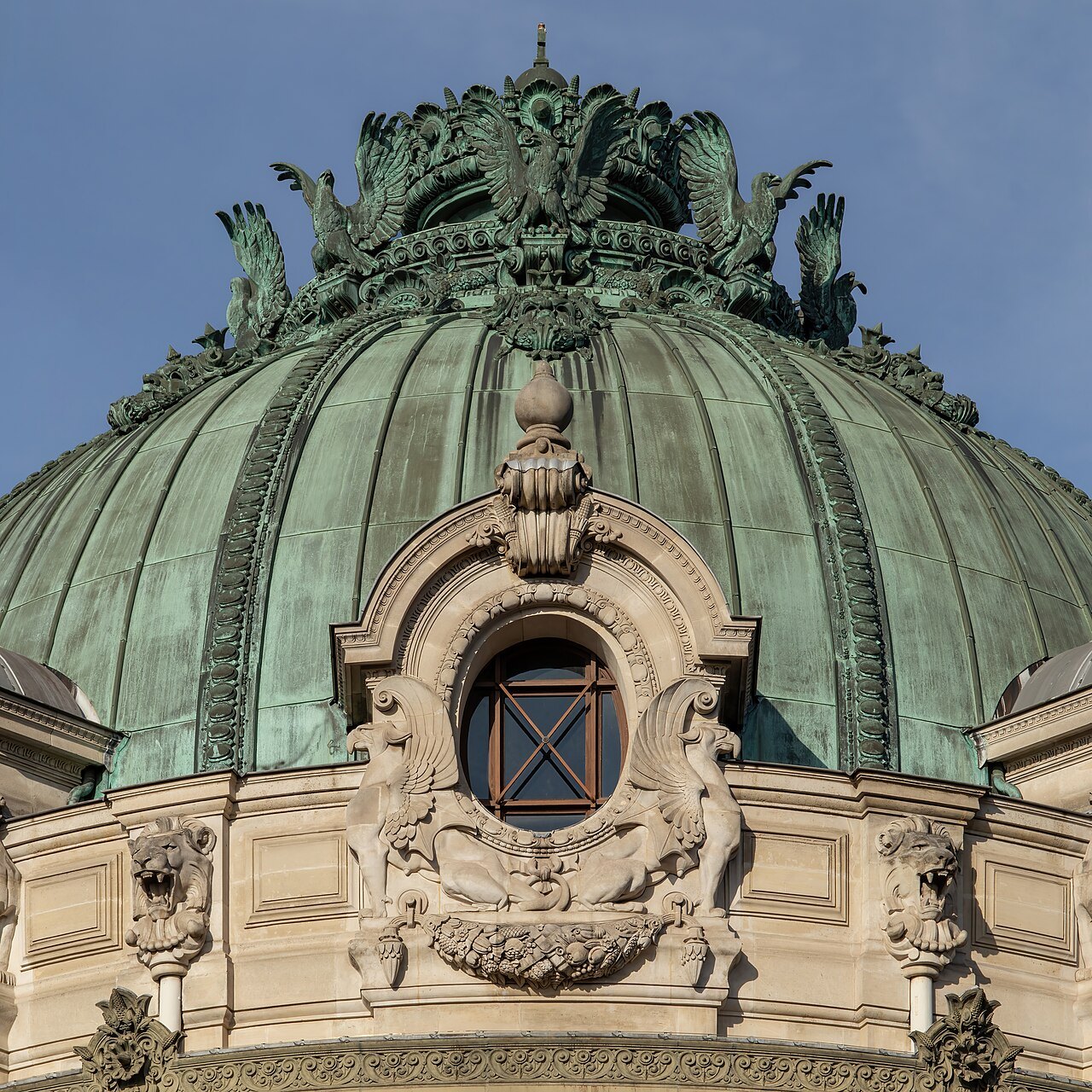
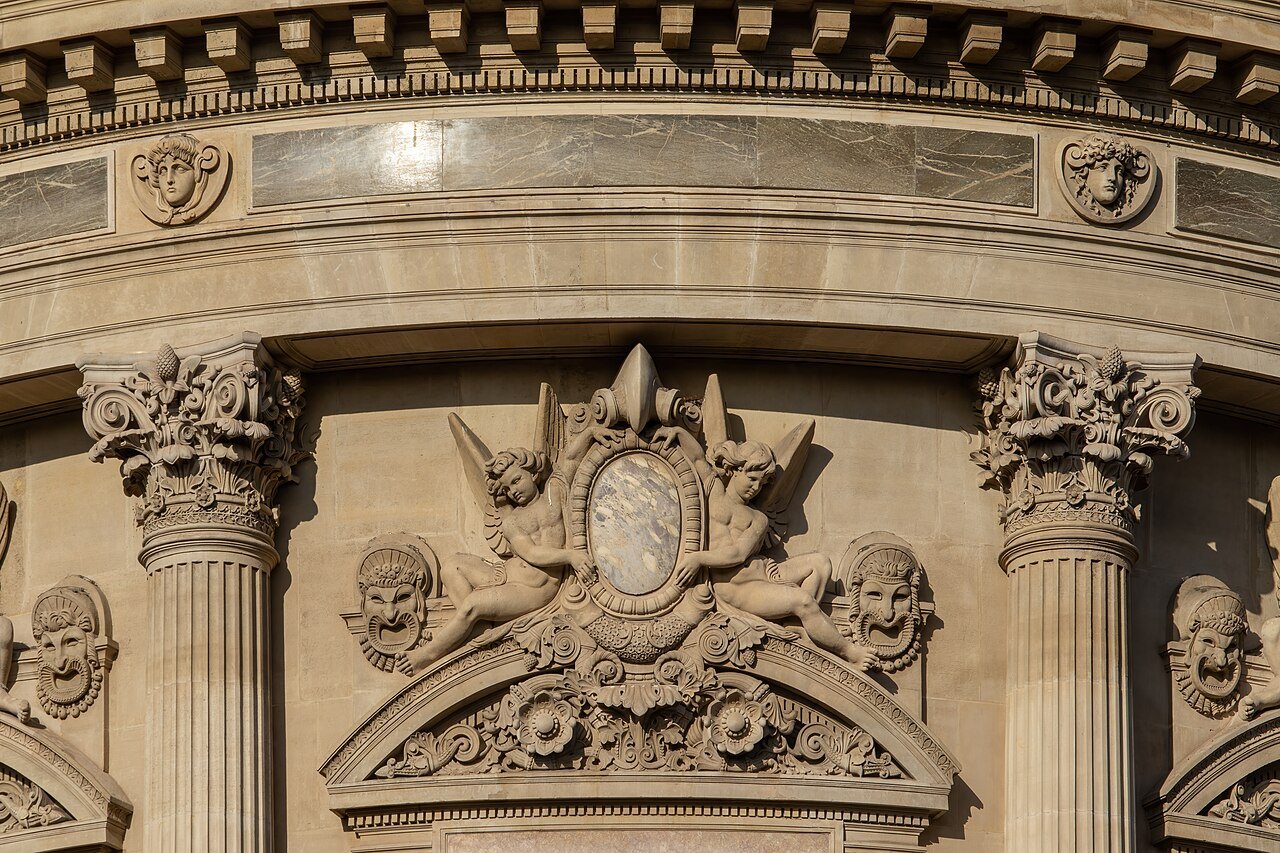
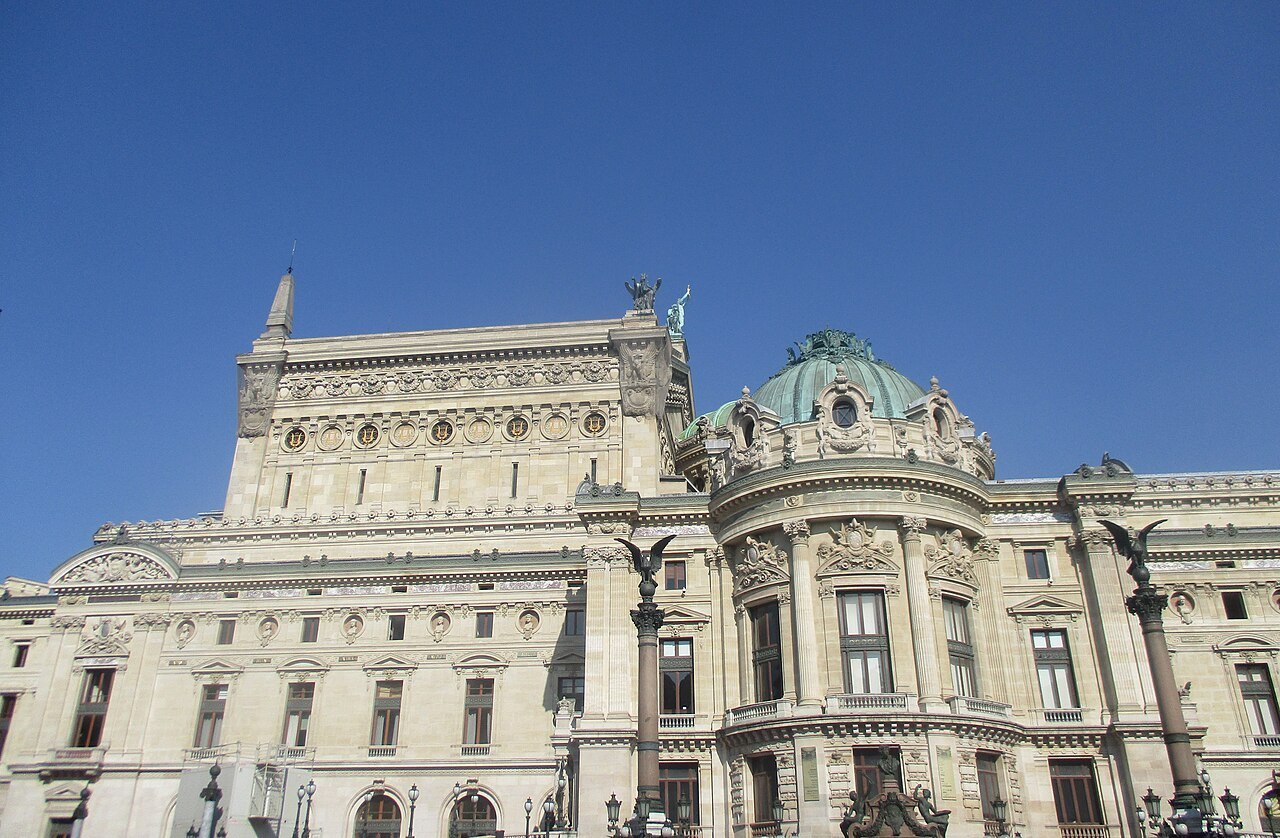
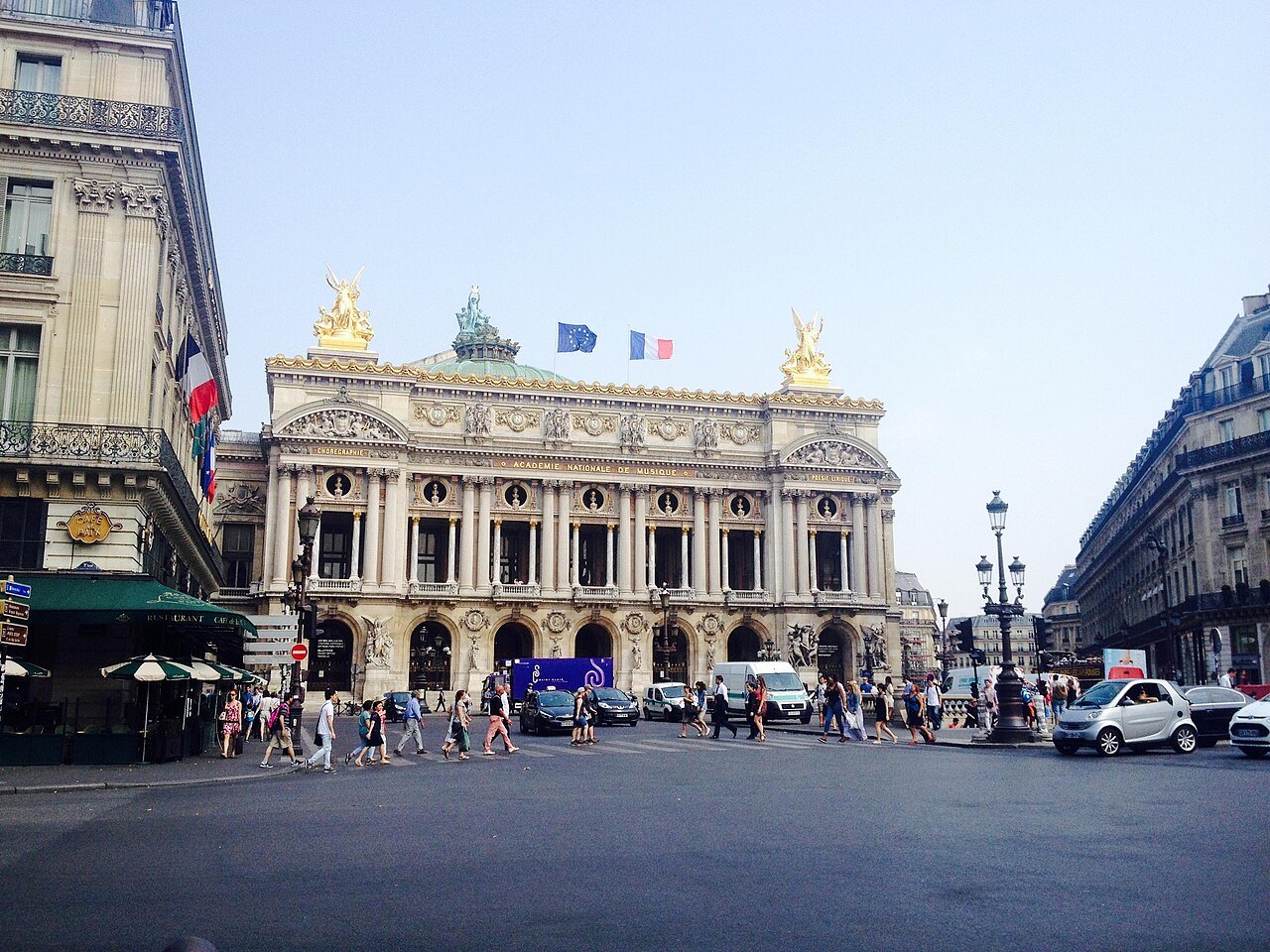
The main front faces south down the Avenue de l'Opéra. Garnier used seventeen kinds of stone and marble in it, with columns, friezes and statuary, and gilded groups of Harmony and Poetry crown its two ends; fourteen painters and mosaicists and seventy-three sculptors worked on the ornament. At street level stand four sculpture groups, among them Carpeaux's Dance, whose whirling nudes were criticized as indecent when it was unveiled.
Inside, the building was designed for movement and for being seen: corridors, landings and alcoves where the audience could walk and talk during the intervals. Its heart is the grand staircase, of white marble with a balustrade of red and green marble, rising to divide into two flights that curve up to the foyers. Standing on the landings and watching the people come up the stairs was part of the evening. The painted ceiling above it was finished only the day before the opening, by the painter's students, after he fell ill reworking canvases that Garnier had judged too dark.
What you see: the foyers and the auditorium
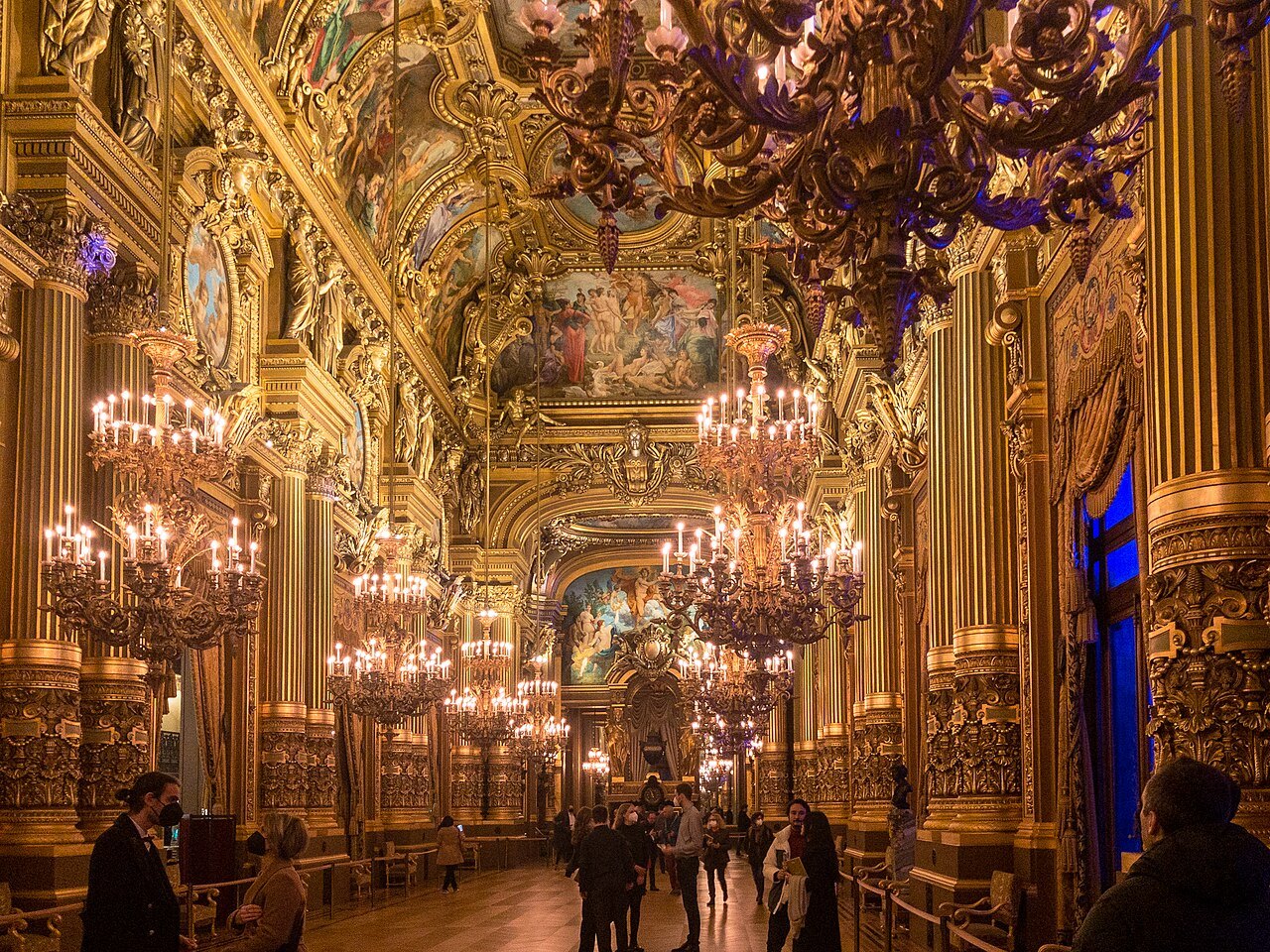
The Grand Foyer, 177 feet long and 59 feet high, was designed as a drawing room for Paris society, a gallery of gilding, mirrors and painted ceilings opening onto a loggia over the square; it was restored in 2004. Before it, the Avant-Foyer glitters with mosaics on a golden ground and chandeliers that Garnier designed in a Byzantine style.
The auditorium is a classic Italian horseshoe of red velvet and gold, with 1,979 seats; its stage is among the largest in Europe and can hold as many as 450 performers. In the middle hangs the great chandelier, seven tons of bronze and crystal. In 1896 one of its counterweights broke loose and crashed through the ceiling into the hall, killing a concierge, an accident that inspired one of the famous scenes in Leroux's novel.
Above the chandelier, since 1964, is a ceiling painted by Chagall, installed on a removable frame over the original: a ring of color with scenes from the works of fourteen composers, from Mozart and Wagner to Debussy, Stravinsky and Tchaikovsky. It has its admirers, and critics who find it a false note in Garnier's carefully orchestrated interior.
How to visit
There are two ways to see the Palais Garnier: go to a performance, usually ballet, or visit the building by day on your own, which includes the Library-Museum of the Paris Opera in the emperor's pavilion, with its collections of books, posters, set models and costume sketches. Daytime visits must be booked online; no visit tickets are sold at the door. Rehearsals close the auditorium often and without notice, so a ticket does not guarantee you will see it, and suitcases and travel bags are not allowed inside. For tickets see booking ahead.
From the steps you look straight down the Avenue de l'Opéra, cut in the 1870s through the narrow old streets between the Louvre and the boulevards; the Tuileries are a short walk beyond. Behind the building stands the Galeries Lafayette department store, and it is under the store, not the opera house, that a real buried stream, the Grange-Batelière, flows.
Myths worth setting aside
There is no underground lake. There is Garnier's great concrete cistern beneath the stage, built to hold back the groundwater, and it still holds water: it is the largest underground reserve the firemen stationed in the building can draw on. At one time the staff even fed fish that lived in it. But it is an engineering work, not a lake, and no one rows across it.
Nor was the Phantom a real person. Leroux wove his novel from real details of the building, the cistern and the falling counterweight among them, but the masked genius in the cellars is his invention.
Where to go next
Nearby
- Nearby · 1stThe LouvreA medieval fortress, then the palace of the kings of France, and since 1793 a public museum: the largest in the world, entered through a glass pyramid in its main courtyard.Read the page →
- Nearby · 1st · 8thThe Tuileries, the Orangerie and the Place de la ConcordeA queen's palace garden of 1564, redrawn by Le Nôtre and opened to the public in 1667, running from the Louvre to the largest square in Paris, with Monet's Water Lilies on its western terrace.Read the page →
- Nearby · 18thSacré-Cœur and MontmartreA white basilica begun in 1875 on the top of Montmartre, finished in 1914 and consecrated in 1919, looking south over the whole of Paris, with the old hill village and its painters' square behind it.Read the page →