Home · Sights · Sacré-Cœur and Montmartre
What you are looking at
Sacré-Cœur and Montmartre
18th
- 1The domeOpen to climbers, with a view over the whole city from its gallery.
- 2The apse mosaicChrist with open arms offering his heart, one of the largest mosaics in the world.
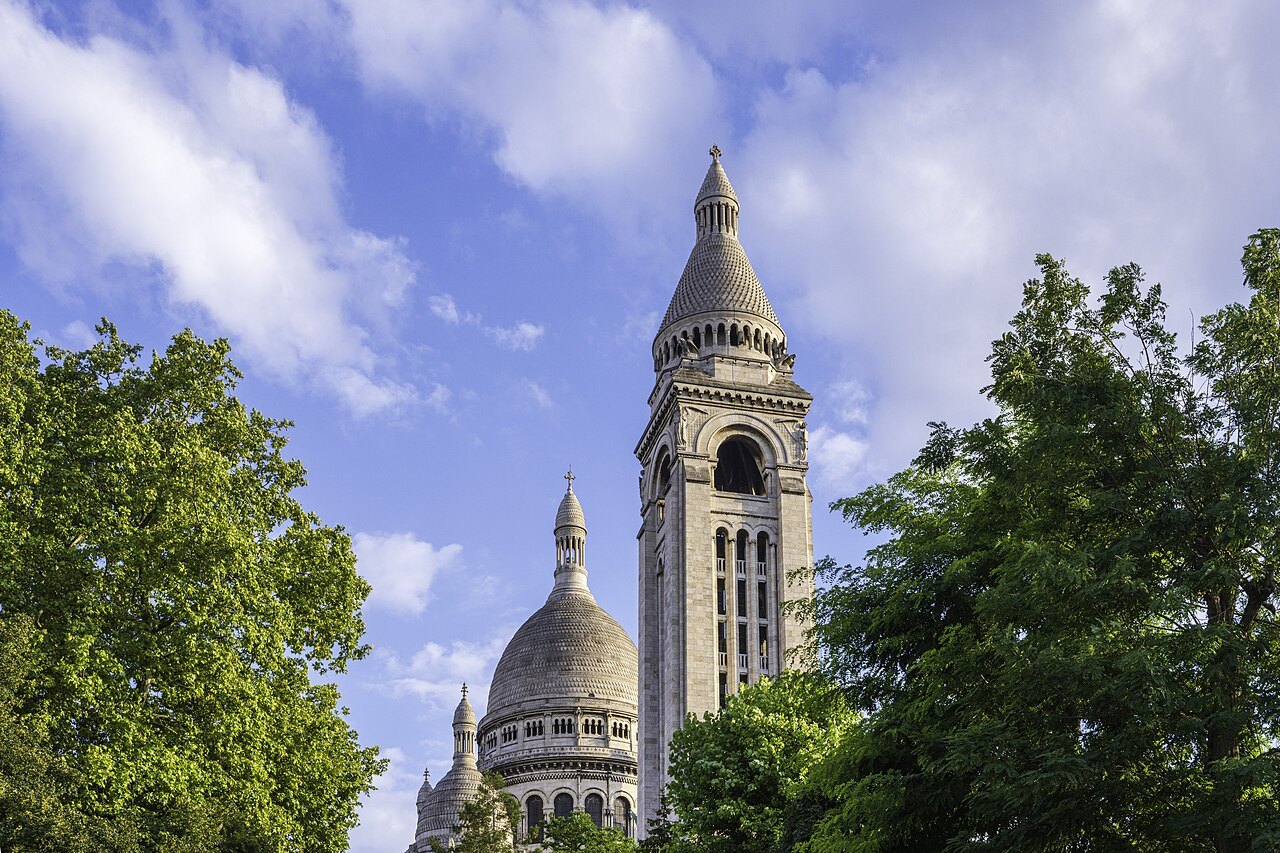
- 3The SavoyardeThe largest bell in France, over eighteen tons, hauled up the hill by 28 horses in 1895.
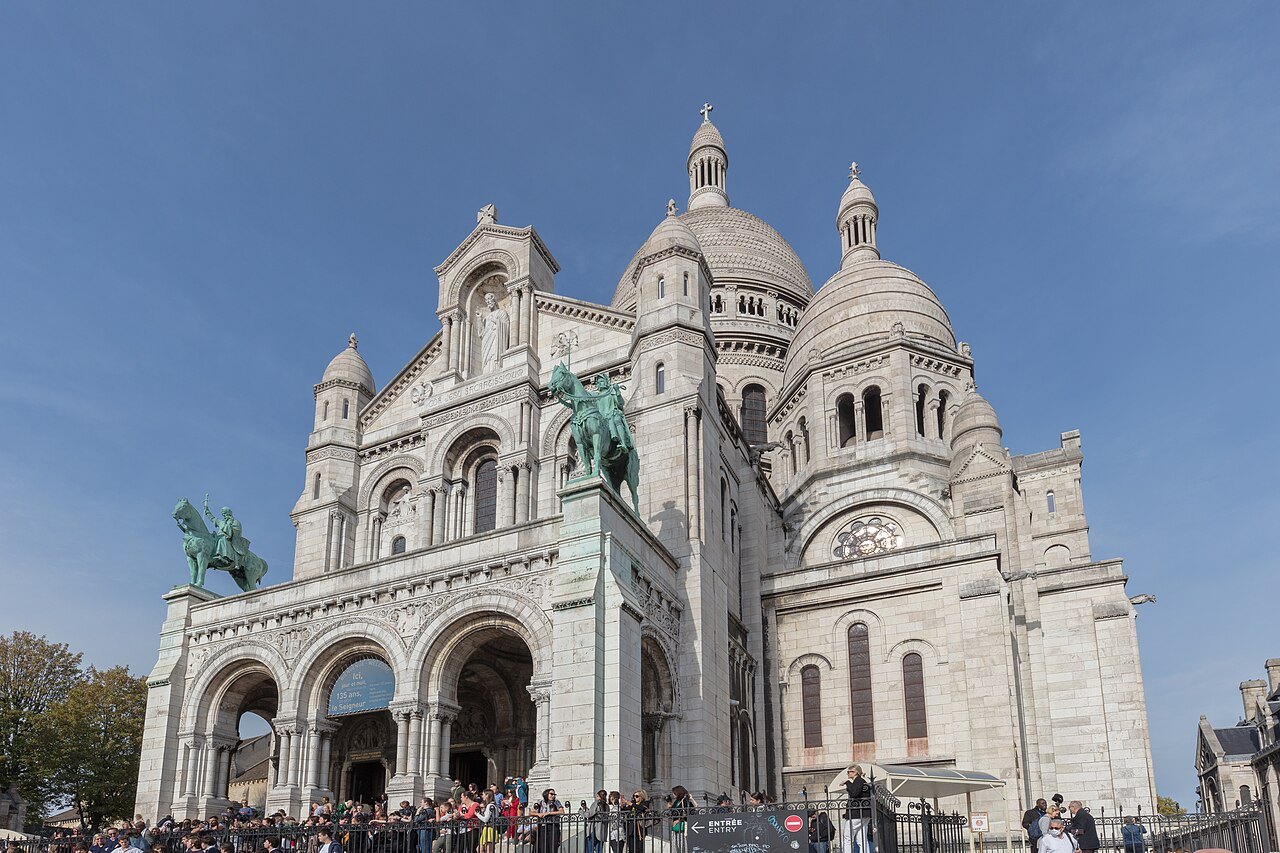
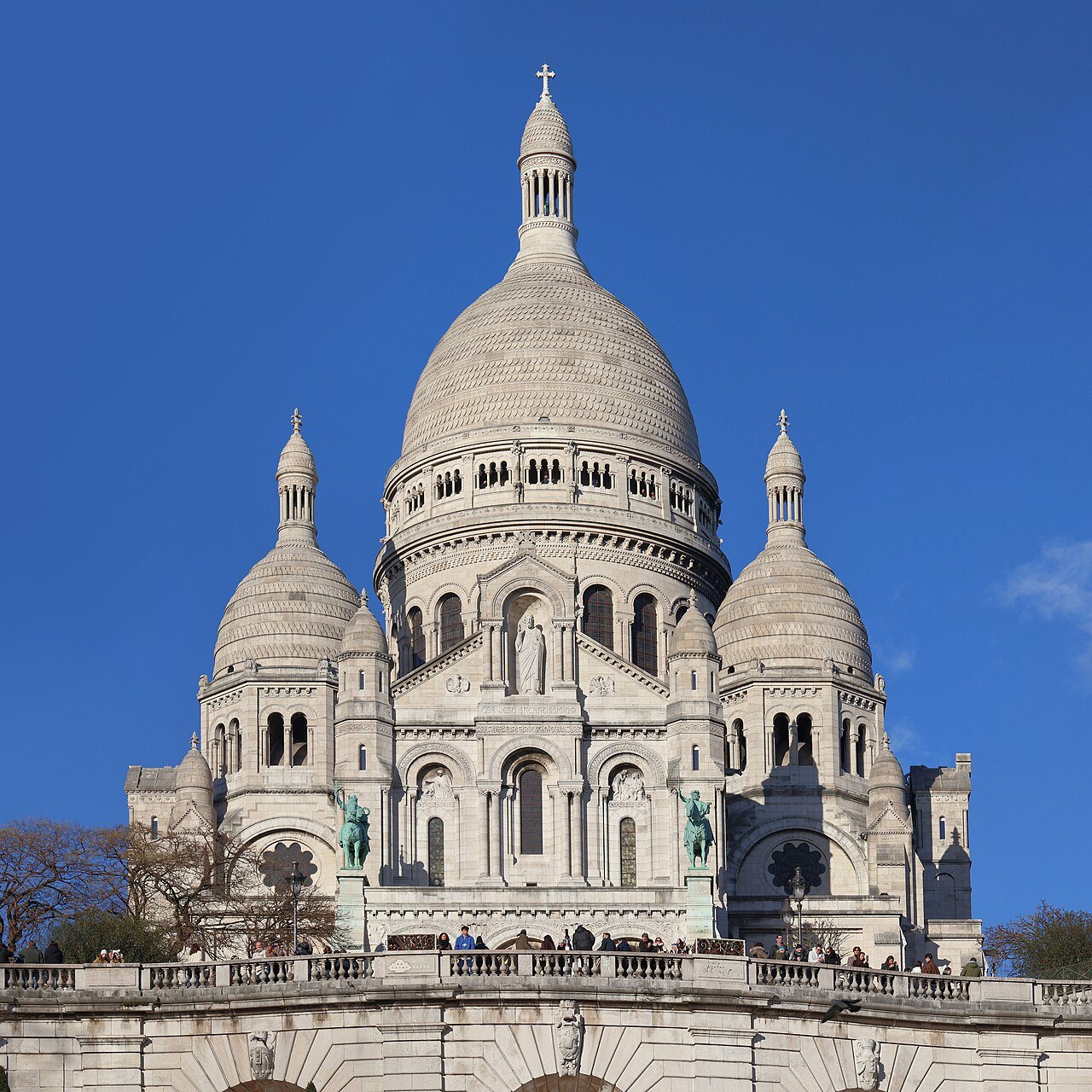
- 4The white stoneTravertine that whitens in the rain, keeping the basilica pale above the rooftops.
- 5The steps and funicularThe Rue Foyatier's 222 steps, or the little funicular railway beside them.
- 6The Place du TertreThe old village square behind the basilica, where painters set up their easels every day.
The sight in full
Reading the place
Why it matters
The Basilica of the Sacred Heart stands on the summit of Montmartre, the hill in the 18th arrondissement that rises about 430 feet high over the north of the city. Its white domes are visible from all over the city, and from its steps the whole of Paris spreads out to the south. After the Eiffel Tower, it is the second most visited sight in the capital.
It is a young building by Paris standards: begun in 1875, finished in 1914 and consecrated in 1919. It is also a building with a history of argument, which remains part of its story. And behind it lies Montmartre itself, once a village of vineyards and windmills outside the city, then the home of painters, and still, in its back streets, one of the most charming places in Paris.
A church of penance
The basilica was proposed in 1870, after France's defeat by Prussia and the capture of Napoleon III at Sedan. Its promoters saw the defeat as punishment for the country's moral decline since the Revolution, and proposed a great new church in Paris dedicated to the Sacred Heart of Jesus, to be paid for by private donations. The National Assembly declared it a work of national interest in 1873.
Montmartre was chosen for its height and for its sacred associations: by tradition it is the hill where Saint Denis, the patron saint of Paris, was martyred, the hill of the martyrs of its name. In 1534 Ignatius of Loyola and his companions took the vows on the hill that founded the Jesuits. But Montmartre was also where the uprising of the Paris Commune began in 1871, and the Commune had ended in bloody repression. For much of the left, a church of penance built on that hill was a provocation, and it has remained controversial. In 1882 the parliament tried to stop the work, and in 1897 Clemenceau tried again; both failed, largely because canceling the project would have meant repaying millions of donors.
Building it
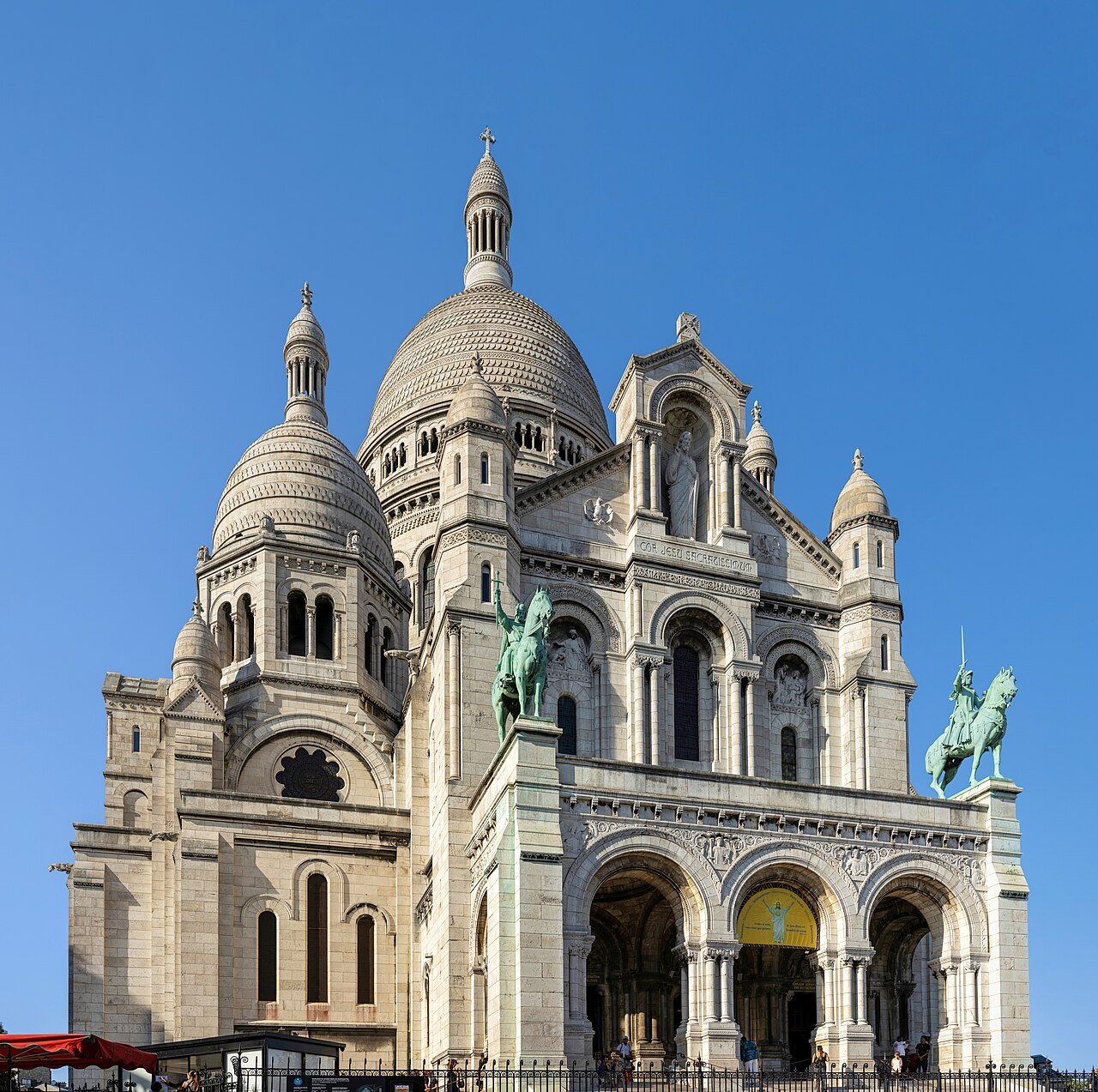
A competition drew seventy-seven designs, and Paul Abadie's plan, inspired by Romanesque and Byzantine churches, won. The cornerstone was laid on 16 June 1875. The hill was riddled with old gypsum quarries, and before any walls could go up the builders had to dig eighty-three shafts, each about a hundred feet deep, and fill them with stone and concrete as pillars under the church.
Abadie died in 1884, soon after the foundations were done, and five architects followed him, each changing the design. The interior opened for worship in 1891, the dome was finished in 1899, and the bell tower in 1912. The church was completed in 1914, but the war delayed its consecration until 1919.
What you see: outside
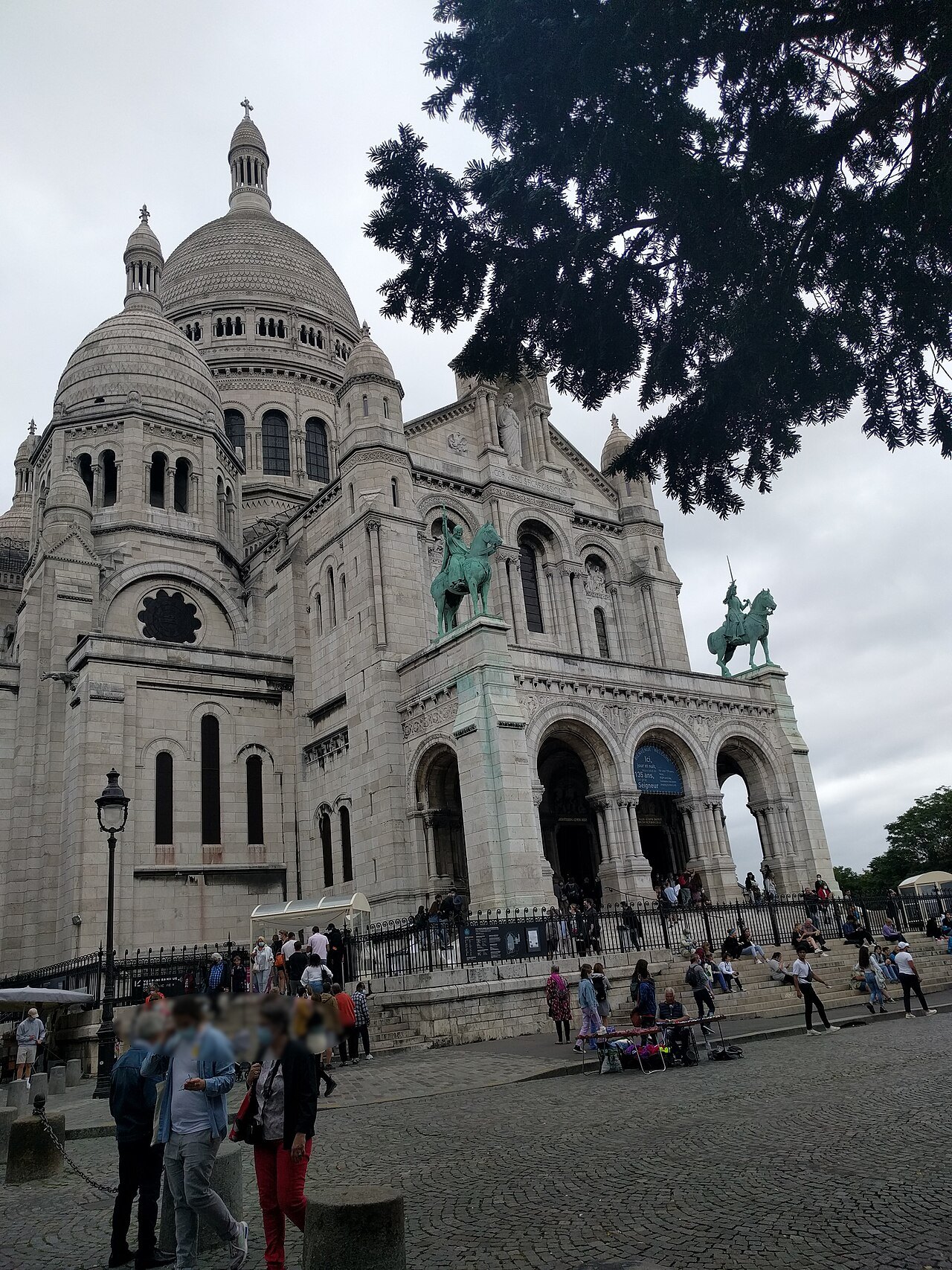
The basilica is built of a pale travertine limestone, quarried south of Paris, which is extremely hard and releases calcite when it rains; the rain keeps it white, which is why it looks so clean above the gray roofs of Paris. Over the main porch, two bronze horsemen, Joan of Arc and King Saint Louis, guard the entrance.
In the bell tower hangs the Savoyarde, the largest bell in France, weighing more than eighteen tons. It was cast in 1891 in Savoy, a gift from its dioceses, and hauled up the hill by a team of 28 horses in 1895. It rings only on the great feasts of the church, but it rang on the night of 24 August 1944 to announce the arrival of the first French troops in Paris at the Liberation.
What you see: inside
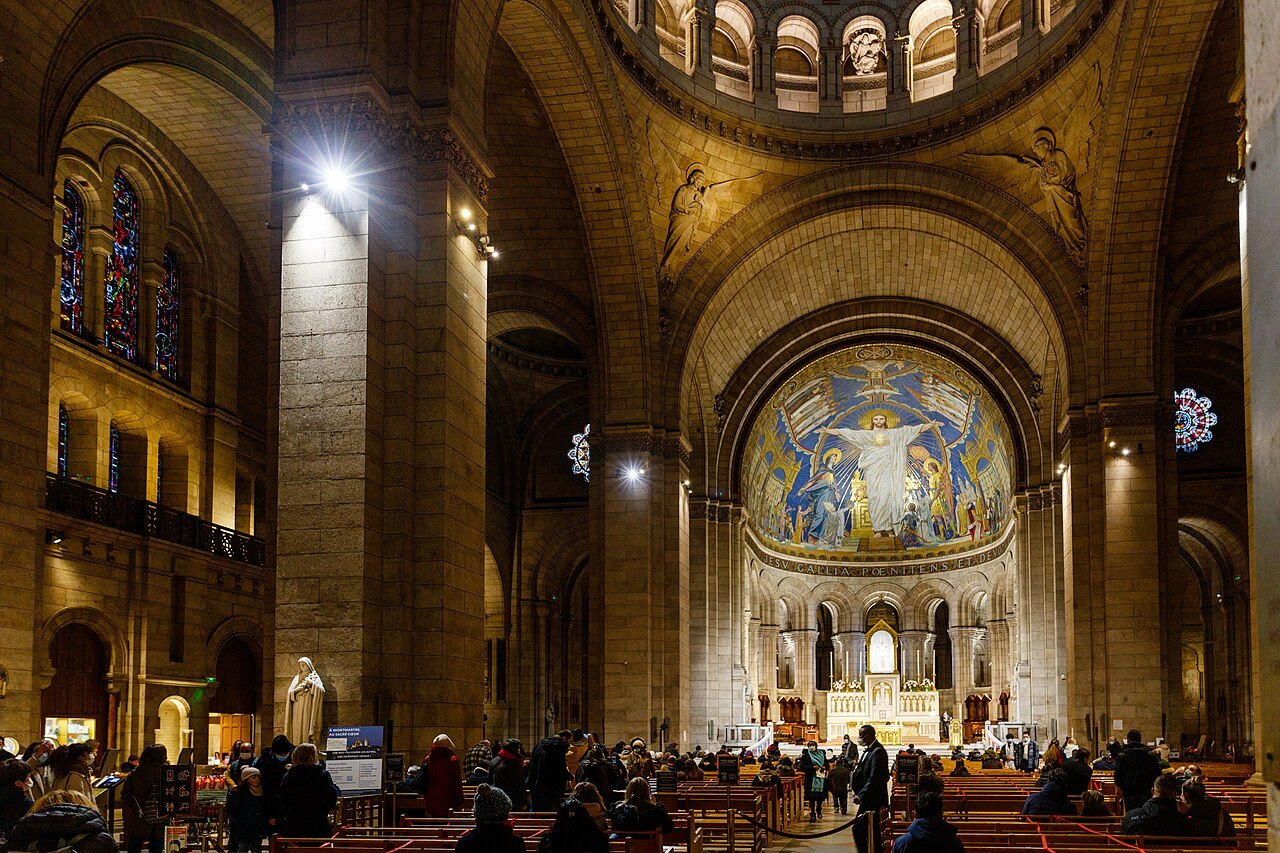
The interior is dim, with the light falling from high windows, and it takes a moment for the eyes to adjust. Then the great mosaic over the apse appears: Christ in white with open arms, showing his golden heart, surrounded by the Virgin, the Archangel Michael, Joan of Arc and figures presenting the basilica to him. Designed by Luc-Olivier Merson and dedicated in 1923, it covers about 5,100 square feet and is one of the largest mosaics in the world.
The crypt, unusually, has daylight, thanks to a trench dug around it, and holds the tombs of the cardinals who built the church. Photography is not allowed inside the basilica, and it is a working church: prayer before the sacrament has continued day and night since 1885, so visitors are asked to keep quiet.
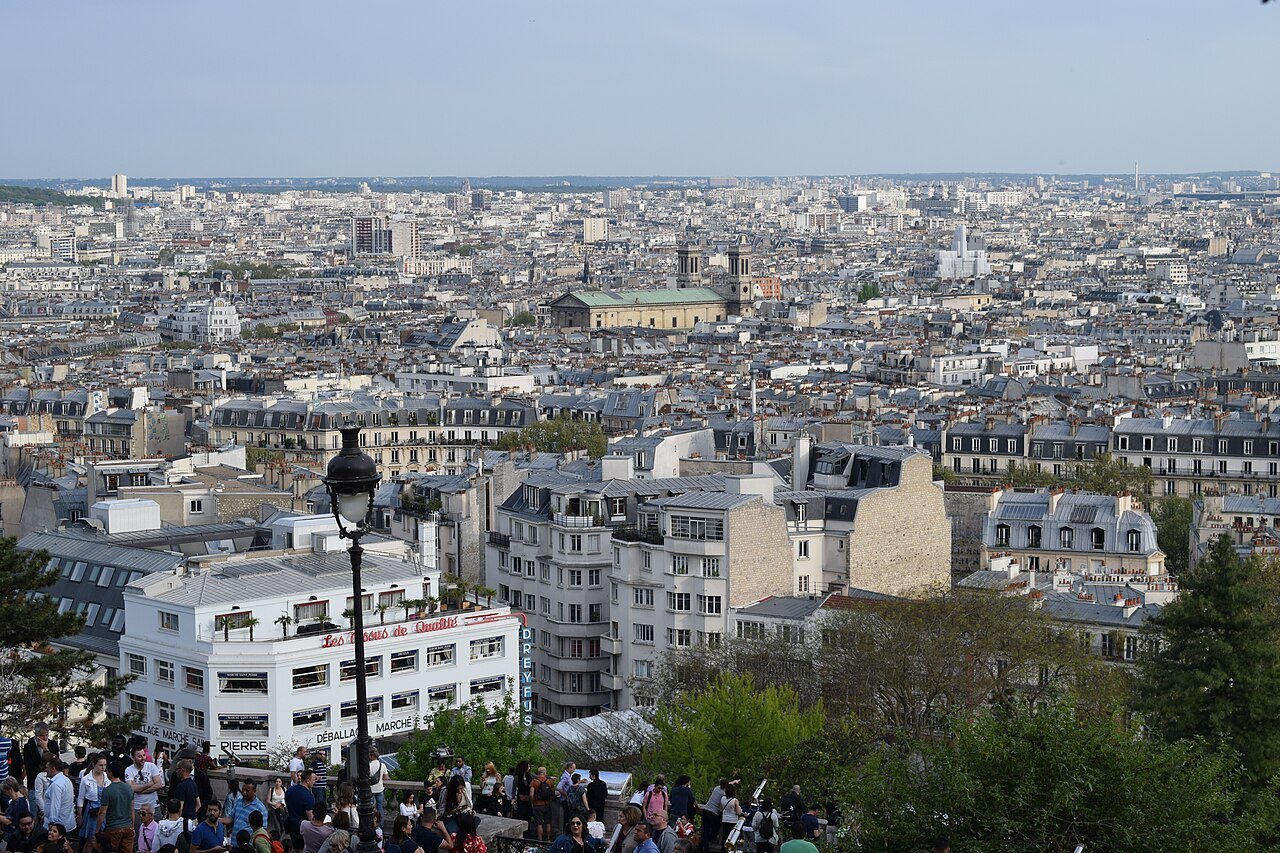
The dome can be climbed, by a long spiral stair, to a gallery with a panoramic view of Paris spread out to the south.
Montmartre
Walk behind the basilica into the village. The Place du Tertre, once the site of the town hall of the commune of Montmartre, is where painters set up their easels every day among the café tables. The other church on the hill, Saint-Pierre de Montmartre, is far older than the basilica, a church of 1147 that belonged to the abbey of Montmartre.
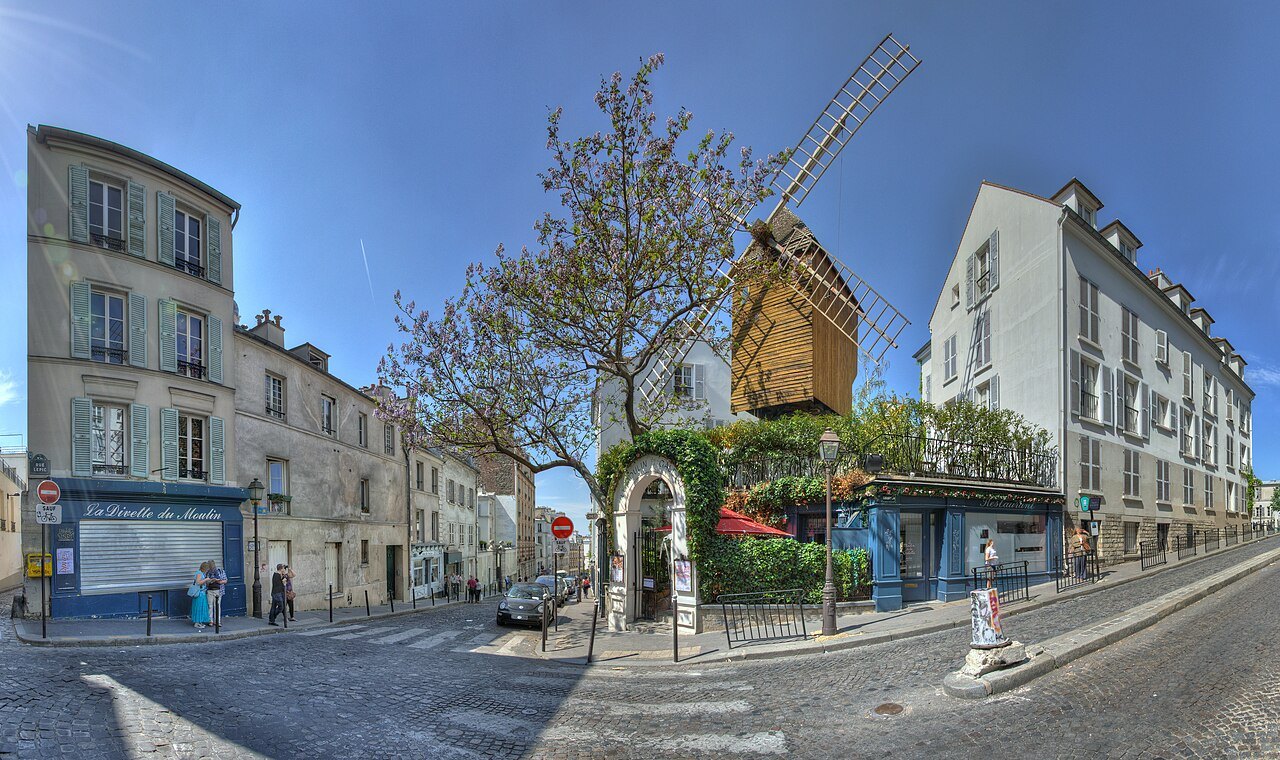
At the end of the nineteenth century, when rents were low, painters crowded onto the hill: Renoir painted his Bal du moulin de la Galette here, and Picasso painted Les Demoiselles d'Avignon in the studio building called the Bateau-Lavoir. The house on the Rue Cortot where Renoir rented space is now the Musée de Montmartre. On the Rue Saint-Vincent, a small vineyard still makes wine, and the Moulin Rouge is at the foot of the hill, on the Boulevard de Clichy.
How to visit
From the Anvers Métro station, walk up to the foot of the hill; then either climb the 222 steps of the Rue Foyatier or take the funicular that runs beside them from the Place Saint-Pierre. Arrive early in the day for the quietest steps and the clearest light over the city. See neighborhoods for Montmartre and itineraries for a day that includes it.
The steps are crowded on fine afternoons; keep bags closed, as in any crowd. The Canal Saint-Martin and the Palais Garnier are both a short Métro ride away.
Myths worth setting aside
Sacré-Cœur is not an old church. It looks timeless on its hill, but it was built between 1875 and 1914, and finished a quarter of a century after the Eiffel Tower.
Nor is its whiteness the work of cleaners. The stone itself keeps it white, releasing calcite in the rain.
Where to go next
Nearby
- Nearby · 10th · 11thThe Canal Saint-MartinA canal Napoleon ordered in 1802 to bring fresh water into Paris, opened in 1825, with tree-lined quays, iron footbridges and nine locks stepping down from the Bassin de la Villette to the Seine.Read the page →
- Nearby · 9thThe Palais GarnierCharles Garnier's opera house of 1861 to 1875, gilded, marbled and crowded with sculpture, with a grand staircase built for being seen, a Chagall ceiling and the cistern that gave birth to the Phantom of the Opera.Read the page →
- Nearby · 20thPère Lachaise CemeteryThe largest cemetery in Paris, 110 acres of cobbled lanes, chapels and trees on a hillside in the 20th arrondissement, opened in 1804 and now the resting place of Chopin, Oscar Wilde, Jim Morrison and about a million others.Read the page →