Home · Sights · The Arc de Triomphe and the Champs-Élysées
What you are looking at
The Arc de Triomphe and the Champs-Élysées
8th · 16th · 17th
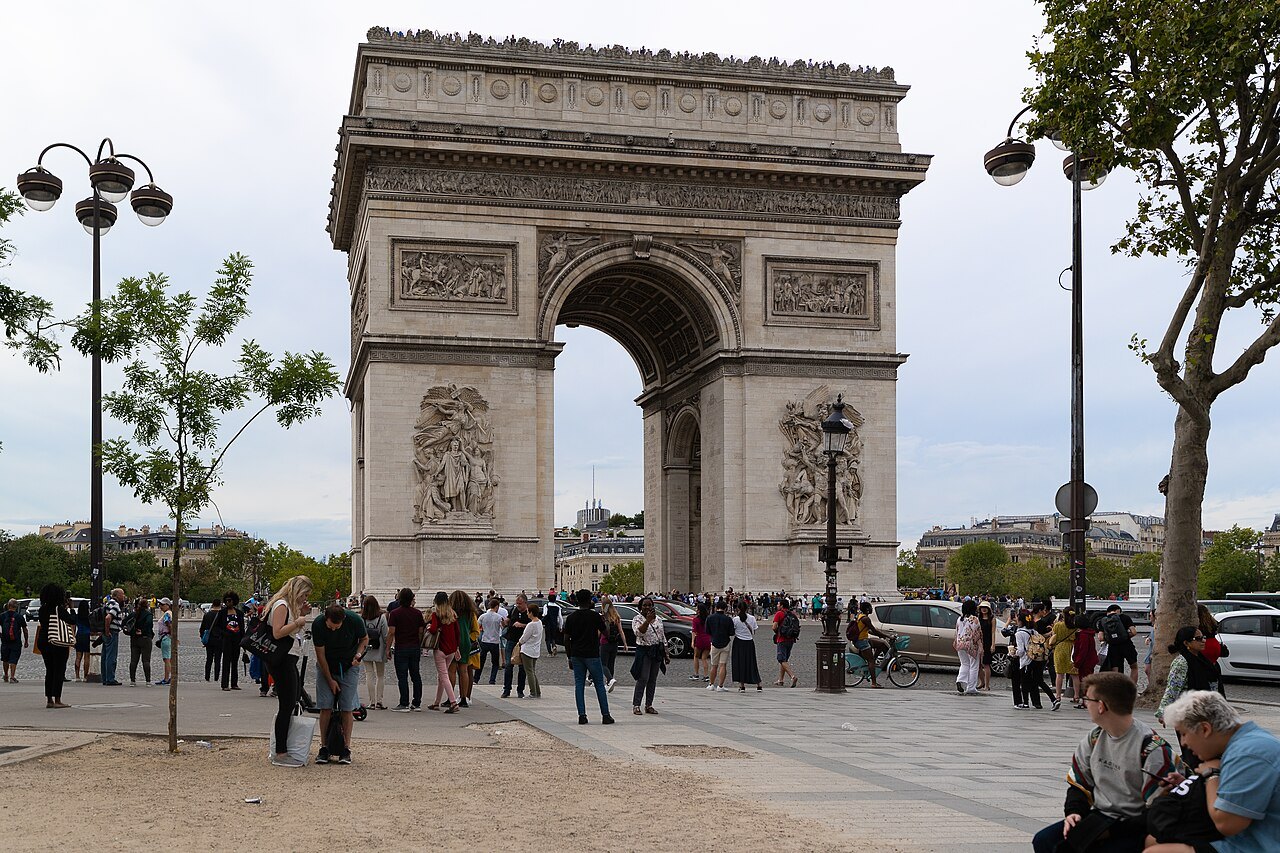
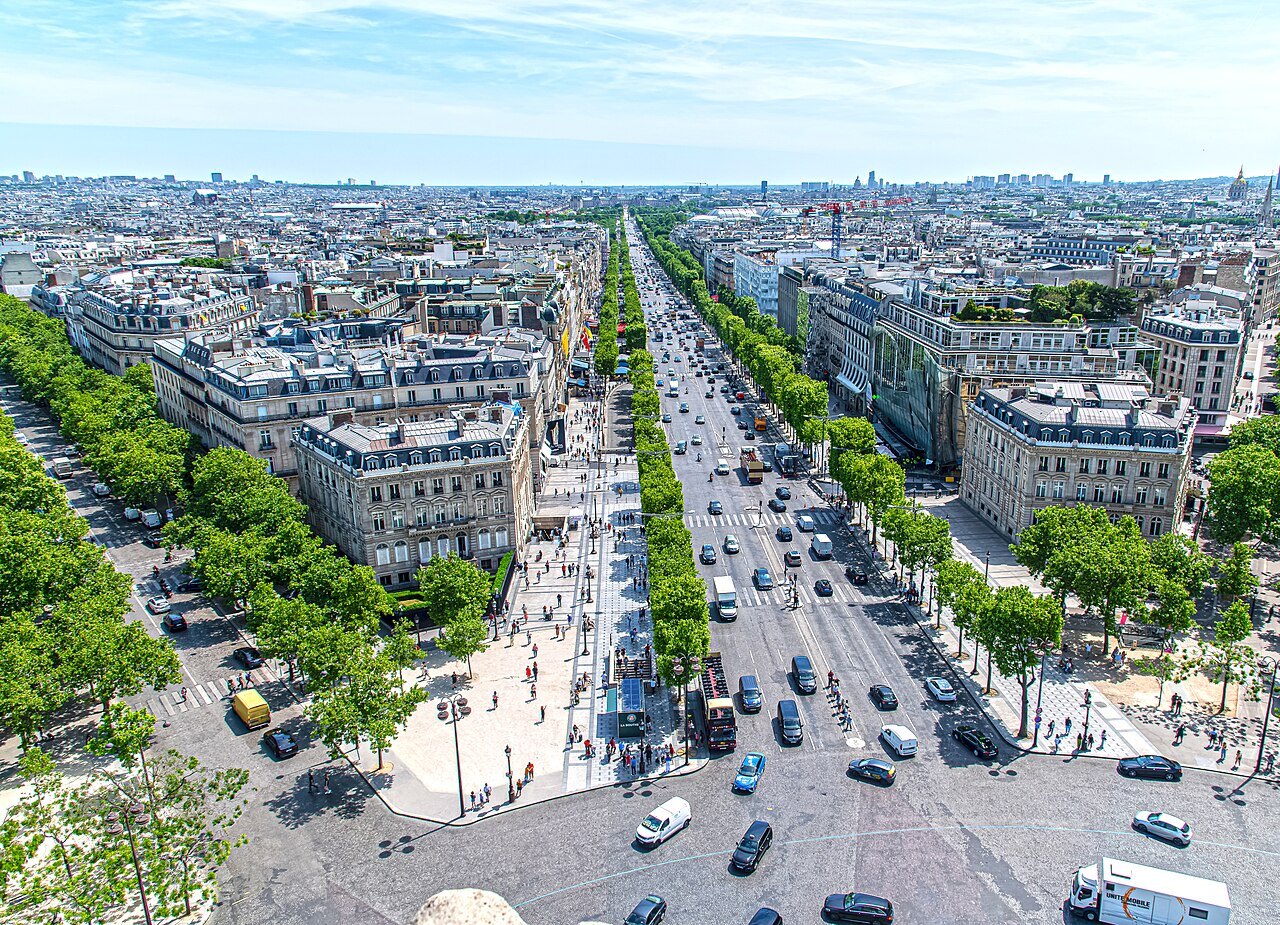
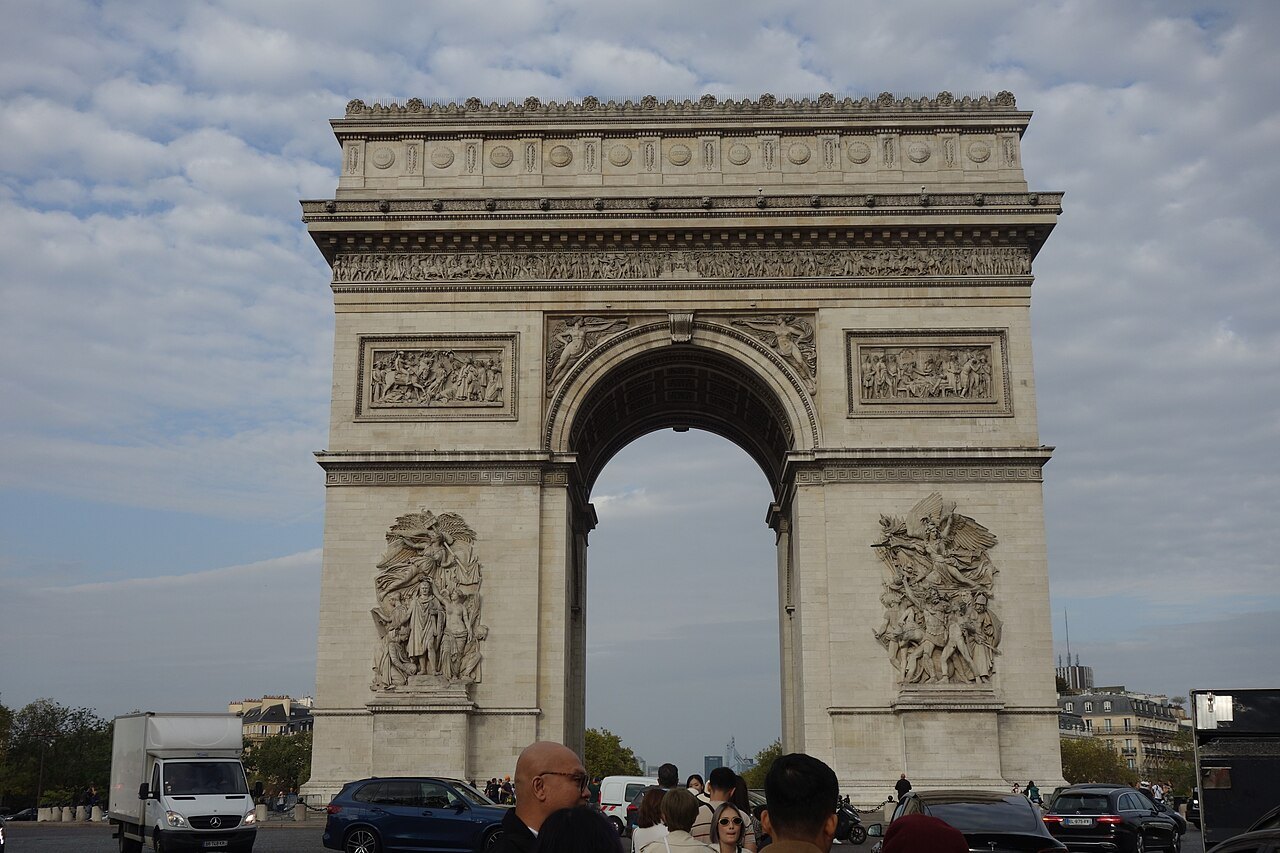
- 1The great vaultA single arch about 95 feet high, carved with the names of battles and generals.
- 2The four reliefsHuge sculpted groups on the pillars, the most famous of them Rude's Marseillaise.
- 3The Unknown SoldierA soldier of the First World War buried under the arch in 1921, with an eternal flame.
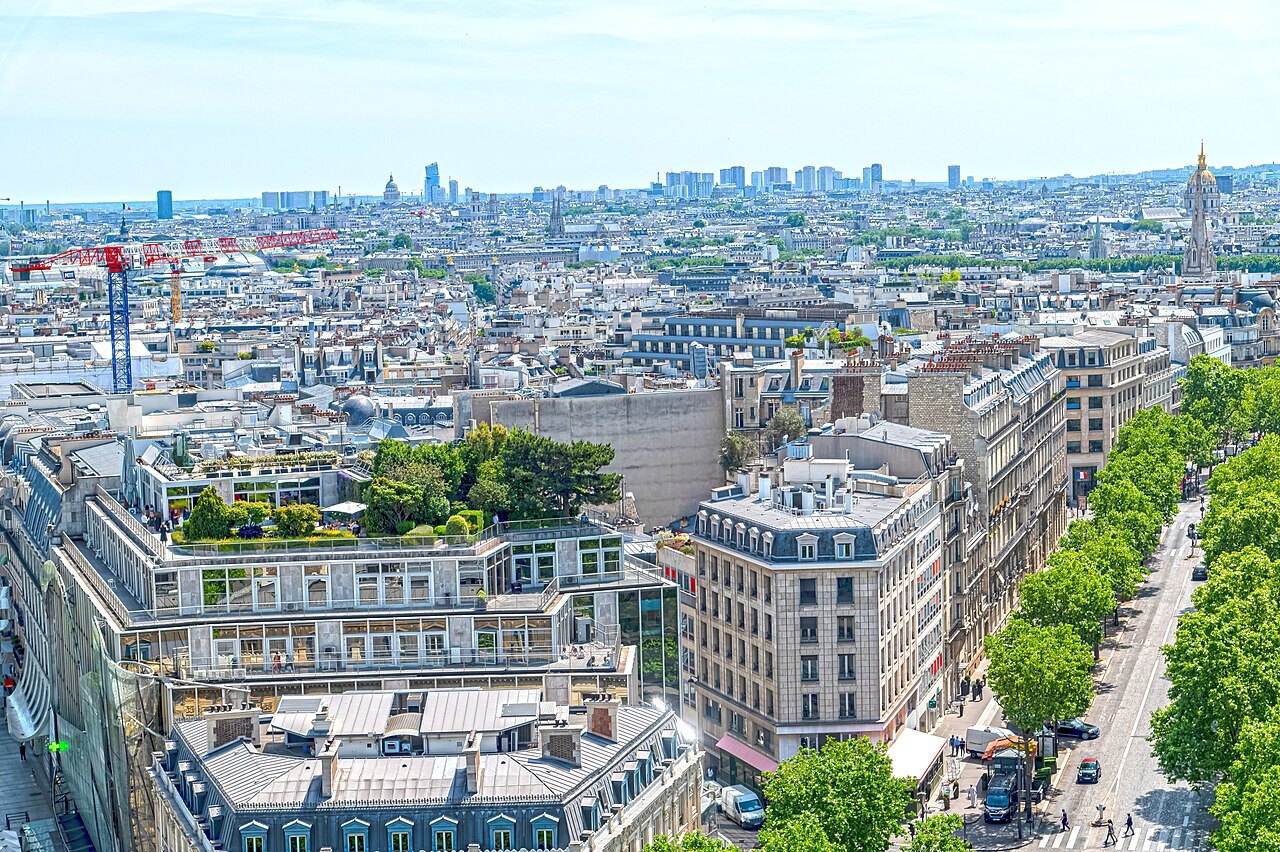
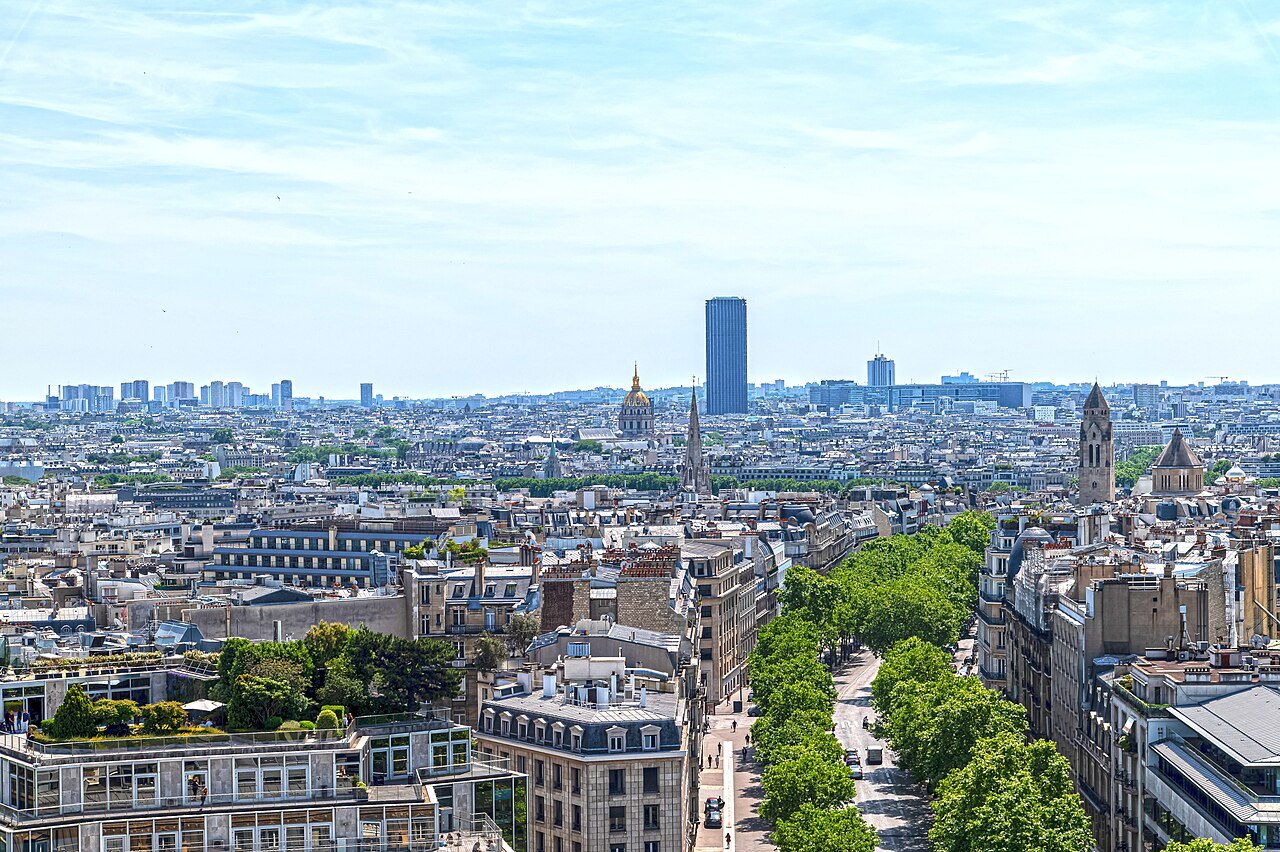
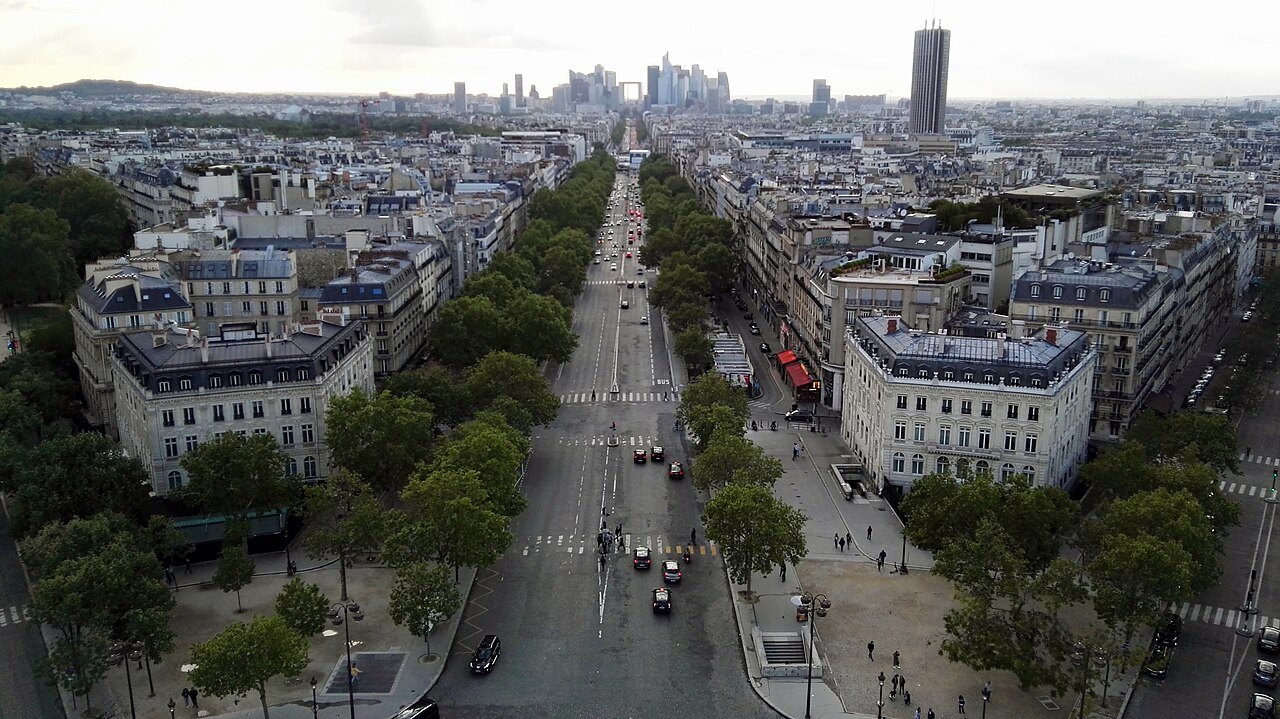
- 4The roof terraceReached by 284 steps, with views down all twelve avenues and along the historical axis.
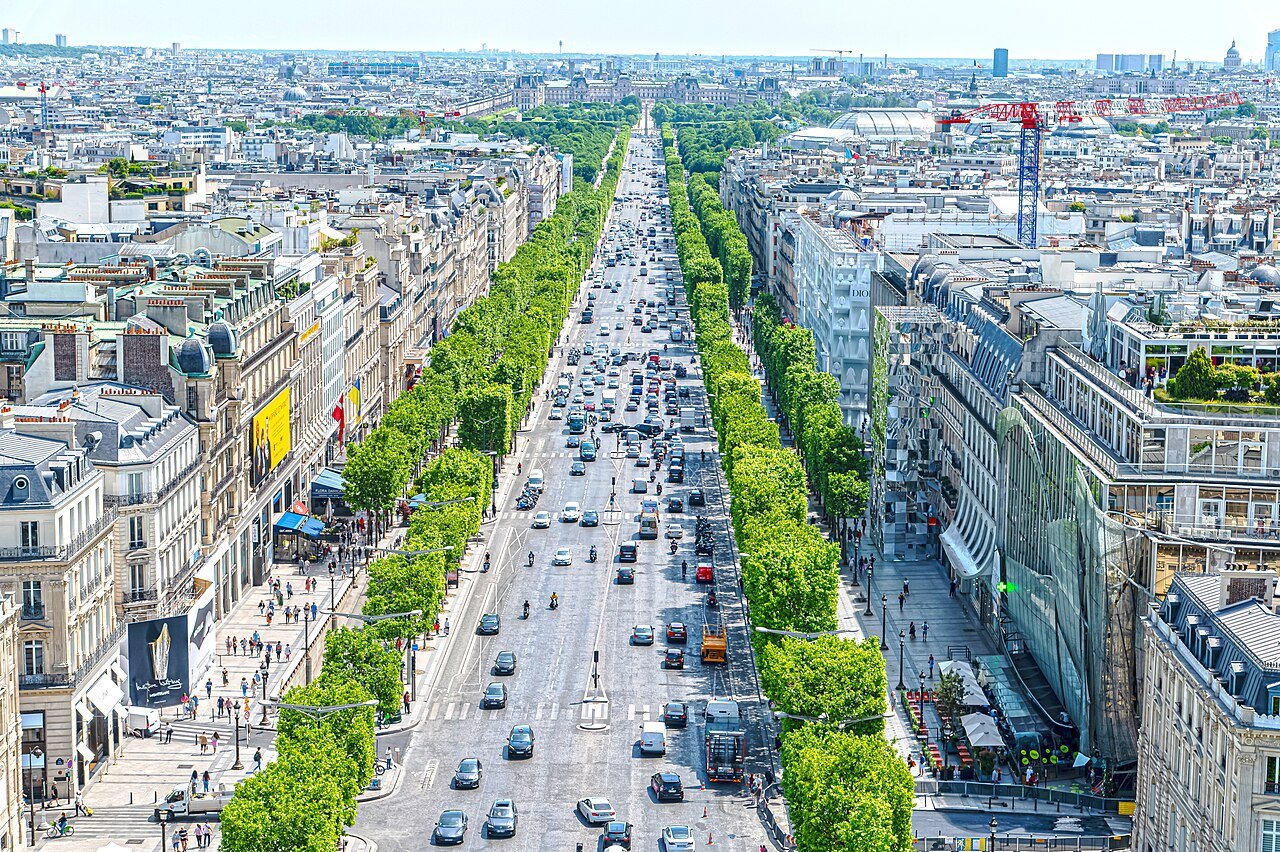
- 5The Champs-ÉlyséesAn avenue about a mile and a quarter long and 230 feet wide, down to the Concorde.
The sight in full
Reading the place
Why it matters
The Arc de Triomphe de l'Étoile stands at the western end of the Champs-Élysées, in the middle of the Place Charles de Gaulle, where twelve avenues meet in the star, the étoile, that gave the square its older name. It sits at the meeting point of the 8th, 16th and 17th arrondissements, and it is the centerpiece of the city's historical axis, the line of monuments that runs from the courtyard of the Louvre through the Tuileries, the Concorde and the Champs-Élysées to the arch, and on beyond the city limits to the Grande Arche of La Défense.
It was built to honor the armies of the Revolution and of Napoleon, and its surfaces carry the names of their victories and generals. Since 1921 it has also covered the grave of the Unknown Soldier of the First World War, and it has become the country's great memorial to the dead of its wars.
An emperor's arch
Napoleon commissioned the arch in 1806, after his victory at Austerlitz, at the height of his power, and the architect Jean-François Chalgrin designed it on the model of the Arch of Titus in Rome, but at an enormous scale: about 160 feet high and 148 wide, with a main vault about 95 feet high. The foundations alone took two years. When Napoleon entered Paris with his new wife, Marie-Louise of Austria, in 1810, the arch was not built, so a full-size wooden mock-up was put up for the procession.
Work stopped with the fall of the empire and did not resume until 1823; the arch was completed in 1836 under King Louis-Philippe. Napoleon himself passed beneath it only in death, when his remains were brought back from Saint Helena in 1840 and carried under the arch on their way to the Invalides.
What you see: the sculpture
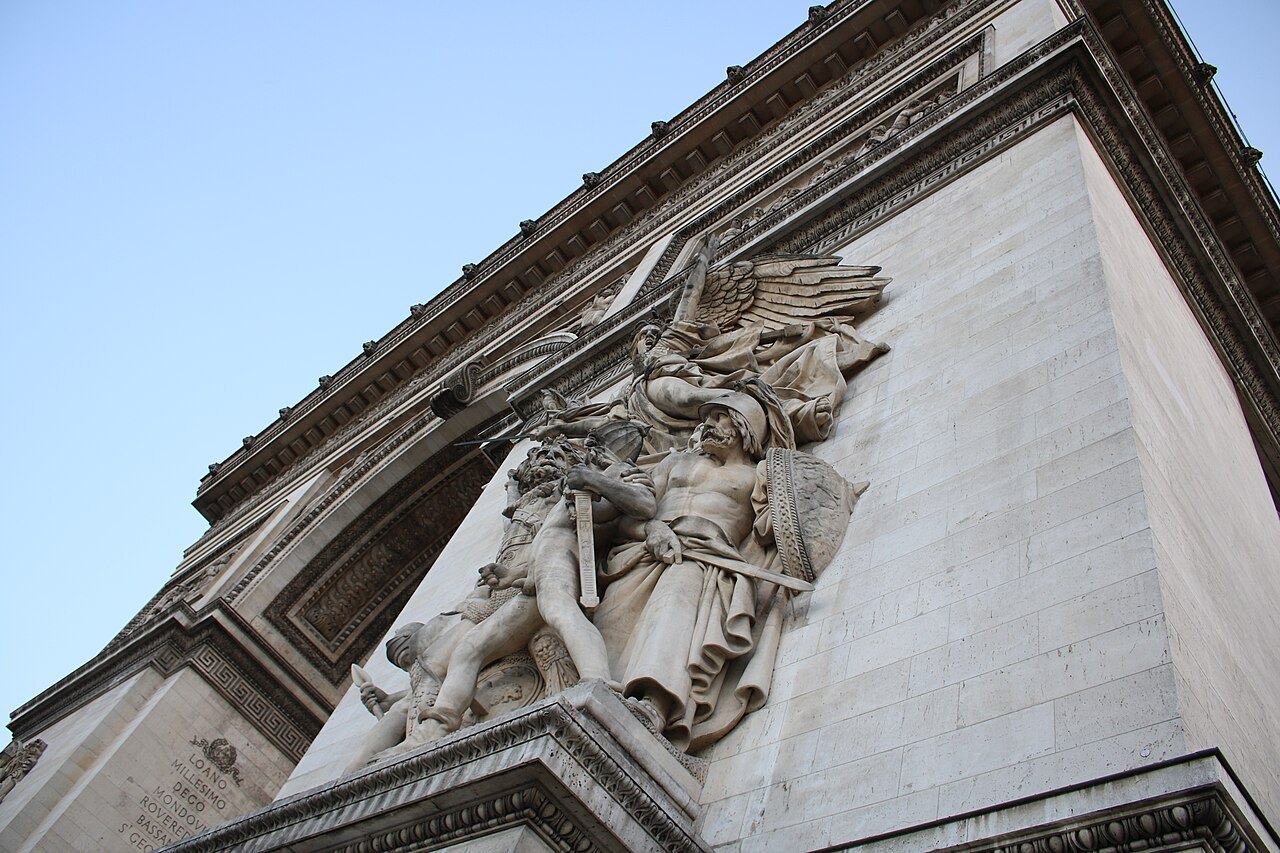
The four great sculpted groups on the pillars are the arch's glory: the Triumph of 1810 by Jean-Pierre Cortot, the Resistance of 1814 and the Peace of 1815 by Antoine Étex, and the one everyone knows. The most famous, by Rude, is the Departure of the Volunteers of 1792, known as La Marseillaise, in which a winged figure of the Republic, sword raised, calls a crowd of citizens of every age to arms. Legend says that on the day the Battle of Verdun began in 1916 the figure's sword broke off, and the relief was covered with tarpaulins so that no one would read it as an omen.
Above the groups, smaller reliefs show battles and events of the Revolution and the empire, a frieze of marching soldiers runs around the top, and on the attic thirty shields carry the names of the great victories. On the inner walls are carved the names of 660 officers, 558 of them generals of the empire; the names of those killed in battle are underlined.
The Unknown Soldier
In November 1919 it was decided to bury an unidentified soldier of the First World War in the Panthéon, but a public campaign of letters asked for the arch instead. The coffin lay in a chapel inside the arch from 10 November 1920 and was laid in its grave on 28 January 1921. The slab reads: here lies a French soldier who died for his country, 1914 to 1918. An eternal flame burns beside it, in memory of the dead of both world wars who were never identified, and a ceremony is held there every 11 November.
After the burial, military parades stopped marching through the arch itself and go around it. Jacqueline Kennedy, who visited the flame with President Kennedy in 1961, asked for an eternal flame at her husband's grave after his death.
The Champs-Élysées
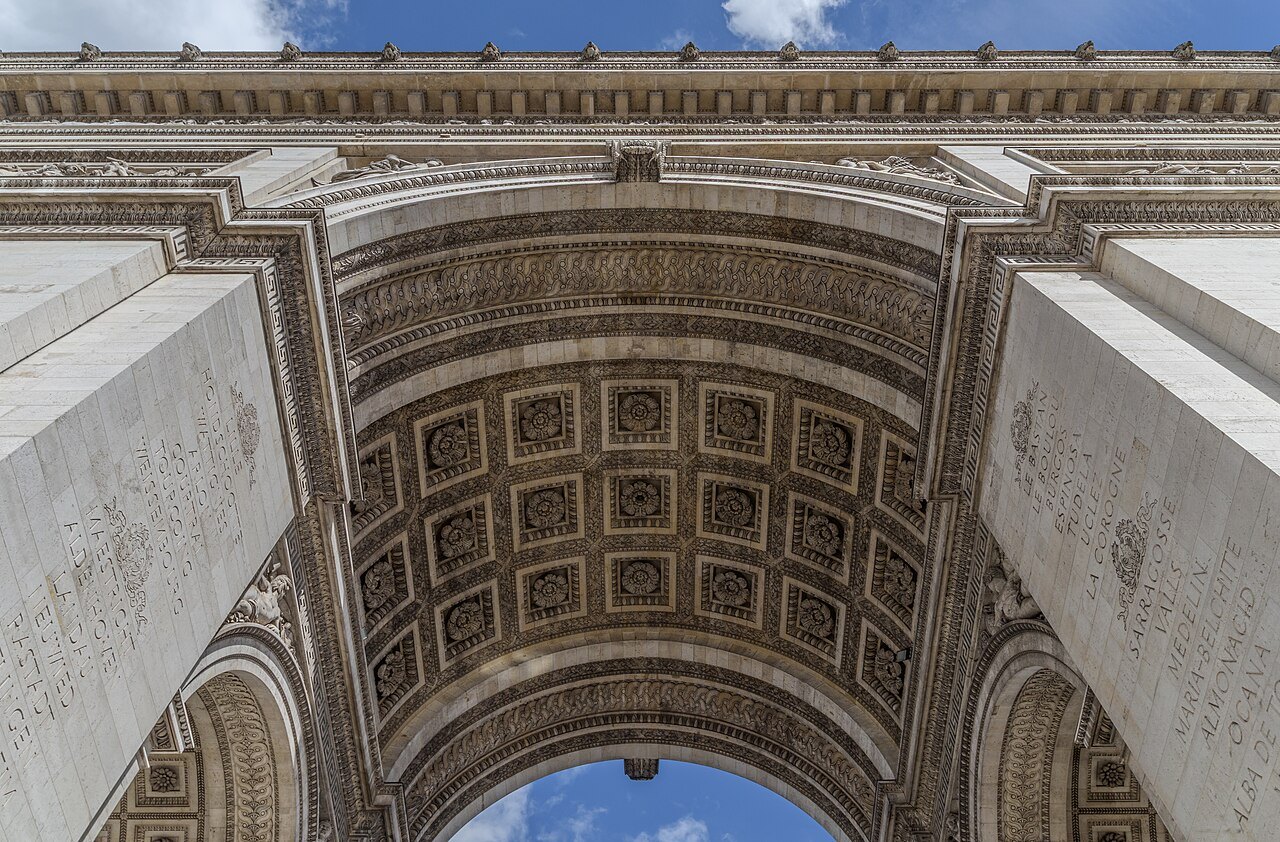
The avenue below the arch began as a garden. André Le Nôtre laid out a broad promenade lined with double rows of elms in 1667 as an extension of the Tuileries, and it became the Champs-Élysées, the Elysian Fields, named for the resting place of heroes in Greek myth. The avenue is about a mile and a quarter long and 230 feet wide, running from the Place de la Concorde up to the arch.
Its lower half, toward the Concorde, is still a park with pavilions and theaters among the trees; its upper half, toward the arch, is lined with cinemas, cafés and shops. It is where the Bastille Day military parade is held every 14 July, and for decades it was the finish of the Tour de France. Seen from the Concorde on a clear evening, with the arch closing the view at the top of the slope, it deserves its old reputation.
How to visit
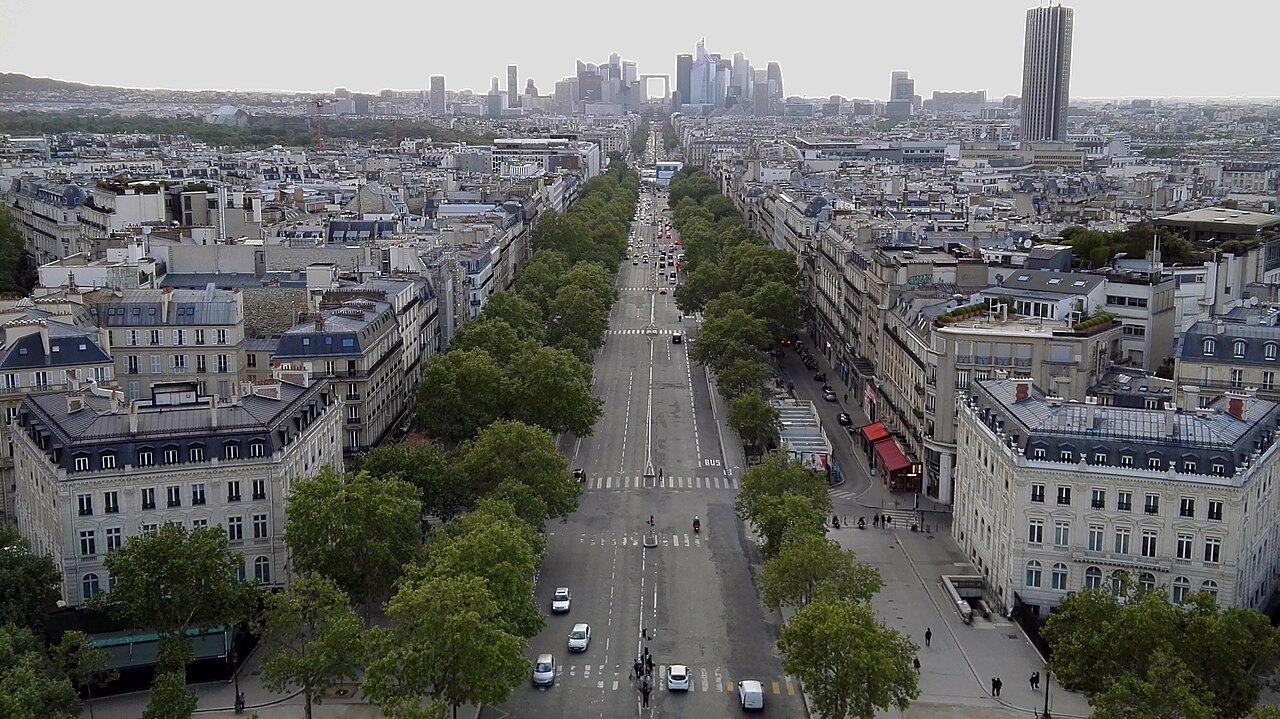
Do not try to cross the traffic of the Place Charles de Gaulle; two pedestrian underpasses, from the Champs-Élysées and from the Avenue de la Grande Armée, lead to the foot of the arch. The climb to the roof is 284 steps, most of them on a tight spiral stair, with a small museum on the way up. There is an elevator, but it has been out of service for maintenance, leaving the stairs as the only way to the terrace, so check before you go if stairs are difficult for you. From the terrace you see all twelve avenues radiating from the star, and the historical axis in both directions.
For tickets see booking ahead. To walk the whole axis, start at the Louvre, cross the Tuileries and climb the Champs-Élysées; the Grand Palais is just off the avenue's lower half.
Myths worth setting aside
Napoleon never saw his arch finished and never rode through it in triumph. It was completed fifteen years after his death.
And the arch is not the tallest in the world. The Arch of Triumph in Pyongyang, finished in 1982 and modeled on this one, is slightly taller.
Where to go next
Nearby
- Nearby · 8thThe Grand Palais, the Petit Palais and the Pont Alexandre IIIThree survivors of the Universal Exposition of 1900: an exhibition hall under the largest glass roof in Paris, a museum of fine arts around a garden court, and the most ornate bridge on the Seine.Read the page →
- Nearby · 1st · 8thThe Tuileries, the Orangerie and the Place de la ConcordeA queen's palace garden of 1564, redrawn by Le Nôtre and opened to the public in 1667, running from the Louvre to the largest square in Paris, with Monet's Water Lilies on its western terrace.Read the page →
- Nearby · 7thThe Eiffel TowerWrought iron, 1,083 feet tall, built between 1887 and 1889 as the centerpiece of a World's Fair and meant to come down after twenty years, it was saved by the radio and has stood over the Seine ever since.Read the page →