Home · Sights · The Eiffel Tower
What you are looking at
The Eiffel Tower
7th
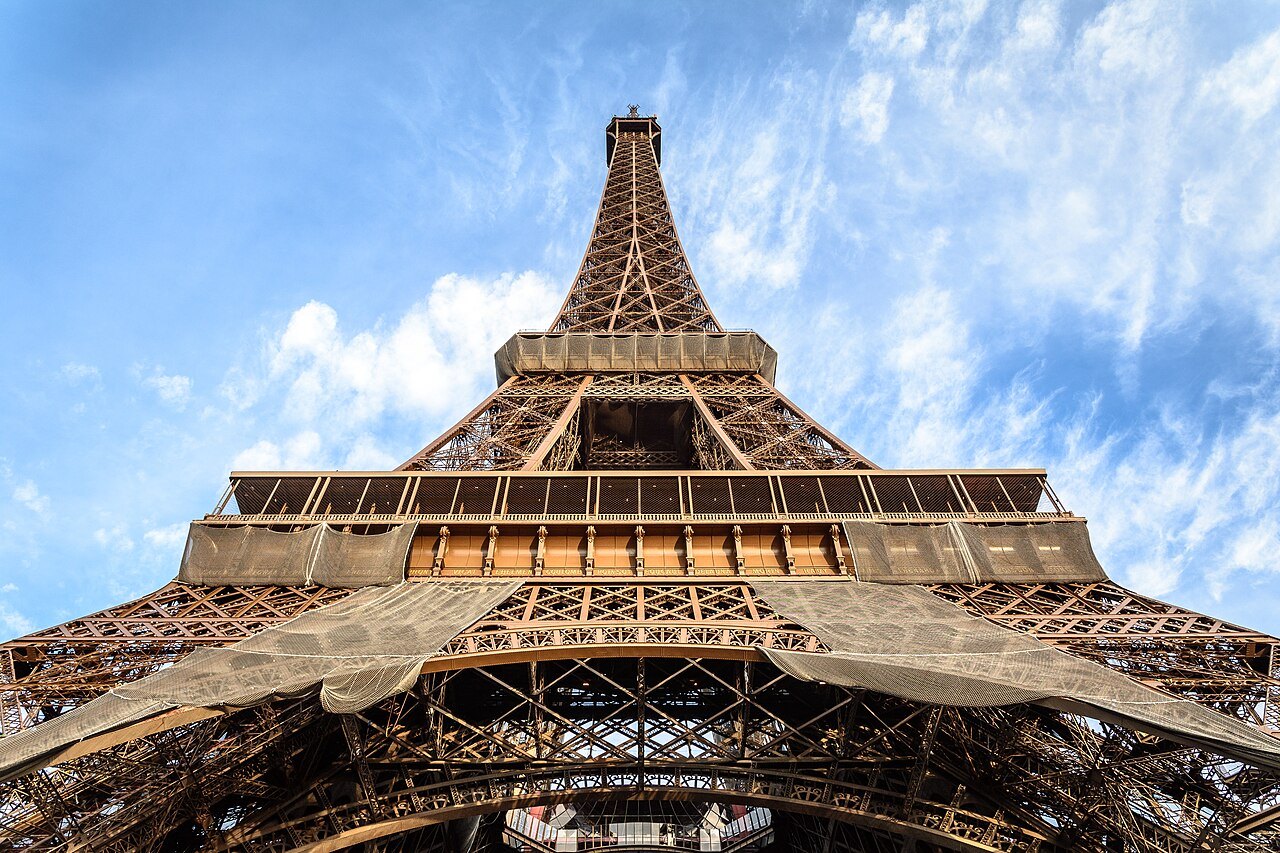
- 1The four legsCurved lattice piers on stone foundations, each wide enough at the base to carry an inclined elevator.
- 2The first levelThe broadest platform, about 190 feet up, with a glass floor looking down between the legs.
- 3The second levelThe best height for seeing the city, reached by elevator or by about six hundred steps.
- 4The summitAn enclosed and an open deck 906 feet up, and Gustave Eiffel's small private apartment.
- 5The ironworkAbout eighteen thousand pieces held by two and a half million rivets, repainted every seven years.
The sight in full
Reading the place
Why it matters
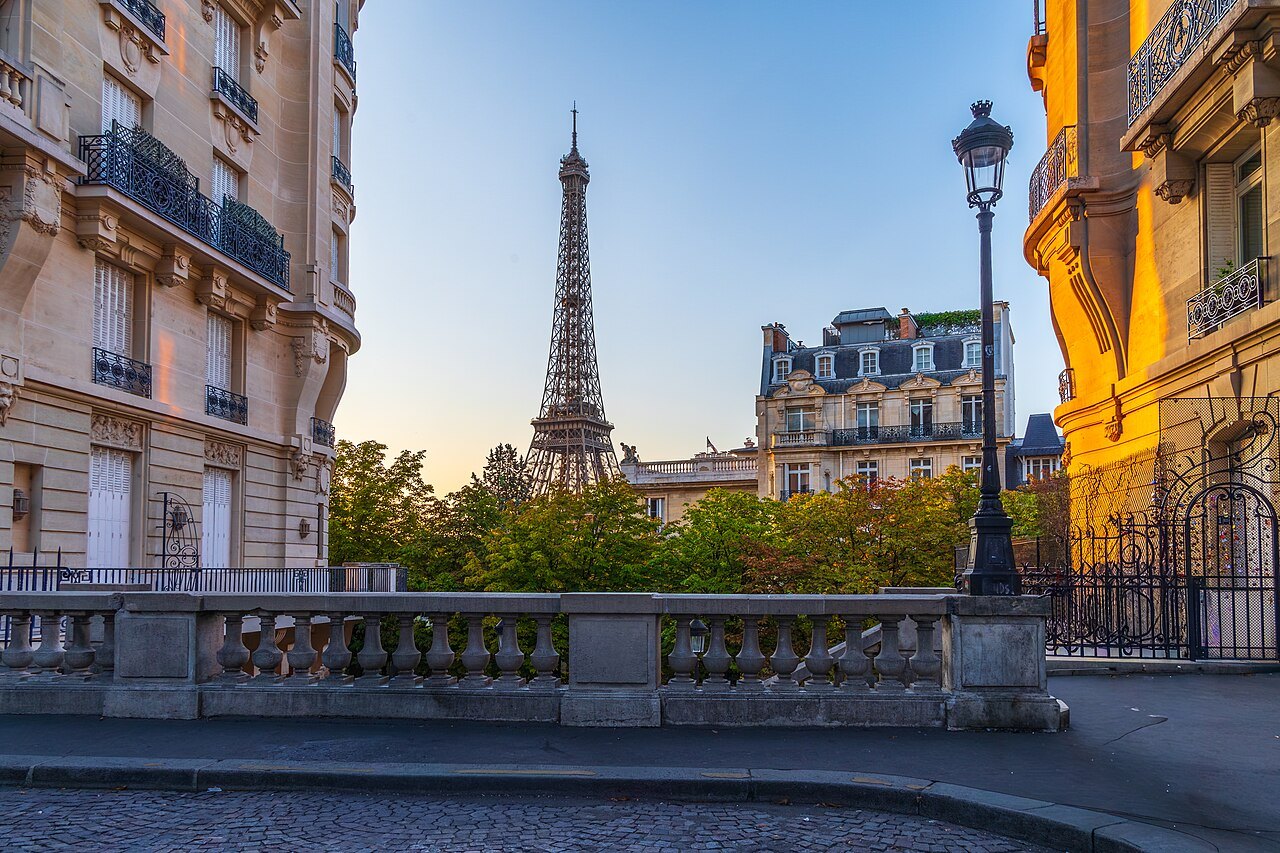
The Eiffel Tower stands at the northwest end of the Champ de Mars, beside the Seine in the 7th arrondissement. It is 1,083 feet tall with its antennas, the tallest structure in Paris, and was built from 1887 to 1889 as the centerpiece of the Universal Exposition held to mark the centenary of the French Revolution. When it was finished it was by far the tallest structure in the world, a title it held for forty-one years.
Its builder was Gustave Eiffel, whose company designed and made it, and Parisians nicknamed it the Iron Lady for the wrought iron it is built of. Few buildings anywhere have been so completely adopted as the symbol of a country. It is also among the most visited monuments that charge for entry in the world: close to six million people went up it in 2022.
A tower nobody wanted
The design began in 1884 with two engineers in Eiffel's company, Maurice Koechlin and Émile Nouguier, who sketched a great pylon of four lattice girders standing apart at the base and joining at the top. The company's architect, Stephen Sauvestre, added the decorative arches at the base and a glass pavilion on the first level. Eiffel, at first unenthusiastic, bought the rights to the design and championed it, and it was chosen for the exposition.
Not everyone was pleased. In February 1887, as work began, a petition by artists and writers, among them the architect Charles Garnier, the novelist Guy de Maupassant and the composer Charles Gounod, protested against this useless and monstrous tower in the name of French taste. The newspaper Le Temps published it. The tower went up anyway.
Building it
Work on the foundations started on 28 January 1887. The two legs nearest the river needed caissons driven down to firm ground under compressed air; the other two rest on concrete slabs. The drawing office produced thousands of detailed drawings for about eighteen thousand different parts, each rivet hole placed to within a millimeter.
The parts were made in Eiffel's workshop at Levallois-Perret, brought to the site by horse-drawn cart, bolted together and then riveted, two and a half million rivets in all. The legs rose as cantilevers until they reached the first level, where they were joined at the end of March 1888, and the tower was finished in time for the exposition of 1889. It opened to the public nine days after the fair did, before the elevators were even finished; by the end of the fair nearly two million people had been up.
Among the first visitors to Eiffel's small apartment at the top was Thomas Edison, who presented him with one of his phonographs and signed the guestbook in admiration of the engineer.
Saved by the radio
The tower was meant to be temporary. Eiffel held the right to run it for twenty years, and in 1909 ownership would pass to the city, which could take it down. Eiffel made it useful in the meantime, with experiments in meteorology and on the air resistance of falling bodies, and above all by offering it for radio. The tower became a great wireless station, and that saved it.
In 1914, at the start of the First World War, its transmitter jammed German radio communications during the advance on Paris, and its station went on to intercept enemy messages. It has carried broadcasting antennas ever since; an aerial added in 1957 made it taller than the Chrysler Building in New York, the building that had taken its record.
What you see
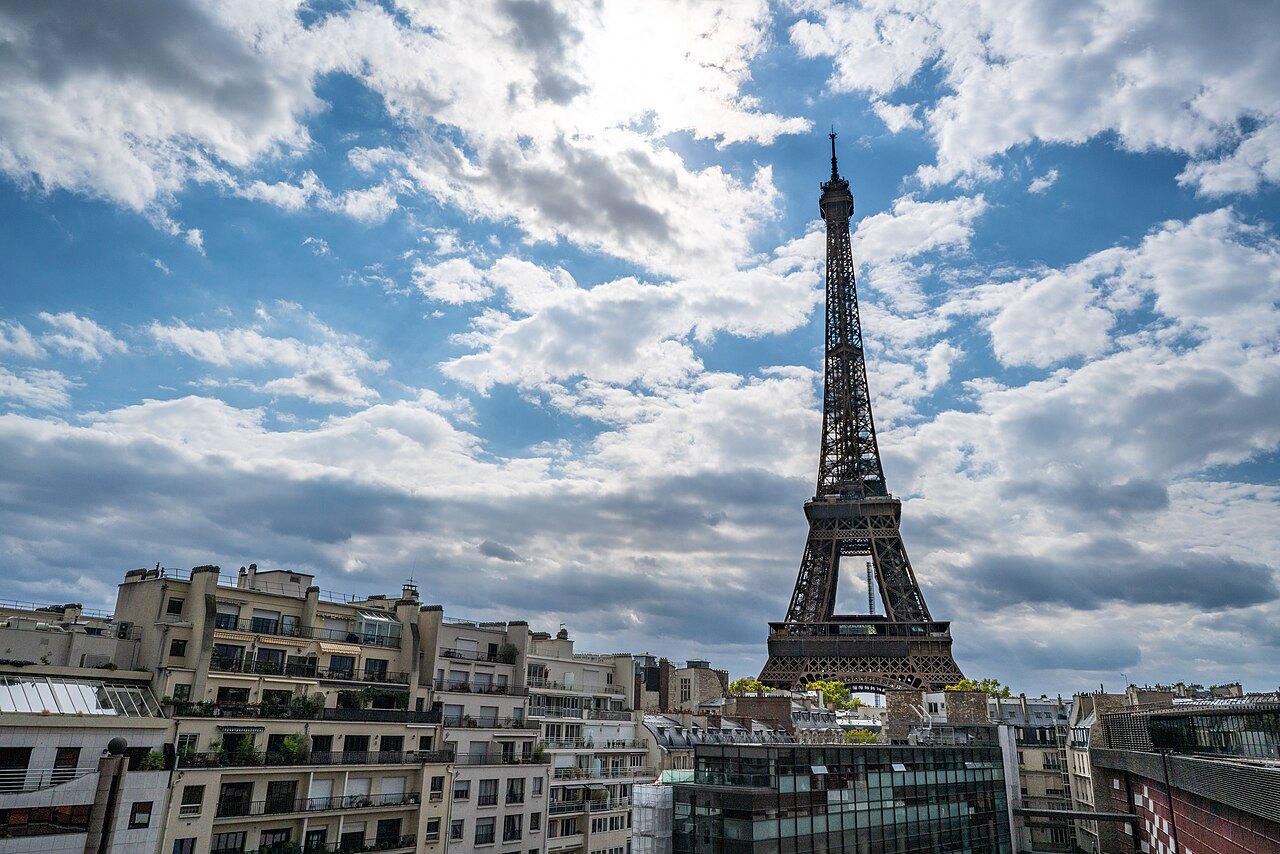
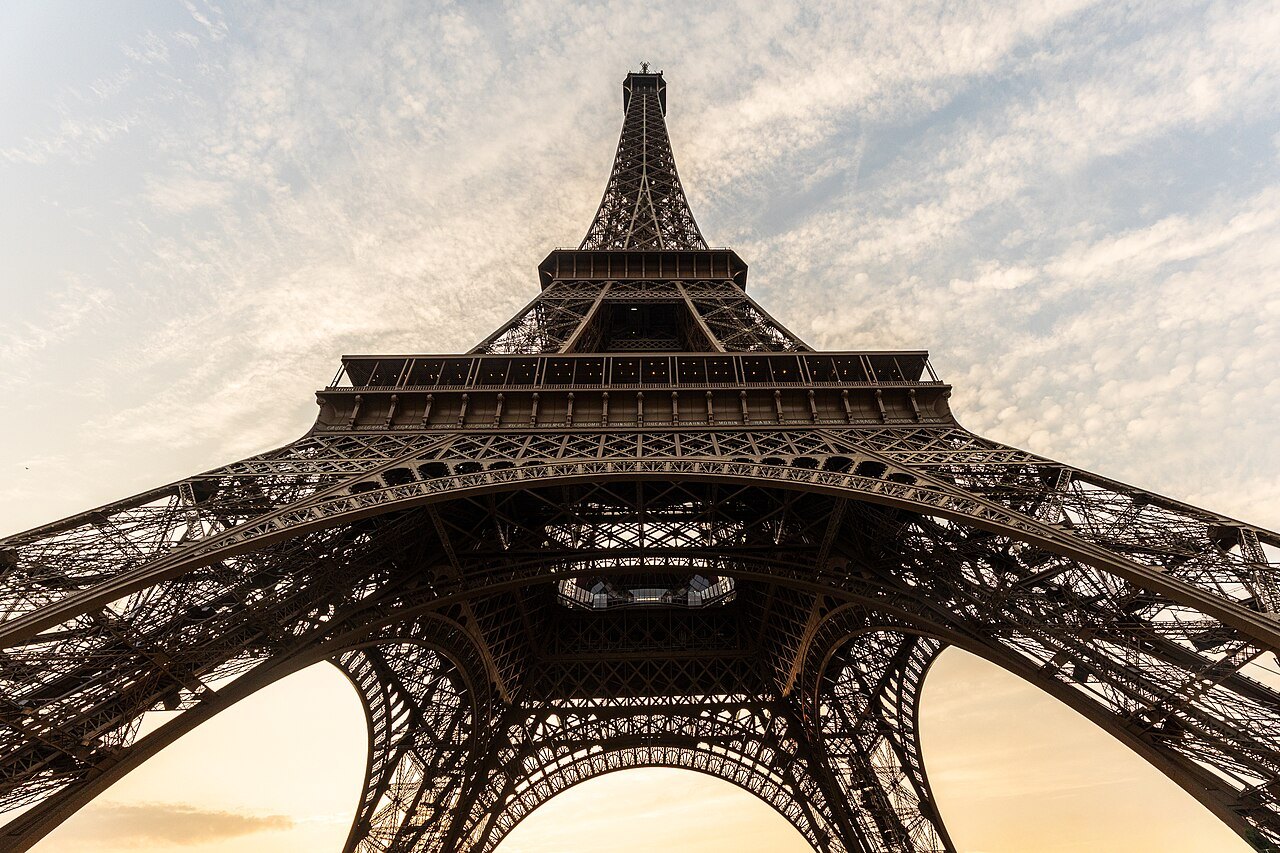
Walk under the tower before going up. The four legs curve up from their stone bases to meet at the first level, and the sheer quantity of crossed iron above your head is the best way to understand how the structure works. Around the first level run the names of seventy-two French scientists, engineers and mathematicians, in gold letters on the frieze.
The first level, about 190 feet up, is the broadest; part of its floor is glass. The second level, about 380 feet up, is the height most people find best for seeing the city: high enough to see the layout of the streets, the river and the domes, low enough to pick out buildings. The summit, usually reached only by elevator, has an enclosed deck and an open deck above it, 906 feet up, the highest public observation deck in the European Union.
The ironwork is painted every seven years, about sixty tons of paint each time, in three shades of brown, lighter at the top and darker toward the bottom, to complement the Paris sky.
How to visit
Elevators are the main way up, but tickets are also sold to climb the stairs to the first and second levels: a little over three hundred steps to the first level and as many again to the second. Tickets are sold online and at the tower, but the summit and the stairs are not suited to visitors with limited mobility; see booking ahead.
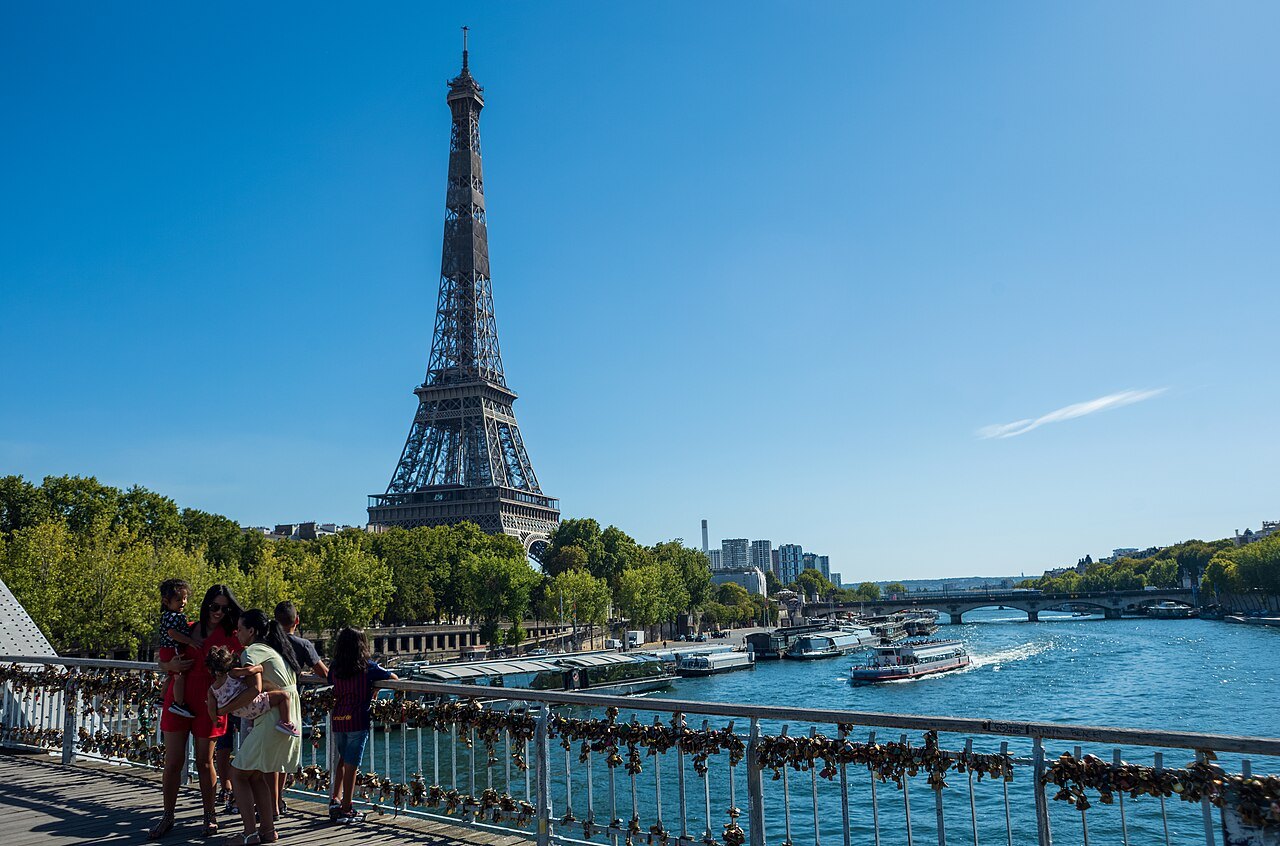
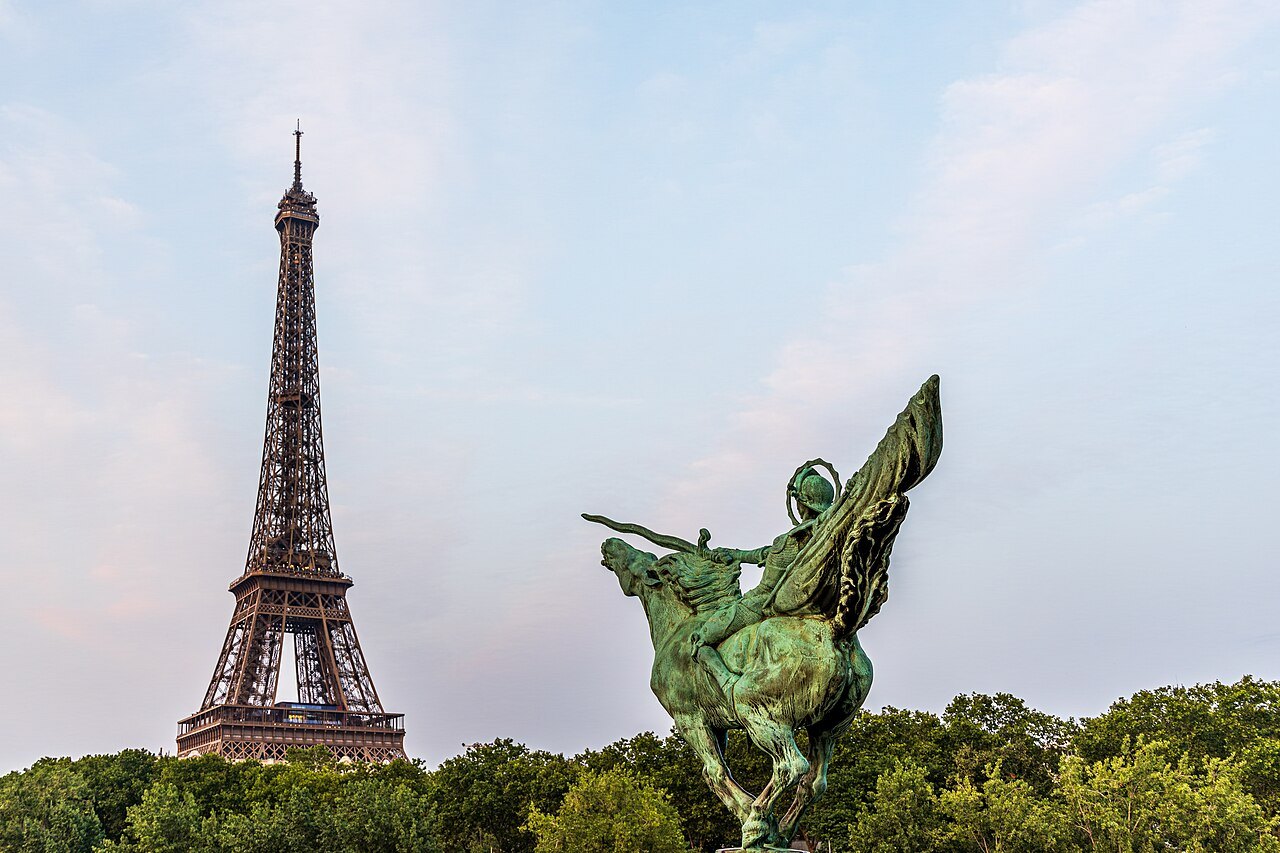
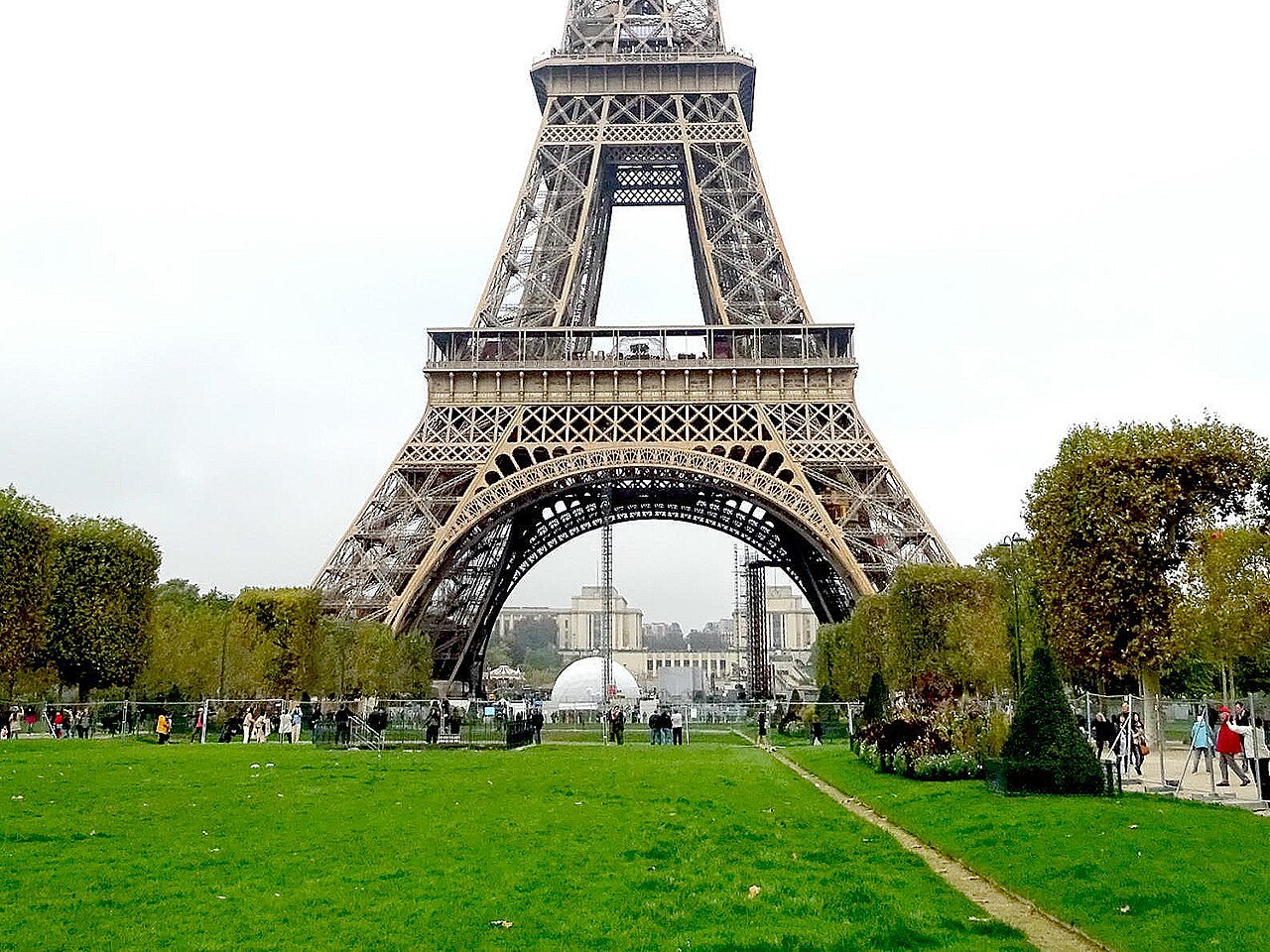
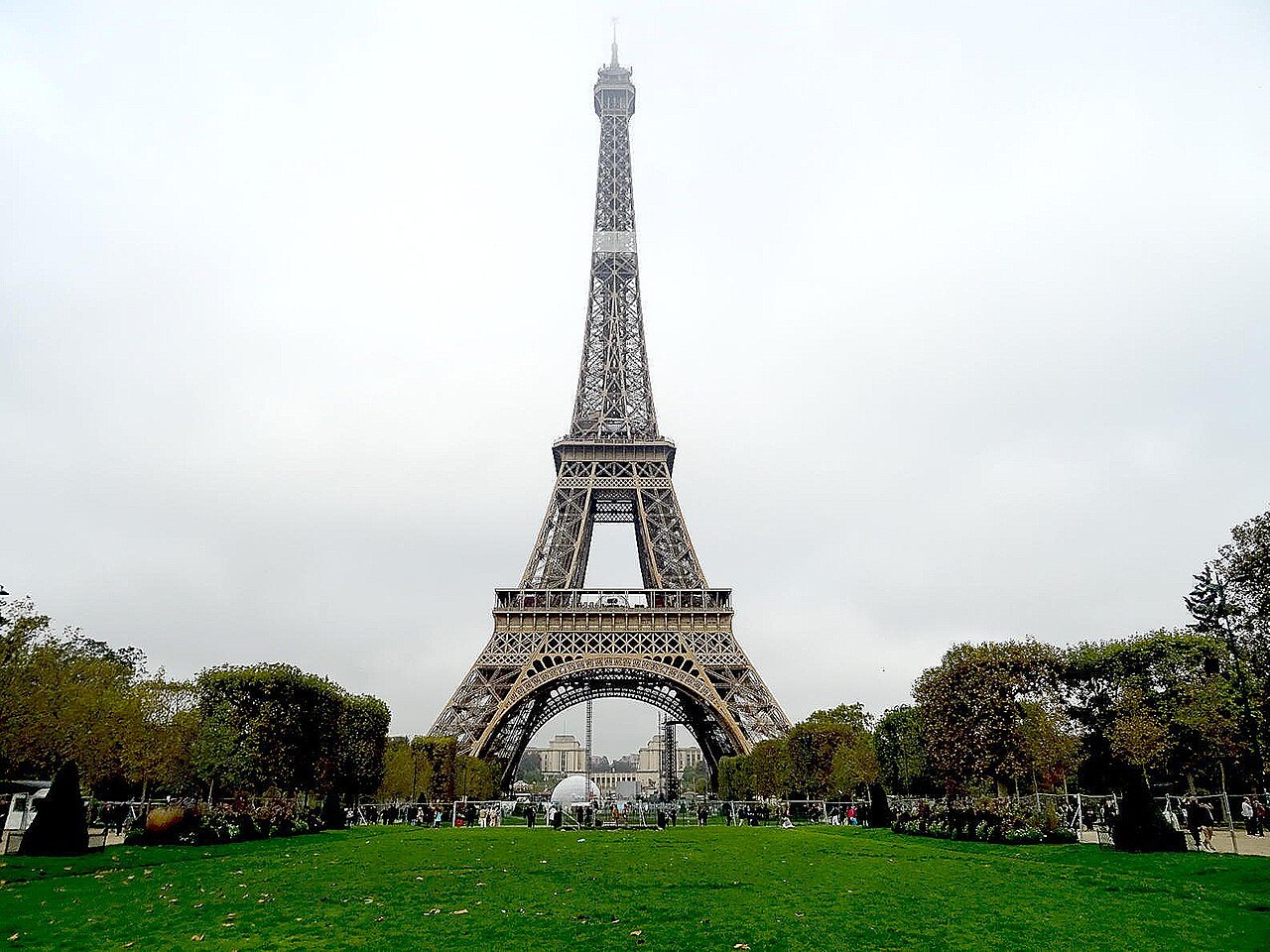
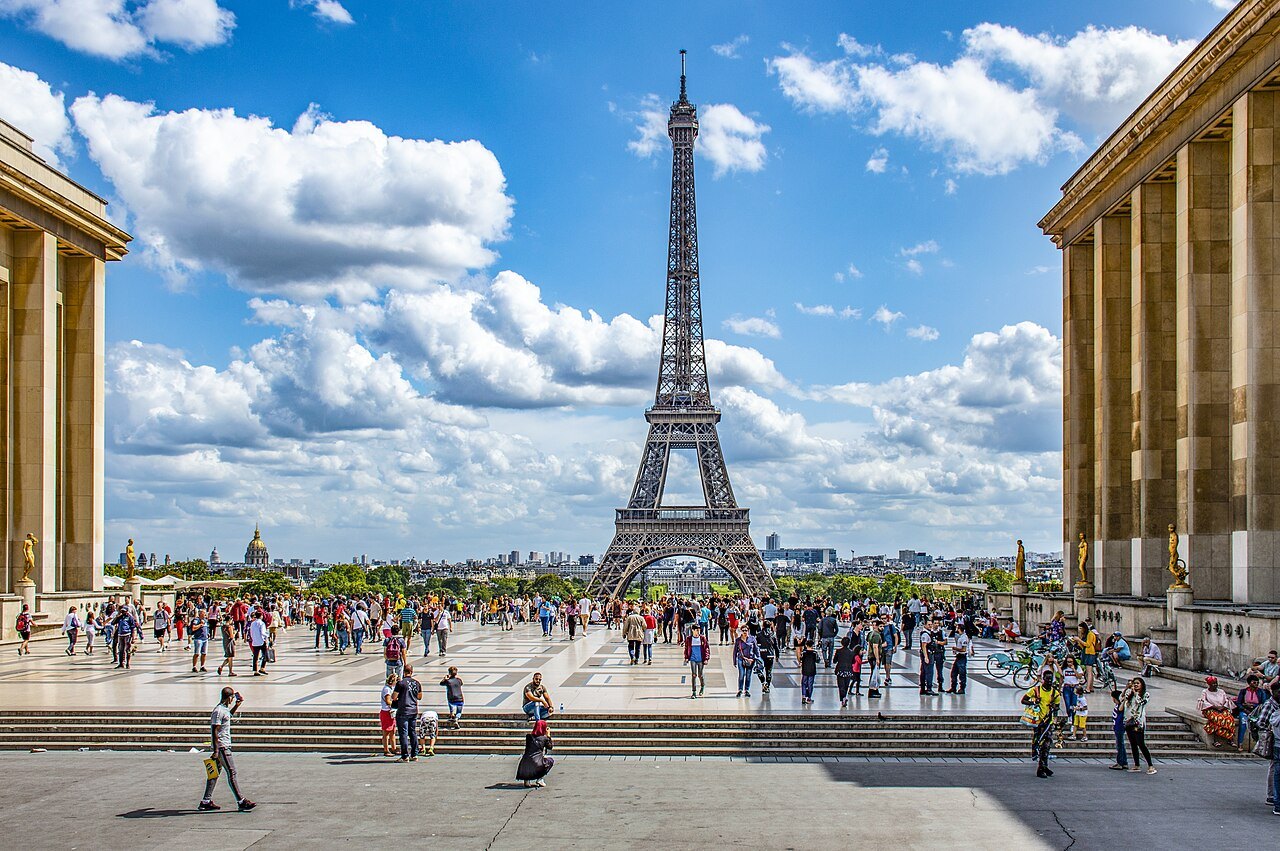
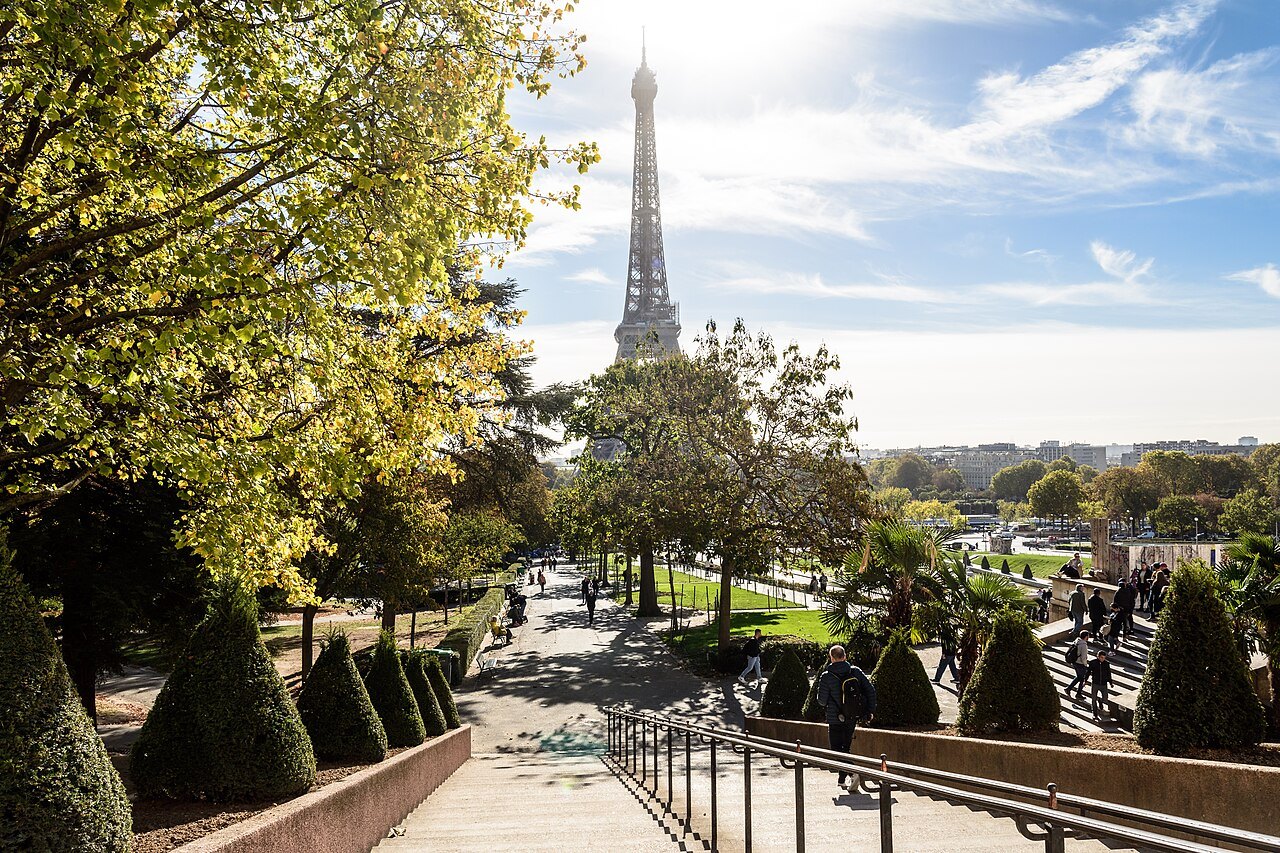
The classic views of the tower are from across the river, on the terrace of the Trocadéro, and from the long lawn of the Champ de Mars behind it. For the whole tower in its setting, walk to the Pont de Bir-Hakeim, the two-level bridge just west of it. The Invalides are across the Champ de Mars, and a boat on the river from the quay below the tower passes most of the sights on the Seine.
Myths worth setting aside
Eiffel did not sketch the tower himself. The idea came from two of his engineers, Koechlin and Nouguier; his contribution was to buy it, improve it, defend it against its critics and build it.
And while the iron tower has been in the public domain since 1993, its night lighting is another matter. The lighting displays are treated as works of art in their own right, protected by copyright, which is why photographs of the lit tower are rarely used commercially; the photographs on this site are all taken by day.
Where to go next
Nearby
- Nearby · 7thLes InvalidesLouis XIV's hospital of 1670 for old and wounded soldiers, still partly a home for veterans, with the Army Museum in its courtyards and Napoleon's tomb beneath the tallest church dome in Paris.Read the page →
- Nearby · 7thThe Musée RodinThe eighteenth-century Hôtel Biron, Rodin's workshop from 1908 and a museum of his work since 1919, with The Thinker, The Gates of Hell and The Burghers of Calais in its garden.Read the page →
- Nearby · 8thThe Grand Palais, the Petit Palais and the Pont Alexandre IIIThree survivors of the Universal Exposition of 1900: an exhibition hall under the largest glass roof in Paris, a museum of fine arts around a garden court, and the most ornate bridge on the Seine.Read the page →