Home · Sights · The Grand Palais, the Petit Palais and the Pont Alexandre III
What you are looking at
The Grand Palais, the Petit Palais and the Pont Alexandre III
8th
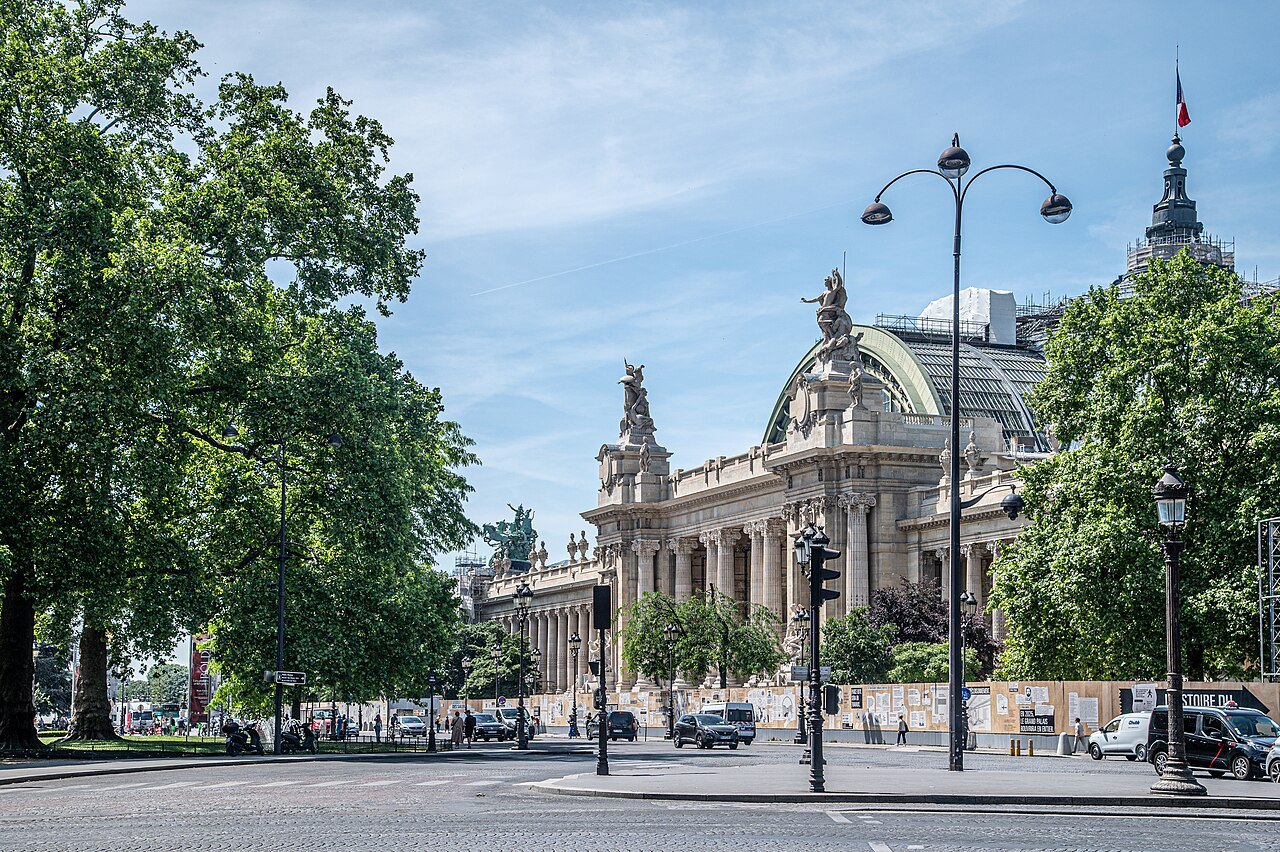
- 1The naveA hall about 660 feet long under a vault of iron and glass, painted a pale reseda green.
- 2The quadrigasTwo copper chariots by Georges Récipon rearing over the corners of the main front.
- 3The Petit PalaisCharles Girault's museum of the city's fine arts, built around a curved garden court.
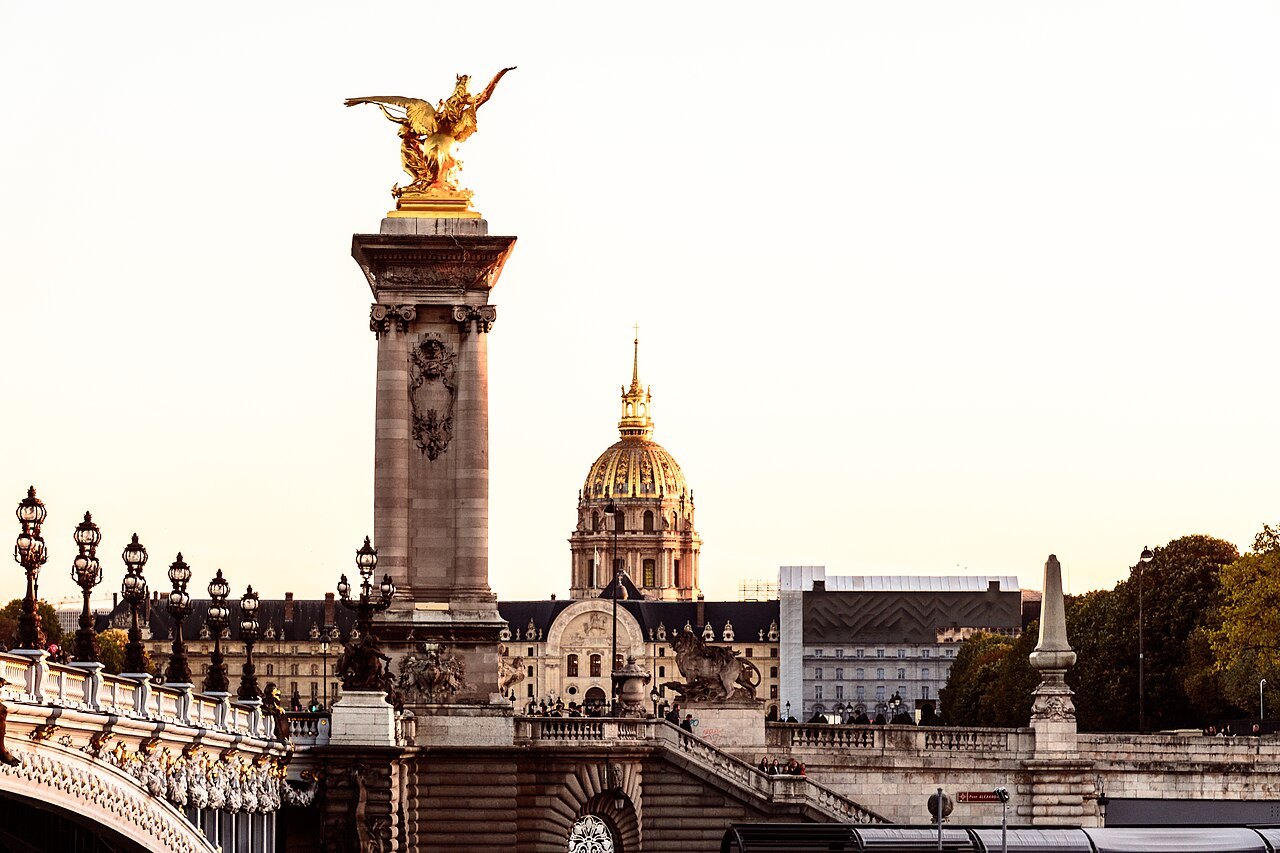
- 4The gilded FamesFour winged figures holding Pegasus on tall stone columns at the bridge's corners.
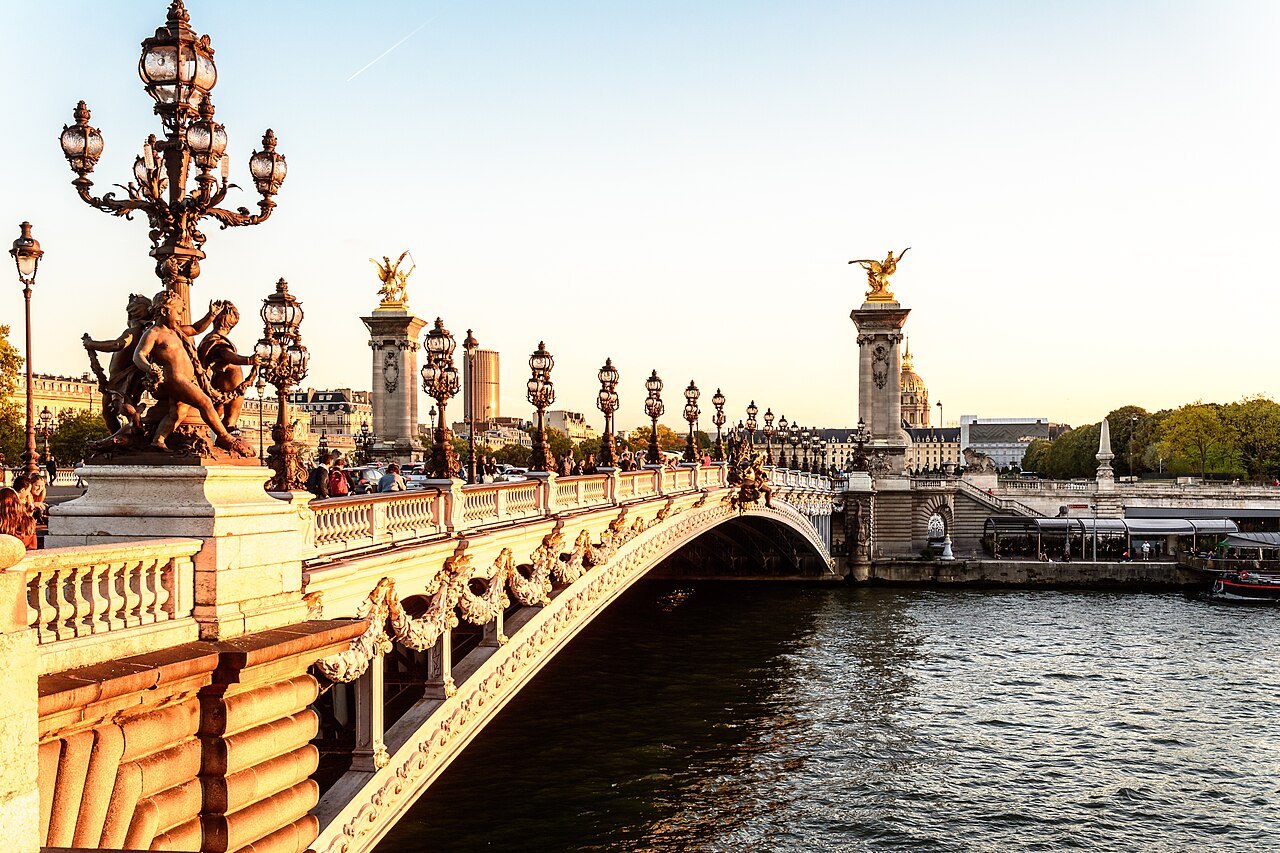
- 5The bridge's lampsRows of bronze lamps, cherubs and nymphs along a single low steel arch.
The sight in full
Reading the place
Why it matters
Between the Champs-Élysées and the Seine, in the 8th arrondissement, stands the most complete surviving piece of the Paris of the Belle Époque. For the Universal Exposition of 1900 the city tore down an older exhibition hall and built in its place two palaces facing each other across a new avenue, the Grand Palais and the Petit Palais, with a new bridge, the Pont Alexandre III, carrying the same axis over the river to the Invalides.
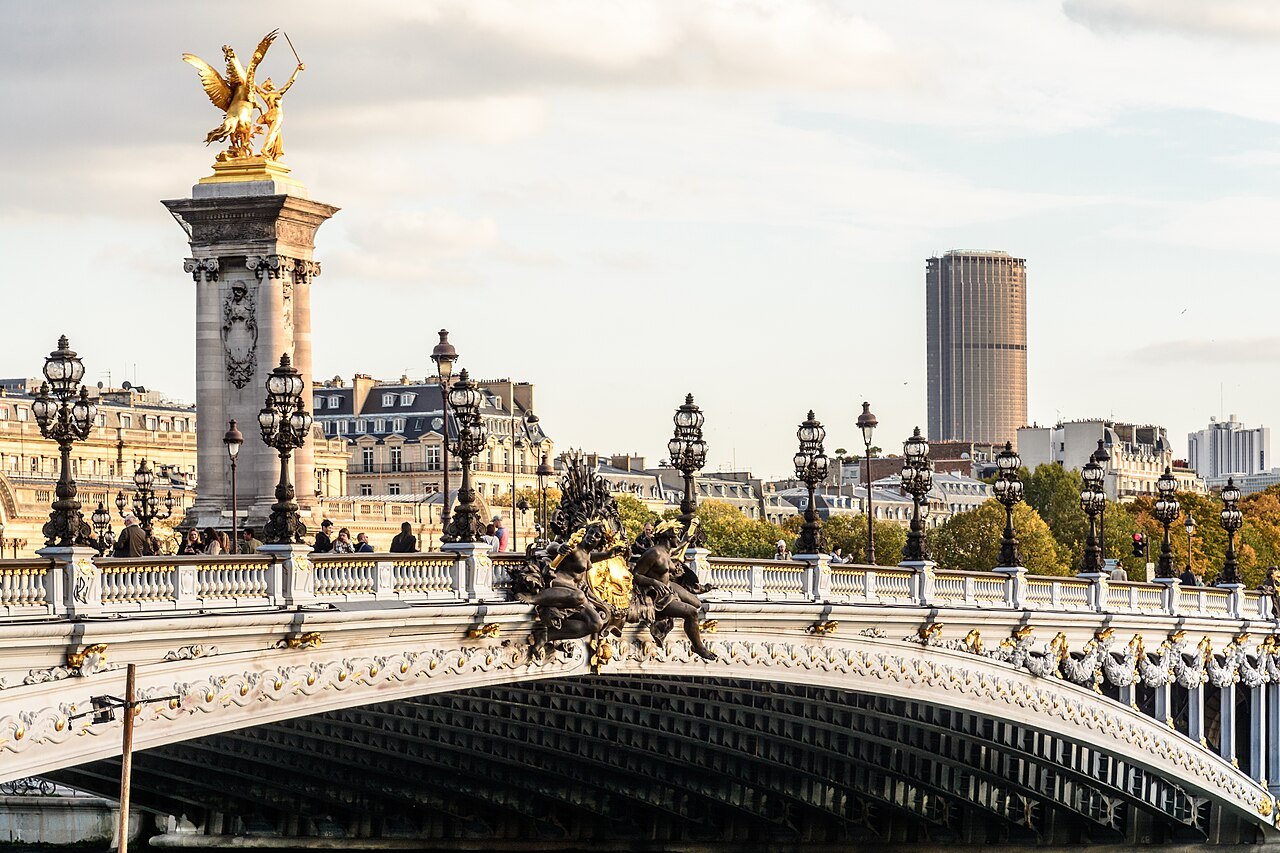
All three survive, and all three have been restored. The Grand Palais, under a roof of glass and iron, is again the city's great hall for art fairs and exhibitions; the Petit Palais is the city's own museum of fine arts; and the bridge, with its gilded statues and lamps, is the one people photograph from every angle.
An exposition's palaces
Construction of the Grand Palais began in 1897, after the old Palace of Industry was demolished to prepare for the exposition. It was built as a hall for official artistic events, and the inscription on its pediment calls it a monument dedicated by the Republic to the glory of French art. The competition to design it ended in a compromise, and the work was divided among four architects, Henri Deglane, Albert Louvet, Albert Thomas and Charles Girault, each responsible for one part.
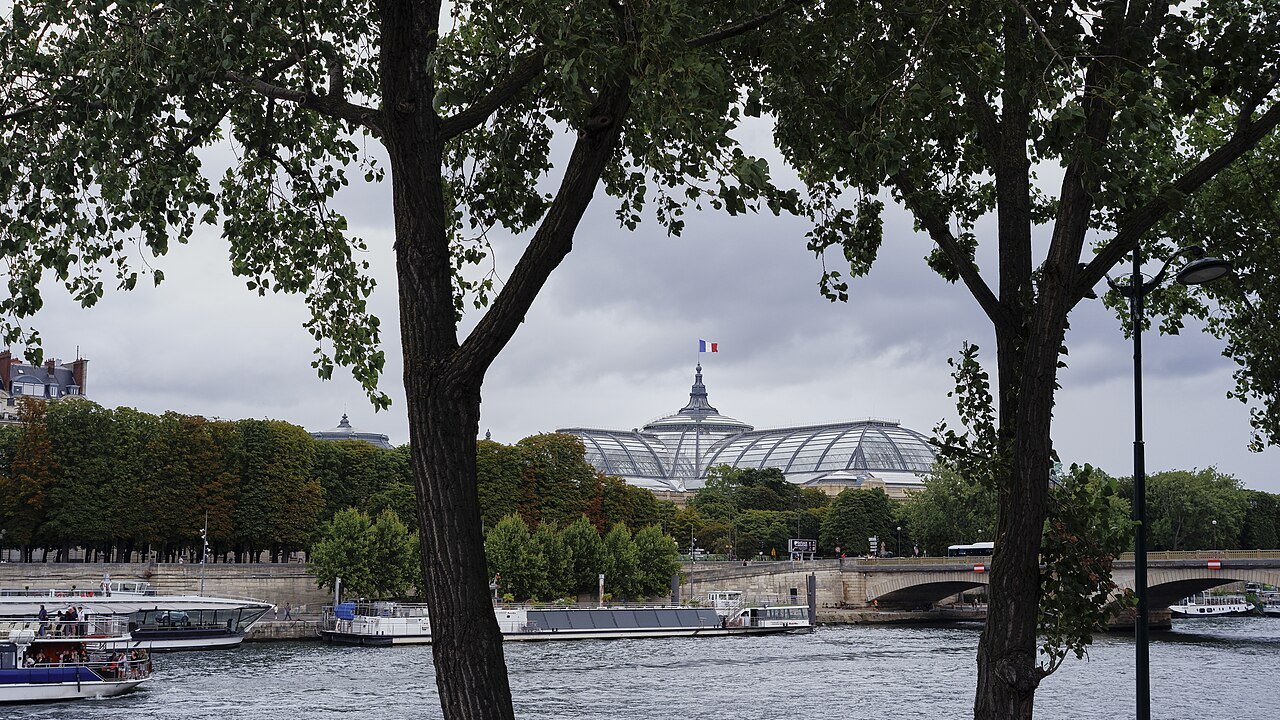
Its outside is Beaux-Arts stone, with columns, sculpture and mosaics. Its inside was modern: a steel and iron frame, some of the first reinforced concrete in Paris, and a nave covered by a glass roof of about 150,000 square feet. On the corners of the main front, two great copper quadrigas by Georges Récipon, chariots drawn by rearing horses, crown the building.
What you see: the Grand Palais
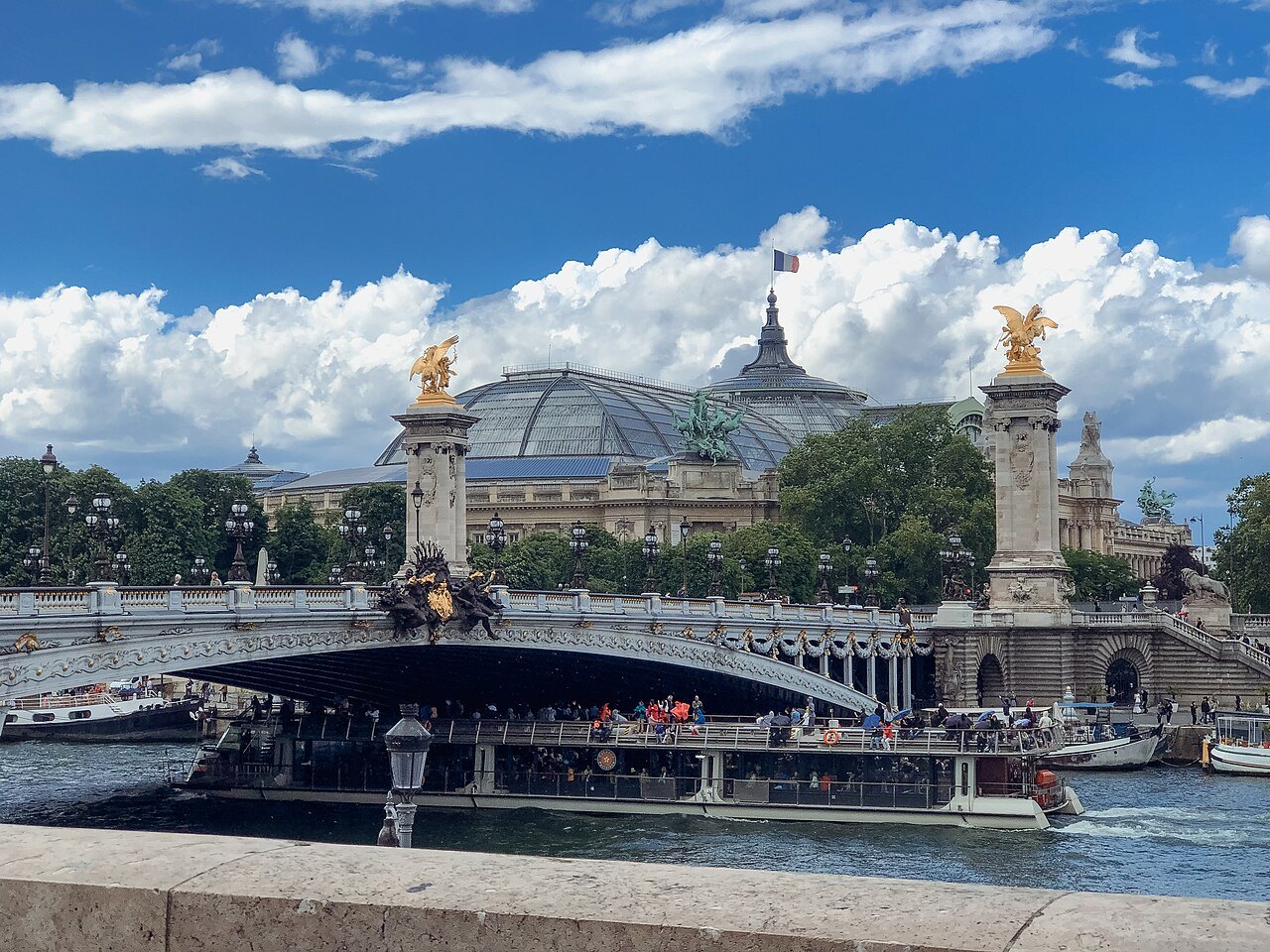
The nave is one of the largest spaces in Paris, about 660 feet long and 160 feet wide, and on a sunny day the light through the glass is extraordinary. Its ironwork is painted a pale green. Over the decades layers of paint had turned it almost gray, and when the restorers searched for the original color they found that the paint company that supplied it in 1900 was still in business and still had its records: the color was pale reseda green, and it was restored.
The building has needed a great deal of care. In 1993 a glass panel fell from the roof, and the nave was closed until 2007. A second, four-year renovation closed it again; it reopened for the Olympic Games of 2024, when the nave hosted the fencing and taekwondo competitions, and the whole restored building reopened in June 2025. What is on inside depends on the exhibition calendar, so the nave may hold an art fair, a show or a concert.
What you see: the Petit Palais
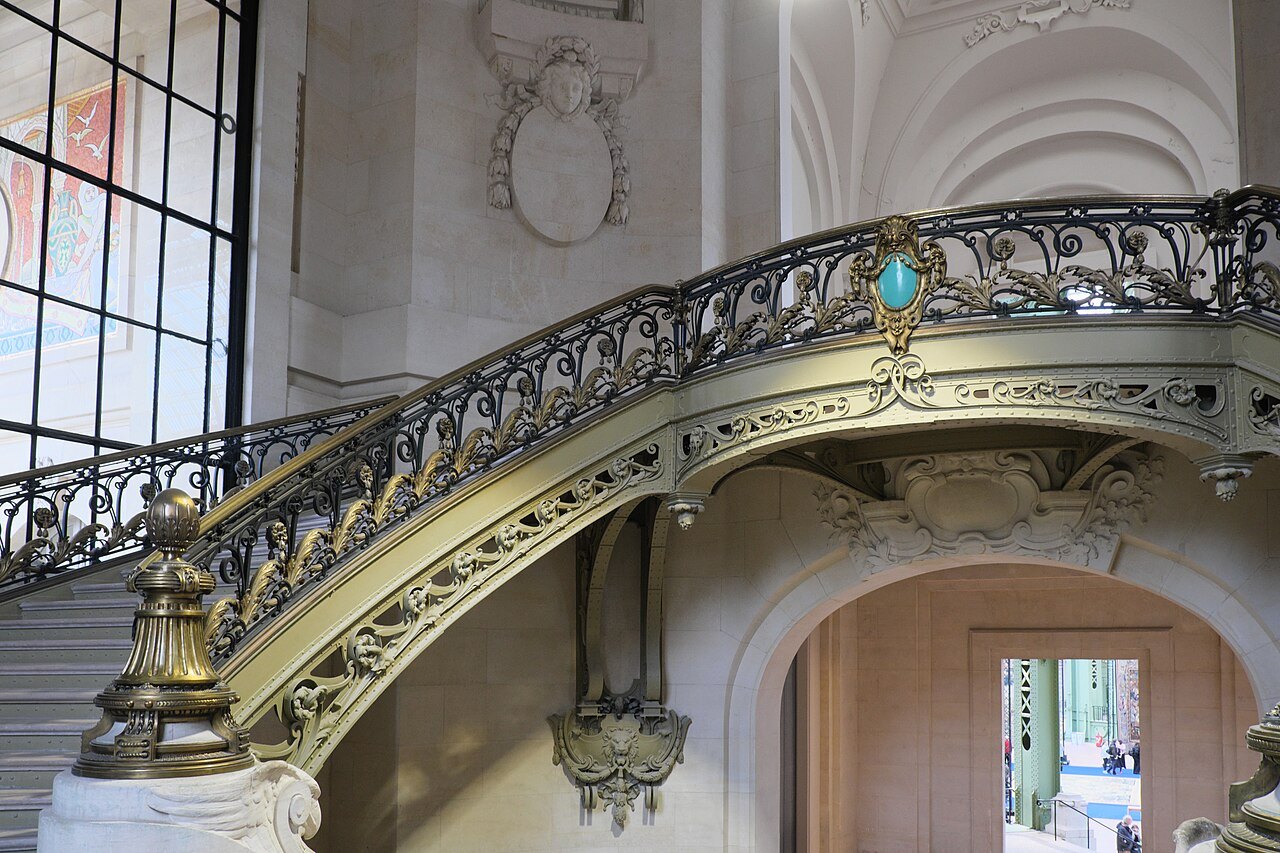
Across the avenue, the Petit Palais was designed by Charles Girault, who won the competition for it. It draws on French architecture of the late seventeenth and early eighteenth centuries, with a monumental porch at its center under a dome reached by a broad flight of steps, and its dome and Ionic columns answer the Invalides across the river. Inside, the building wraps around a semicircular garden court ringed by a peristyle, one of the quietest places near the Champs-Élysées. The galleries were planned for every kind of collection: outer galleries for objects, inner galleries lit from above for paintings, and the entrance rotunda and main gallery for sculpture.
Since the exposition it has housed the City of Paris Museum of Fine Arts, and the collection is wider than its name suggests: medieval and Renaissance art in the Dutuit collection, eighteenth-century furniture in the Tuck collection, and paintings by Rembrandt, Rubens, Poussin and Fragonard, with a remarkable nineteenth-century collection of Ingres, Delacroix, Courbet, Monet, Pissarro and Cézanne.
The Pont Alexandre III
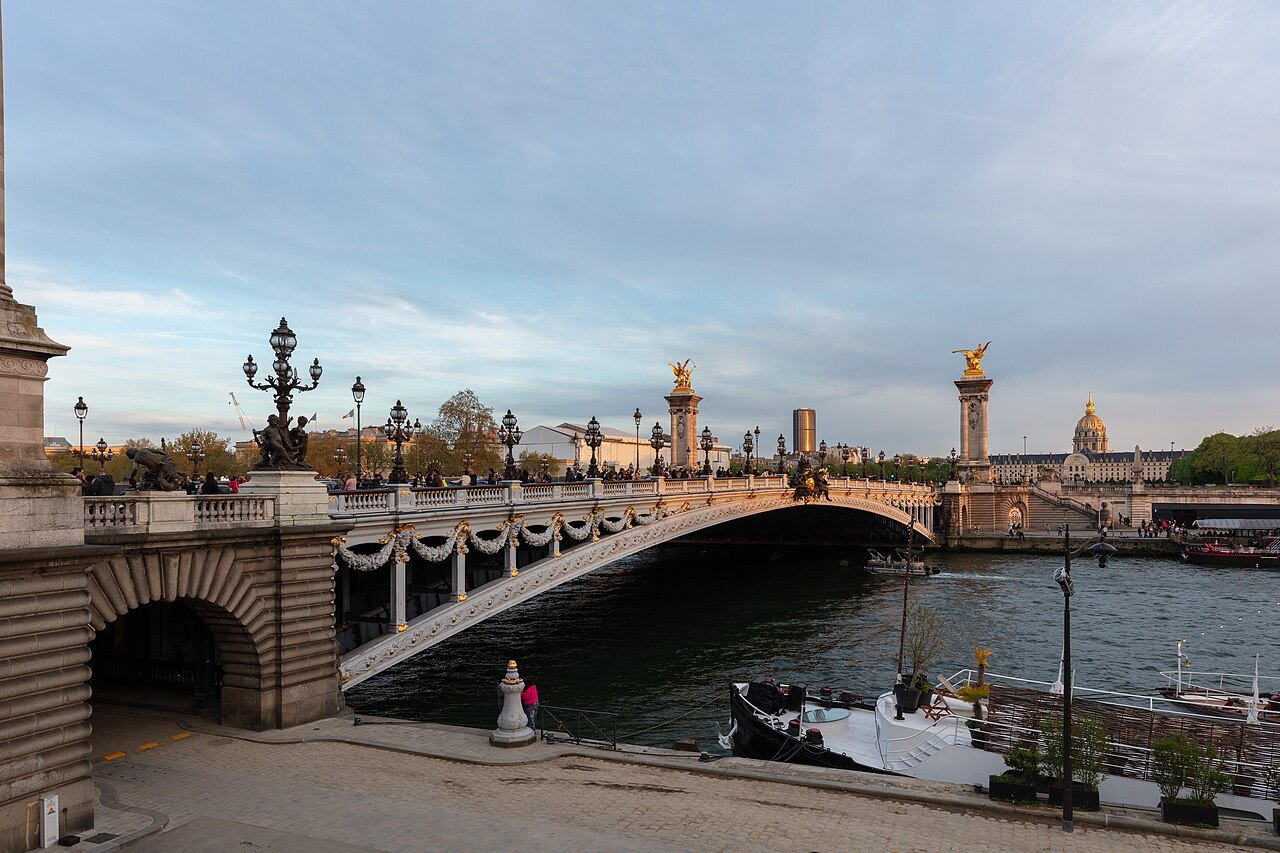
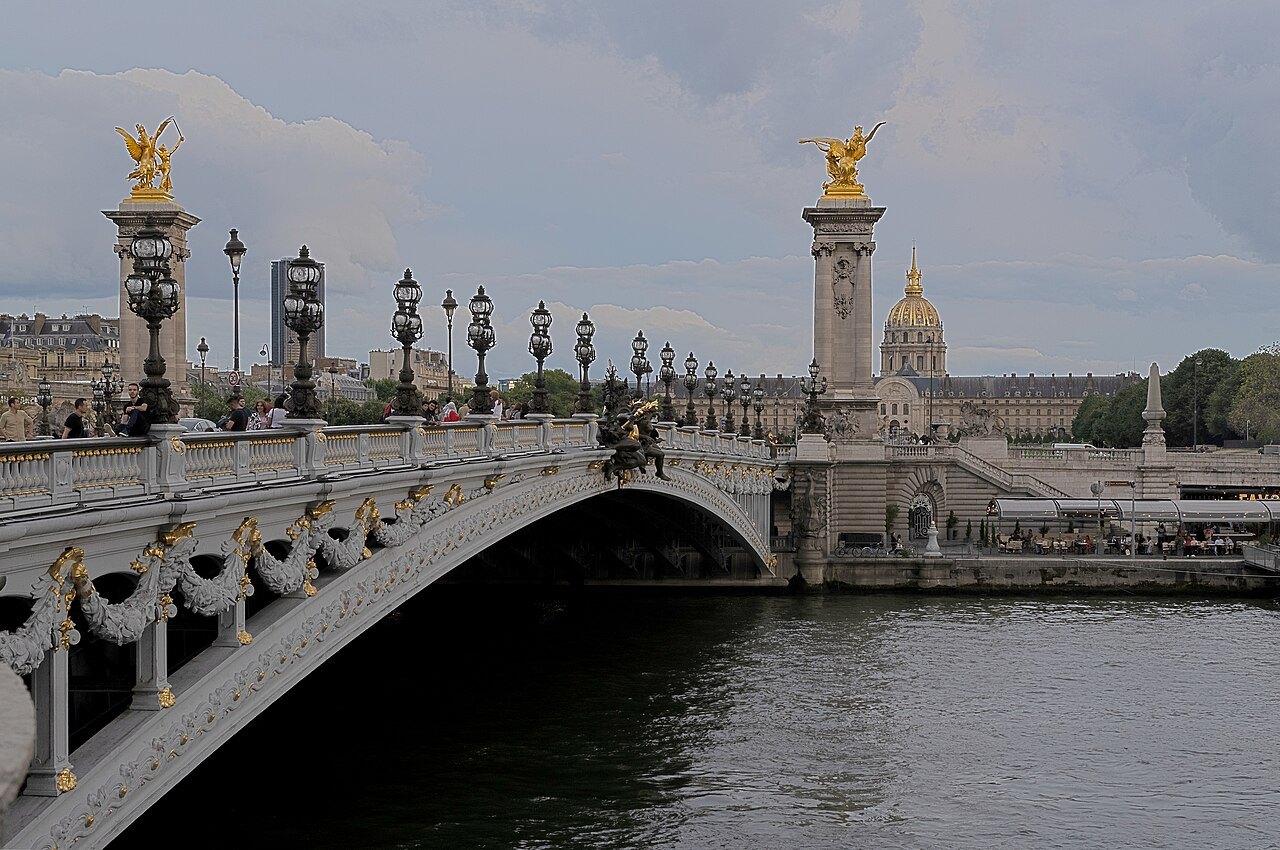
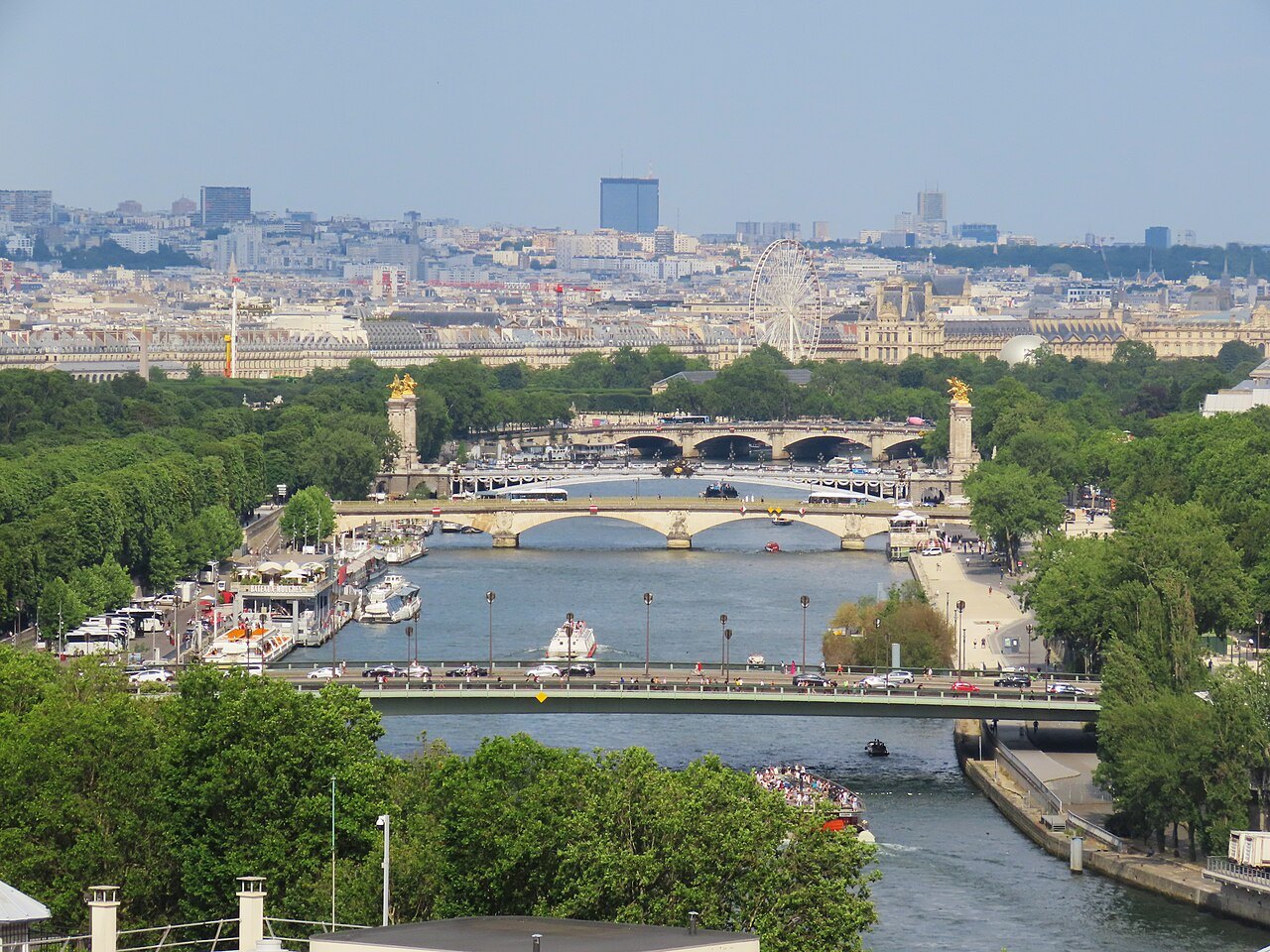
The bridge was built between 1896 and 1900 and named after Tsar Alexander III of Russia, who had concluded the Franco-Russian alliance in 1892; his son, Nicholas II, laid the foundation stone in October 1896. Its designers had a rule to follow: the bridge must not block the view from the Champs-Élysées to the Invalides. So it crosses the Seine in a single, very low steel arch, rising only about 20 feet, a marvel of the engineering of its time.
At each corner, a stone column 56 feet high carries a gilded bronze Fame restraining a winged horse; the heavy columns also act as counterweights for the arch. Along the bridge run Art Nouveau lamps, cherubs, nymphs and sea creatures, and at the center of each side are reliefs of nymphs, the nymphs of the Seine on one side and of the Neva, the river of Saint Petersburg, on the other.
How to visit
The three are best seen together, on a walk from the Champs-Élysées down the Avenue Winston-Churchill, between the two palaces, and across the bridge to the Invalides; allow an hour for the walk and more for whatever exhibition is on. The Petit Palais's collection makes a calm hour on its own. For exhibitions that sell timed tickets, see booking ahead.
From the middle of the bridge, the Eiffel Tower rises downstream and the dome of Les Invalides closes the view to the south.
Myths worth setting aside
The Grand Palais was not built to last only for the fair, as its temporary-looking glass might suggest. It was built as a permanent home for the great art exhibitions of the Republic, and it has served that purpose, with interruptions, ever since.
Nor was the bridge a gift from Russia. It was built by France, and named for the tsar as a symbol of the alliance between the two countries.
Where to go next
Nearby
- Nearby · 8th · 16th · 17thThe Arc de Triomphe and the Champs-ÉlyséesNapoleon's arch of victory, designed by Chalgrin in 1806 and finished in 1836, standing where twelve avenues meet, with the Unknown Soldier beneath it and the Champs-Élysées running down to the Concorde.Read the page →
- Nearby · 7thLes InvalidesLouis XIV's hospital of 1670 for old and wounded soldiers, still partly a home for veterans, with the Army Museum in its courtyards and Napoleon's tomb beneath the tallest church dome in Paris.Read the page →
- Nearby · 1st · 8thThe Tuileries, the Orangerie and the Place de la ConcordeA queen's palace garden of 1564, redrawn by Le Nôtre and opened to the public in 1667, running from the Louvre to the largest square in Paris, with Monet's Water Lilies on its western terrace.Read the page →