What you are looking at
Les Invalides
7th
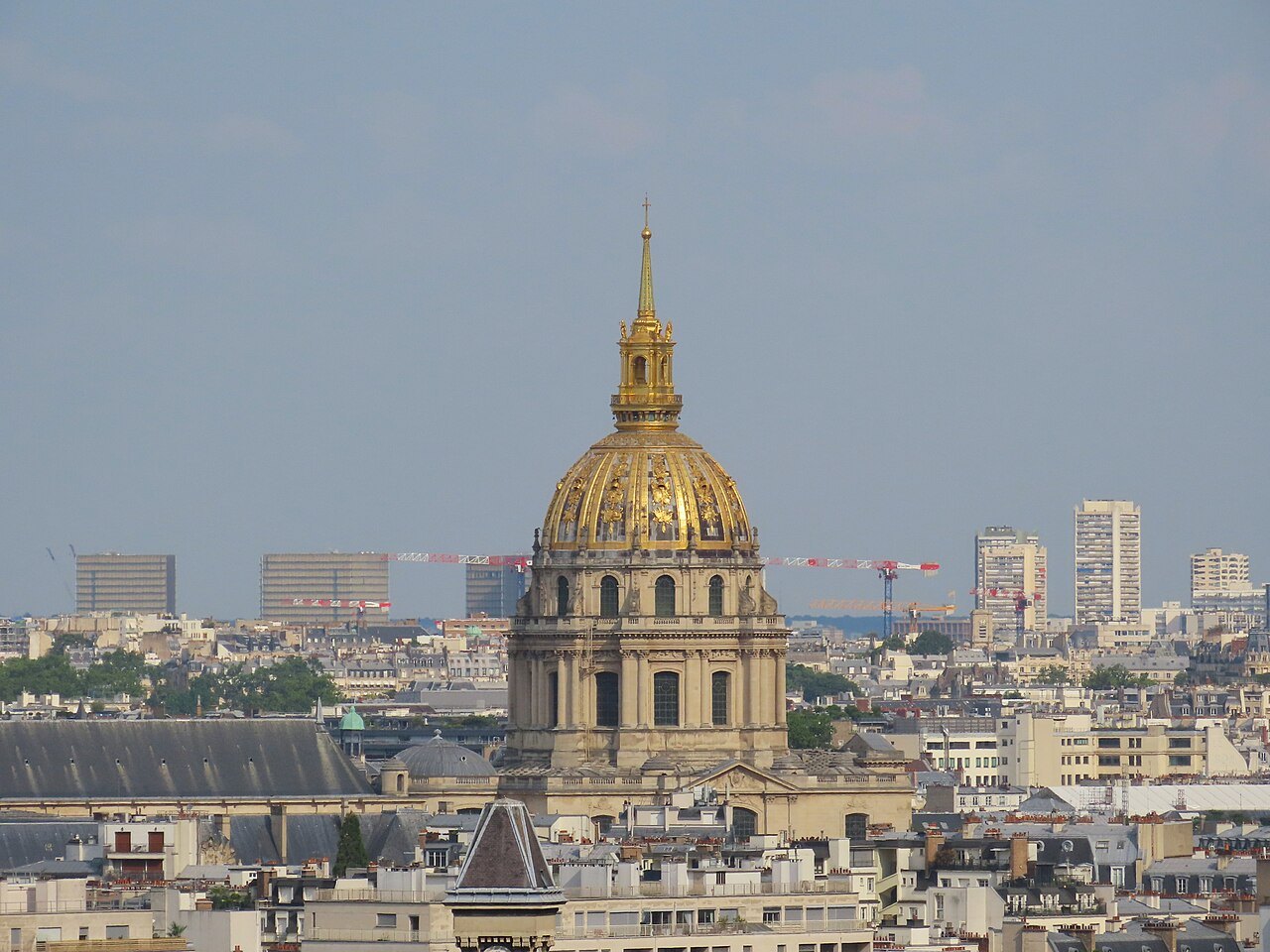
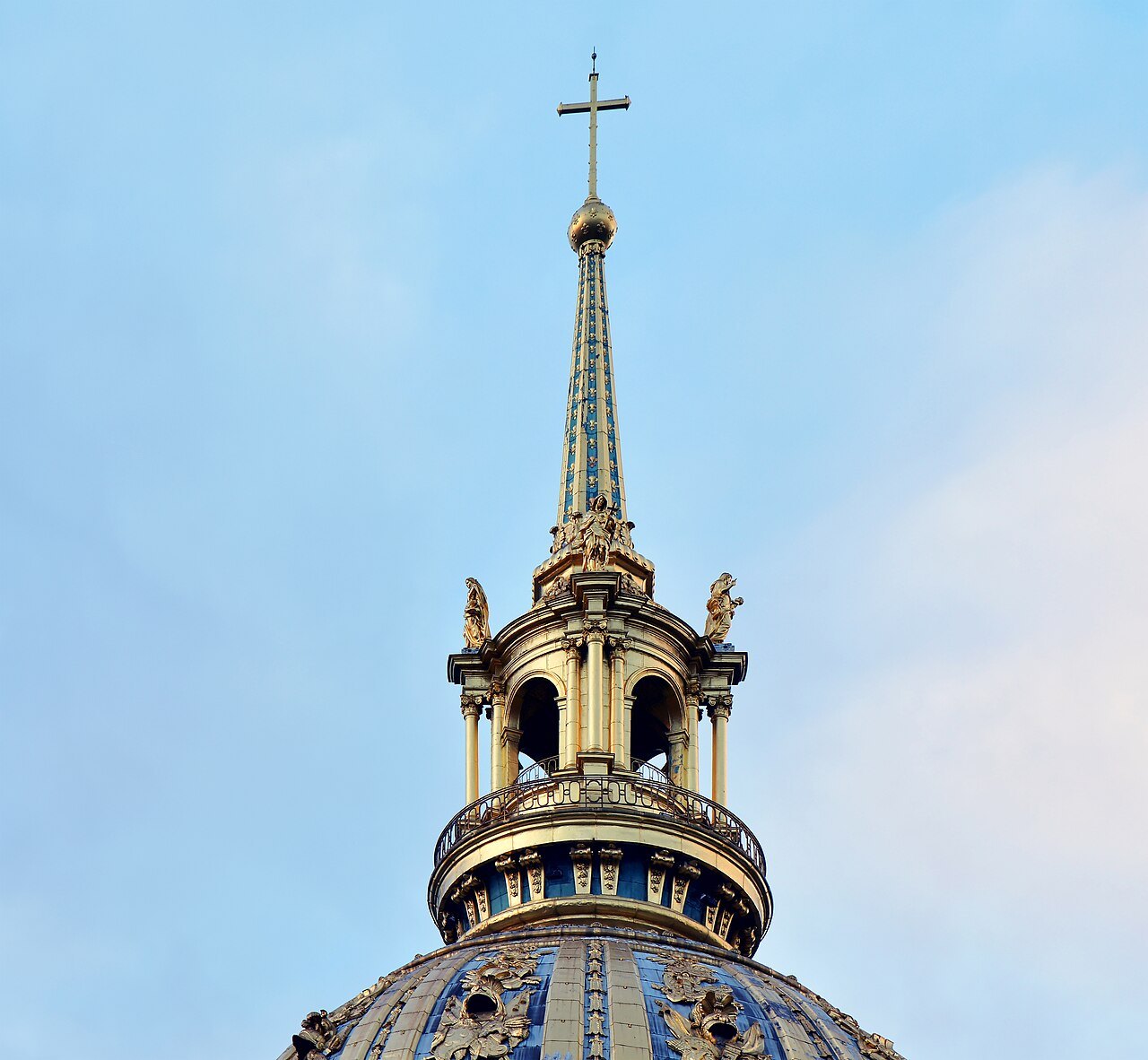
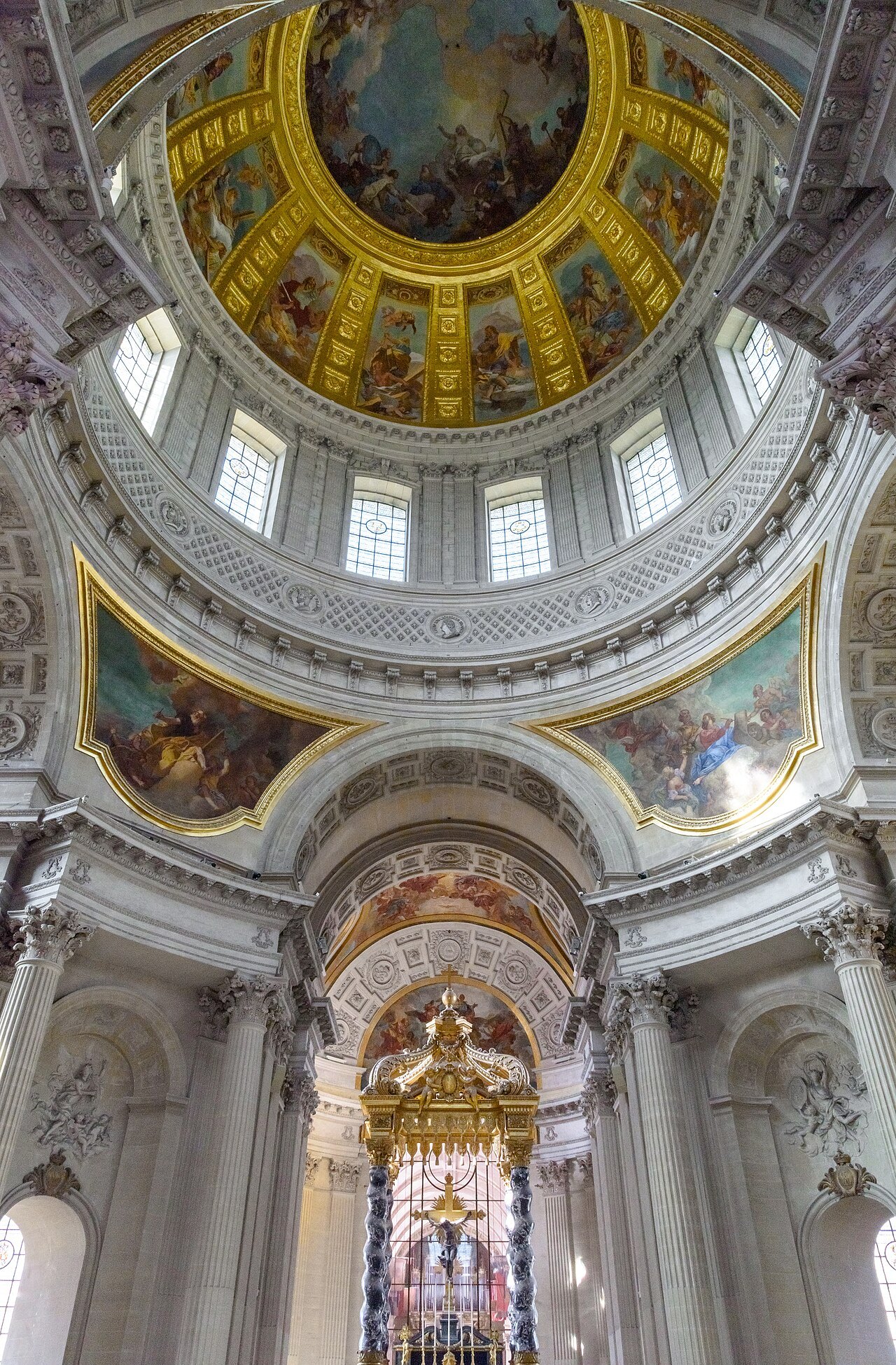
- 1The domeJules Hardouin-Mansart's royal chapel, finished in 1706, its gilded dome 351 feet high.
- 2Napoleon's tombA sarcophagus of deep red quartzite on green granite, in an open crypt ringed by twelve figures.
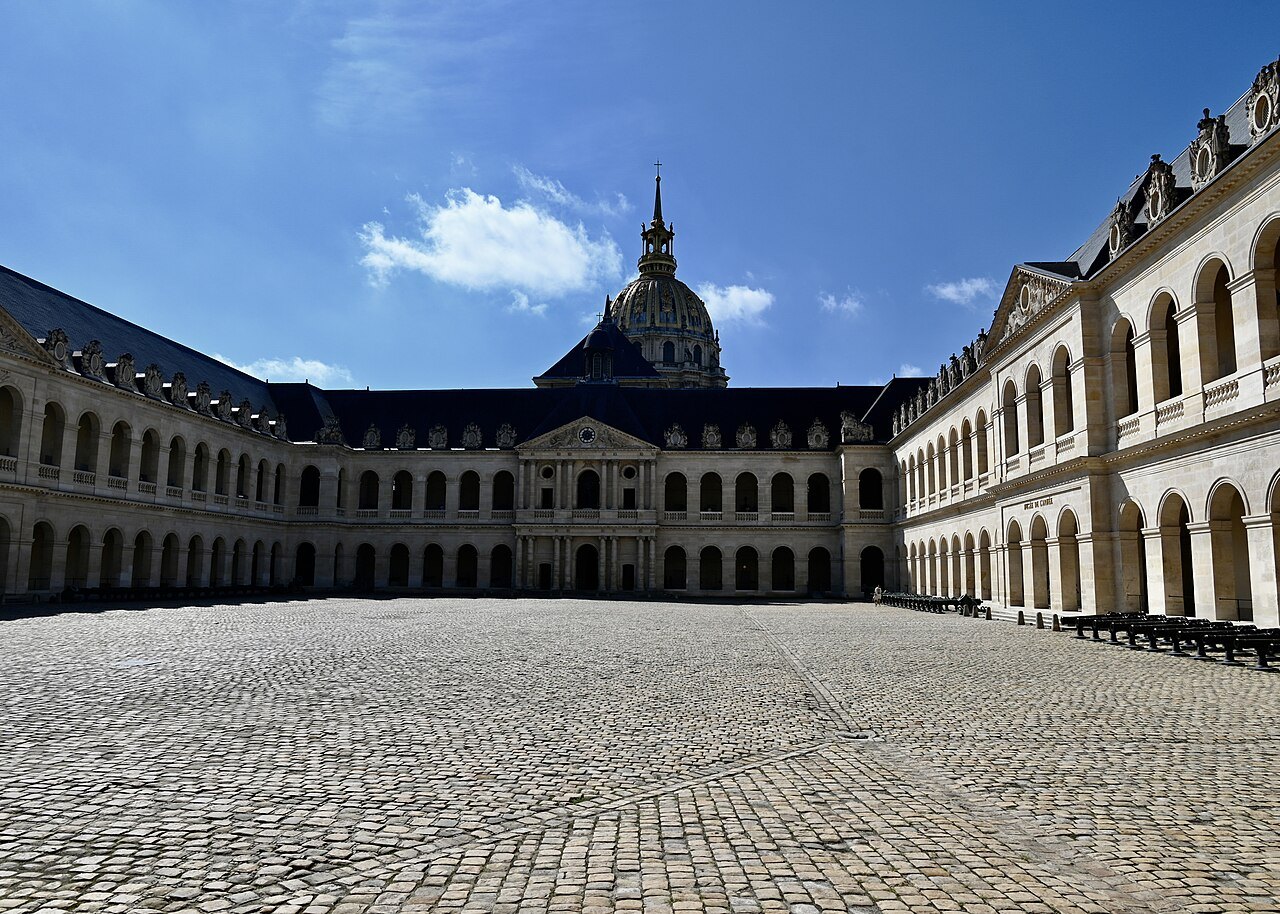
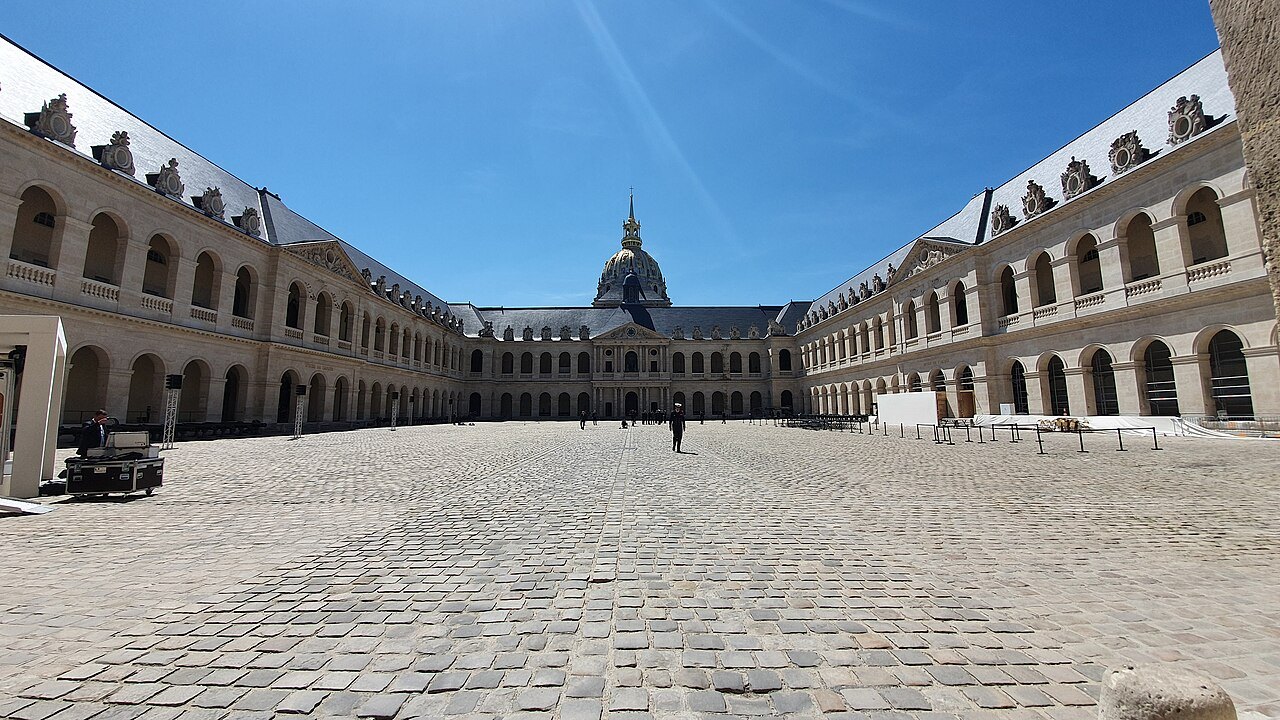
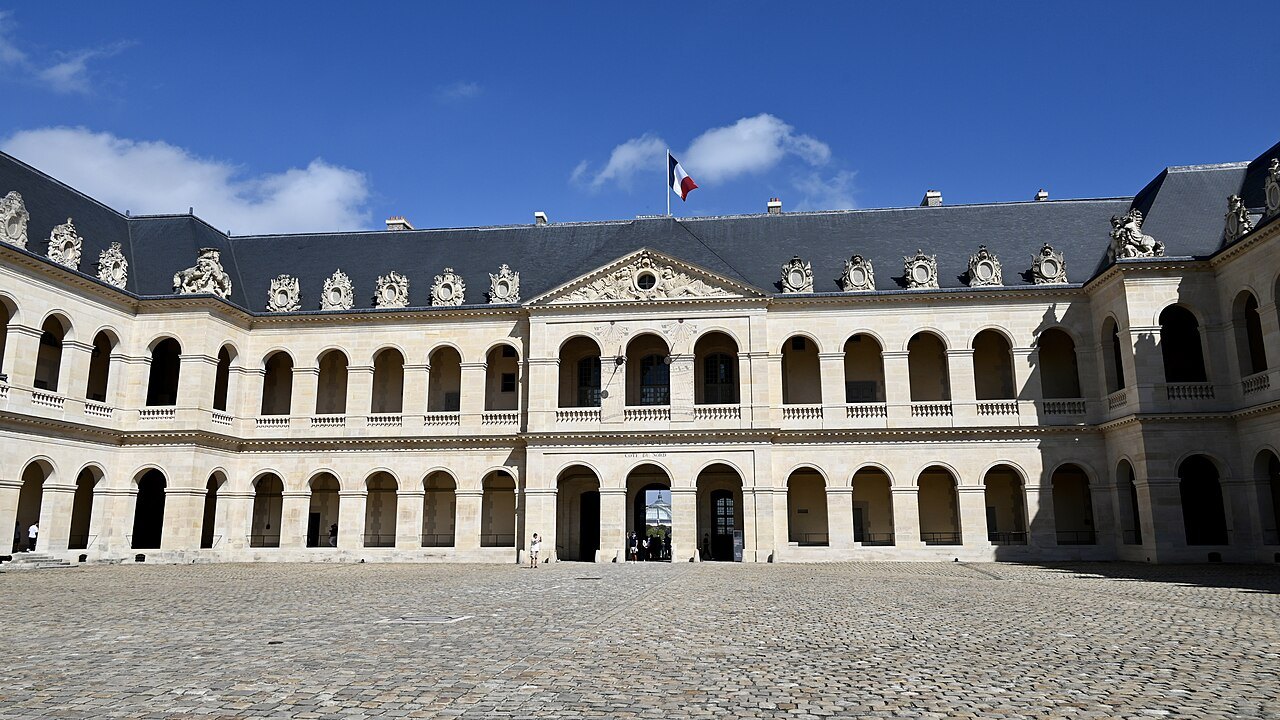
- 3The Cour d'HonneurThe great parade courtyard, two stories of arcades around a square of cobbles.
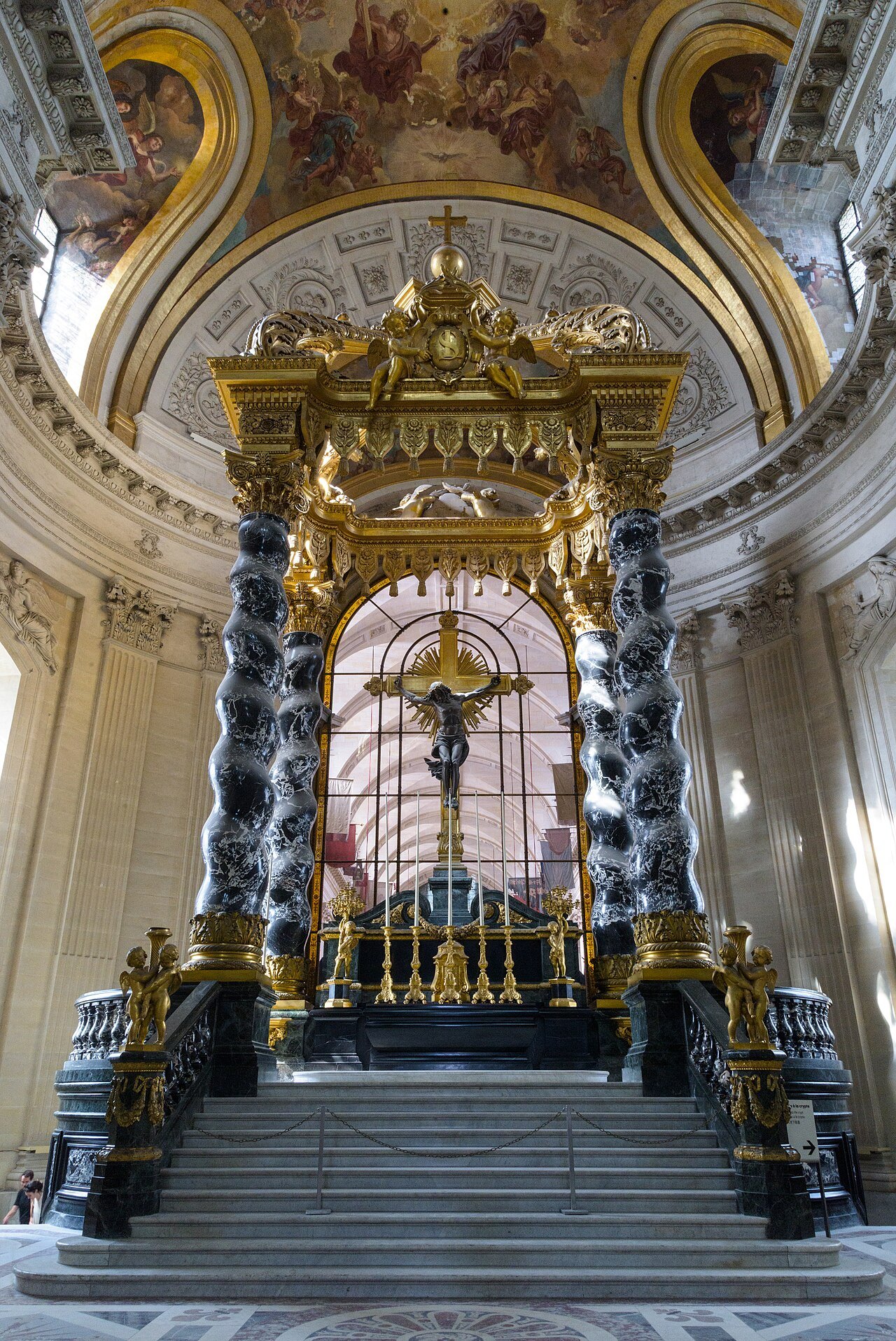
- 4The soldiers' churchSaint-Louis-des-Invalides, hung with flags captured by the French army over three centuries.
- 5The Army MuseumArmor, weapons and uniforms from the Middle Ages to the two world wars.
The sight in full
Reading the place
Why it matters
The Hôtel des Invalides fills a vast site in the 7th arrondissement, between the Seine and the Rue de Babylone, its long front facing the river across a lawn, the Esplanade des Invalides. Louis XIV founded it by an order of 24 November 1670 as a home and hospital for old and disabled soldiers, the veterans of his many wars, and it still houses a hospital and a home for veterans today.
Most visitors come for two things. The first is the Dôme des Invalides, the royal chapel whose dome, ribbed with gilded panels and crowned by a gilded lantern, 351 feet high, is the tallest church building in Paris and one of the landmarks of the skyline. Beneath it lies the tomb of Napoleon. The second is the Musée de l'Armée, the army museum, whose collections fill the old wings around the courtyards.
A king's hospital
The first architect was Libéral Bruant, and the site was chosen in what was then the suburban plain of Grenelle. By 1676 the buildings had a river front of about 640 feet and fifteen courtyards, the largest of them the Cour d'Honneur, designed for military parades. That same year Jules Hardouin-Mansart designed the church complex: a church for the soldiers and, joined to it, a domed royal chapel. The chapel was finished in 1706.
It was a hospital, a hospice, a barracks and something like a monastery at once, run by a governor, exempt from taxes, and paid for from the revenues of church properties. Louis XIV came in person to open it in October 1674, when the first residents moved in, though work on the church had not yet begun.
Hardouin-Mansart gave the dome the form of a Greek cross on a square plan, rising so high that it dominates the long, low front, and asked the painter Charles de La Fosse to paint the cupola and its corners. The soldiers worshipped in the nave, and the king's family in the domed chapel, which served as its choir.
On the morning of 14 July 1789 a crowd stormed the Invalides and took the cannons and muskets stored in its cellars. They used them against the Bastille later the same day.
Napoleon's tomb
Napoleon died in exile on Saint Helena in 1821 and was buried there. In 1840 King Louis-Philippe arranged for his remains to be brought back to France, an event remembered as the return of the ashes, and he was laid under the dome with a grand ceremony. His permanent tomb took another twenty-one years. The architect Louis Visconti designed it but died before it was finished, and it was inaugurated in 1861.
The sarcophagus, of deep red quartzite on a base of green granite, stands in an open circular crypt cut into the floor beneath the dome, so that visitors look down on it from the balustrade above before descending to walk around it. A gallery surrounds the crypt, carried on twelve pillars and decorated with reliefs and tall carved figures celebrating Napoleon's achievements.
Around the dome, in its side chapels, lie other soldiers and members of Napoleon's family: Marshal Turenne, whose monument Napoleon had moved here; a cenotaph for the heart of Vauban, the great military engineer of Louis XIV; and Jérôme Bonaparte, the emperor's youngest brother, who governed the Invalides in the middle of the nineteenth century.
What you see: the courtyards and the church
Enter from the esplanade side and walk into the Cour d'Honneur, the parade ground: two stories of arcades around a cobbled square, with the church front at the far end. The rooms off these arcades hold the Army Museum, founded in 1905 from two older collections, with armor and weapons from the Middle Ages to the age of Louis XIV and galleries on the two world wars.
The soldiers' church, Saint-Louis-des-Invalides, lies behind the dome. It is the cathedral of the French armed forces, and along its nave hang the flags that the army has captured from its enemies. Its organ, built between 1679 and 1687, has a case designed by Hardouin-Mansart. Also in the building, under the roofs, is the Musée des Plans-Reliefs, the royal collection of scale models of fortified towns and harbors, made so that kings and ministers could study their defenses. It moved here from the Louvre in 1777 and has stayed ever since.
How to visit
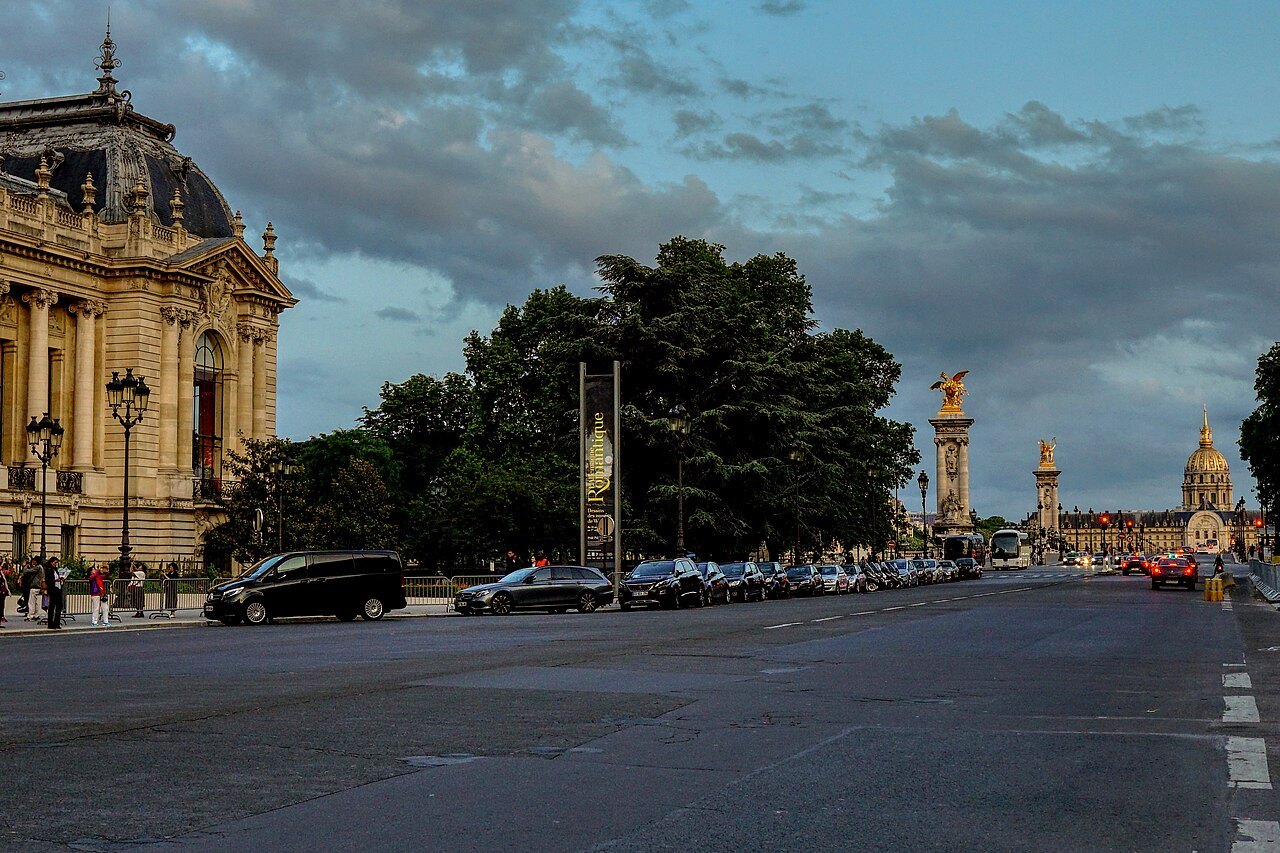
The Army Museum and the Dôme with Napoleon's tomb are visited together; allow two hours at least, more if the museum's war galleries interest you. For advance tickets, see booking ahead. The Esplanade des Invalides, the long lawn in front, runs north to the river and the Pont Alexandre III, which was built on the same axis.
The esplanade itself is part of the story. The long lawn in front of the building was laid out so that the dome could be seen from the river, and it was covered with pavilions for the Universal Exposition of 1900, the same exposition for which the bridge was built on its axis.
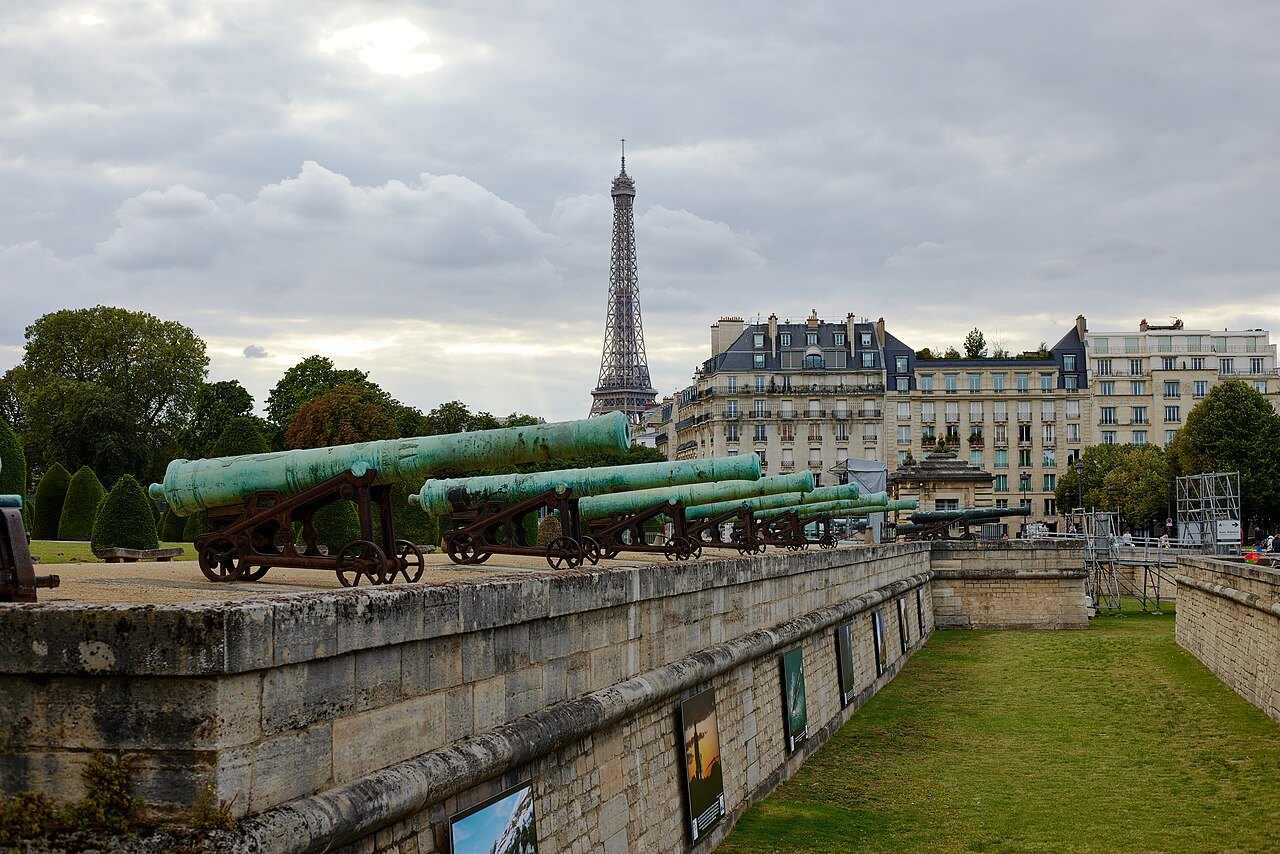
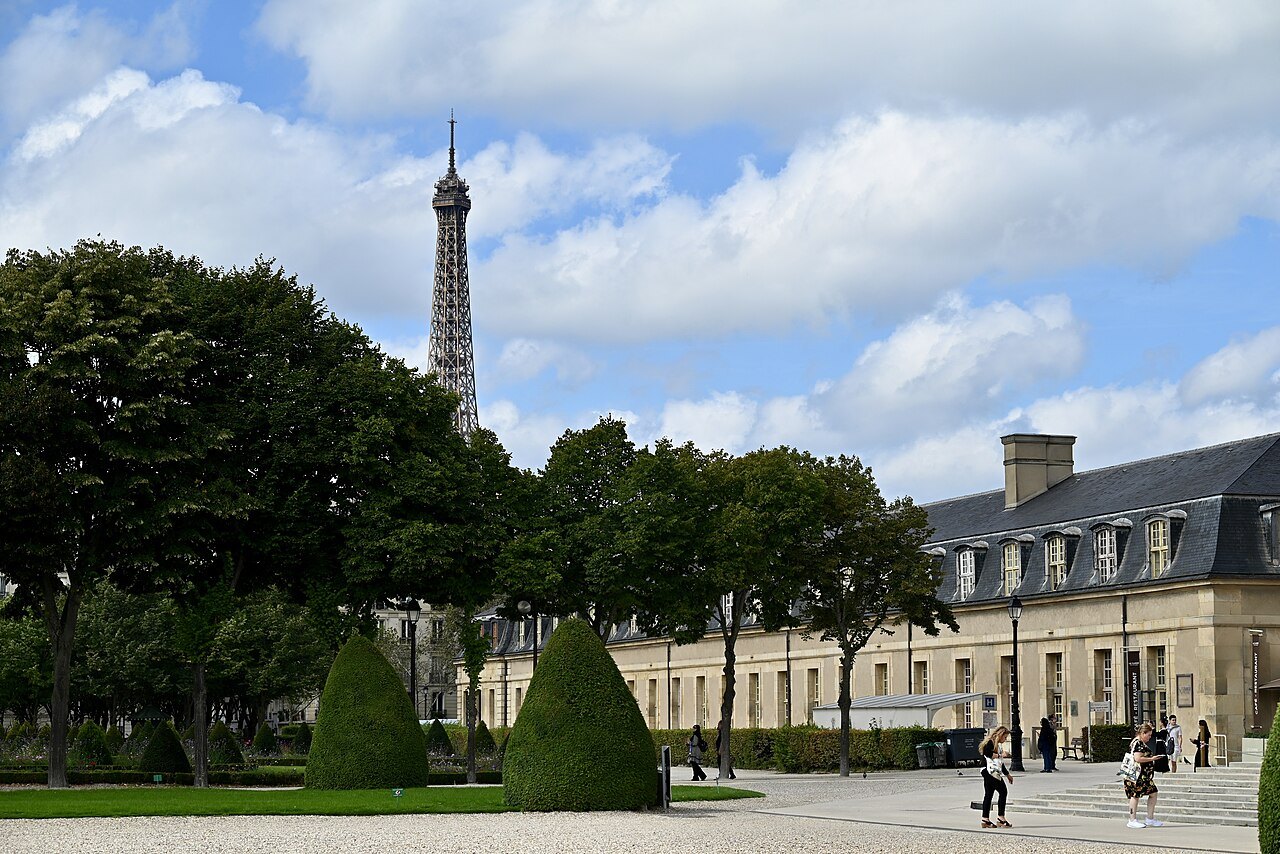
The Musée Rodin is next door to the east, and the Eiffel Tower is a walk west across the Champ de Mars.
Myths worth setting aside
Napoleon is not lying in the stone itself. His body was placed in the sarcophagus on 2 April 1861 inside six successive coffins, one within another; what the visitor sees is only the outer shell.
Nor are the Invalides only a monument. The word invalides meant disabled soldiers, and the institution Louis XIV founded still cares for them in a hospital on the site.
Where to go next
Nearby
- Nearby · 7thThe Musée RodinThe eighteenth-century Hôtel Biron, Rodin's workshop from 1908 and a museum of his work since 1919, with The Thinker, The Gates of Hell and The Burghers of Calais in its garden.Read the page →
- Nearby · 7thThe Eiffel TowerWrought iron, 1,083 feet tall, built between 1887 and 1889 as the centerpiece of a World's Fair and meant to come down after twenty years, it was saved by the radio and has stood over the Seine ever since.Read the page →
- Nearby · 8thThe Grand Palais, the Petit Palais and the Pont Alexandre IIIThree survivors of the Universal Exposition of 1900: an exhibition hall under the largest glass roof in Paris, a museum of fine arts around a garden court, and the most ornate bridge on the Seine.Read the page →