THE RER B, THE TERMINAL SHUTTLE AND THE TAXI RANK
How do you get from Charles de Gaulle Airport to central Paris?
Most visitors take the RER B, which runs from the airport's two stations to the Gare du Nord, Châtelet and the Left Bank. How the terminals connect, which train to board, how to handle luggage on a commuter line, and when a taxi makes more sense.
The answer in full
Read on
The short answer
By train. Charles de Gaulle, the main international airport of Paris, lies about fourteen miles northeast of the center, and the RER B, one of the regional express lines, runs from the airport straight into the city. It stops at the Gare du Nord, crosses the center underground to Châtelet–Les Halles, and continues south under the Left Bank toward the Luxembourg Gardens. From any of those stations, the Métro takes you on to your hotel.
The alternative is a taxi from the rank outside your terminal, which takes you to your door and can use the city's bus lanes on the way in. With heavy bags, small children or a late arrival, it is often worth it; with light luggage and a hotel near the RER, the train is simpler than it looks.
The airport itself
Charles de Gaulle opened in 1974 at Roissy-en-France, and it is often called simply Roissy. It is named after the wartime leader and president Charles de Gaulle, whose initials form its three-letter code, CDG. It is the main hub of Air France and the busiest airport in the European Union: in 2024 it handled more than seventy million passengers, and more than a hundred airlines fly there.
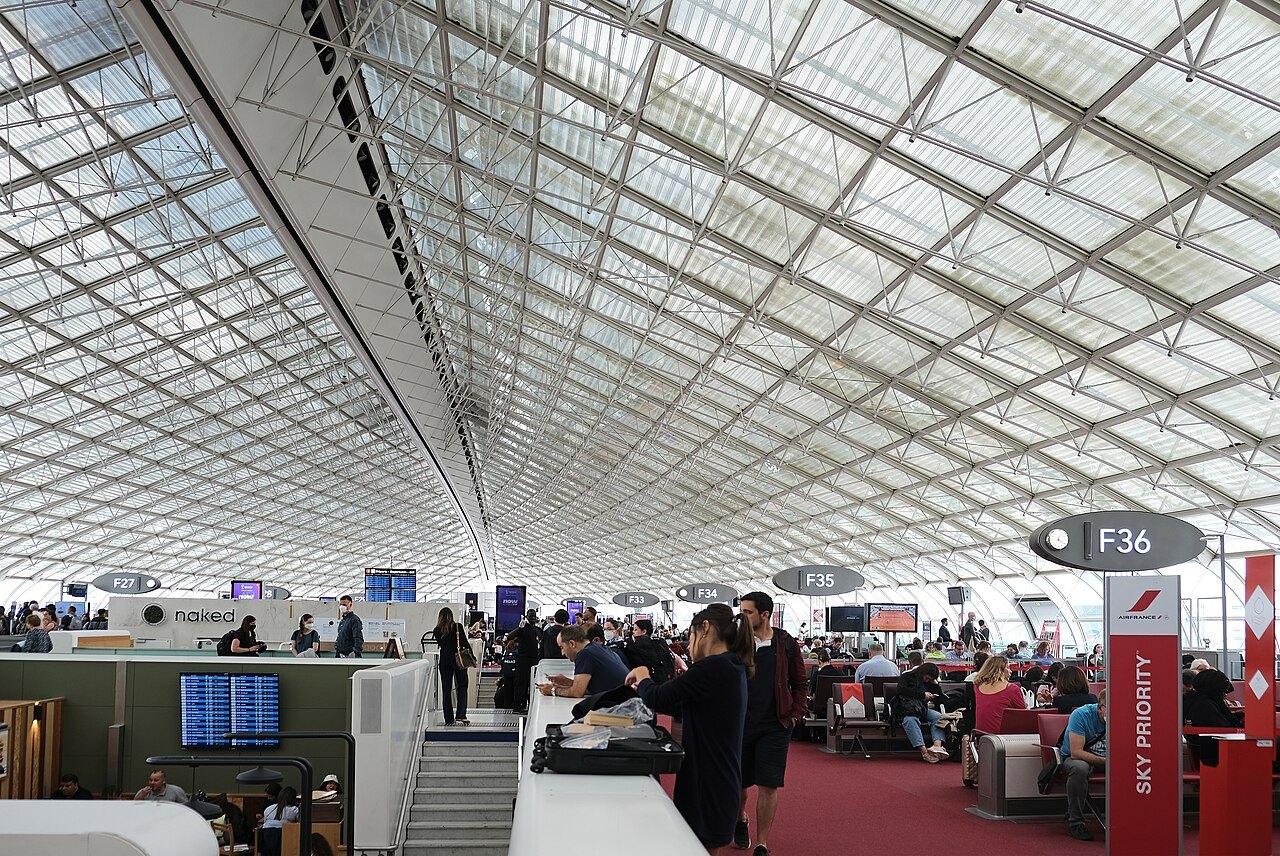
Its size is the thing to prepare for. Allow time on arrival for the walk from your gate to passport control, the baggage hall and the station, and allow more on departure, when the check-in halls, security and the long walks between them can take far longer than at a smaller airport.
Finding the train
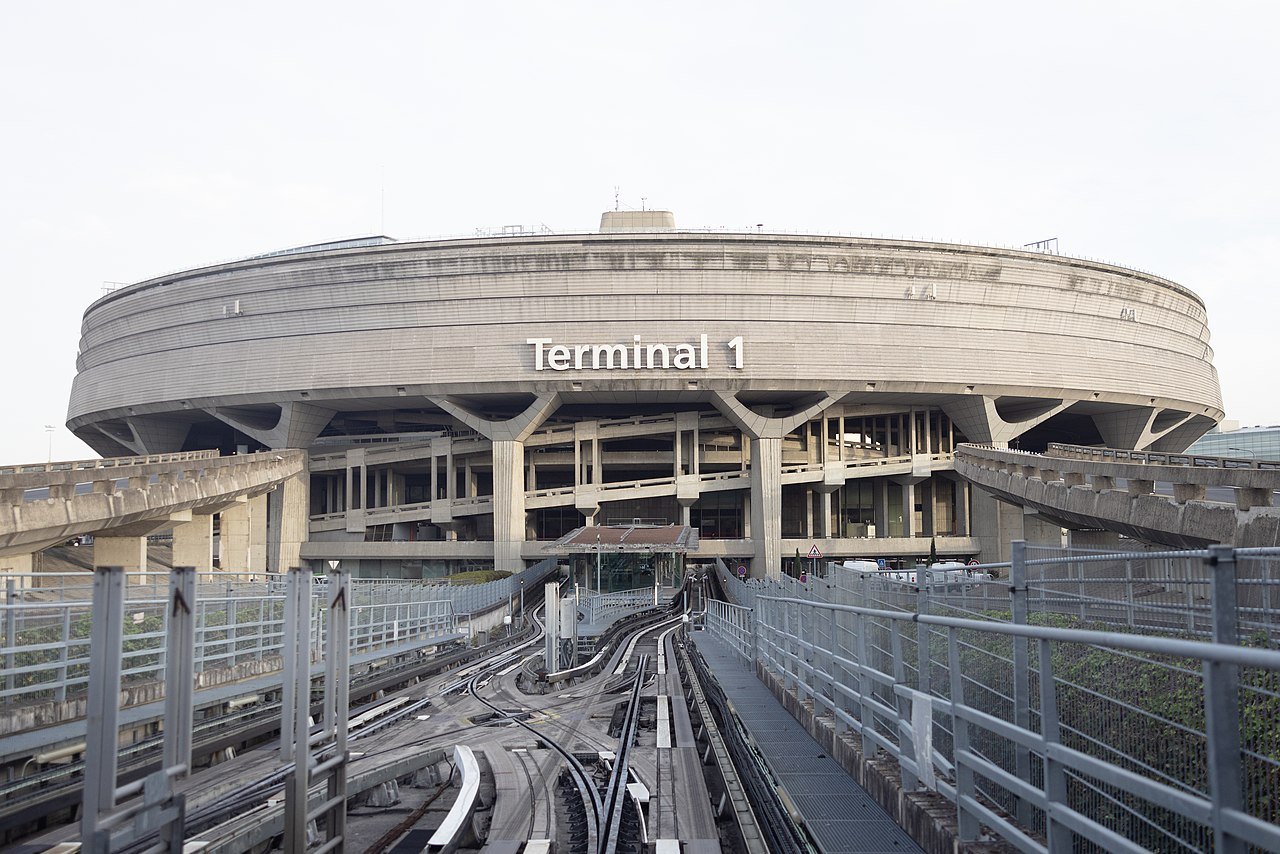
Charles de Gaulle is large, and the first task is to reach one of its two railway stations. Terminal 2 is divided into several halls, lettered from 2A to 2G; the station called Aéroport Charles de Gaulle 2 TGV stands between halls 2C, 2D, 2E and 2F, and most travelers from Terminal 2 can walk to it by following the signs for trains. The second station, Aéroport Charles de Gaulle 1, stands next to Terminal 3, inside the Roissypôle complex.
If you land at Terminal 1, the oldest, or need to move between terminals, take the CDGVAL, a free automated shuttle train that links Terminal 1, the parking lots, the Terminal 3 station and the Terminal 2 station. It is the fastest way from Terminal 1 to the RER. A second automated line, LISA, links Terminal 2E with its satellite halls for the L and M gates.
Both stations sell tickets from machines and at ticket windows, and the regional transport authority's app sells them for your phone. Make sure the ticket you buy is valid for the airport journey, and keep it until you leave the station at the other end; see getting around for how tickets and cards work.
Which train to board
At most times of day two kinds of RER B train leave the airport, about four of each an hour. The express trains run non-stop from the airport to Aulnay-sous-Bois and the Gare du Nord, then stop at every station across Paris; the others stop at every station from the airport onward. The express is quicker, but both reach the same stations in the city, so take whichever comes first if you are in no hurry.
The line is shown on the platform displays by its letter and the name of its terminus at the far end, south of Paris; all trains from the airport go toward Paris, so you cannot board one in the wrong direction. Check only that the train is not terminating early, which the display will show.
Riding a commuter line with luggage
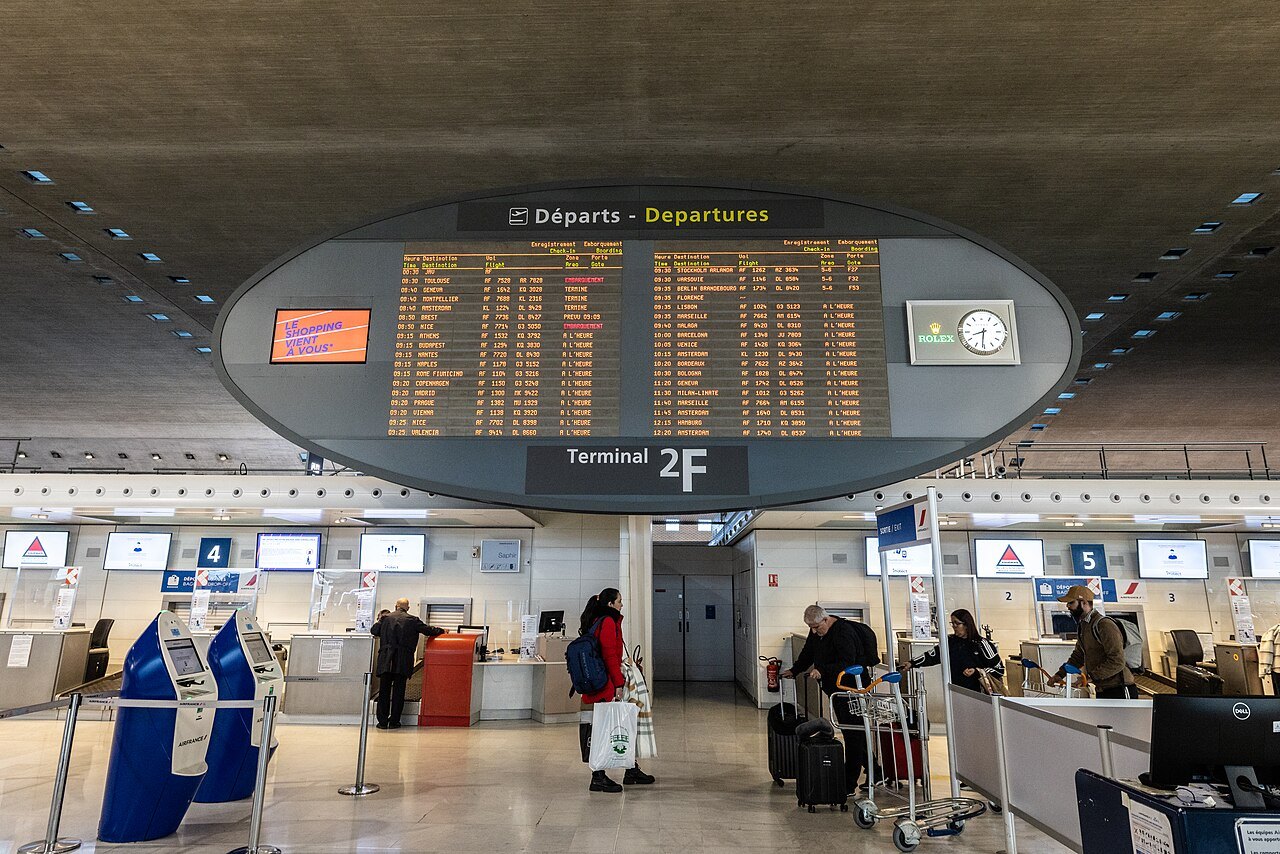
The RER B is an airport link and a busy commuter line at the same time, and French authorities acknowledge that it has long suffered from slowness and overcrowding. Rush hours, when the trains fill with commuters from the northern suburbs, are the hardest time to travel with suitcases. Keep your bags with you and in sight, stand clear of the doors if you can, and have the name of your stop ready.
At the Gare du Nord, the RER platforms connect with several Métro lines and other RER lines. At Châtelet–Les Halles, where five Métro lines and three RER lines meet in one of the largest metro stations in the world, the corridors to the Métro can be long, with stairs and moving walkways; if your hotel is near another RER B station, it may be easier to stay on the train.
Where to get off

Choose your stop by where you are staying. For hotels in the 10th and 9th arrondissements, around the Gare du Nord and the Gare de l'Est or up toward the Opéra, get off at the Gare du Nord. For the Marais, the Louvre and the islands, Châtelet–Les Halles is the natural change to the Métro. For the Latin Quarter and Saint-Germain, stay on through the center to the stations under the Left Bank, which stops near the Luxembourg Gardens. The arrondissement in your hotel's postcode tells you which is closest; see where to stay.
High-speed trains from the airport
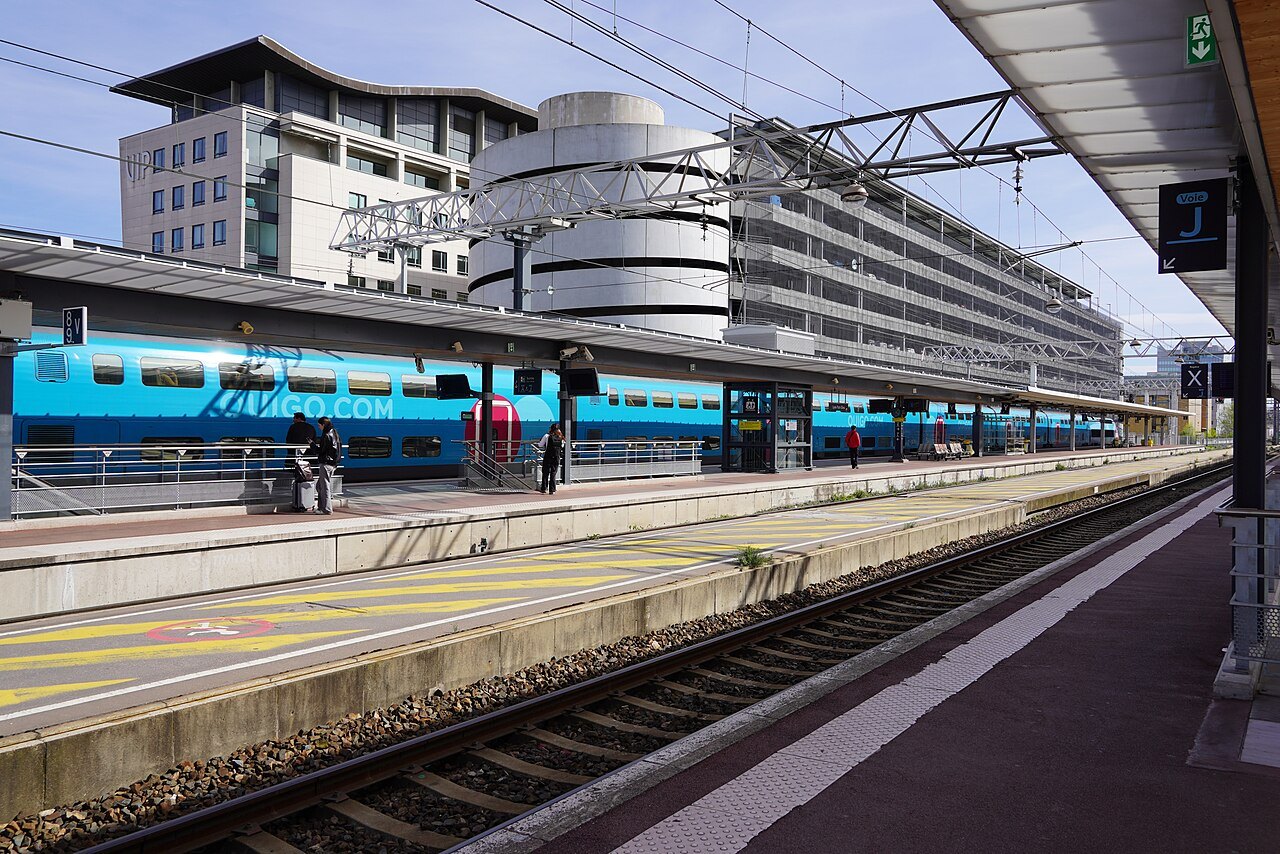
Charles de Gaulle is also a railway junction. The Terminal 2 station is on a high-speed line, and TGV, Ouigo and Eurostar services run from it to cities across France and on to Belgium and the Netherlands. If your trip begins outside Paris, you may not need to enter the city at all: you can take a train from the airport straight to your first destination and come to Paris at the end.
Arriving well
Arriving at Charles de Gaulle is easier with a plan. Before you fly, check which terminal your flight uses, since the walk to the train differs, and decide whether you will take the RER or a taxi. If your room will not be ready when you land, arrange somewhere to leave your bags, so that you can spend the first afternoon in the city rather than in a lobby.
And if you are flying into Orly instead, the journey is different: Métro Line 14 has run from Orly into the center since June 2024; see getting here.
Read next
More from the journal
- Getting AroundHow does the Paris Métro work for visitors?Sixteen lines, 321 stations and one simple rule: follow the line's number and the name of the station at the end of it. How to read the signs, change lines, pay, and where the Métro is hard going with luggage or a wheelchair.Read the piece →
- The SpiralWhy are the arrondissements of Paris numbered in a spiral?Because in 1859 the wealthy residents of Passy refused to live in a new 13th arrondissement, and their mayor suggested a spiral instead. The story of the numbers, from the Revolution's twelve districts to the twenty of today, and how to use them.Read the piece →
- The Musée d'OrsayHow did a railway station become the Musée d'Orsay?How a Belle Époque railway terminus on the Seine became the world's great home of Impressionist painting.Read the piece →