FROM TERMINUS TO TREASURE HOUSE
How did a railway station become the Musée d'Orsay?
How a Belle Époque railway terminus on the Seine became the world's great home of Impressionist painting.
The answer in full
Read on
A palace, twice over
The Musée d'Orsay sits on the Left Bank of the Seine in the seventh arrondissement, facing the Tuileries across the water. The building looks like a palace, and in a sense it has been one twice: first as a government palace, then, after decades as a railway station, as a palace of art. Its present role, since 1986, is to house French art made between 1848 and 1914.
The site's first palace, the Palais d'Orsay, was begun in 1810 to house the Council of State and the Court of Audit. It stood for sixty years before the Paris Commune of 1871, when it was burned along with other public buildings during the fighting. What remained was a shell, and the ruin was left standing on the riverbank for nearly three decades, a conspicuous gap in the cityscape opposite the Louvre.
A terminus for a world's fair
The empty site was eventually bought by the Paris-Orléans railway company, which needed a terminus close to the center of the city rather than on its outskirts. Construction moved quickly enough that the new station, the Gare d'Orsay, was ready in time for the Universal Exposition of 1900, when Paris expected enormous numbers of visitors arriving by train from across France and beyond.
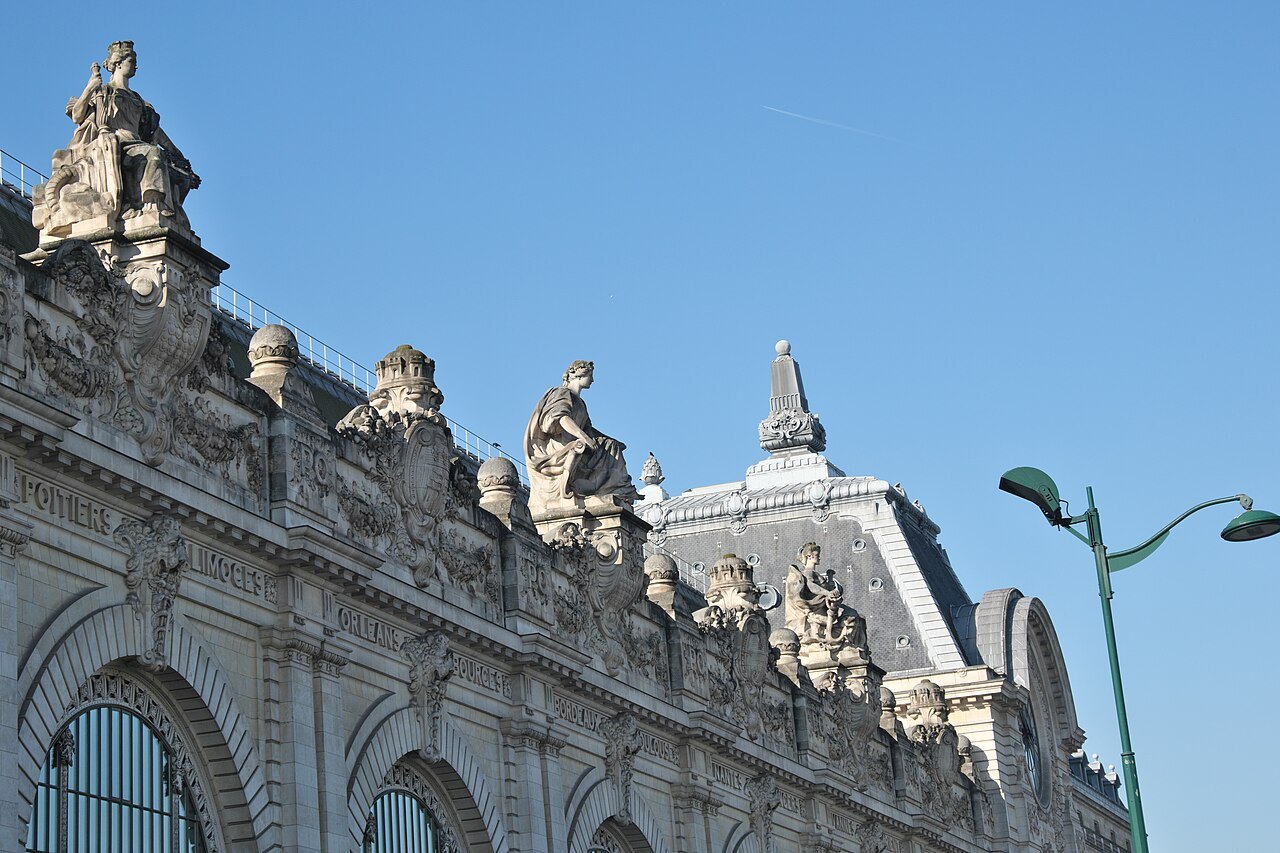
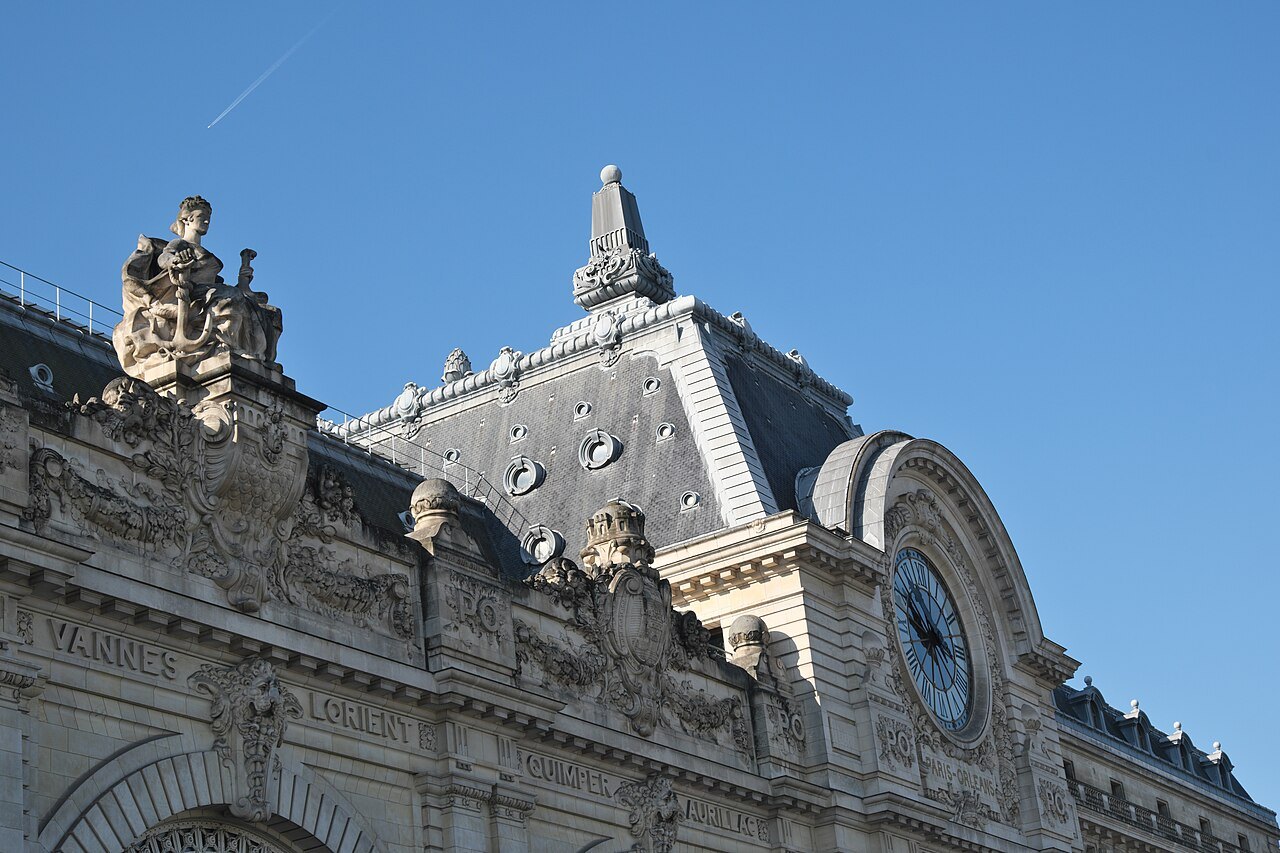
The architect Victor Laloux, working with Lucien Magne and Émile Bénard, faced an unusual problem: a railway station is a work of iron and glass, but this one stood directly across the river from the Louvre and the Tuileries gardens. Their solution was to wrap the modern iron train shed in a stone façade and an attached hotel, so that from the quay the building reads as a palace rather than a shed.
That disguise was deliberate rather than decorative alone. Laloux wanted the Gare d'Orsay to answer the grand buildings on the opposite bank, not compete with them as an industrial intruder. The result pleased Belle Époque Paris: a station that could serve the busiest rail line into the city while looking, from the outside, entirely at home among the palaces of the river.
Decline, demolition order, reprieve
The station's working life as a main-line terminus did not last. Its platforms were too short for the longer trains that came into use in the twentieth century, and by the 1970s it had fallen out of main-line use even as a tunnel was being dug beneath it for the new RER line C. For a building that had once greeted the crowds of a world's fair, this was an unglamorous second act.
In 1970, permission was granted to demolish the building outright, and a new hotel was proposed for the site. The culture minister refused to allow it. Eight years later, in 1978, the former station was listed as a historic monument, which protected the structure itself even though no new use for it had yet been settled.
The decision to turn it into a museum came from President Valéry Giscard d'Estaing, who proposed dedicating the building to nineteenth-century art, an era that had no single great museum of its own in Paris at the time. A team of young architects took on the structural conversion, the Italian designer Gae Aulenti designed the interior fit-out, and President François Mitterrand opened the Musée d'Orsay in December 1986.
The station inside the museum
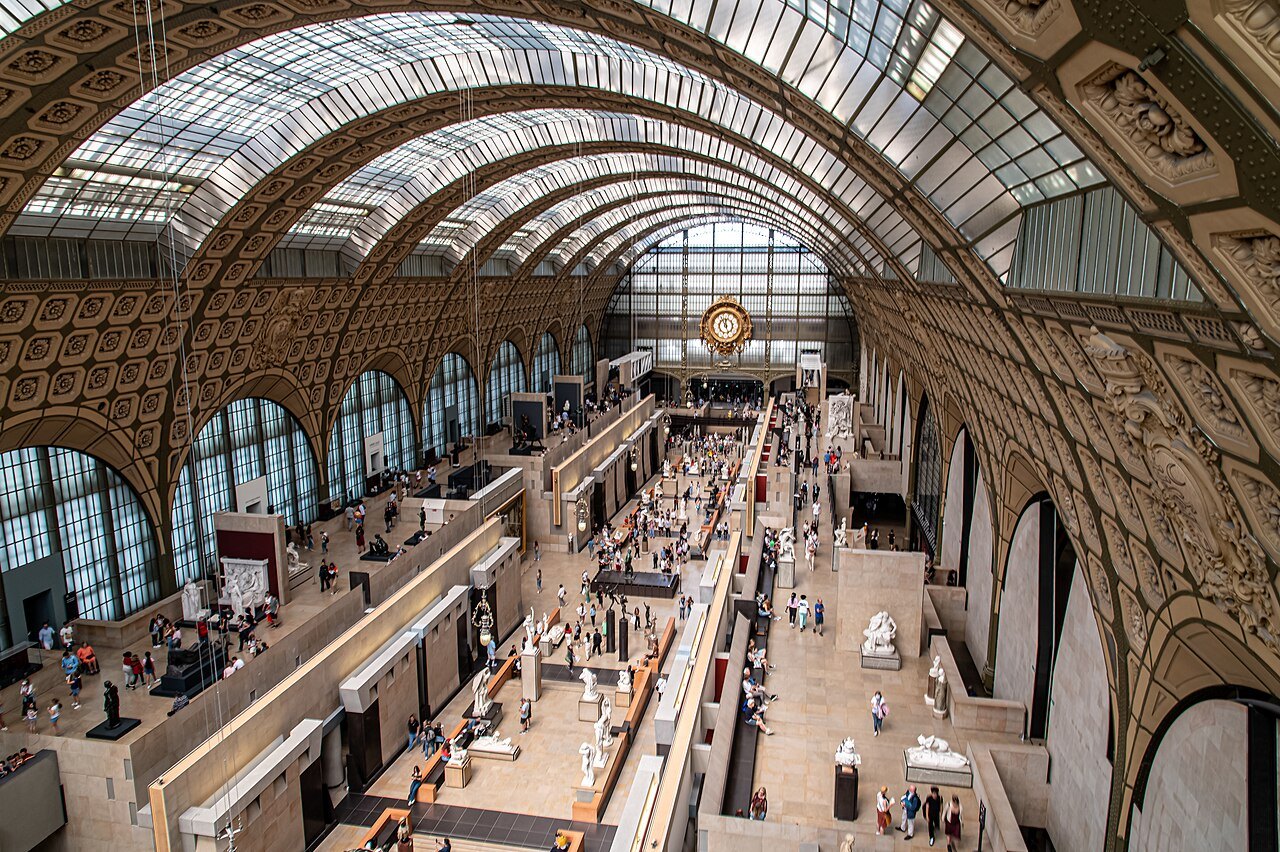
Walk in today and the station has not disappeared; it has been built around. The great nave, the old train hall, still runs the length of the building beneath its curved roof of glass and iron, exactly as travelers once saw it. Nineteenth-century sculpture now stands along the central aisle, on stone terraces that were once the platforms where passengers boarded trains for Orléans and beyond.
At the river end of the top floor, two large station clocks still face the Seine, as they did when they told arriving travelers the time in Paris. From inside, the glass face of one clock doubles as a window: through its numerals, visitors look out across the river toward the Tuileries, with Montmartre visible on the skyline beyond. The museum's café, redesigned by the designers Fernando and Humberto Campana, sits beside it.
The galleries themselves open off terraces on either side of the nave, following the shape of the old train shed rather than disguising it. Visitors moving through the building are, in effect, walking the length of a Belle Époque station while looking at paintings hung where luggage and passengers once moved. Few museum buildings keep this much of their original purpose so visibly on view.
What the conversion makes possible
Because the nave and its light survive largely intact, the museum can hang its largest and most dramatic nineteenth-century paintings at the scale they were meant to be seen. Courbet's huge Burial at Ornans and his Artist's Studio, Manet's Olympia and Déjeuner sur l'herbe, Millet's Gleaners, and Whistler's portrait of his mother all hang along this ground-floor aisle, in a space tall enough to hold them properly.
The top floor, lit from above through the station's original glass roof, is given over to the Impressionists and Post-Impressionists, the collection for which the museum is best known worldwide: Monet, Degas, Renoir, Cézanne, Seurat, Gauguin and Van Gogh among them. The quality of overhead daylight that once lit a train shed now does the work of lighting paintings made to capture changing natural light.
The museum also holds one of the great collections of Art Nouveau furniture and decorative art, and a substantial collection of early photography, both housed within the same converted structure. In 2022 the Musée d'Orsay was the second-most visited art museum in France, after the Louvre, a measure of how completely the building's second life has eclipsed its first.
Visiting what remains of the station
A visit of two to three hours is enough for a good first look at both the building and its collection. Because the top-floor galleries, lit by the old roof glass, draw the largest crowds, visiting them early or late rather than in the middle of the day makes for an easier walk through the Impressionist rooms. The ground-floor nave, with its sculpture on the old platforms, is worth equal attention.
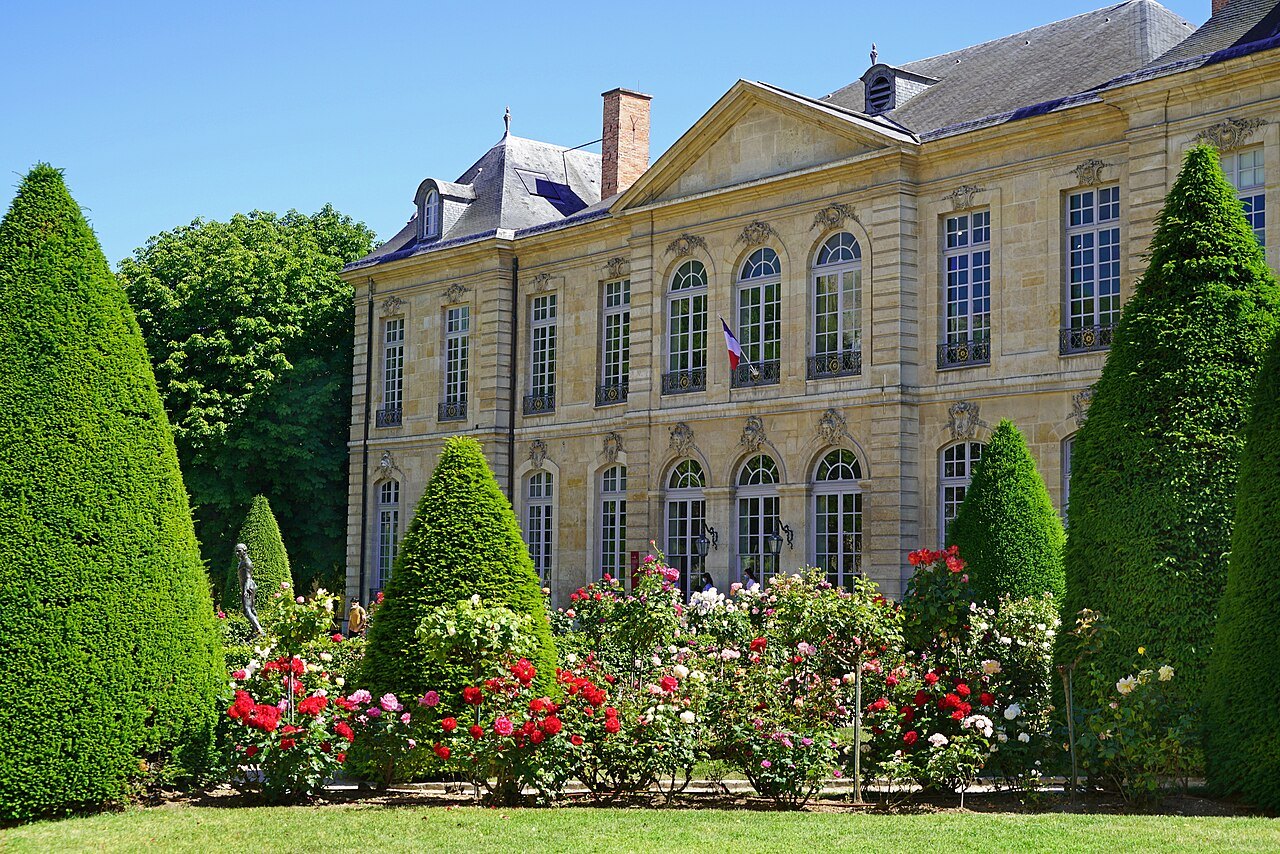
The entrance is on the square by the river, close to where travelers once arrived by train. For timed tickets and what else is worth booking ahead, see booking ahead. The Musée de l'Orangerie, with Monet's Water Lilies, lies across the river by the footbridge from the quay, and the Musée Rodin is a short walk west on the Rue de Varenne.
It is worth remembering, walking through, that the Orsay was never meant to look industrial or plain. Laloux designed the Gare d'Orsay to look like a palace from the river so that it would suit its grand neighbors, and eighty years after it opened as a station, the building became a palace of art in fact, with the nineteenth century's rebels and its establishment hung within sight of each other.
Read next
More from the journal
- The LouvreWhy did the glass pyramid at the Louvre cause such a fight?How I. M. Pei's glass pyramid divided opinion at the Louvre, and what problem it actually solved.Read the piece →
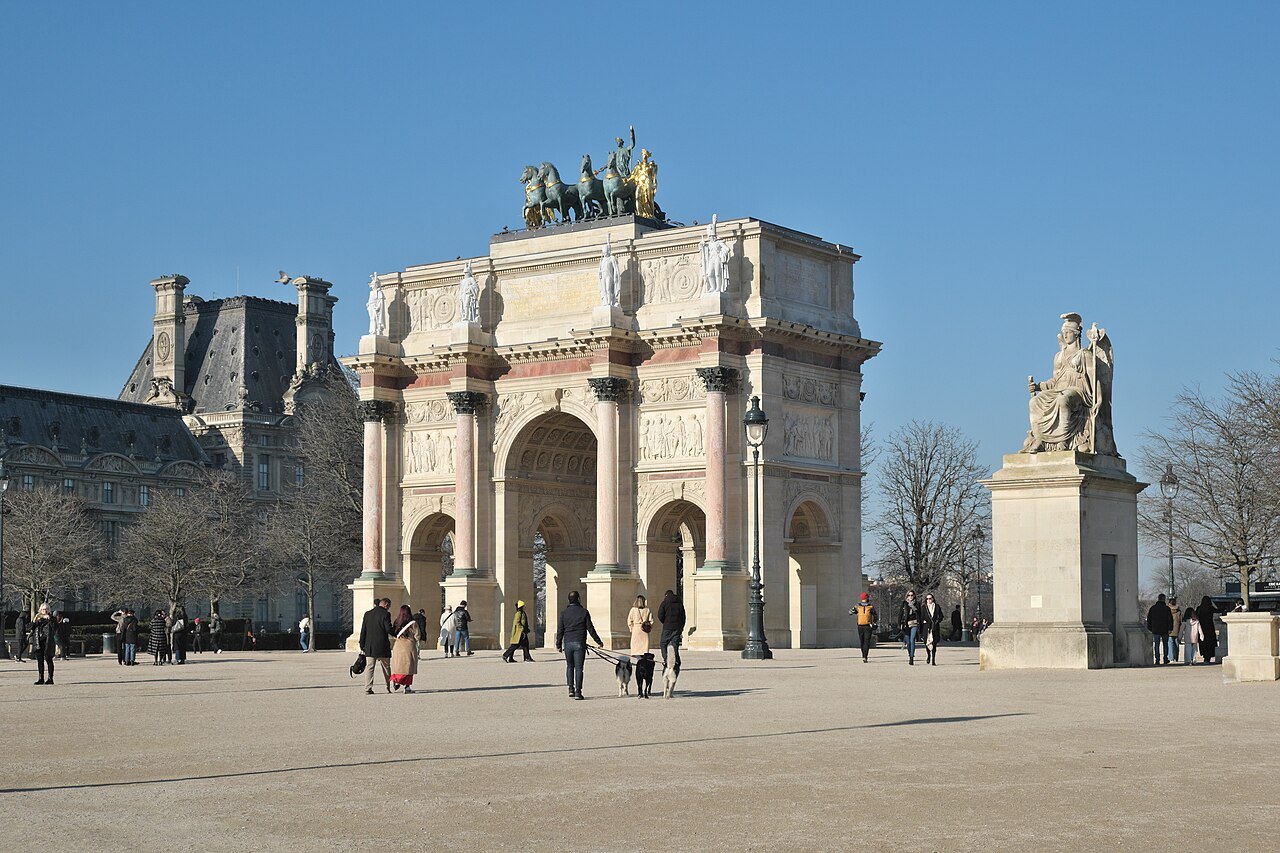
- The Tuileries, the Orangerie and the Place de la ConcordeWhat happened to the Tuileries Palace?How Catherine de' Medici's palace became the Tuileries Garden, and what still stands where it burned in 1871.Read the piece →
- The LouvreHow do you see the Louvre in a single day?A practical one-day plan for choosing what to see at the world's largest museum.Read the piece →