A LEFT BANK TRADITION
How do you sail a toy boat in the Luxembourg Gardens?
How visitors can watch or try the model-boat tradition on the Grand Bassin of the Luxembourg Gardens.
The answer in full
Read on
Why it matters
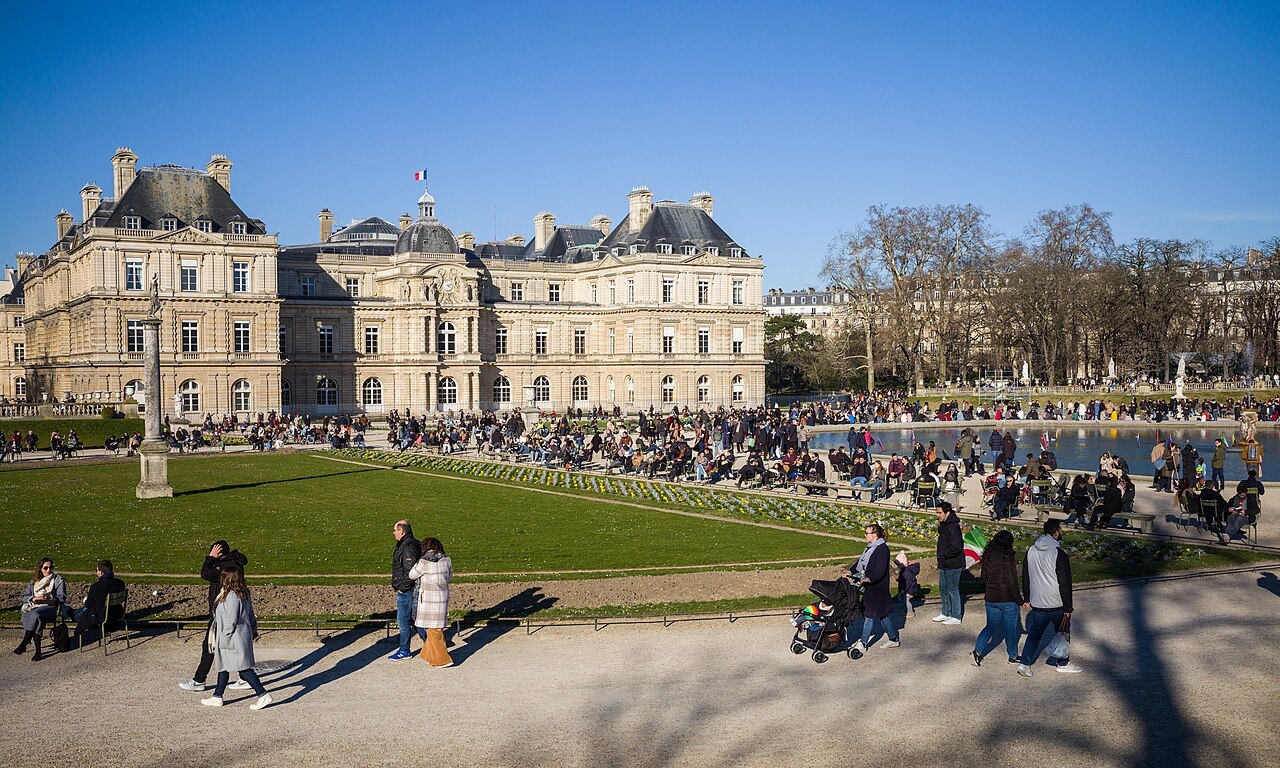
The Luxembourg Gardens are the great garden of the Left Bank, set in the sixth arrondissement between Saint-Germain-des-Prés and the Latin Quarter. They cover about fifty-six acres of lawns, gravel, flowerbeds and tree-lined walks around the palace that gives them their name, and they belong to the French Senate, which meets inside the palace itself.
Parisians call the gardens le Luco, after the Latin name of the hill beneath them. Where the Tuileries across the river are a formal promenade, the Luxembourg is a garden people live in: students on the metal chairs, chess players, runners, free concerts, and children sailing boats on the water.
Of all the garden's small rituals, sailing a toy boat on the pool below the palace is the one most visitors remember. The mechanism is simple enough to watch and to try, and it connects directly to the garden's long history as a place built around water.
The Grand Bassin and its boats
The heart of the garden is the parterre below the palace, a sunken lawn and gravel ground centered on the octagonal Grand Bassin, with a single jet of water rising from its middle. Model sailboats and remote-controlled boats cross the pool on most days, pushed and turned by whatever wind and current the fountain's jet creates.
This is a genuinely old tradition. It is established enough that the model-boat pond in a well-known American park was loosely based on this one, which gives the Luxembourg's basin a claim to being an ancestor of a familiar park feature found far from Paris.

Because the fact base for this garden does not describe a fixed rental point, a fee, or hours for borrowing a boat, the safest approach is practical rather than assumed: look at the edge of the Grand Bassin itself for any current signage, and ask garden staff on site, since the Senate runs and staffs the gardens and is the authority on what is available on a given day.
The raised terraces around three sides of the pool give an easy vantage point for watching the boats cross, whether or not a visitor sails one personally.
A queen's garden
In 1611 Marie de' Medici, widow of Henry IV and regent for her young son Louis XIII, decided to build a palace in imitation of the Pitti Palace of her native Florence. She bought an existing mansion, the Hôtel du Luxembourg, commissioned the architect Salomon de Brosse, and in 1612 had two thousand elm trees planted.
Her gardener Tommaso Francini laid out terraces and parterres on the palace's axis around a circular pool, in the Italian manner she had known as a child. Marie enlarged the garden again in 1630.
After the Revolution the Directory took land from a neighboring Carthusian monastery and extended the garden to about a hundred acres, and Haussmann's new Boulevard Saint-Michel and Rue de Médicis later cut into its northeast corner. In the nineteenth century it filled with statues of queens, writers and artists.
The garden also saw war. In June 1944 German occupiers turned the Medici Fountain's basin into a swimming pool and dug trenches along the paths; on 25 August 1944 the French 2nd Armored Division forced the gates on the Rue Auguste-Comte and entered the garden.
The terraces and the view toward the Panthéon
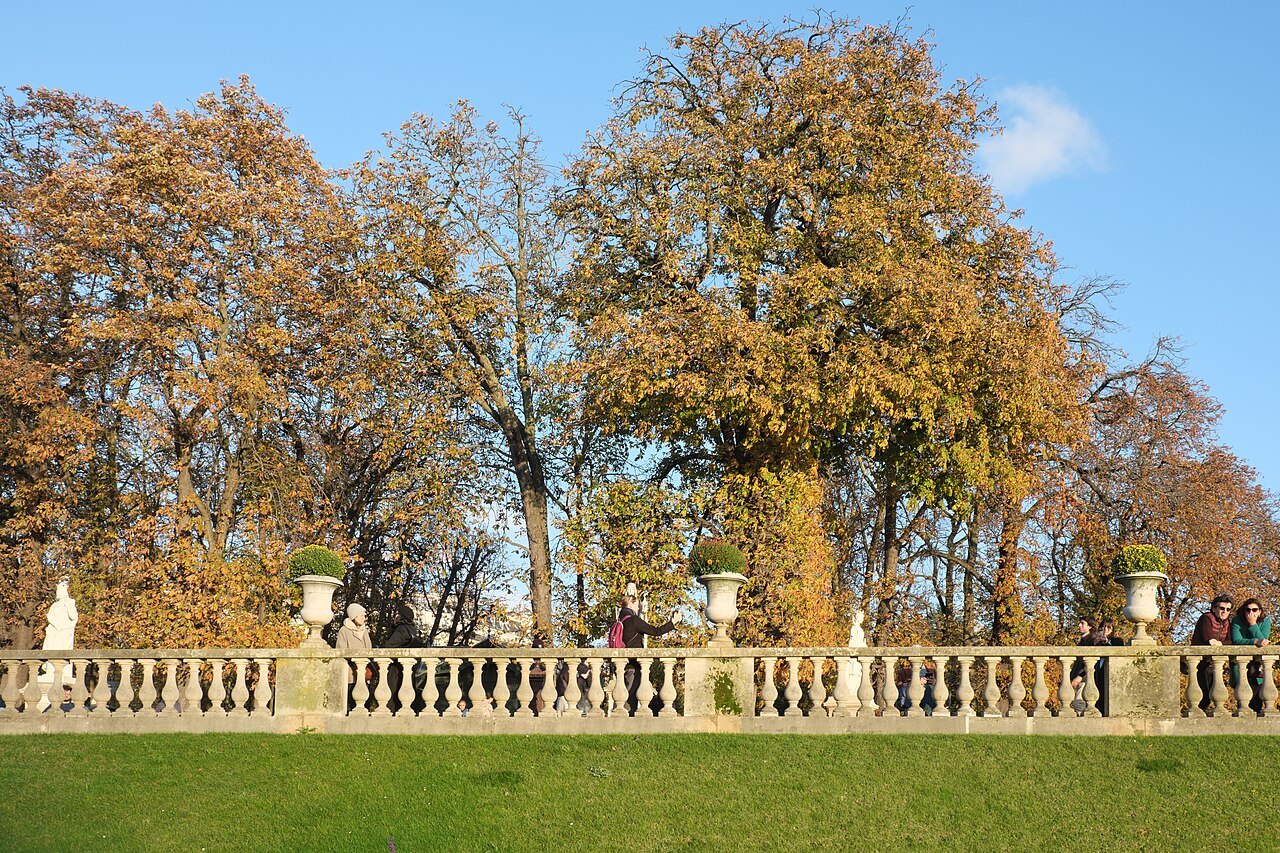
Raised terraces with balustrades wrap around the Grand Bassin on three sides. Along them stand statues of queens of France and other famous women, each on her own pedestal beneath the trees, additions of the nineteenth century that turned the garden into something of an open-air gallery.
From the eastern terrace the view runs straight up the Rue Soufflot to the dome of the Panthéon, one of the clearest sightlines in this part of the Left Bank and a natural point to pause while children sail their boats below.
The terraces are also simply good places to sit with one of the garden's green metal chairs, close enough to the water to follow a boat's slow crossing from one side of the octagon to the other.
The Medici Fountain
East of the palace stands the Medici Fountain, the loveliest corner of the garden and a short walk from the boating pool. Francini designed it around 1630 as a grotto in the Italian manner, though it fell into ruin during the eighteenth century.
It was restored in 1811 on Napoleon's orders by Jean-François Chalgrin, architect of the Arc de Triomphe, and moved to its present position in the 1860s, when the long pool shaded by plane trees was added in front of it.
In the grotto the giant Polyphemus crouches on the rocks above the lovers Acis and Galatea, about to crush them, carved by Auguste Ottin. Behind the fountain, facing the street, a smaller wall fountain of 1807 shows Leda and the swan.
Planning the visit
The garden costs nothing to enter, and its opening times follow the daylight and are posted at each gate; anyone planning a visit around the boating pool should check the posted times on arrival rather than assume a fixed schedule. A walk around the inside perimeter runs to about a mile and a quarter.
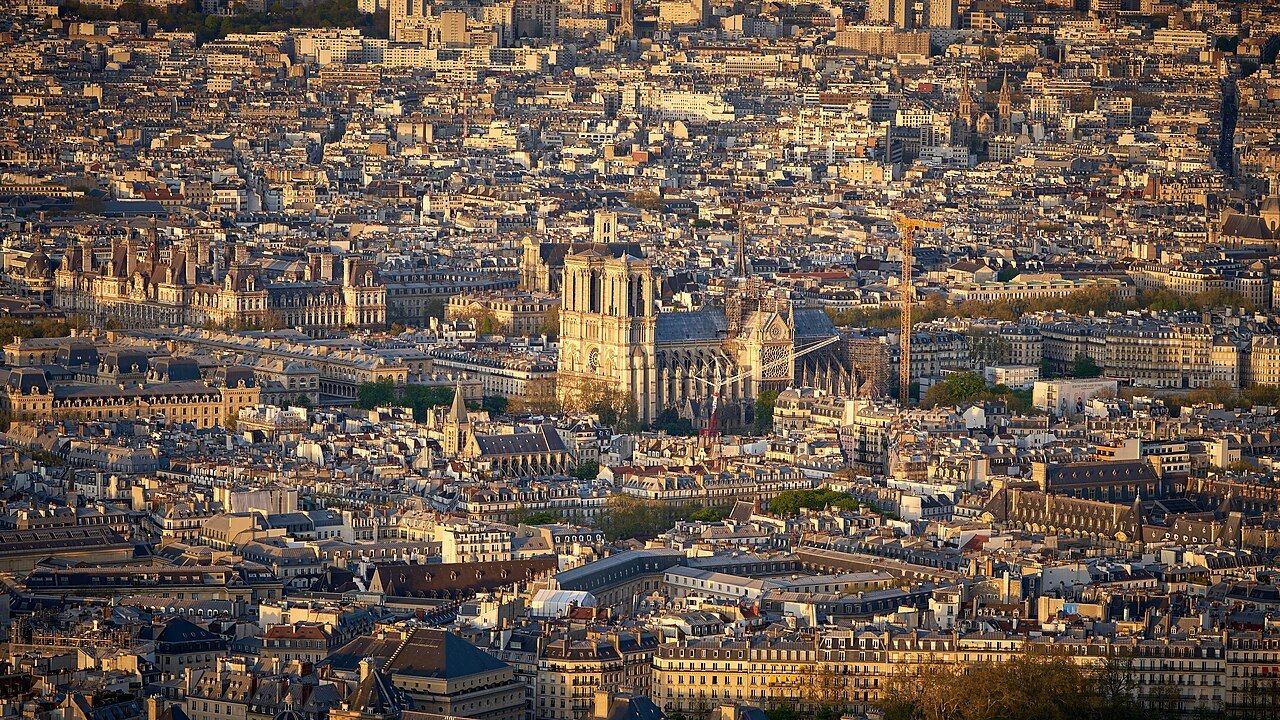
Take one of the green metal chairs and move it wherever suits, including near the Grand Bassin; that is how the garden is meant to be used. For most of its history this cost a fee, and the chairs became free for everyone only in 1974.
The garden pairs easily with the Panthéon and the streets of Saint-Germain-des-Prés, both a few minutes' walk away, making a half day that combines the boating pool with a church, a museum quarter, or simply a long stroll through chestnut walks that are at their best in spring and fall.
Myths worth setting aside
The garden is not a public park in the legal sense. It belongs to the Senate, which runs it and pays for its gardeners, though anyone may walk in freely and watch or join the boating on the Grand Bassin.
The palace itself is not named for the country of Luxembourg. It takes its name from the Hôtel du Luxembourg, the earlier mansion on the site that Marie de' Medici bought, which had belonged to François de Piney-Luxembourg, a family only distantly related to the ruling house of Luxembourg.
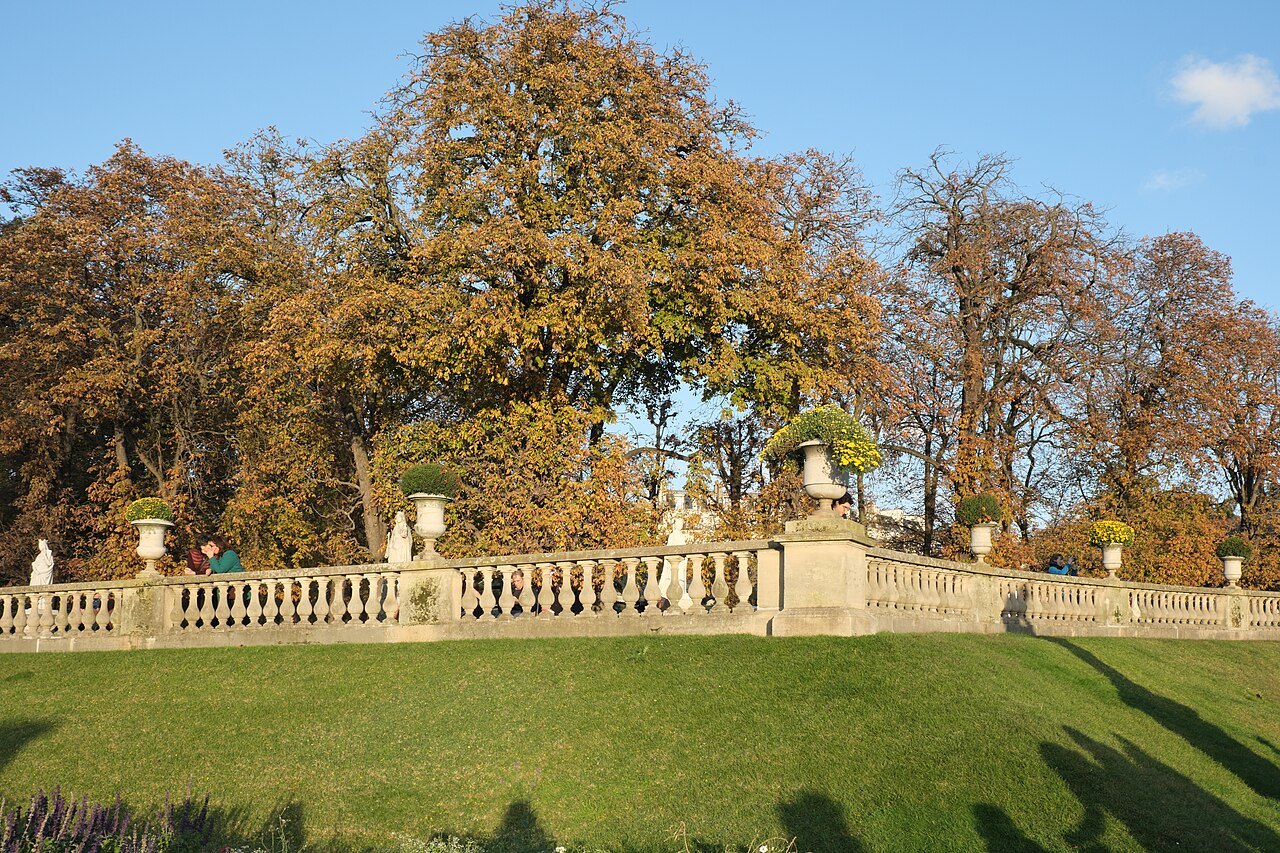
Visitors looking for a formal, Tuileries-style promenade should recalibrate expectations: the Luxembourg, boating pool included, is built for lingering rather than for a brisk walk, as the comparison with the Tuileries gardens across the river makes clear.
Read next
More from the journal
- The Tuileries, the Orangerie and the Place de la ConcordeWhat happened to the Tuileries Palace?How Catherine de' Medici's palace became the Tuileries Garden, and what still stands where it burned in 1871.Read the piece →
- The PanthéonWho is buried in the crypt of the Panthéon?Voltaire, the Curies, Victor Hugo, and more: who France has chosen to bury in the Panthéon's crypt, and why.Read the piece →
- The Musée d'OrsayHow did a railway station become the Musée d'Orsay?How a Belle Époque railway terminus on the Seine became the world's great home of Impressionist painting.Read the piece →