WHO RESTS IN THE CRYPT
Who is buried in the crypt of the Panthéon?
Voltaire, the Curies, Victor Hugo, and more: who France has chosen to bury in the Panthéon's crypt, and why.
The answer in full
Read on
A mausoleum by vote
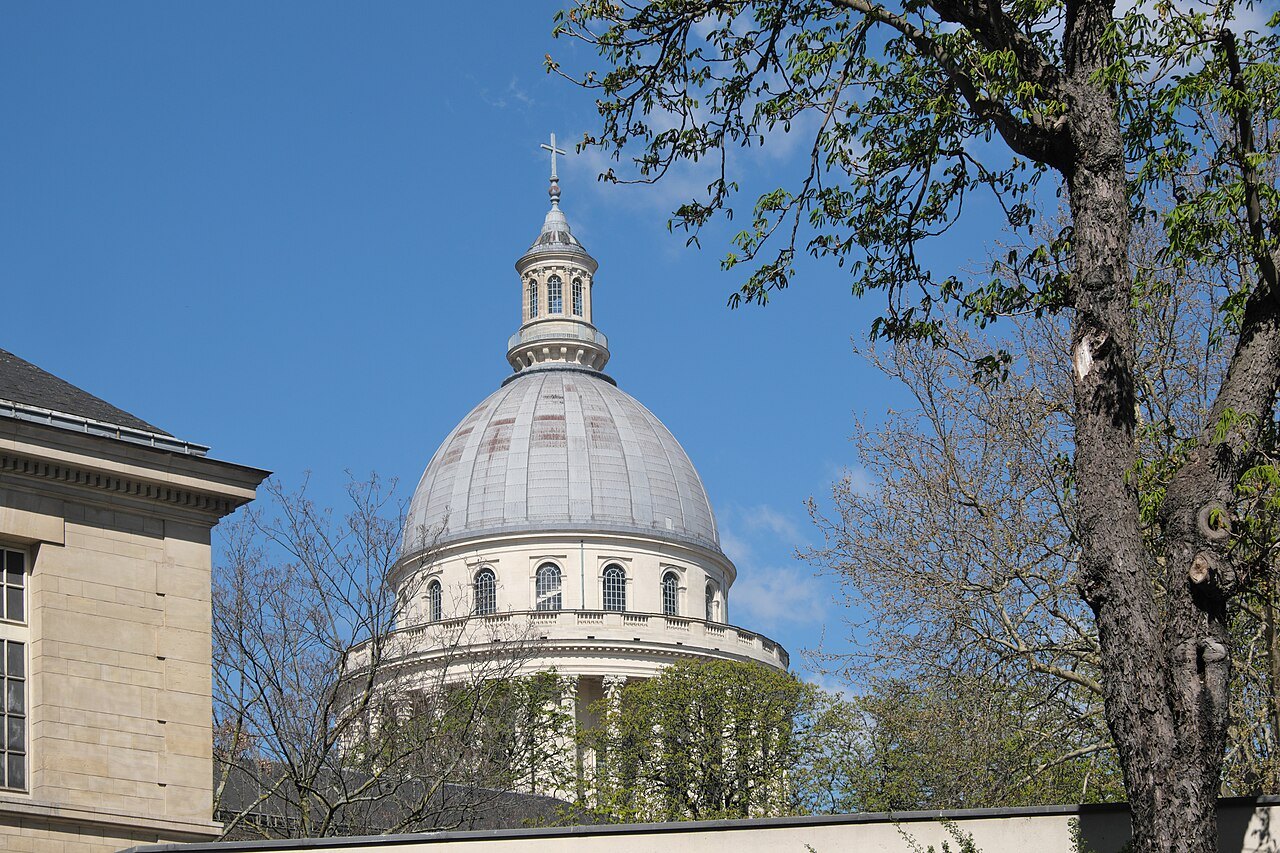
Across the pediment of the Panthéon runs an inscription: Aux grands hommes la patrie reconnaissante, to the great men, from a grateful nation. The words explain the building more than its architecture does. France's parliament decides who lies inside, and the list is short enough that every name carries weight, stretching from a Revolutionary orator to a singer who spied for the Resistance.
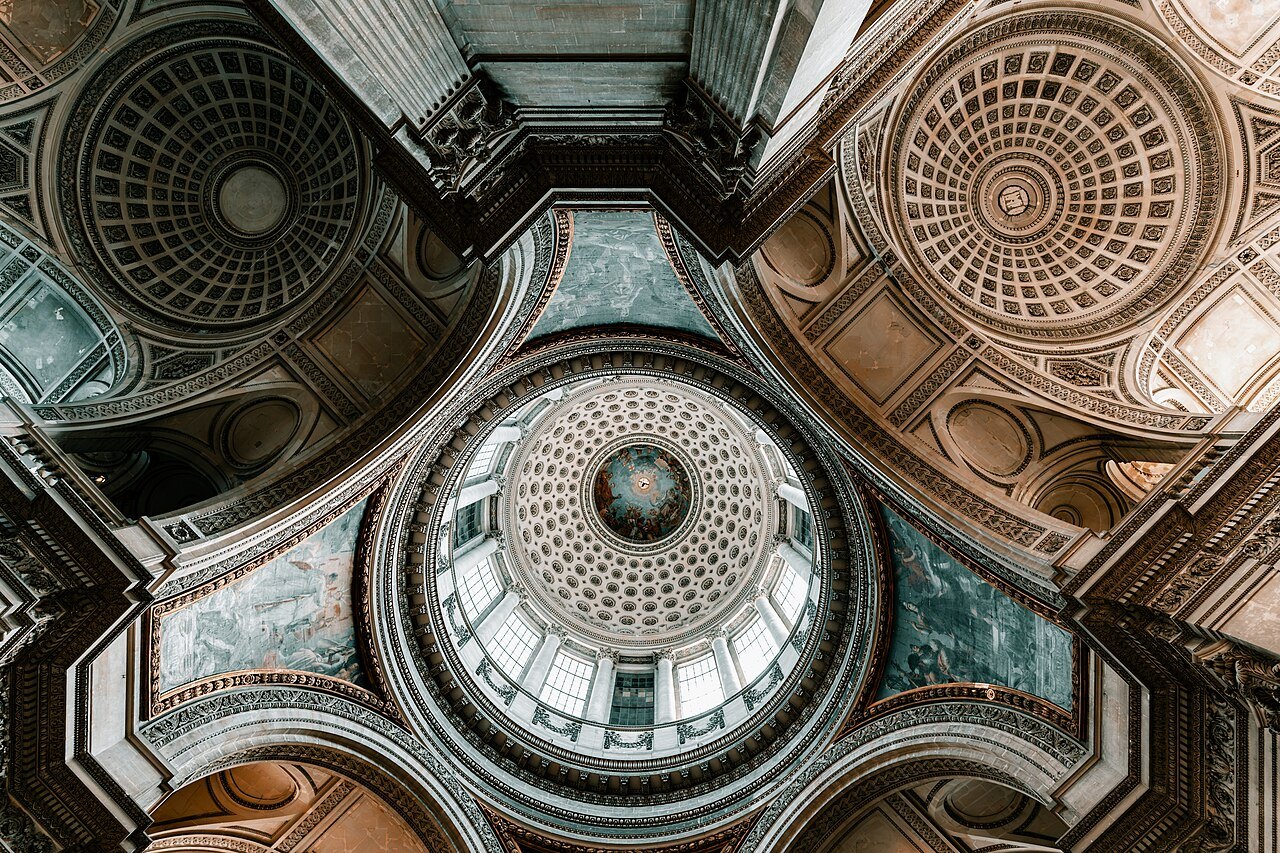
The building began as a church. Louis XV vowed to rebuild the old abbey church of Saint Genevieve, patron saint of Paris, after recovering from a grave illness, and set the architect Jacques-Germain Soufflot to design it. Neither king nor architect lived to see it finished. By the time the work was complete in 1790, the Revolution had begun, and in 1791 the National Constituent Assembly voted to turn the new church into a mausoleum for distinguished citizens, modeled loosely on the Pantheon in Rome.
The first burial, the orator Mirabeau, was removed again within a few years, and for most of the nineteenth century the building swung back and forth between church and mausoleum as each regime changed the pediment and the dome to suit itself. The funeral of Victor Hugo in 1885 settled the matter for good; the Third Republic had already decreed in 1881 that it would be a mausoleum only.
Philosophers, novelists, and one blind inventor
Voltaire and Rousseau, the two writers whose arguments did much to shape the Revolution's ideas, lie here, brought in during the Revolutionary years when the building's new purpose was still being tested. Their presence set the pattern: the Panthéon would honor thought and writing as readily as politics or war.
Victor Hugo's funeral in 1885 was itself a national event, and his burial in the crypt confirmed the building's role. Émile Zola followed in 1908, in a transfer that set off violent arguments at the time. Louis Braille, the inventor of the reading system used by blind people, is also buried in the crypt, among the quieter names in the vaults.
More recently, the novelist Alexandre Dumas was brought to the crypt in 2002, carried in by the Republican Guard in a ceremony that acknowledged how long his recognition had been delayed. His arrival, more than a century after his death, is a reminder that the list of great men and women keeps being revised.
Scientists and the Resistance
Marie Curie was the first woman buried here on her own merit, moved to the crypt in 1995 alongside her husband Pierre; their joint resting place marks a scientific partnership as much as a marriage. Among the other names in the vaults is Soufflot himself, the Panthéon's own architect, brought here in 1829, decades after his death.
The crypt also holds two figures tied to twentieth-century politics and the Resistance: Jean Jaurès, the socialist leader, and Jean Moulin, a leader of the Resistance. Their burials mark moments when the nation chose to honor political courage and wartime sacrifice alongside literary and scientific achievement, each case decided by parliament rather than by any automatic rule.
The range of professions in the crypt, from physics to politics to literature, reflects the inscription's broad promise: greatness here is defined by service to the nation rather than by any single field. Parliament's vote decides each case individually, which is why so many years can pass between a death and a burial in the crypt.
The timing of a burial can lag far behind a death: Soufflot waited decades after dying before parliament approved his transfer, and Dumas waited even longer. The gap reflects how recognition in the Panthéon depends on changing political and cultural judgment, not on any fixed schedule tied to a person's death.
The newest names
The most recent interments show how the idea of greatness recognized here has changed. For more than a century, the roster was almost entirely of men; the names added since the turn of the twenty-first century tell a different story, of resistance fighters, a Holocaust survivor and politician, and public figures honored decades after their work was done.
Two women of the Resistance, Geneviève de Gaulle-Anthonioz and Germaine Tillion, were brought to the crypt in 2015, recognition that the record of the Resistance had long been told mostly through men. Simone Veil, the politician, was interred in 2018 with her husband beside her, one of the few burials here to place a married couple together.
The singer and Resistance agent Josephine Baker was inducted in 2021, the first Black woman honored in the crypt. Her case, like Dumas's, shows how the Panthéon's list keeps being reopened long after a candidate's death, as parliament and public opinion reconsider whose service to the nation deserves this particular form of recognition.
Myths worth setting aside
A persistent story claims Voltaire's remains were stolen from the crypt by religious fanatics in 1814 and thrown onto a rubbish heap. The rumor spread for decades until the coffin was finally opened in 1897, and Voltaire was found still inside it, exactly where he had been placed. The crypt's quiet does not always match the drama attached to its occupants.
The building is also not, despite its name, a copy of the Pantheon in Rome. Soufflot designed a working church, combining Gothic lightness with classical columns and proportions; only the name, and the idea of honoring the dead inside it, came from the Roman original, a detail that still misleads first-time visitors standing at the base of the dome.
The dim, heavy interior is sometimes assumed to be the architect's original intention, but it is not. Soufflot wanted the lightness of a Gothic cathedral combined with classical proportions; it was the Revolutionary government that walled up some of the windows afterward, to make the space feel darker and more solemn, and that change is why the nave feels heavier today than he planned.
Visiting the crypt
The crypt runs beneath the entire building in long, bare, vaulted galleries, each opening into small cells of tombs rather than one continuous hall. Burial here still requires an act of parliament, which is why the list of names grows so slowly and why each new arrival, like Baker's in 2021, is treated as a public event rather than a private funeral.
An hour covers the nave, the pendulum demonstration under the dome, and a walk through the crypt; allow longer if reading the names in each vault interests you. The Panthéon is run by the national monuments agency, which also manages the Arc de Triomphe and the Sainte-Chapelle, and its website carries the details a visitor needs for the day.
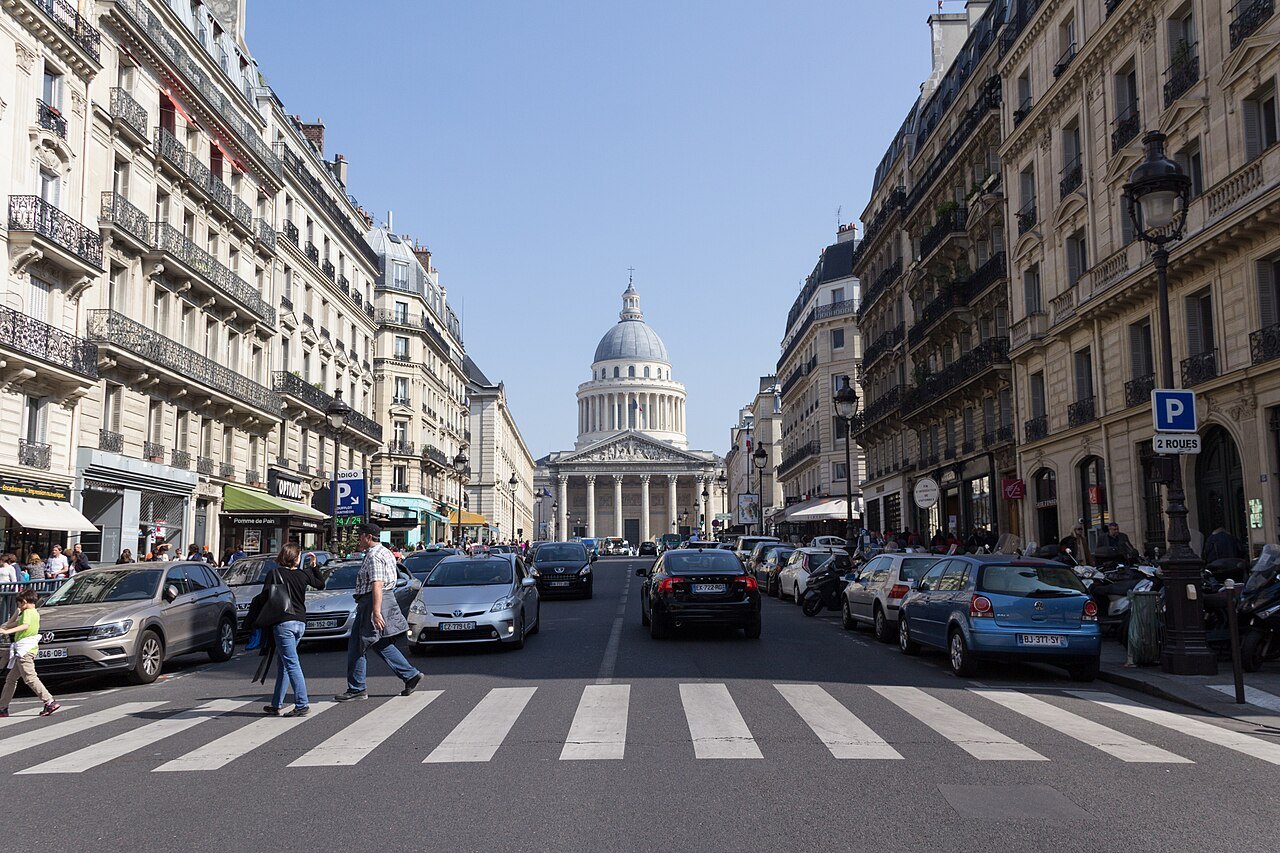
For sights that sell timed tickets, including some run by the same agency, see booking ahead before setting out. The square in front of the Panthéon is a good place to begin a walk through the Latin Quarter, and the Luxembourg Gardens lie a few minutes downhill, at the bottom of the Rue Soufflot.
Read next
More from the journal
- The Place des Vosges and the MaraisWhere did Victor Hugo live on the Place des Vosges?Where Victor Hugo's apartment stood on the Place des Vosges, and what the house at number six holds today.Read the piece →
- The Sainte-Chapelle and the ConciergerieWho was held in the Conciergerie during the Revolution?Marie Antoinette and thousands of others passed through the Conciergerie's halls before the guillotine.Read the piece →
- The Musée d'OrsayHow did a railway station become the Musée d'Orsay?How a Belle Époque railway terminus on the Seine became the world's great home of Impressionist painting.Read the piece →