THE NIGHT OF THE FIRE, FIVE YEARS OF WORK, AND WHAT YOU SEE NOW
What happened to Notre-Dame in the fire of 2019?
On 15 April 2019 fire destroyed the spire and the medieval oak roof of Notre-Dame; the stone vaults, the towers, the façade and the great windows survived. How the fire spread, how firefighters saved the north tower, how the roof was rebuilt in oak, and what visitors notice since the reopening in December 2024.
The answer in full
Read on
The short answer
On the evening of 15 April 2019, a fire broke out in the roof space of Notre-Dame de Paris. It destroyed the spire, the flèche, and the forest, the nickname for the dense framework of oak beams that had carried the lead roof since the Middle Ages. Firefighters saved the rest: the façade, the two towers, the walls, the buttresses and the stained-glass windows survived, and the stone vaults that form the ceiling, though holed in places, held. After five years of stabilization, research and rebuilding, the cathedral reopened on 7 December 2024.
The night of the fire
The fire began in the attic, where renovation work was under way, and investigators have speculated that the two were linked. The smoke detectors raised the alarm at once, but the alarm system was not designed to call the fire brigade automatically. A cathedral guard was sent to check and went first to the wrong attic, over the neighboring sacristy, and reported no fire. By the time the error was found and he had climbed some three hundred steps to the right place, the fire was well advanced, and the fire brigade was called more than half an hour after the alarm first sounded. Firefighters arrived in less than ten minutes.
Later that evening the flèche collapsed, bringing down some 750 tons of stone and lead, and the firefighters inside were ordered out. The fire had by then reached the north tower, where eight bells hung. The firefighters feared that if the bells fell they could wreck the tower, endanger the other tower and bring down the cathedral.
How the towers were saved
A team of twenty firefighters climbed the narrow stair of the south tower, threatened by fire and short of water pressure, crossed to the north tower, lowered hoses to be connected to the fire engines below, and sprayed water on the fire beneath the bells while their colleagues soaked the stairway and the roof. Their stand saved the towers, and late that night the fire was brought under control. About five hundred firefighters took part in all; one was seriously injured.
Some things survived by chance or foresight. The copper statues that stood around the base of the spire had already been taken down for the renovation. The Great Organ, with more than eight thousand pipes, survived, although it was damaged by water. That Christmas, for the first time in more than two hundred years, no Christmas Mass was held in the cathedral.
Rebuilding in oak
The morning after the fire, the president of France promised that Notre-Dame would be rebuilt within five years, and a special law was passed to govern the work, which was debated fiercely. Architects around the world proposed new spires of glass, steel and light, but the law finally required the restoration to preserve the building's historic, artistic and architectural character, and a poll found that most of the French wanted the spire rebuilt as it had been. The roof and the flèche were rebuilt in the same materials and to the same design.
In February 2021 the search began for oak trees to replace the roof timbers and the spire. About a thousand mature trees, several hundred years old, were chosen from the forests of France and left to dry before they were worked; new trees were planted to replace them. In September 2021 the public body in charge declared the building fully secured, and reconstruction could begin.
The new flèche was put in place on 16 December 2023, a year before the reopening. At its tip stands a new gilded cockerel designed by the chief architect, Philippe Villeneuve, which holds the same relics as the old one and the names of two thousand people who worked on the reconstruction. The old cockerel had held three relics: a tiny fragment of the Crown of Thorns, and relics of Saint Denis and Saint Genevieve, the patron saints of Paris.
What the work uncovered
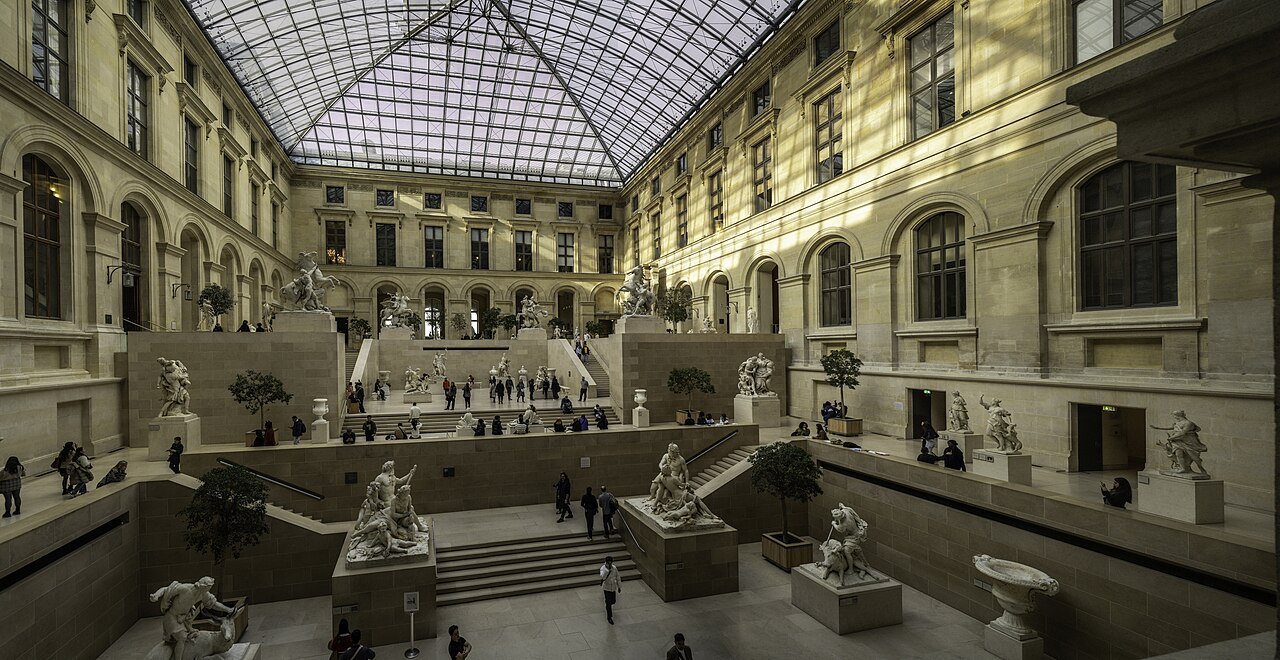
The rebuilding was also a chance for research. In 2022, before the scaffold for the new spire was built, archaeologists digging beneath the crossing found statues, tombs and a fourteenth-century lead sarcophagus, along with fragments of a thirteenth-century choir screen that had been destroyed in the early eighteenth century. In 2023 they found thousands of iron staples in the stonework, some dating from the early 1160s, and concluded that Notre-Dame is the first known Gothic cathedral where iron was used on a large scale to bind stones together.
What visitors notice now
The first thing most returning visitors notice is the color. The interior stone was cleaned of centuries of grime and soot, and the general who led the restoration warned that its whiteness would be a shock. The cleaning was criticized by some conservationists; the culture ministry replied that the stone had simply regained its original blond color, with a patina that respects its age. Either way, the nave is now far lighter than it has been in living memory.
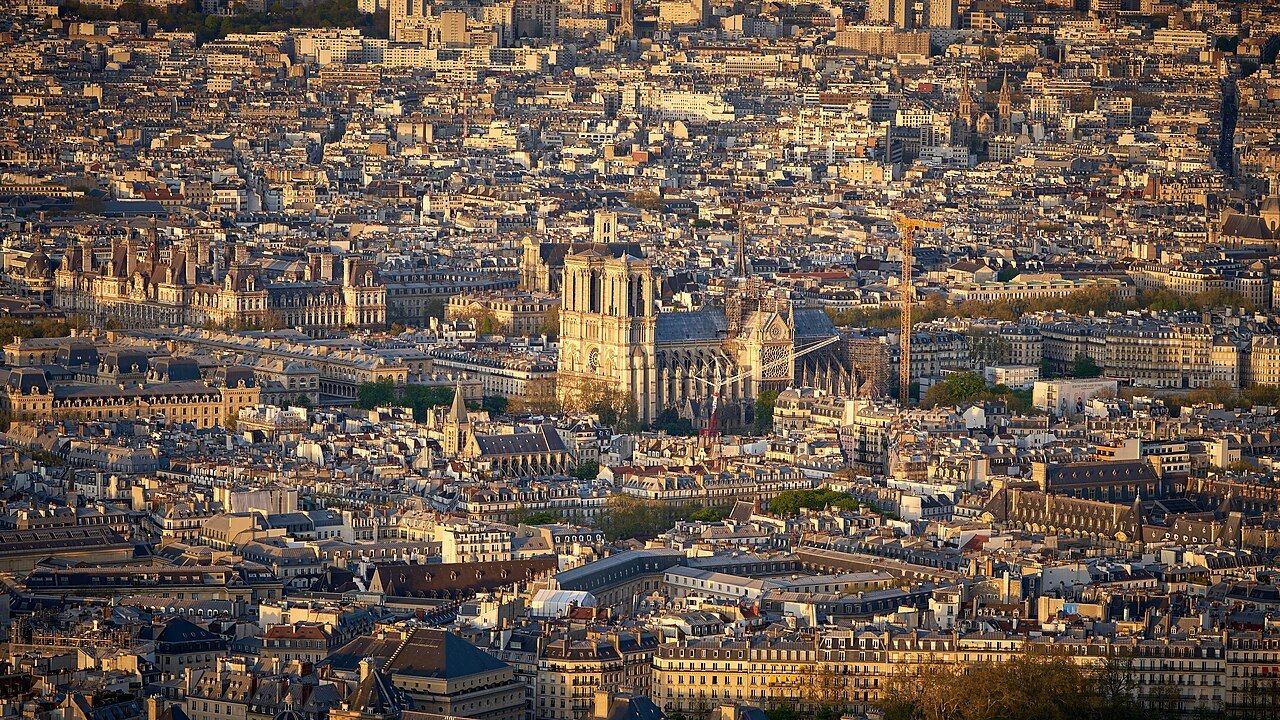
Look up at the crossing, where the rebuilt spire rises again, and at the great rose windows, which survived the fire. And look at the chapels, where the future of six nineteenth-century windows by Viollet-le-Duc, undamaged by the fire, became the subject of a new controversy: the president and the archbishop proposed replacing them with modern designs by the artist Claire Tabouret, and preservationists strongly opposed it.
Visiting
The cathedral admits visitors free of charge, and the line can be long, especially in the middle of the day. For its history from 1163 to the present, its sculpture, its windows and the view from its towers, see the cathedral's own page, linked above; for the island around it and the Sainte-Chapelle nearby, see itineraries.
The reopening on 7 December 2024 was marked by a ceremony led by the Archbishop of Paris, Laurent Ulrich, attended by some fifteen hundred guests from around the world. The Great Organ was restored after the fire, its action upgraded, its case and façade pipes restored and the whole instrument retuned, and the cathedral returned to the daily round of services and visits that had filled it for more than eight centuries.
Read next
More from the journal
- The SpiralWhy are the arrondissements of Paris numbered in a spiral?Because in 1859 the wealthy residents of Passy refused to live in a new 13th arrondissement, and their mayor suggested a spiral instead. The story of the numbers, from the Revolution's twelve districts to the twenty of today, and how to use them.Read the piece →
- Getting AroundHow does the Paris Métro work for visitors?Sixteen lines, 321 stations and one simple rule: follow the line's number and the name of the station at the end of it. How to read the signs, change lines, pay, and where the Métro is hard going with luggage or a wheelchair.Read the piece →
- The Musée d'OrsayHow did a railway station become the Musée d'Orsay?How a Belle Époque railway terminus on the Seine became the world's great home of Impressionist painting.Read the piece →