Home · Itineraries
A day at a time
Five days and a quarter
Day one: the islands and the Louvre
Start where Paris began, on the Île de la Cité, and follow the river west to the palace and its garden.
Day two: the Left Bank
The Latin Quarter's hill, the gardens and the cafés, and an afternoon of Impressionists in a railway station.
Day three: the tower and the dome
Rodin's garden, Napoleon's tomb and the Iron Lady, joined by the long lawn of the Champ de Mars.
Day four: the Right Bank's arc
From the arch at the top of the Champs-Élysées down to the exposition palaces, then the opera house.
Day five: the hills of the east
The white basilica in the morning light, the canal's locks at lunch, and an afternoon among the famous graves.
Anytime: the Marais
Slot the Place des Vosges and the Marais into any day that ends near the islands.
In full
Itineraries
How these routes work
Each day on this page keeps to one part of the city, so that you walk from sight to sight and use the Métro only to start and finish. They follow the order of the arrondissements' spiral: the islands and the first arrondissements, then the Left Bank, then the Right Bank's arc, then the outer turn. Every stop has its own page, linked above, with what to see and how long to allow; this page is about putting them together.
Before you fix the days, check two things. First, what needs a booked time slot, since the Louvre, the Sainte-Chapelle and the Palais Garnier are easier or only possible with one; see booking ahead. Second, which day each museum closes: it differs from one museum to the next, and shuffling two days is easier at home than on the doorstep.
One day
With a single day, stay in the center and follow the river, the way the home page's walk does. Start early on the Île de la Cité at Notre-Dame, then go to the Sainte-Chapelle, whose windows are at their best in morning light. Cross the Pont Neuf to the Louvre and give it the middle of the day, choosing one or two collections rather than trying to see everything. End by walking west through the Tuileries to the Place de la Concorde, with the Champs-Élysées rising to the Arc de Triomphe ahead of you.
If you have the evening, take a boat on the Seine from the quays near the Eiffel Tower or the Pont Neuf; it shows you in an hour how the whole city is laid out along the river. See the Seine.
Three days
With three days, use days one, two and three above. Day two crosses to the Left Bank: climb to the Panthéon in the Latin Quarter, walk down through the Luxembourg Gardens, and have lunch in Saint-Germain-des-Prés before an afternoon at the Musée d'Orsay. Day three starts at the Musée Rodin, whose garden is best on a fine morning, continues next door to the Invalides and Napoleon's tomb, and ends at the Eiffel Tower, reached by walking across the Champ de Mars.
This leaves the Right Bank's grand avenues and the hills of the north and east for a return visit, but gives you the heart of the city, its greatest museums, its two most famous monuments and a good sense of both banks.
Five days
Five days lets you add the Right Bank's arc and the outer turn. Day four begins at the Arc de Triomphe, where you can climb to the roof for the view down the twelve avenues, walks down the Champs-Élysées to the Grand Palais, the Petit Palais and the Pont Alexandre III, and ends at the Palais Garnier, ideally with a booked visit or a ballet in the evening.
Day five climbs Montmartre early, before the crowds, to Sacré-Cœur and the village streets behind it, then comes down to the Canal Saint-Martin for lunch by the locks and ends at the Père Lachaise cemetery, where the lanes are at their most beautiful in the late afternoon light. Fit the Marais and the Place des Vosges into whichever evening you finish near the islands; it is the best quarter in the city for an evening stroll and dinner.
A longer stay
With more than five days, slow down. Spend a second, unhurried day in the Louvre or the Musée d'Orsay; walk the covered arcades of the 2nd arrondissement on a rainy afternoon; follow the Canal Saint-Martin up to the Bassin de la Villette. And take a day or two outside the city: Versailles, Giverny, Fontainebleau, Chartres and the basilica of Saint-Denis are all within easy reach by train; see day trips.
Pacing and weather
Paris rewards walking, but distances add up: a day on these routes means many miles on foot, much of it on stone and cobbles. Wear comfortable shoes, plan a long lunch in the middle of the day, and use the Métro to save your legs between the day's first and last stops. Keep a museum or a covered sight in reserve for a sudden shower, since the weather changes quickly in every season; see when to come.
For families, the Luxembourg Gardens, where children sail toy boats on the great octagonal pool, and the Tuileries, with their own pools and wide gravel paths, are good places to let children run between museums; a morning in one of the gardens and an afternoon in a museum is a rhythm that suits most ages. The Canal Saint-Martin's locks, where the boats rise and fall between stone walls, are another sight children rarely tire of. For travelers who find stairs difficult, check in advance: the Arc de Triomphe's terrace is reached by stairs, and the Eiffel Tower's summit is not suited to visitors with limited mobility.
Evenings and rainy days
Paris does not stop at dusk. The Louvre stays open late on two evenings a week, when its galleries are calmer, and it is free on the evening of the first Friday of most months. A ballet at the Palais Garnier, booked well ahead, is the grandest evening the city offers; a boat on the Seine is the simplest. The cafés of Saint-Germain and the streets of the Marais and around the Bastille are at their liveliest after dark.
For a wet day, swap in the covered sights: the Louvre and the Musée d'Orsay can fill any amount of time, the Sainte-Chapelle's glass glows even under a gray sky, the Grand Palais and the Petit Palais are both under cover, and the glass-roofed arcades of the 2nd arrondissement were built precisely so Parisians could shop out of the rain. Keep the gardens, the canal, the cemetery and the climbs for the dry days.
Where to base yourself
These routes work from any central hotel, but the Marais and the Latin Quarter put you within walking distance of the first two days, and a hotel close to a Métro station on a line that crosses the center makes the others simple. See where to stay, getting around and the sights for more.
Seen on the way
More photographs
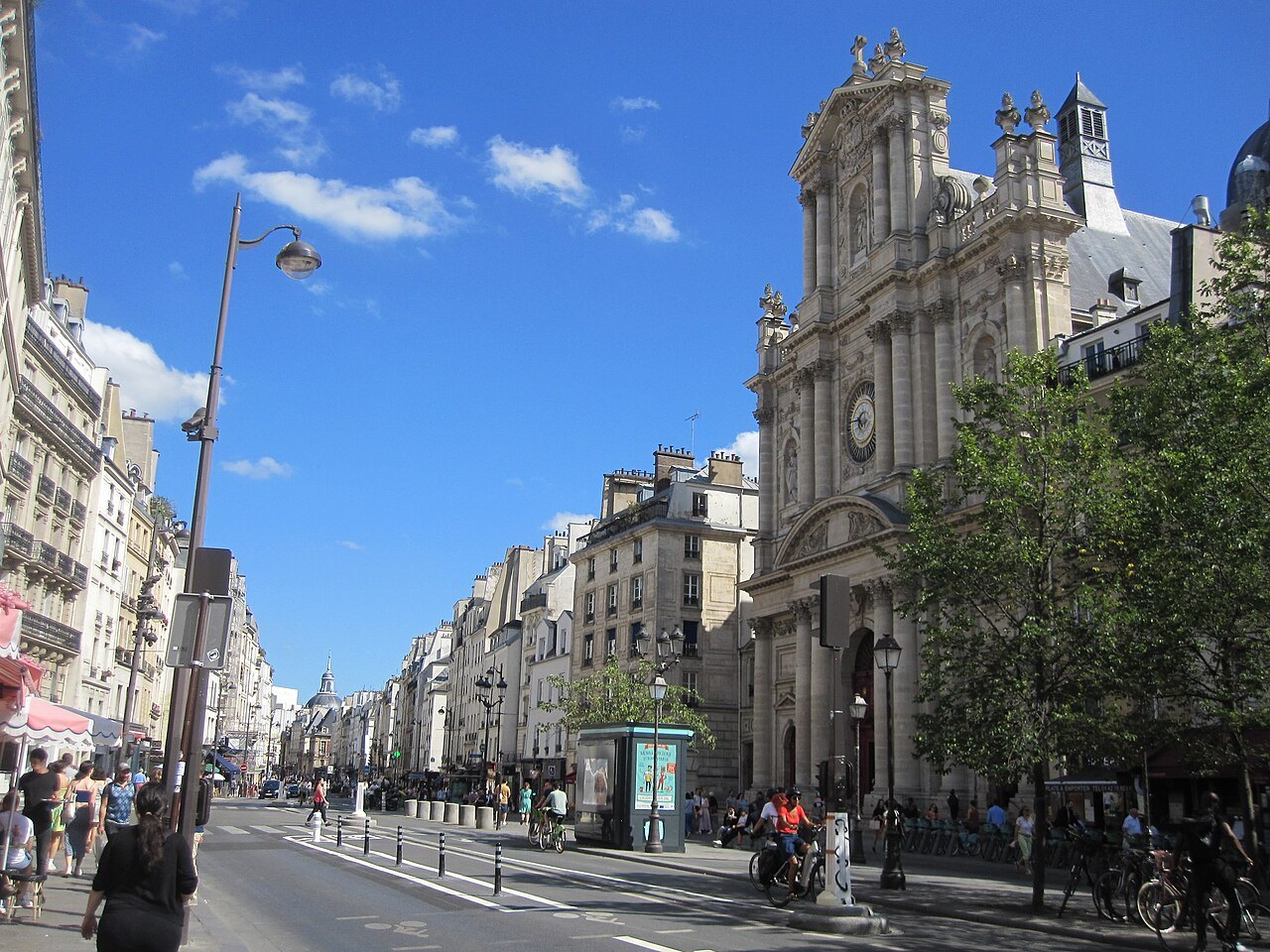
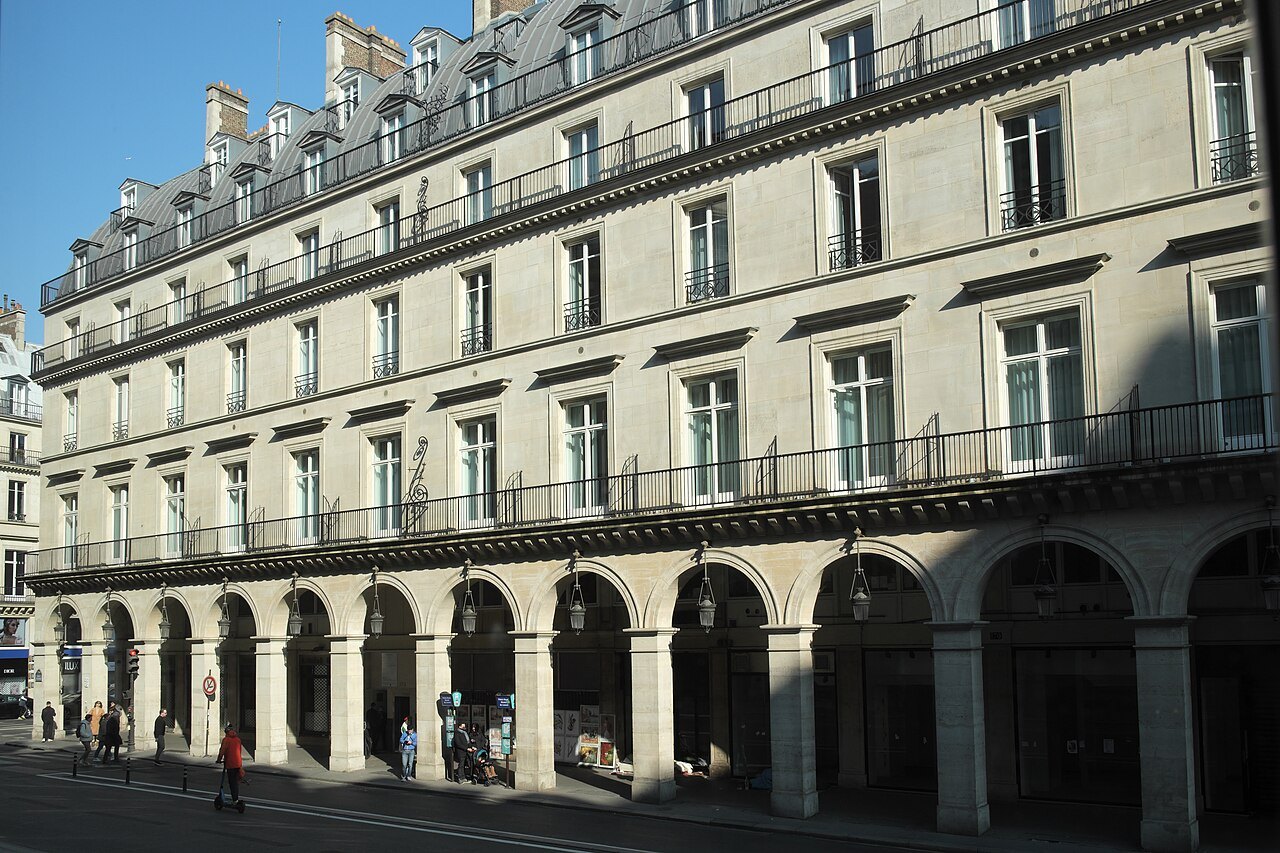
The Rue de Rivoli with the Baroque front of Saint-Paul-Saint-LouisDiscoA340, Wikimedia Commons, CC BY-SA 4.0 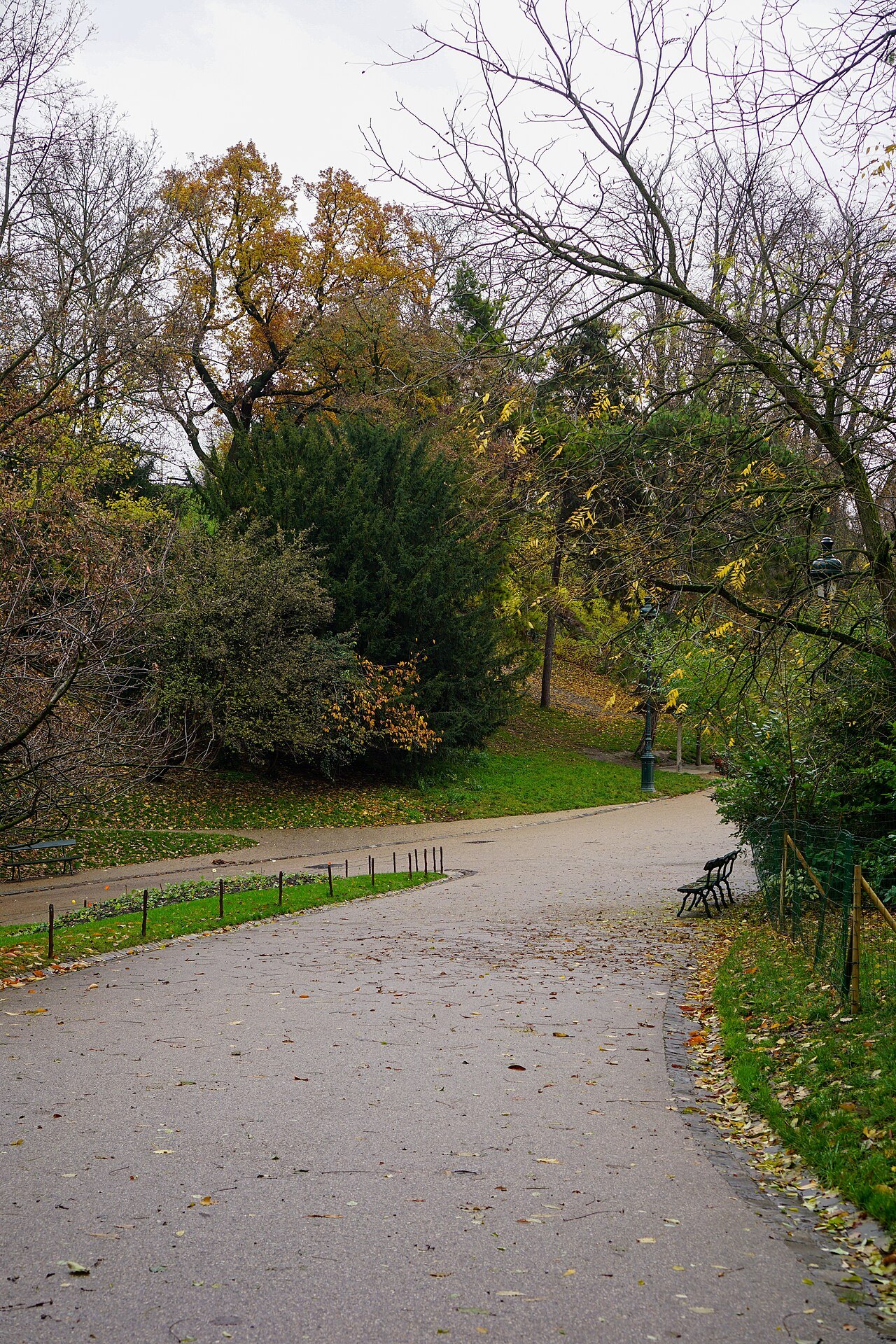
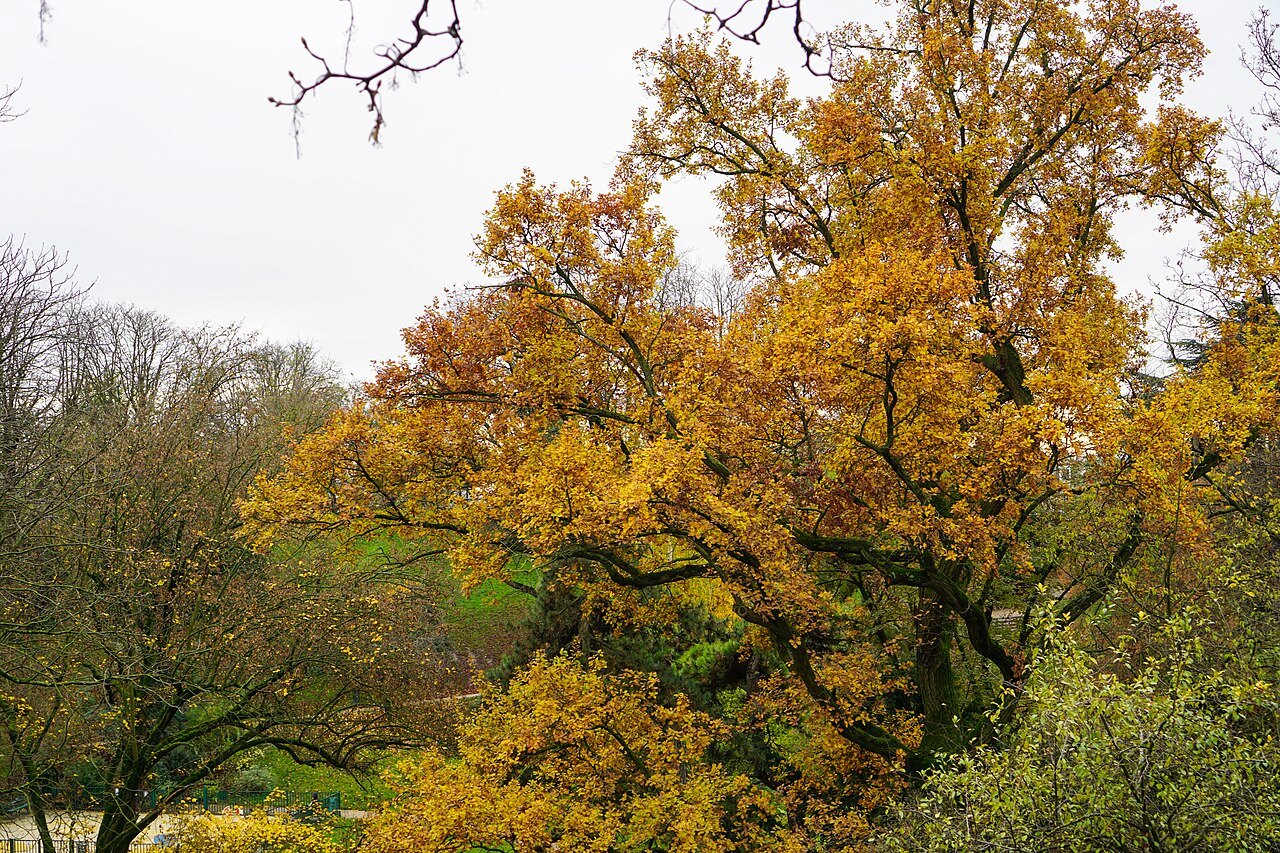
A path through the trees of the Parc des Buttes-Chaumont in autumnJami430, Wikimedia Commons, CC BY-SA 4.0 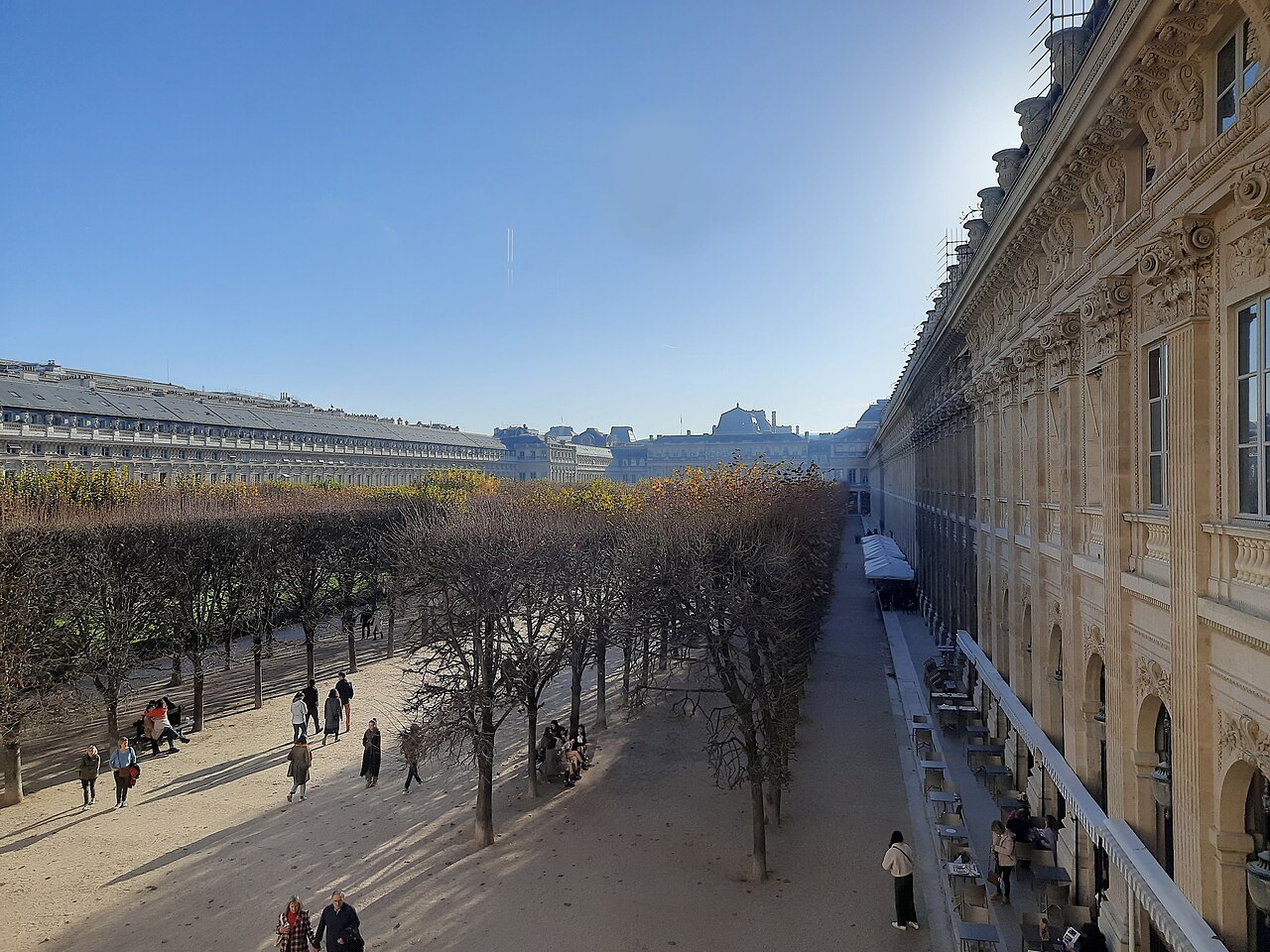
The garden of the Palais-Royal between its long arcaded wingsAnvilaquarius, Wikimedia Commons, CC0