FOUR CENTURIES OF BOOKS ON THE PARAPET
Who are the booksellers along the Seine?
The bouquinistes, some two hundred booksellers who keep about nine hundred green boxes on the stone parapets of the Seine. Where they are, how the trade began on the Pont Neuf, why the boxes are the color they are, and how to browse them.
The answer in full
Read on
The short answer
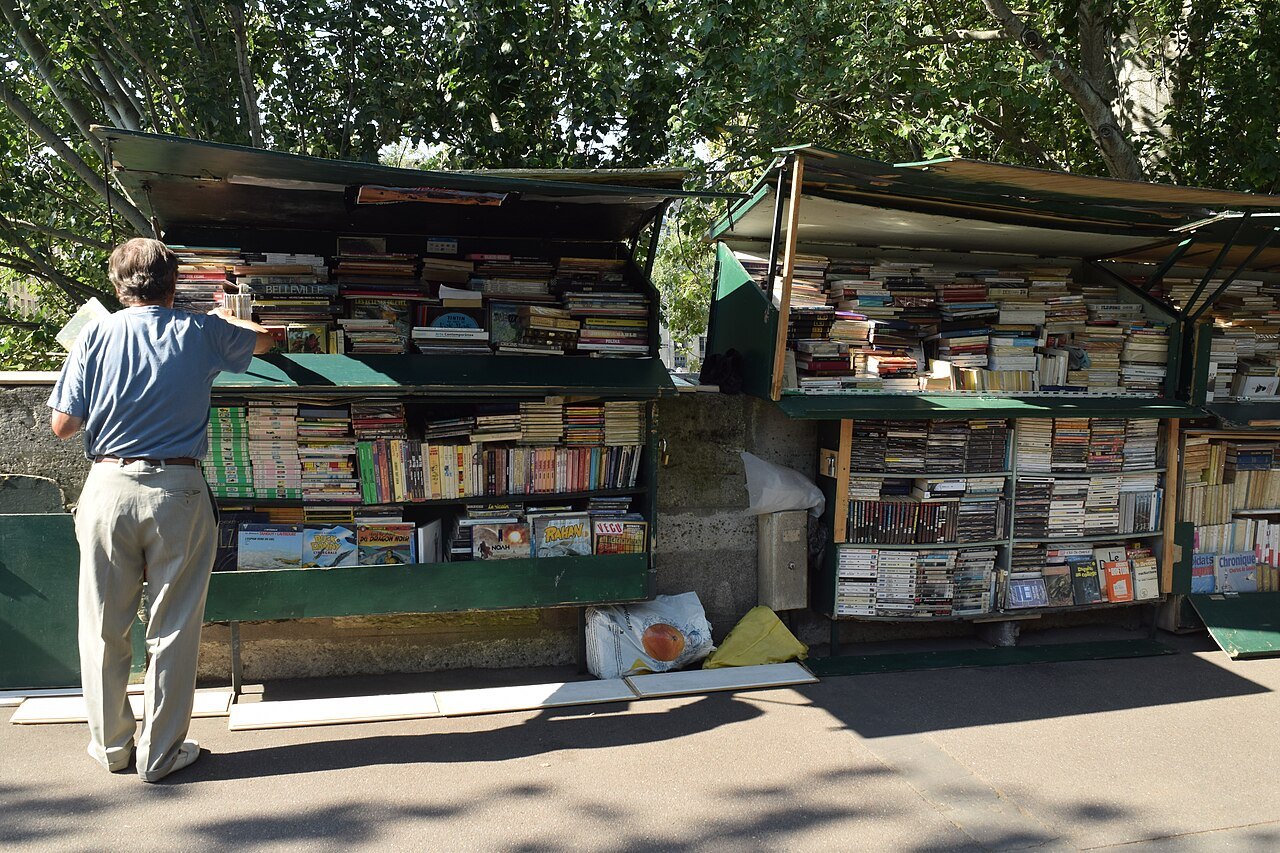
They are the bouquinistes: sellers of old and secondhand books, prints, postcards and magazines who keep their stock in dark green boxes fixed to the stone parapets of the Seine's quays. Around two hundred and thirty of them work along more than two miles of the river in the center of Paris, with about nine hundred boxes holding, by some estimates, three hundred thousand books. The Seine, it has been said, is the only river in the world that runs between two bookshelves.
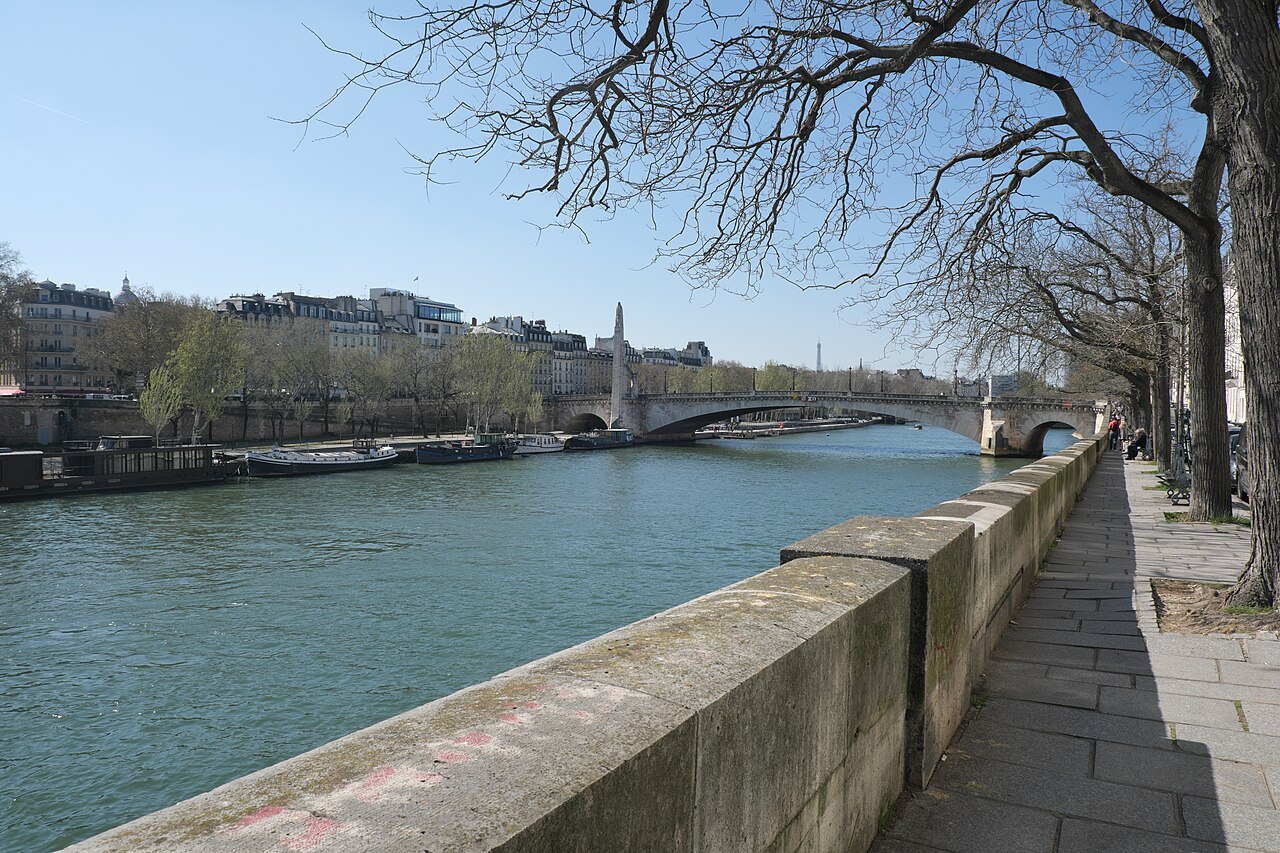
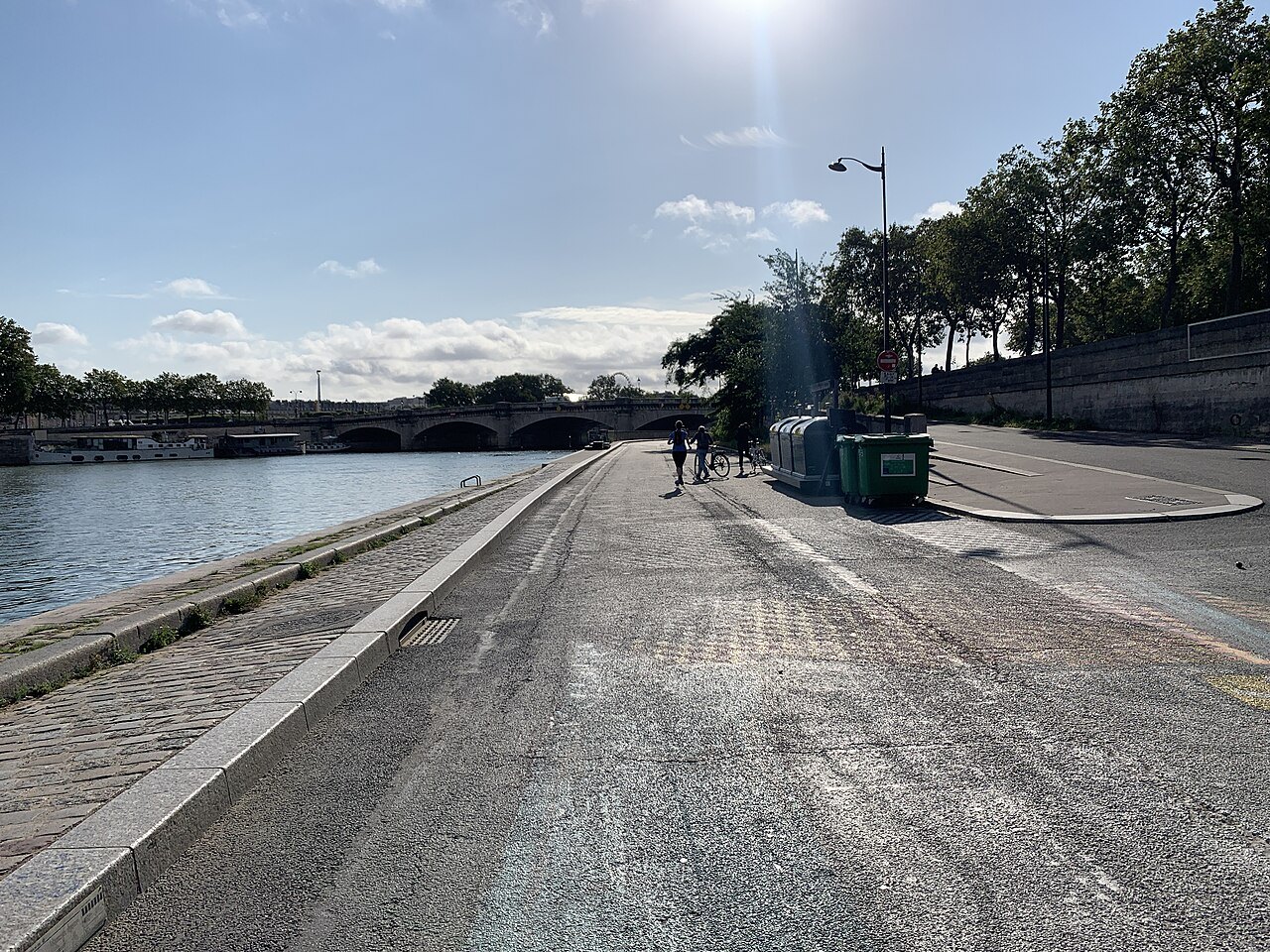
You will find them on the Right Bank from the Pont Marie down to the Quai du Louvre, and on the Left Bank from the Quai de la Tournelle down to the Quai Voltaire, facing the islands and the Louvre. See the Seine for the river and its bridges.
How the trade began
Booksellers have worked beside the river since around the sixteenth century, when peddlers sold books from trays and portable stalls. The Pont Neuf, the new bridge finished under Henry IV, became their favorite pitch, but the established booksellers' guild wanted them gone, and the authorities, anxious about books that escaped censorship, were happy to oblige: a rule of 1649 banned portable shops and book displays on the Pont Neuf. For the next century and more the street sellers were chased off and let back in by turns. By 1756 the Council of State had banned bookselling on the Pont Neuf altogether, to keep the traffic moving, and the sellers moved onto the parapets of the quays.
The word bouquin, a little book, came into French from Dutch in the fifteenth century, and bouquiniste, a dealer in them, appeared in the dictionary of the French Academy in 1762.
Revolution and recognition
The Revolution was good for business. Between 1789 and 1795 almost nothing was printed but newspapers and pamphlets, while the libraries of the aristocracy and the church were seized and scattered, and the bouquinistes grew rich on them. Under Napoleon the quays were improved, the booksellers spread from the Quai Voltaire to the Pont Saint-Michel, and they were at last recognized by the authorities as public traders of the city.
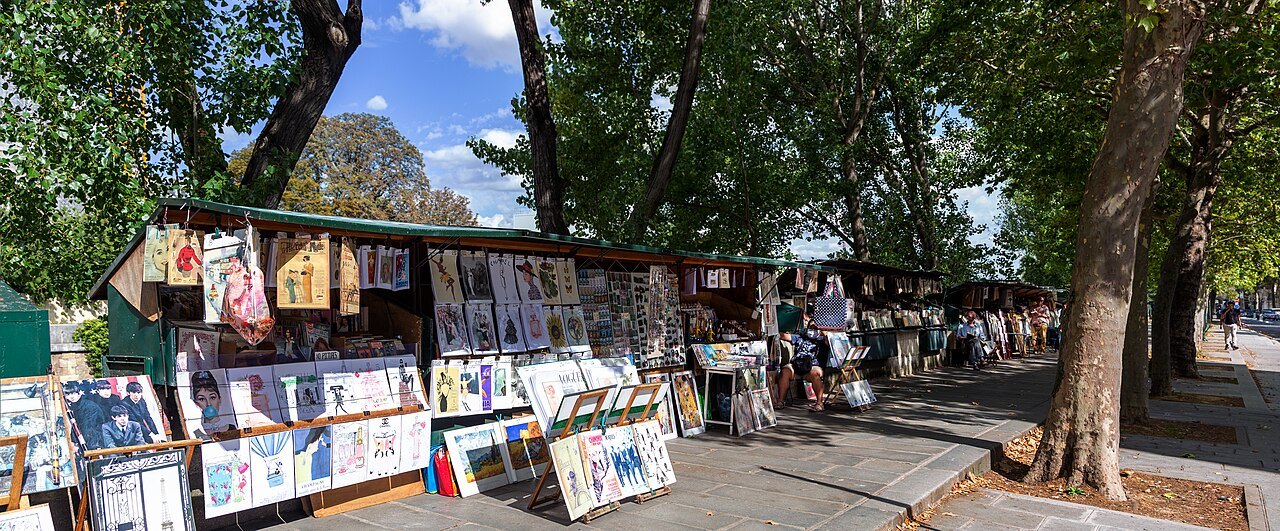
In 1859 the city began granting fixed pitches along the parapets. In 1891 the bouquinistes won the right to leave their stock on the quays overnight, and the boxes they use today date from that permission; before it, they carried their books in small wooden crates. In 1930 the size of the boxes was fixed, and it is still set by the city's rules.
The green boxes
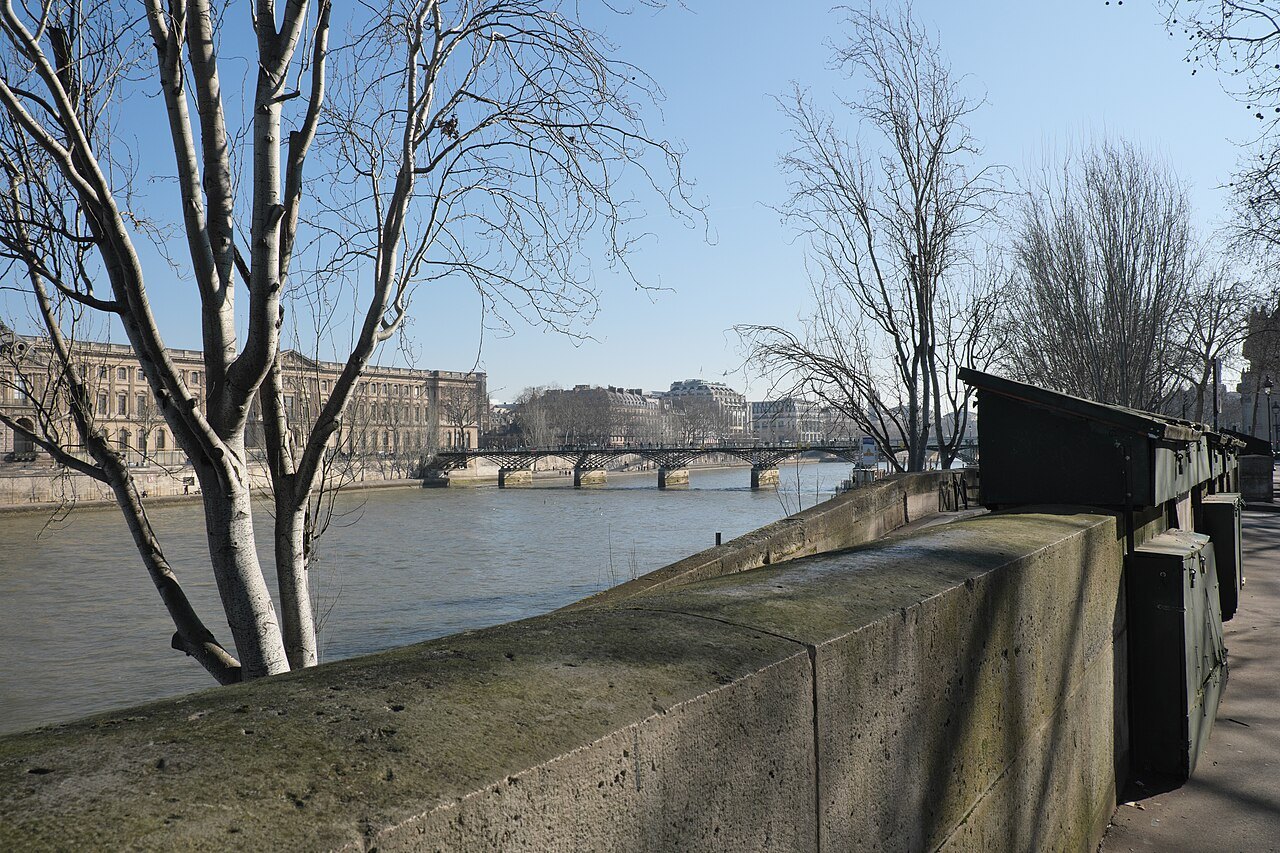
Each bouquiniste has a stretch of about eight yards of parapet and up to four boxes on it. The boxes are painted a regulated color called wagon green, the same dark green as the first Métro's ironwork, the Wallace drinking fountains and the Morris columns that carry theater posters, so the bookstalls belong to the same family of street furniture that gives Paris its look. When the booksellers arrive, they unlock the lids and prop them open, and each box becomes a small shop; when they leave, the lids close and lock over the books.
Books are the official business, but the boxes have always sold other things too: prints, stamps, coins and bric-a-brac. The rules now allow only one box in four to hold souvenirs of Paris, and since 2009 the city has warned booksellers who fill more of them with trinkets instead of books.
Becoming a bouquiniste
A pitch on the quays is a city concession, and a coveted one. Applicants apply to the city in their own name, with a letter describing their knowledge and specialty, a résumé and a clean police record, and there are always more candidates than places: in 2010 about a hundred people applied for twenty-two pitches. The booksellers have their own literary prize, founded in 1953 by one of their number, Ferdinand Teulé, and awarded every year.
In 1991, when the banks of the Seine in Paris were listed as a UNESCO World Heritage Site, there were 240 bouquinistes along them, and their traditions and craft have been listed as part of France's intangible cultural heritage since 2019.
Threats and survival
The trade has had difficult decades. In the 1970s the construction of an expressway along the Left Bank threatened the quays, and as television and radio took over, fewer Parisians bought old books and the quality of the stock declined. Worry about the booksellers' future is not new: around 1840 the writer Charles Nodier was already lamenting the disappearing trade, and in 1866 the scholar Paul Lacroix campaigned for their right to sell on the quays, inviting Napoleon III to come and see them.
In July 2023, as the city prepared for the opening ceremony of the 2024 Olympic Games on the Seine, it raised the idea of temporarily moving the booksellers' boxes for security reasons, and the question of the stalls' place on the river became a public debate. They have friends in high places: President François Mitterrand was a regular customer. And the idea has traveled; the booksellers of Paris have inspired open-air bookstalls in cities as far apart as Ottawa, Beijing and Tokyo.
How to browse
The stalls depend on the weather, since rain would ruin the stock, so the best days to browse are fine ones. Walk slowly, look at the old prints and maps as well as the books, and ask if you are looking for something in particular: many bouquinistes specialize, and a conversation is part of the pleasure. The stretch facing Notre-Dame, on the Quai de Montebello and the Quai Saint-Michel, is one of the most beautiful, with the cathedral across the water; see Notre-Dame.
In 1957 a census counted 238 booksellers, 151 of them on the Left Bank and 87 on the Right, nearly half of them women; the Left Bank quays, from the Pont de la Tournelle downstream, have long held the larger share. For a walk that takes in most of them, start at the Pont Marie, follow the Right Bank down to the Louvre, cross the Pont des Arts and come back along the Left Bank toward the islands.
Read next
More from the journal
- The SpiralWhy are the arrondissements of Paris numbered in a spiral?Because in 1859 the wealthy residents of Passy refused to live in a new 13th arrondissement, and their mayor suggested a spiral instead. The story of the numbers, from the Revolution's twelve districts to the twenty of today, and how to use them.Read the piece →
- Notre-Dame de ParisWhat happened to Notre-Dame in the fire of 2019?On 15 April 2019 fire destroyed the spire and the medieval oak roof of Notre-Dame; the stone vaults, the towers, the façade and the great windows survived. How the fire spread, how firefighters saved the north tower, how the roof was rebuilt in oak, and what visitors notice since the reopening in December 2024.Read the piece →
- The Musée d'OrsayHow did a railway station become the Musée d'Orsay?How a Belle Époque railway terminus on the Seine became the world's great home of Impressionist painting.Read the piece →