Home · Sights · Père Lachaise Cemetery
What you are looking at
Père Lachaise Cemetery
20th
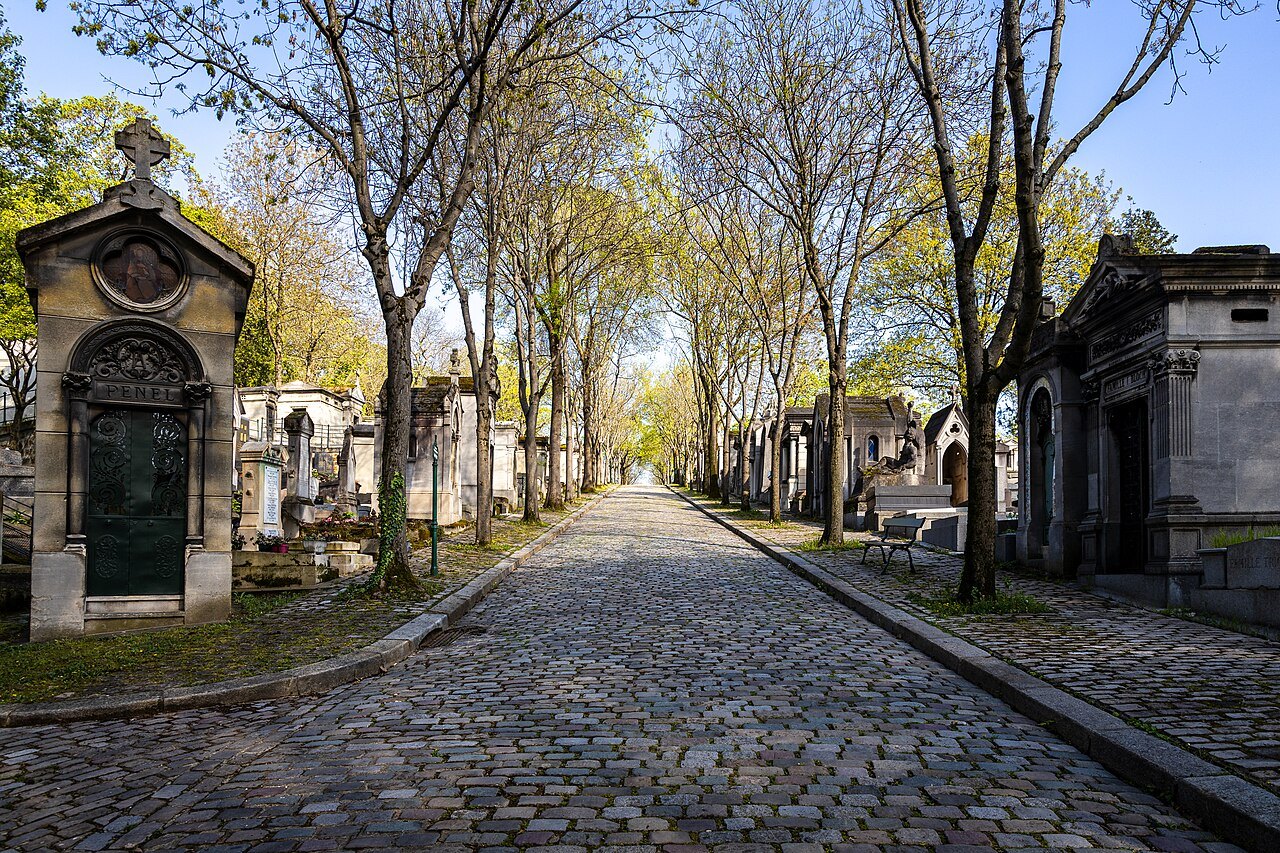
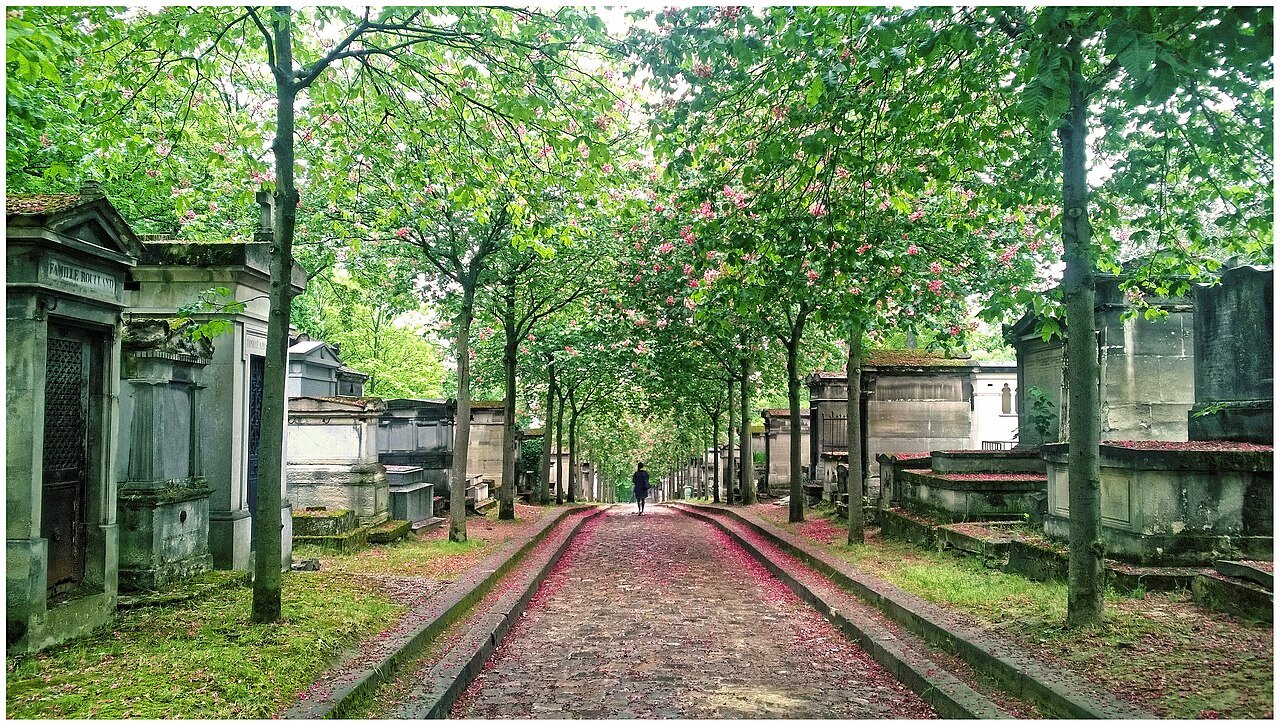
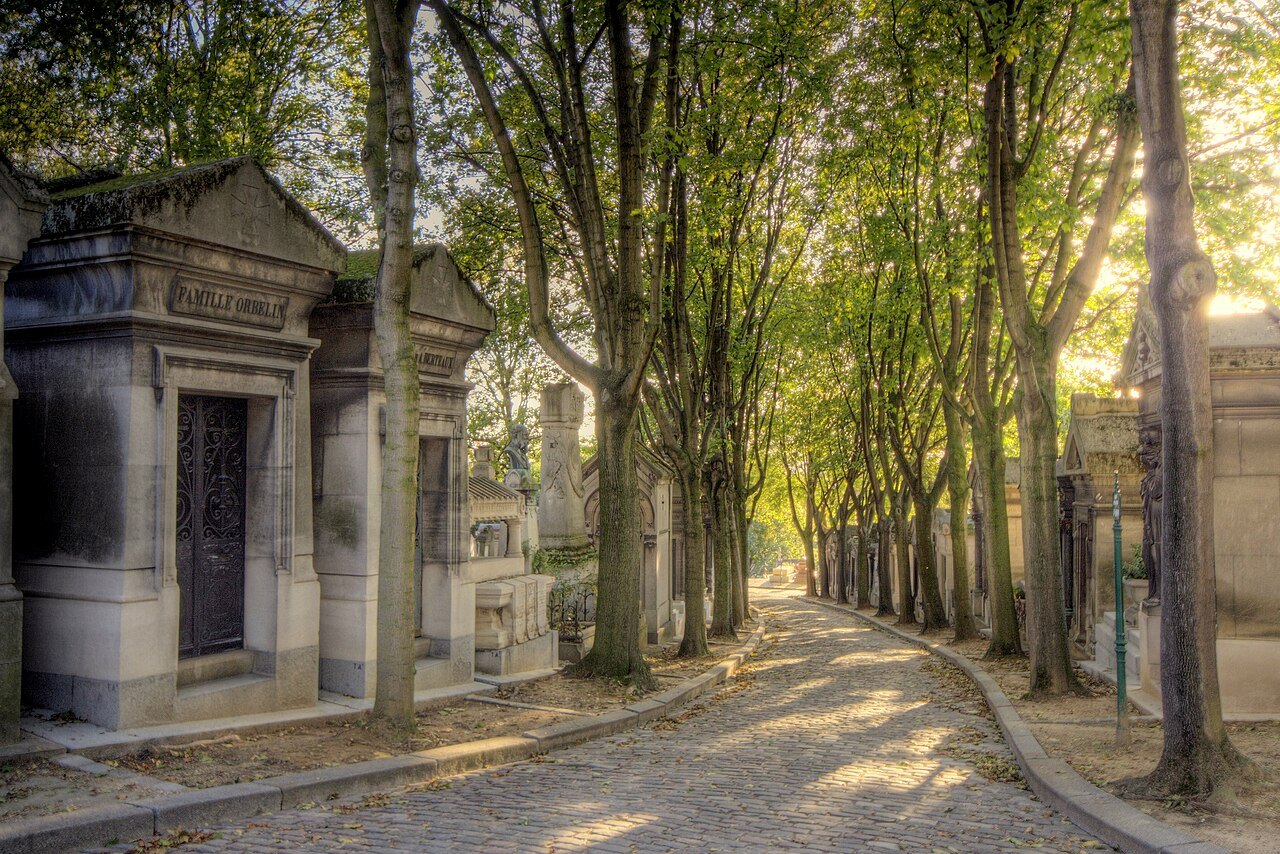
- 1The lanesCobbled avenues and steep paths winding uphill between rows of chapels and old trees.
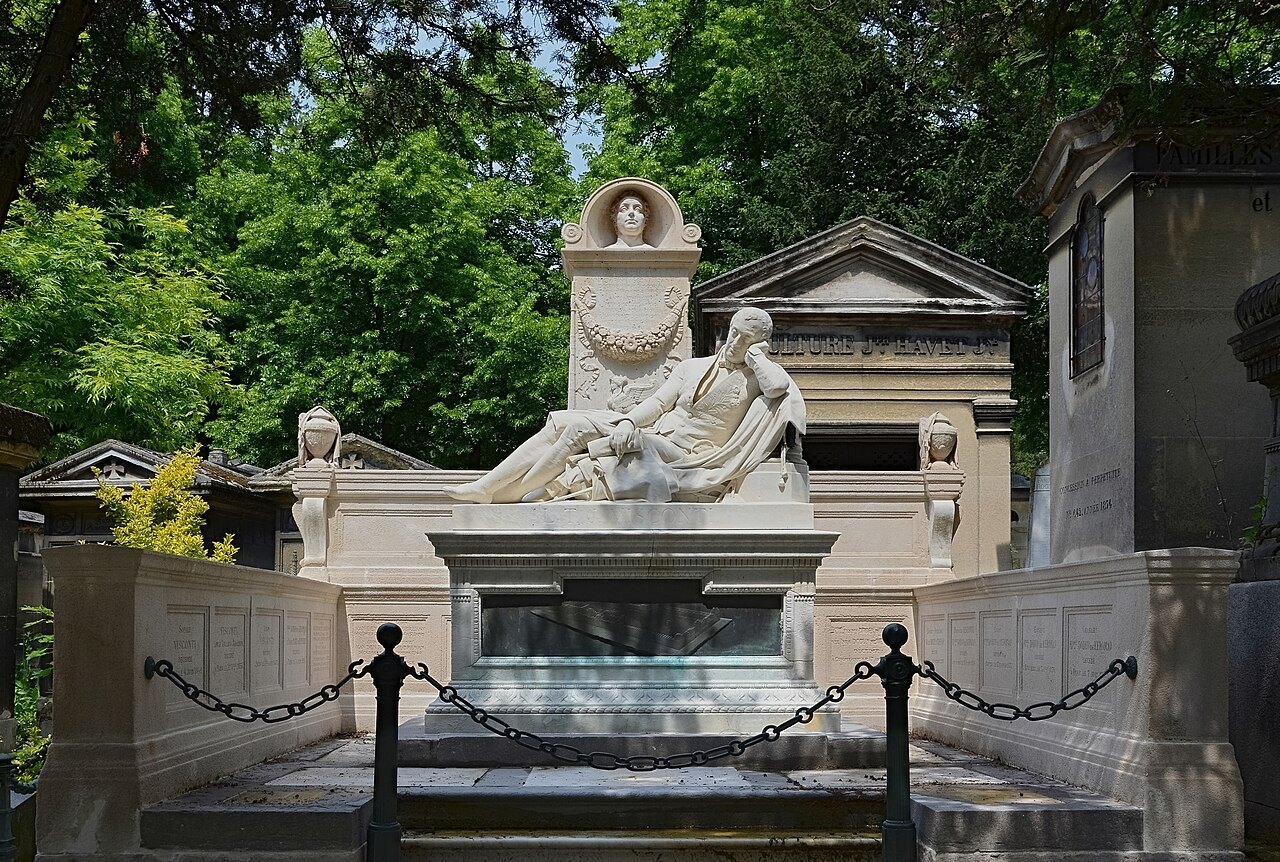
- 2Chopin's graveThe muse of music weeping over a broken lyre, carved by Clésinger in 1850.
- 3Oscar Wilde's tombJacob Epstein's winged figure, behind a glass screen against lipstick kisses.
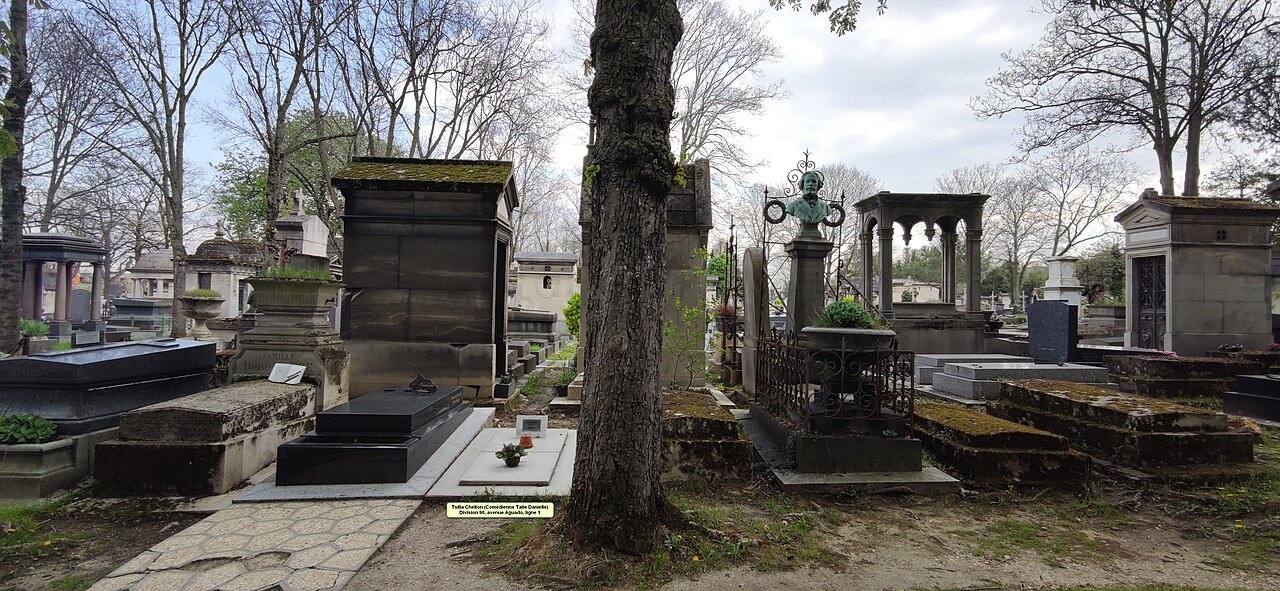
- 4Jim Morrison's graveA place of pilgrimage for fans of the singer of the Doors, who died in Paris in 1971.
- 5The Communards' WallThe wall where 147 fighters of the Paris Commune were shot in May 1871.
- 6Abelard and HéloïseThe medieval lovers under a Gothic canopy, where letters are still left for them.
The sight in full
Reading the place
Why it matters
Père Lachaise is the largest cemetery in Paris, 110 acres on a hillside in the 20th arrondissement, on the eastern edge of the city. It was the first garden cemetery, and it is said to be the most visited cemetery in the world, with more than three and a half million visitors a year. About a million people have been buried here, and the cemetery is still in use.
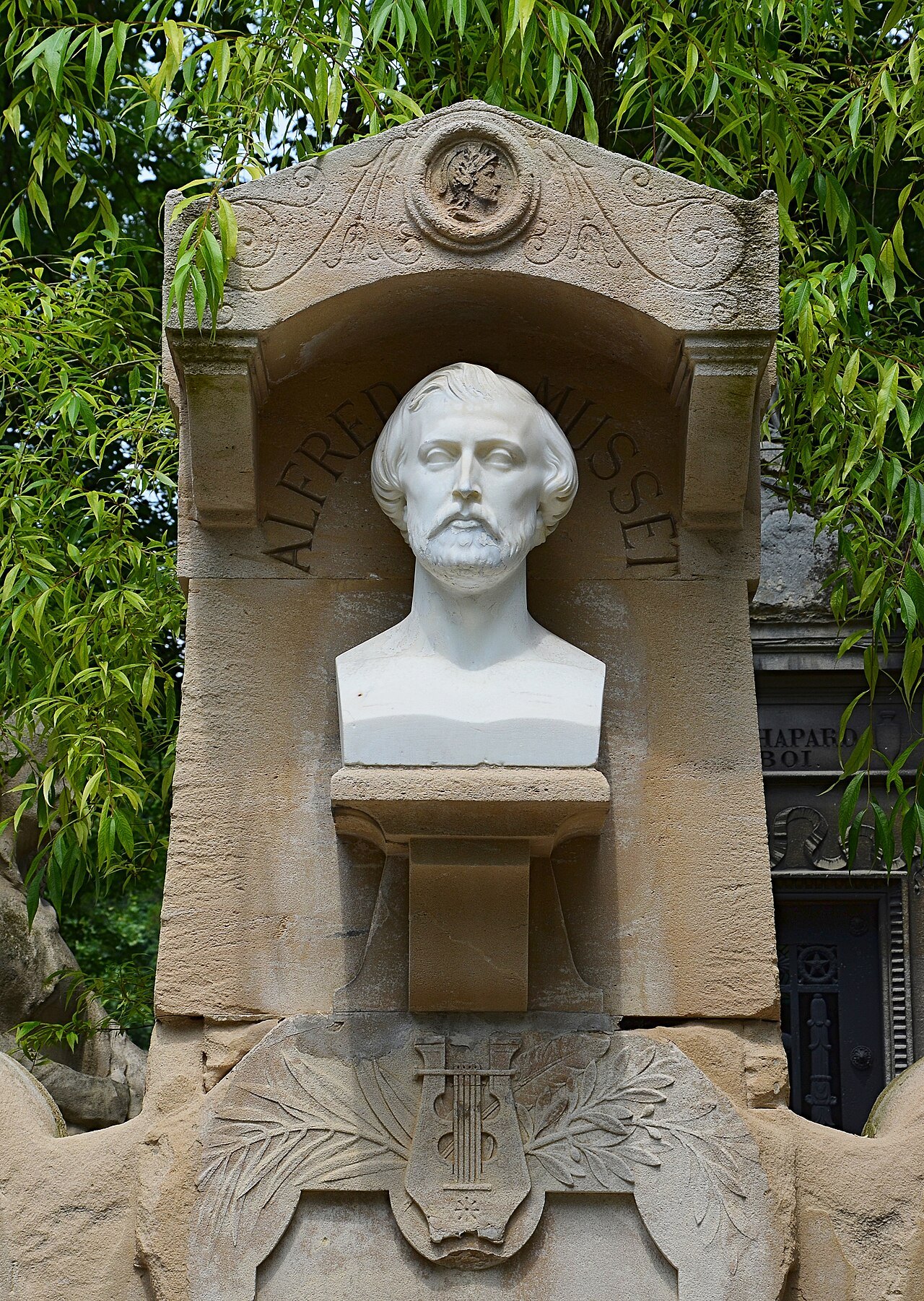
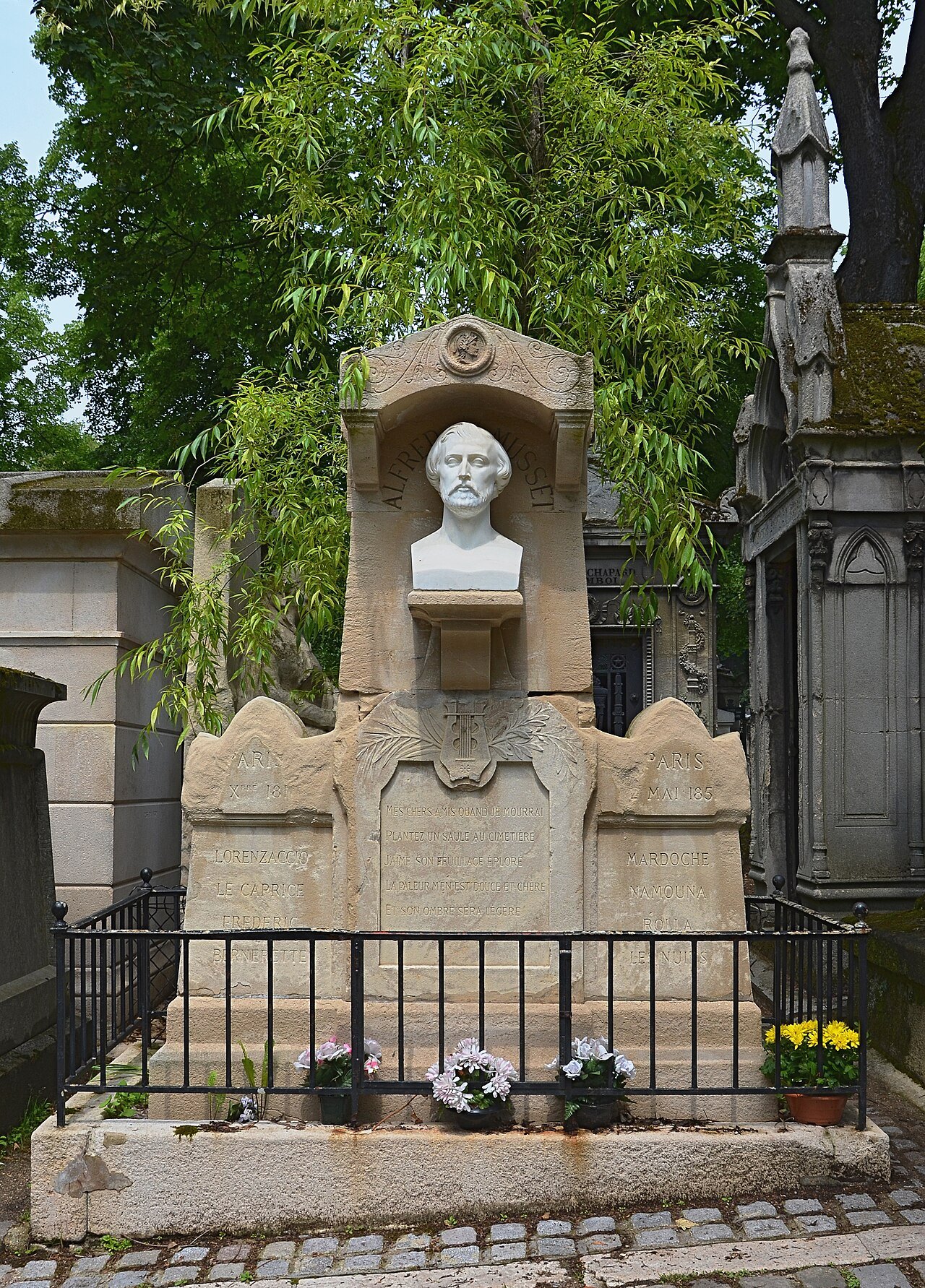
People come for its famous dead, among them Chopin, Oscar Wilde, Jim Morrison, Molière, Balzac and Proust, but also for the place itself: a city of the dead with its own streets, crowded with chapels, statues and tombs of every period, shaded by thousands of trees and quiet enough to hear the birds. It is one of the most peaceful and moving places in Paris to spend a morning.
A cemetery that needed customers
By the end of the eighteenth century the old graveyards inside Paris were full, and new cemeteries were opened outside the city walls: Montmartre in the north, Montparnasse in the south and, in the east, this one. The city bought the hillside in 1804, and it was named after Father François de la Chaise, confessor to Louis XIV, who had lived in a Jesuit house on the site. The architect Alexandre-Théodore Brongniart laid it out on the model of an English landscape garden, with winding paths and trees.
At first nobody wanted to be buried here. The cemetery was thought too far from the city, and many Catholics refused to be buried in ground the church had not blessed. In its first year it held only thirteen graves. So in 1817 its managers organized, with great fanfare, the transfer of the remains of the writers La Fontaine and Molière, followed by the supposed remains of Abelard and Héloïse, the lovers of the twelfth century. It worked: by 1830 there were more than 33,000 graves, and the cemetery was enlarged five times over the following decades.
The famous graves
Chopin died in Paris in 1849 and was buried here; his tomb, with Euterpe, the muse of music, weeping over a broken lyre, was carved by the sculptor Auguste Clésinger and put in place a year after his death. At his request his heart was taken back to Poland by his sister, but his body lies here.
Oscar Wilde's tomb is a great winged figure by Jacob Epstein. Visitors took to kissing it in lipstick, whose grease sank into the stone and damaged it, so a glass barrier was put around its lower half, completed in 2014; Ireland pays for its care. Jim Morrison, the singer of the Doors, died in Paris in 1971 and is buried here too; his grave, long without a proper marker, draws steady pilgrimages.
Abelard and Héloïse lie under a canopy made from fragments of an old abbey, and by tradition lovers leave letters at their tomb. Nearby, and all over the cemetery, are writers, painters, composers and actors: Molière, La Fontaine, Balzac, Proust, Bizet, Sarah Bernhardt, Édith Piaf and many more.
Memorials
On the south side of the cemetery is the Communards' Wall, the Mur des Fédérés. At the end of the Bloody Week of May 1871, when the army crushed the Paris Commune, the last fighters were cornered among the tombs, and after fighting that went on until the evening of 27 May, 147 of them were shot against this wall. It remains a place of commemoration for the left.
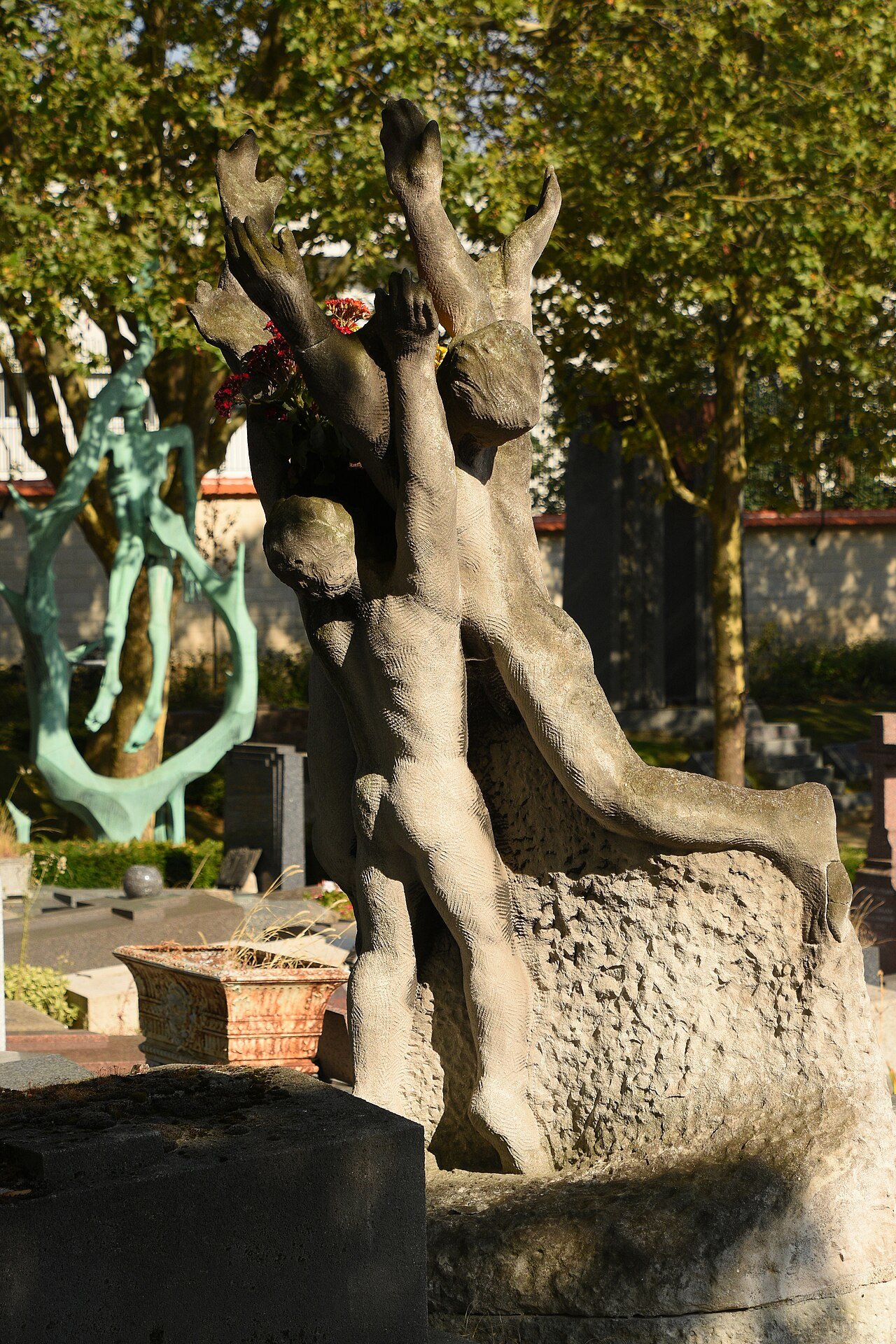
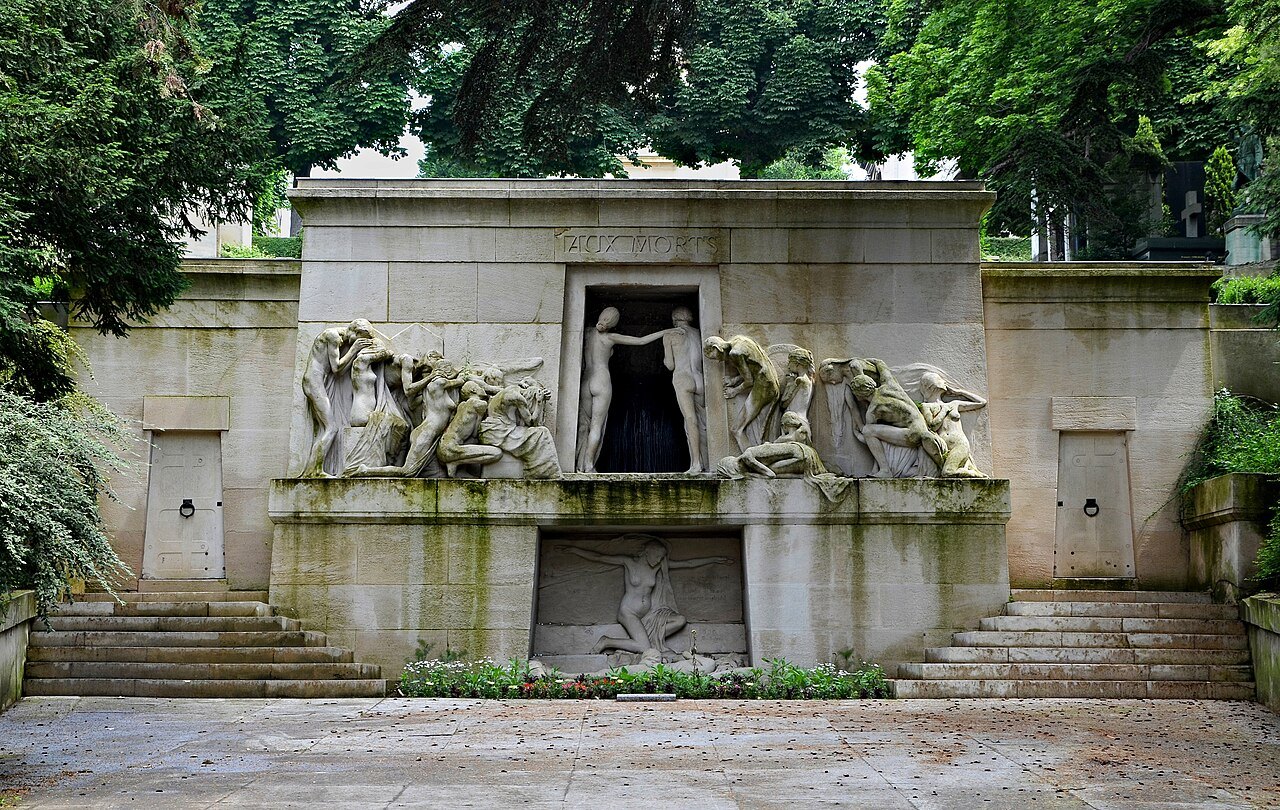
Elsewhere in the cemetery stand memorials to the victims of the Nazi camps, to foreign soldiers who died for France and to the dead of the Second World War. The Monument aux Morts by Albert Bartholomé, of 1899, honors the unidentified dead of Paris.
What you see
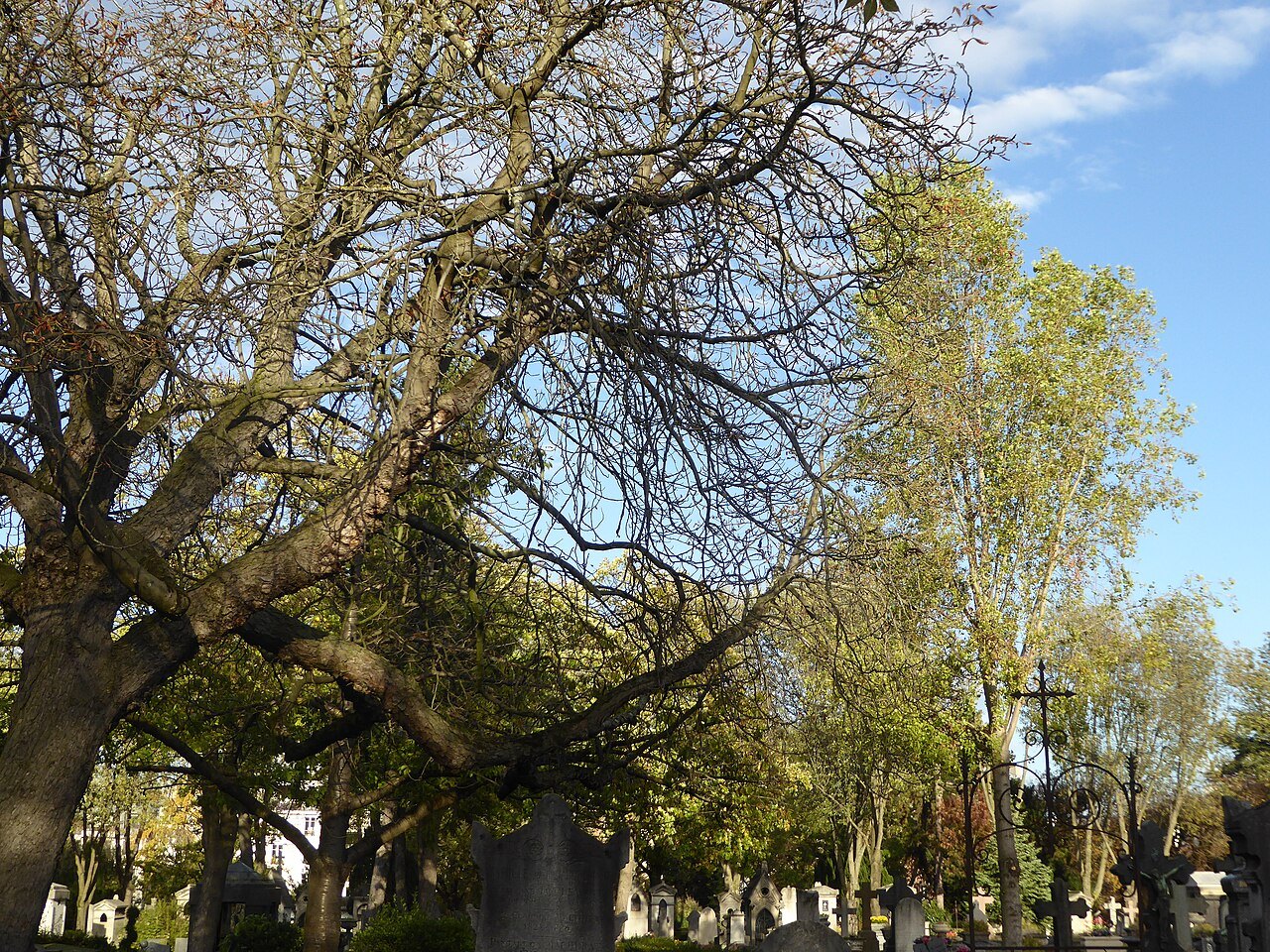
The cemetery is laid out in numbered divisions along named lanes, climbing from the main entrance on the Boulevard de Ménilmontant to the chapel at the top of the hill, built in 1823 on the site of the old Jesuit house. The paths are steep and cobbled in places, and the tombs range from simple stones to miniature Gothic chapels, weeping figures and portrait busts. Look for the neo-Gothic tomb of the Greffulhe family, the only one of Brongniart's planned monuments to be built.
At the far end stands the crematorium and columbarium of 1894, a Byzantine-style building with a great dome; France's first cremation took place here in 1889, and its niches hold the ashes of thousands. The cemetery has also become a haven for wildlife, with foxes, tawny owls and around a hundred species of birds among its trees.
How to visit
The Philippe Auguste Métro station is next to the main entrance; the Père Lachaise station is near a side entrance. Wear comfortable shoes and allow at least two hours; the cemetery is big enough to get lost in, so pick up a map or look up the division numbers of the graves you want before you go. Be respectful: this is a working cemetery, and funerals still take place.
The Canal Saint-Martin is a short ride west, and the Place des Vosges is on the way back toward the center. See neighborhoods for the lively streets of the east.
Myths worth setting aside
Père Lachaise is not a closed historical site. It is a working cemetery with a waiting list, and new burials are allowed only for people who died or lived in Paris.
Nor is every grave permanent. Plots are now often leased for thirty years; if a lease is not renewed, the remains are moved to the cemetery's ossuary to make room.
Where to go next
Nearby
- Nearby · 10th · 11thThe Canal Saint-MartinA canal Napoleon ordered in 1802 to bring fresh water into Paris, opened in 1825, with tree-lined quays, iron footbridges and nine locks stepping down from the Bassin de la Villette to the Seine.Read the page →
- Nearby · 3rd · 4thThe Place des Vosges and the MaraisThe oldest planned square in Paris, built by Henry IV from 1605 to 1612 as the Place Royale, at the heart of the Marais, a quarter of seventeenth-century mansions, narrow streets and museums.Read the page →
- Nearby · 18thSacré-Cœur and MontmartreA white basilica begun in 1875 on the top of Montmartre, finished in 1914 and consecrated in 1919, looking south over the whole of Paris, with the old hill village and its painters' square behind it.Read the page →