Home · Sights · The Place des Vosges and the Marais
What you are looking at
The Place des Vosges and the Marais
3rd · 4th
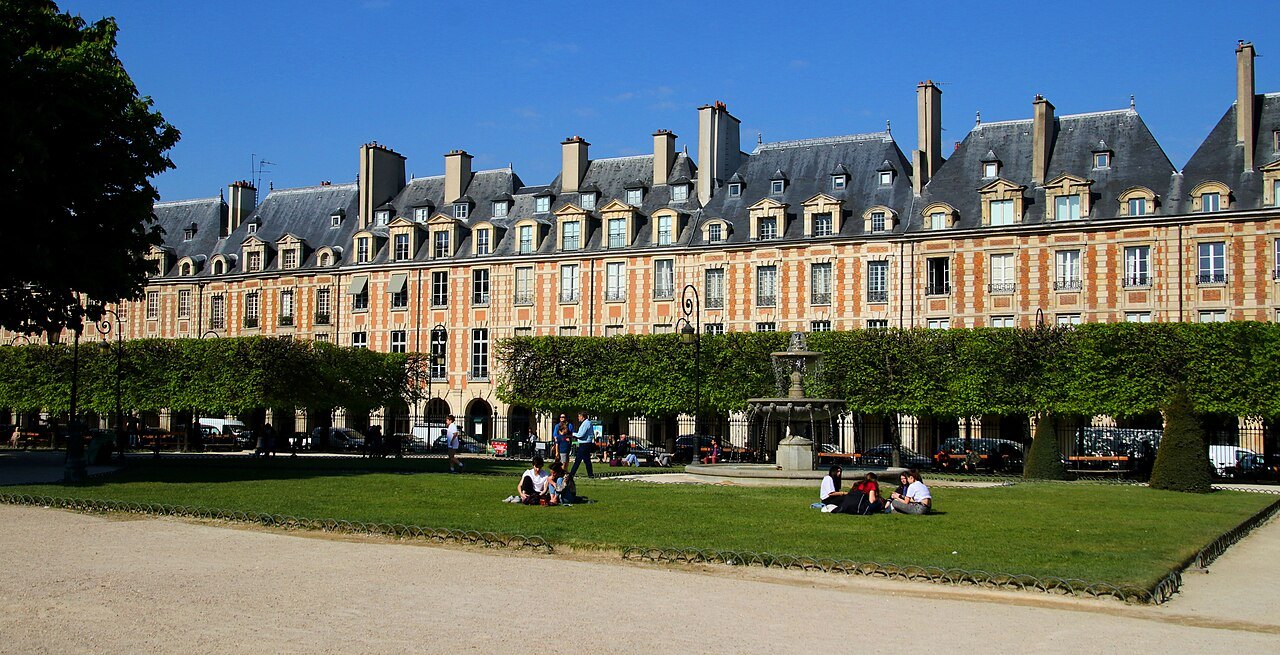
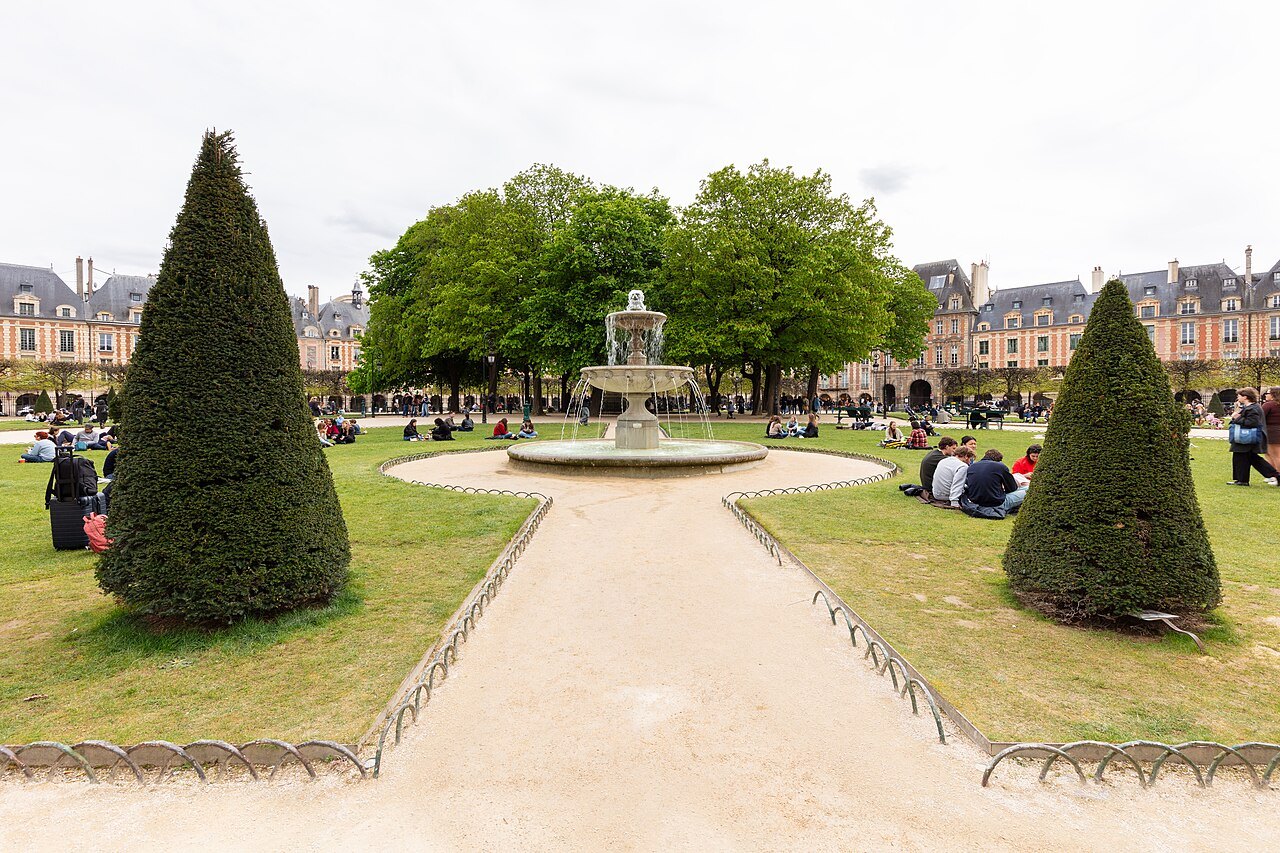
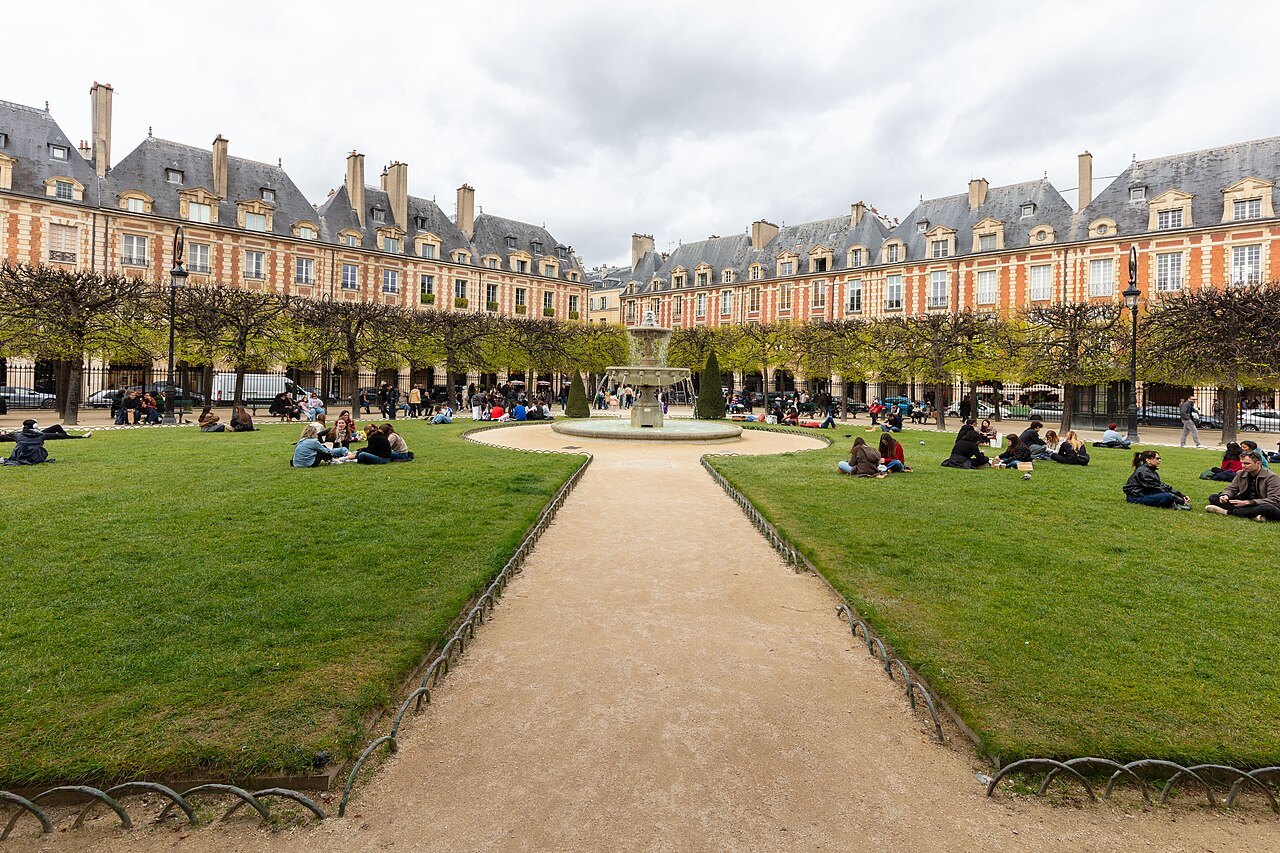
- 1The arcadesVaulted walks on all four sides under houses of red brick and pale stone quoins.
- 2The King's and Queen's pavilionsTwo taller pavilions on the north and south sides, entered through triple arches.
- 3The garden squareClipped lindens around lawns and gravel, four fountains, and a bronze horseman at the center.
- 4Victor Hugo's houseNumber 6, where the writer lived from 1832 to 1848, now a museum of his life.
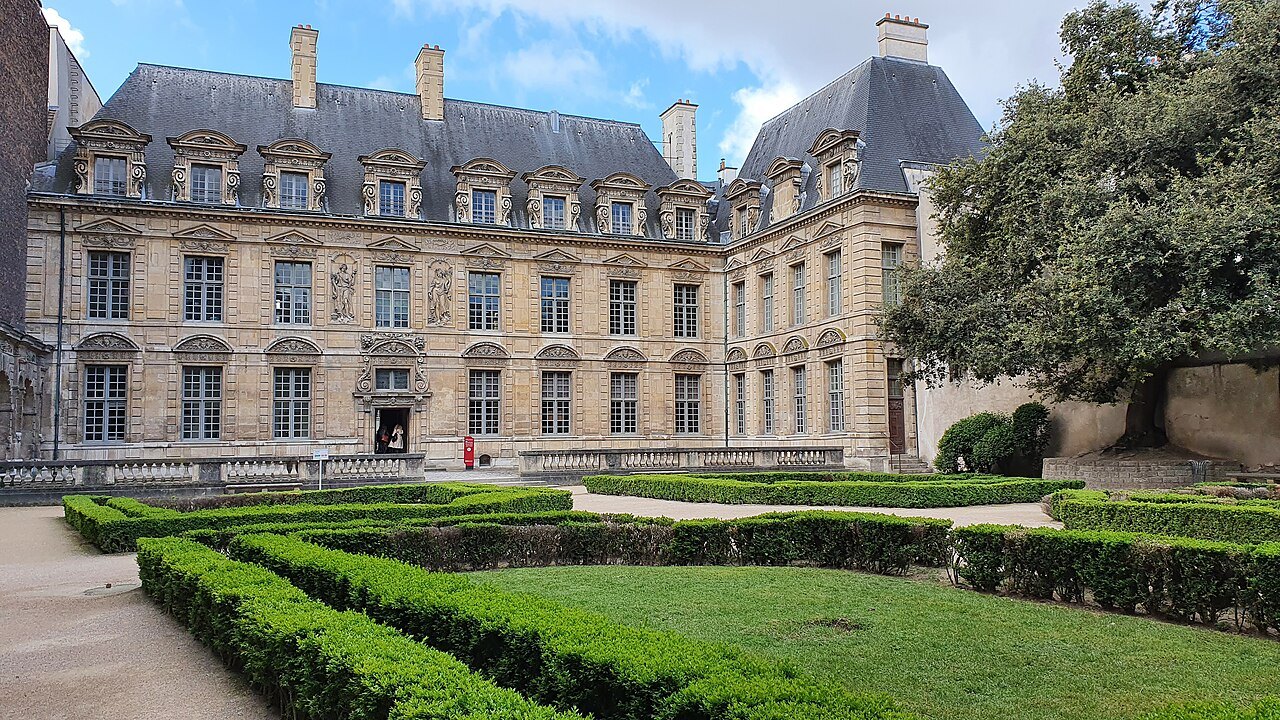
- 5The Hôtel de SullyA Louis XIII mansion on the Rue Saint-Antoine whose garden opens into the square.
The sight in full
Reading the place
Why it matters
The Place des Vosges is the oldest planned square in Paris, a true square of about 460 feet on each side, closed on all four sides by houses of the same design. It was built for Henry IV between 1605 and 1612 as the Place Royale, one of the first examples of royal town planning in Europe, and it became the model for the residential squares of many European cities that followed.
It stands on the border of the 3rd and 4th arrondissements, in the middle of the Marais, the old quarter on the Right Bank whose name means the marsh. In the seventeenth century the nobility built their mansions here, and many of those hôtels particuliers survive, restored as museums, archives and libraries. The square is the best place to start seeing them.
A king's square
The square was laid out on the site of the Hôtel des Tournelles, a royal residence and its gardens, which had been demolished by Catherine de' Medici. Henry IV intended it as part of a wider rebuilding of the city, alongside additions to the Louvre and the Pont Neuf. He did not live to see it finished; he was assassinated in 1610.
It was inaugurated in 1612 with a great carrousel, a display of horsemanship, to celebrate the engagement of Louis XIII and Anne of Austria. The houses were sold to courtiers and financiers, and for the next two centuries this was one of the most fashionable addresses in Paris. Cardinal Richelieu had an equestrian bronze of Louis XIII placed in the center in 1639. It was destroyed in the Revolution, and the statue there now, by Charles Dupaty and Jean-Pierre Cortot, was unveiled in 1825.
The name changed with the regimes. The Revolution briefly called it the square of the weapons factory, and in 1800 it was renamed for the Vosges, the first département to pay its taxes in support of the revolutionary army. Later governments restored the royal name, and in 1870 the Vosges name came back to stay.
What you see
The thirty-six houses, one for each of the original mansions, are built to one design, probably by Jean Baptiste Androuet du Cerceau: red brick with bands of stone at the corners and windows, steep roofs of blue slate with dormers, and vaulted arcades on square pillars at street level. Walk the full circuit of the arcades before crossing the garden; they are one of the few places in Paris where you can go all the way around a square under cover.
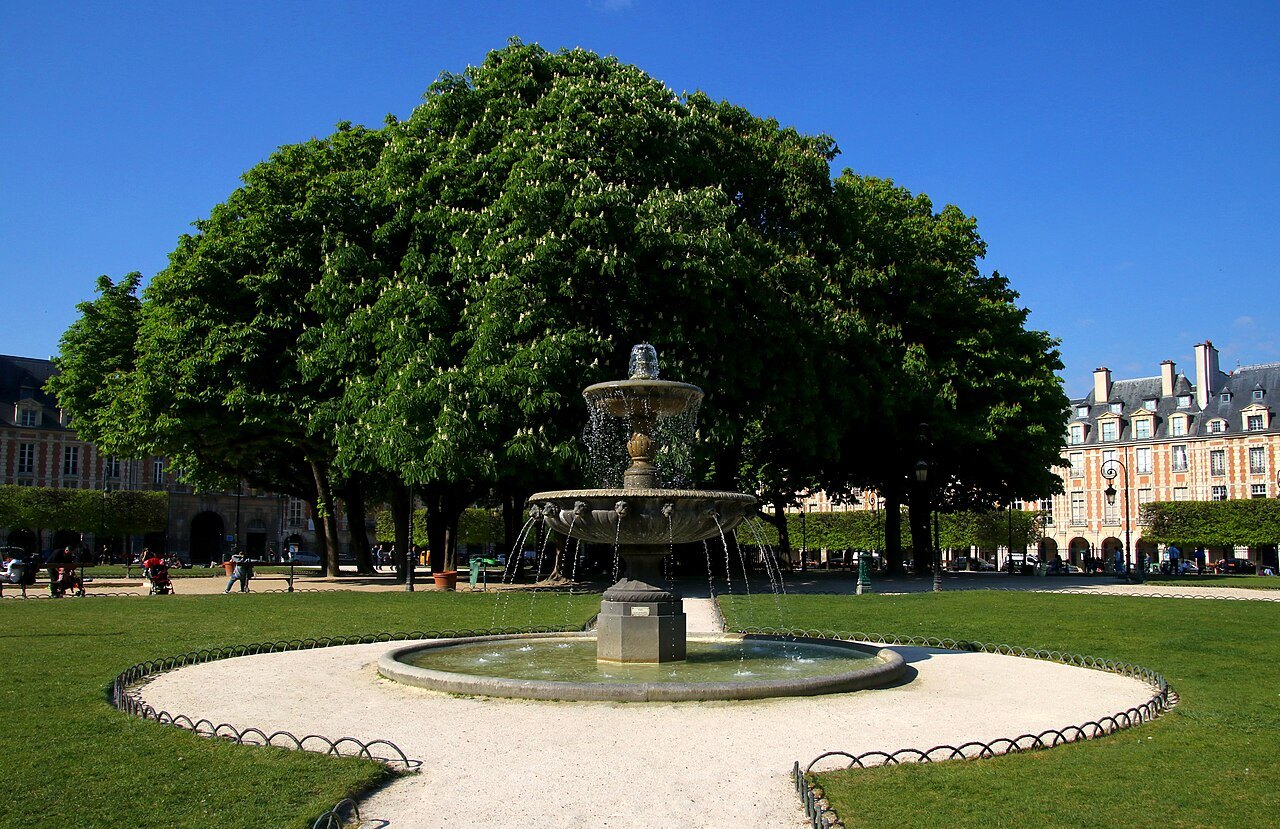
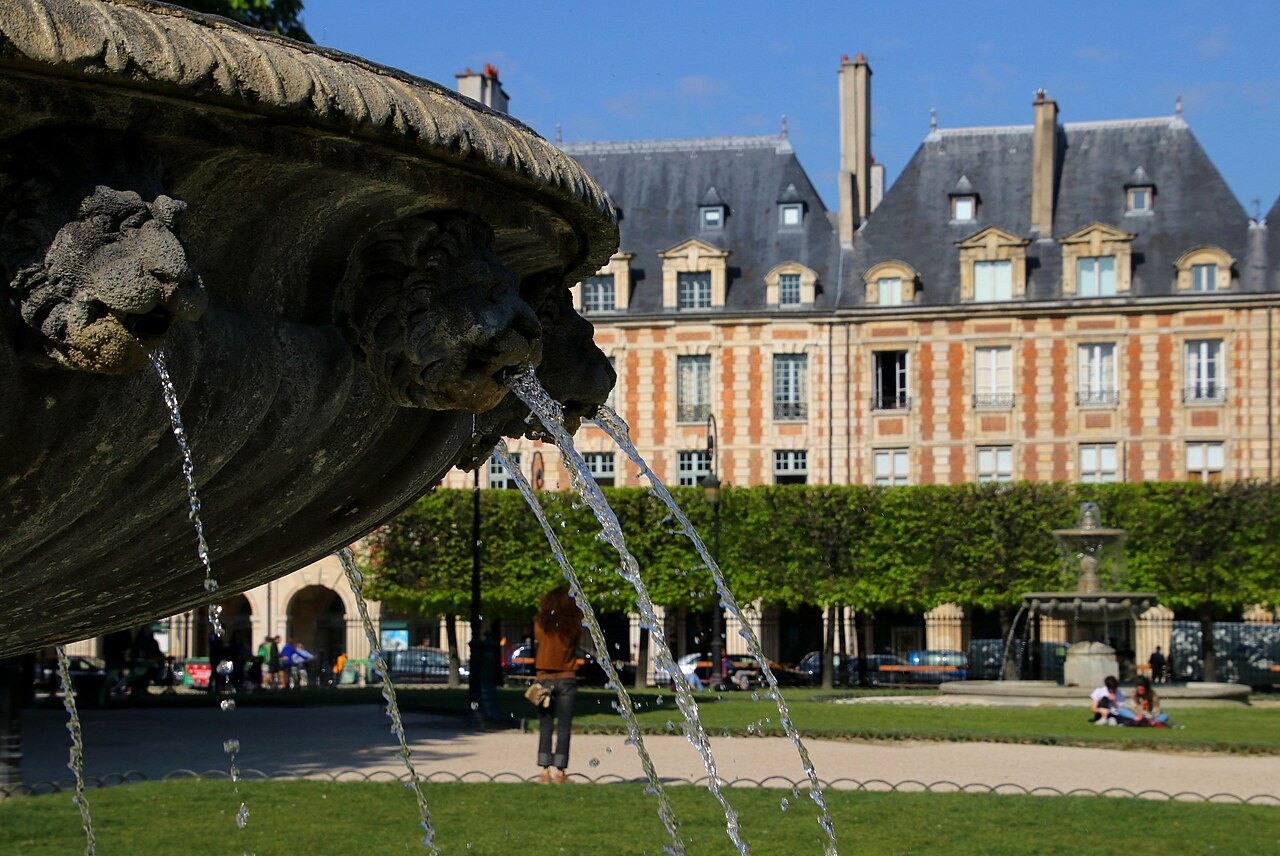
In the middle of the north and south sides, two pavilions rise above the roofline, the King's pavilion and the Queen's pavilion, each opening onto the square through three arches. Despite the names, no king ever lived in the square; Anne of Austria stayed in the Queen's pavilion only briefly. The garden in the center is planted with mature lindens around lawns and gravel, framed by rows of clipped lindens, with a fountain by Cortot in each quarter, fed by water from the Ourcq canal.
Who lived here
Number 6, in the southeast corner, is the Maison de Victor Hugo. The writer rented a second-floor apartment here with his wife Adèle from October 1832 to 1848, and it is now a museum of his life run by the city, with his furniture and drawings. Madame de Sévigné, the great letter writer of Louis XIV's reign, was born at number 1bis, and Henry IV's minister Sully lived at number 7.
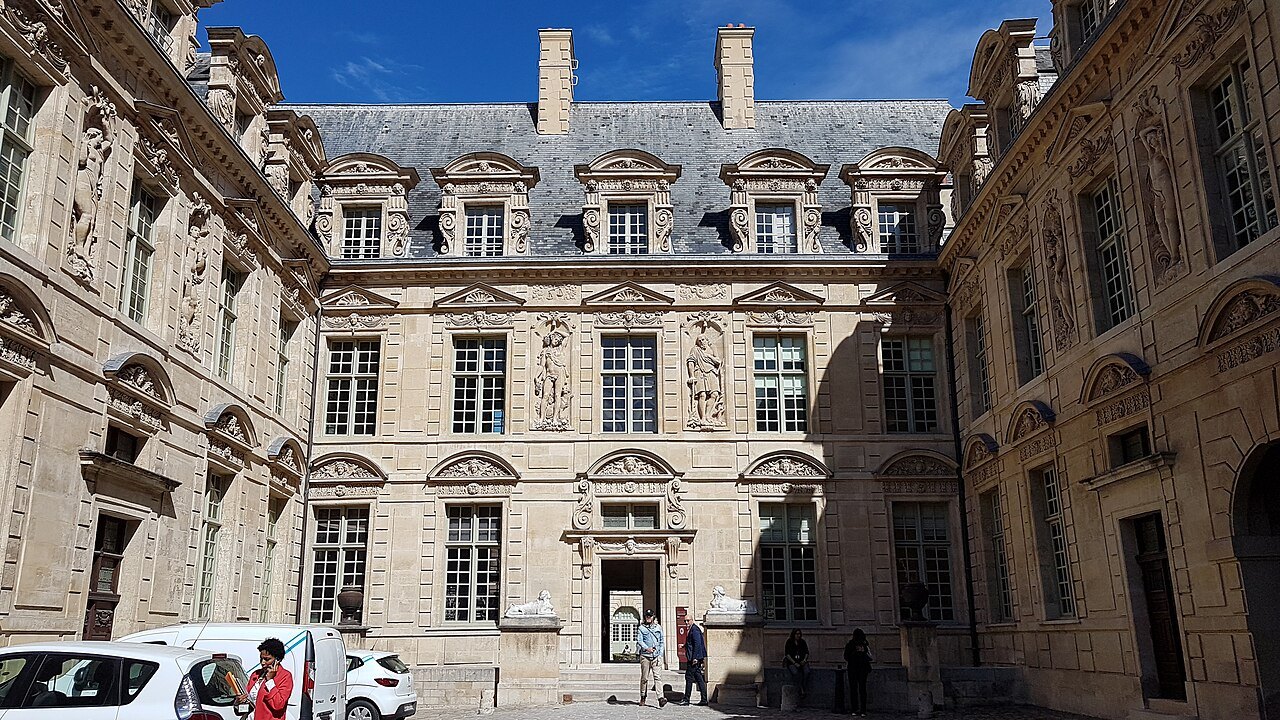
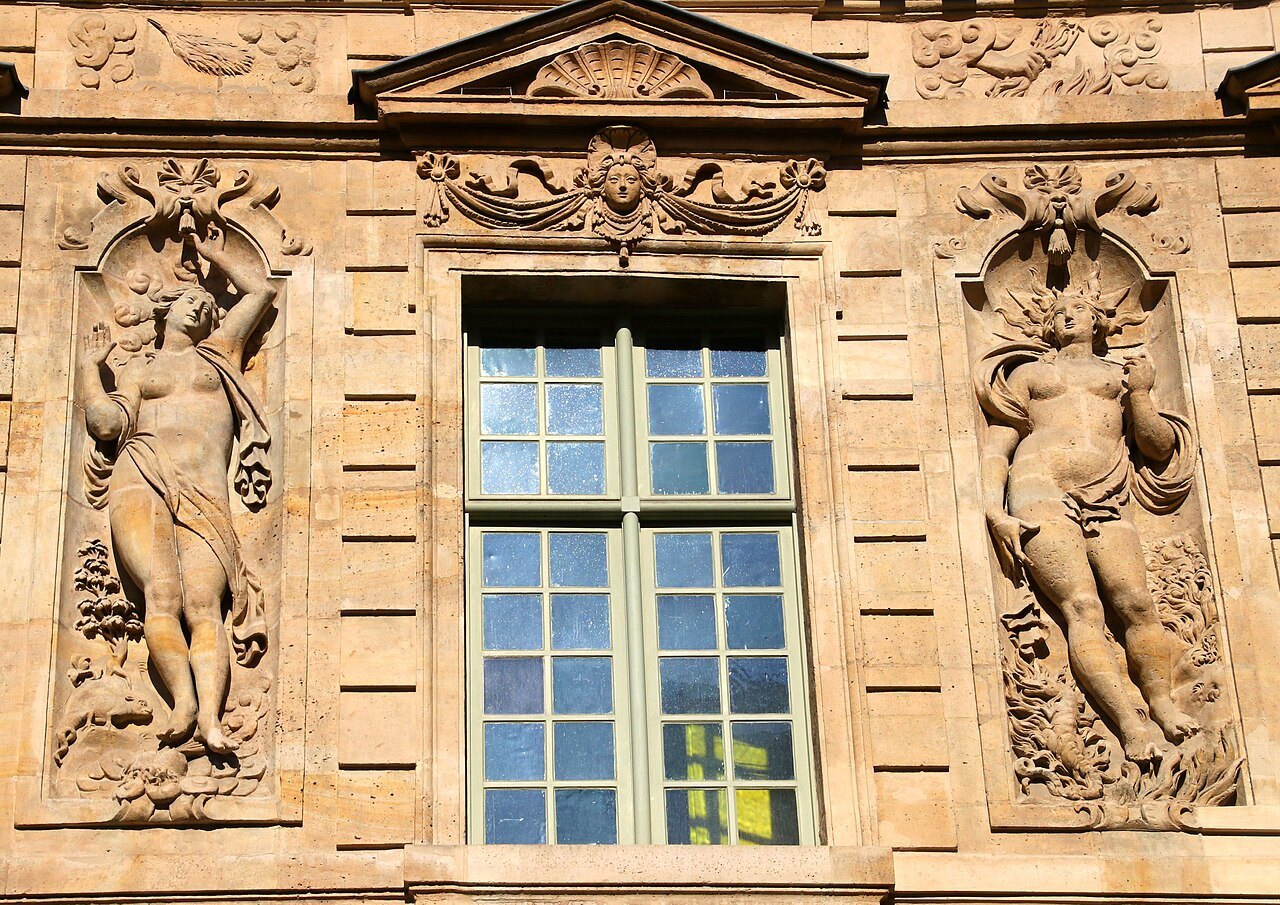
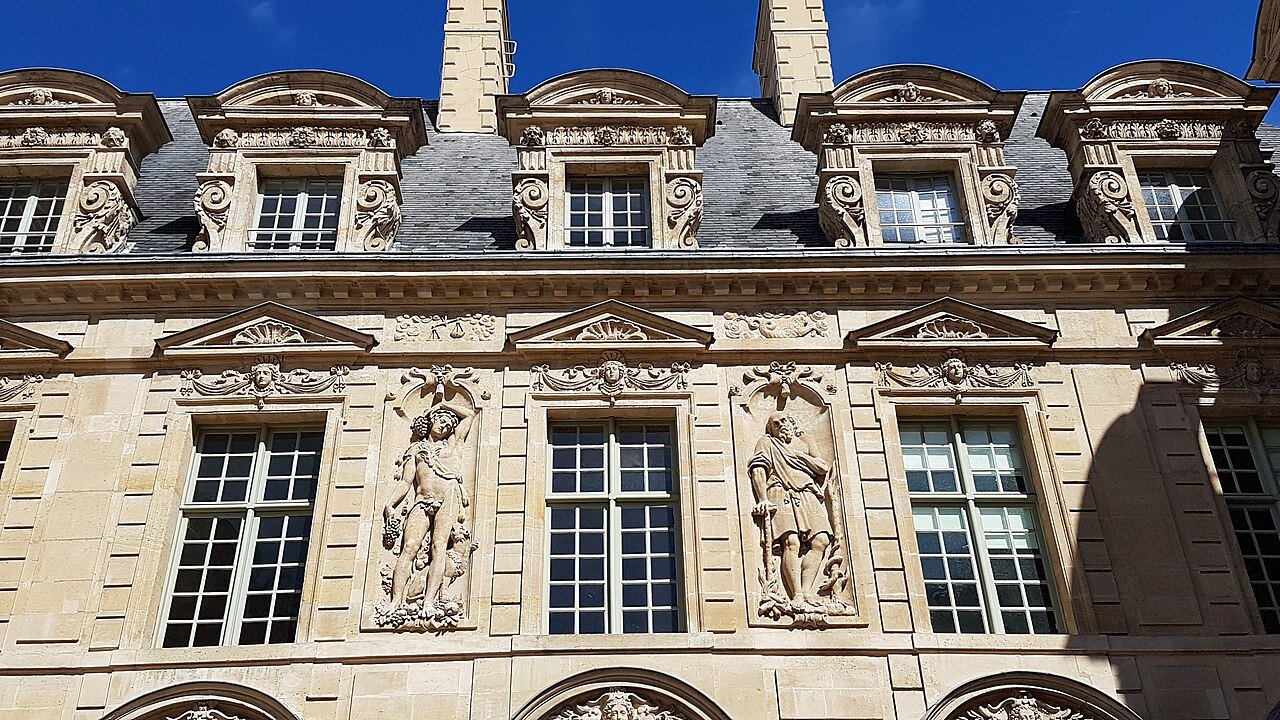
Sully's own mansion, the Hôtel de Sully, stands just behind the southwest corner on the Rue Saint-Antoine. It was built between 1624 and 1630 with gardens and an orangery, and the site was chosen to give access to the square. Its courtyard façades are covered in carved allegories in a Renaissance-inspired style, and a discreet door at the back of its garden opens onto the square, so you can walk from the Rue Saint-Antoine through the courtyard and garden and come out under the arcade.
The Marais around the square
The streets west of the square hold one great mansion after another. The Hôtel Carnavalet, built in the sixteenth century and bought by the city in 1866 on Haussmann's advice, is now the Musée Carnavalet, the museum of the history of Paris, reopened in 2021 after a long renovation. The Hôtel Salé houses the Picasso Museum, and the Hôtel de Saint-Aignan the museum of Jewish art and history.
The Rue des Rosiers, a few streets further on, has been the center of one of the city's main Jewish communities since the nineteenth century, when Jews from Eastern Europe settled here in the quarter known in Yiddish as the Pletzl. Its bakeries and falafel counters are part of the Paris of eating and drinking.
How to visit
The square costs nothing to enter and is pleasant at any hour of daylight. It is quietest early in the day; on weekend afternoons the lawns fill with people and the arcades with galleries and cafés. The museums of the Marais are close together, so a morning can take in the square, Victor Hugo's apartment and the Carnavalet without any transport.
To see the Marais at its best, walk its small streets between the museums rather than taking the main roads around it. For where to stay nearby, see where to stay; the cathedral and the Île Saint-Louis are a short walk south across the river.
Myths worth setting aside
The name has nothing to do with the mountains' scenery. The square was renamed for the département of the Vosges, as a reward for paying its revolutionary taxes first.
And despite the pavilions' names, the square was never a royal residence. It was built for the king, and sold to his court.
Where to go next
Nearby
- Nearby · 4th · Île de la CitéNotre-Dame de ParisThe Gothic cathedral begun in 1163 on the island where Paris began, burned in April 2019 and reopened in December 2024: two square towers, three great rose windows, and a roof of new French oak.Read the page →
- Nearby · 20thPère Lachaise CemeteryThe largest cemetery in Paris, 110 acres of cobbled lanes, chapels and trees on a hillside in the 20th arrondissement, opened in 1804 and now the resting place of Chopin, Oscar Wilde, Jim Morrison and about a million others.Read the page →
- Nearby · 10th · 11thThe Canal Saint-MartinA canal Napoleon ordered in 1802 to bring fresh water into Paris, opened in 1825, with tree-lined quays, iron footbridges and nine locks stepping down from the Bassin de la Villette to the Seine.Read the page →