THE TRAIN, THE TIME SLOT, AND HOW TO SPEND THE DAY
How do you visit Versailles from Paris?
Take the RER C to Versailles Château Rive Gauche, book a time slot for the palace, and give the rest of the day to the gardens and the Trianons. What to see inside, how the estate is laid out, and how to pace a day that most visitors underestimate.
The answer in full
Read on
The short answer
By train, with a booked time slot and a whole day. The palace of Versailles lies southwest of Paris, and the RER C, the regional express line that runs along the Left Bank past the Musée d'Orsay and the Invalides, ends at the station of Versailles Château Rive Gauche, a walk from the palace gates. It is the RER line most used by visitors for exactly this reason. Of everything on the estate, only the palace itself requires a booked time slot; the gardens and the estate of the Trianons do not. Check the calendar before you go, since the palace shuts one day a week and on a few public holidays; see booking ahead.
Why Versailles matters
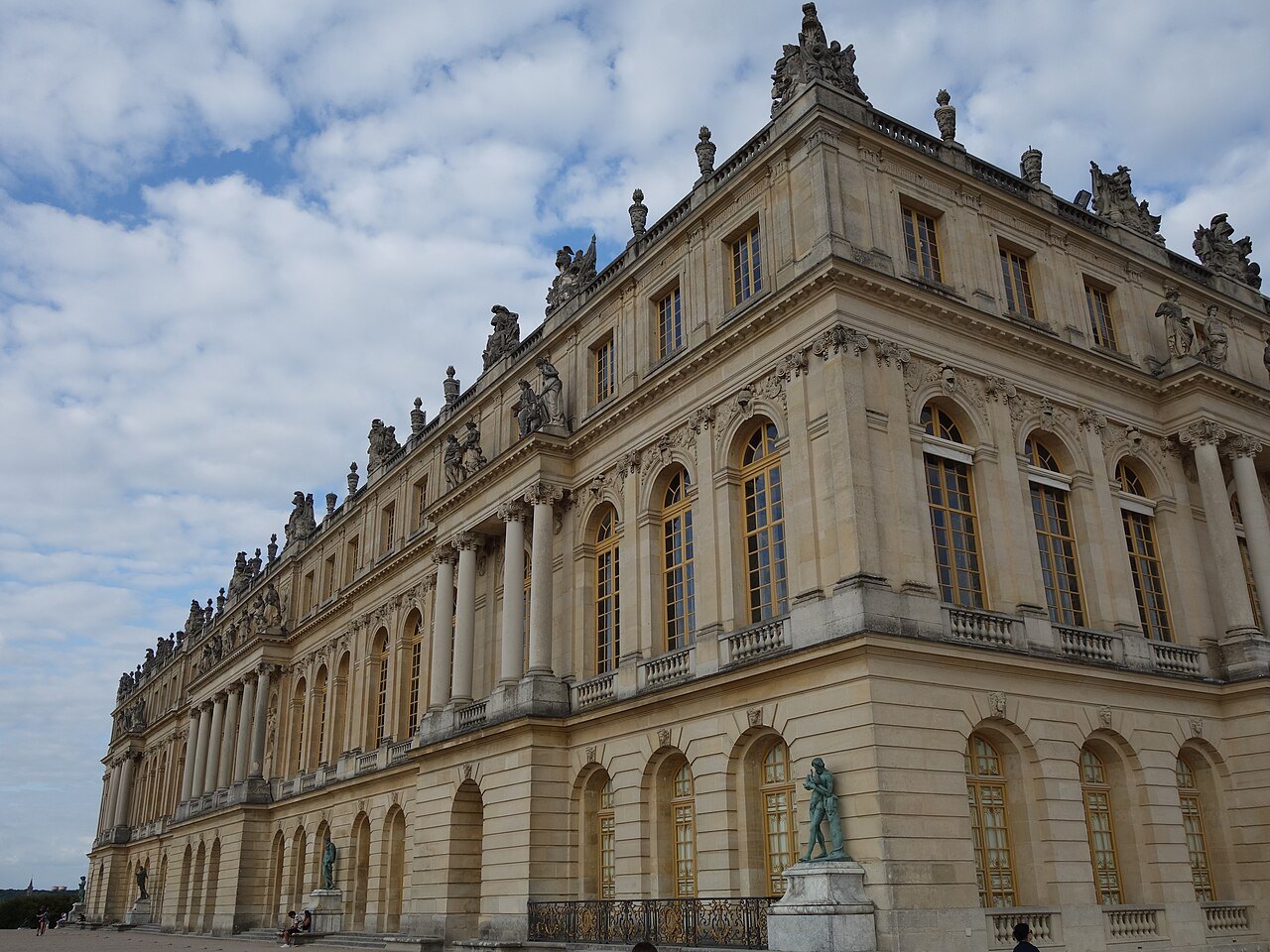
Versailles was the seat of the French monarchy for a century. Louis XIII had a small château here; his son Louis XIV transformed it into the palace he used to glorify the monarchy and to draw the nobility of France into his orbit. The king, the court and the government lived there permanently from 6 May 1682 until 6 October 1789, when the Revolution brought the royal family back to Paris. By 1687 it was clear to all that Versailles was, in practice, the capital of France.
Louis XIV used Versailles as a stage long before he lived there. In 1664, 1668 and 1674 he gave great festivals in its gardens, lasting into the night, and prints and engravings spread news of them across Europe. The palace was built to be seen, and to be talked about.
The palace is one of the masterpieces of French classical architecture, with roughly 2,300 rooms, and it was copied by courts across Europe for the next two centuries. After the Revolution, King Louis-Philippe turned much of it into a museum devoted to all the glories of France, and it remains a museum today.
Inside the palace
The palace visit follows the grand rooms of the first floor. The State Apartments of the King are a sequence of salons named after the planets and the gods of Olympus, Hercules, Venus, Mercury, Mars, Apollo and Diana, through which courtiers passed on their way to the king.
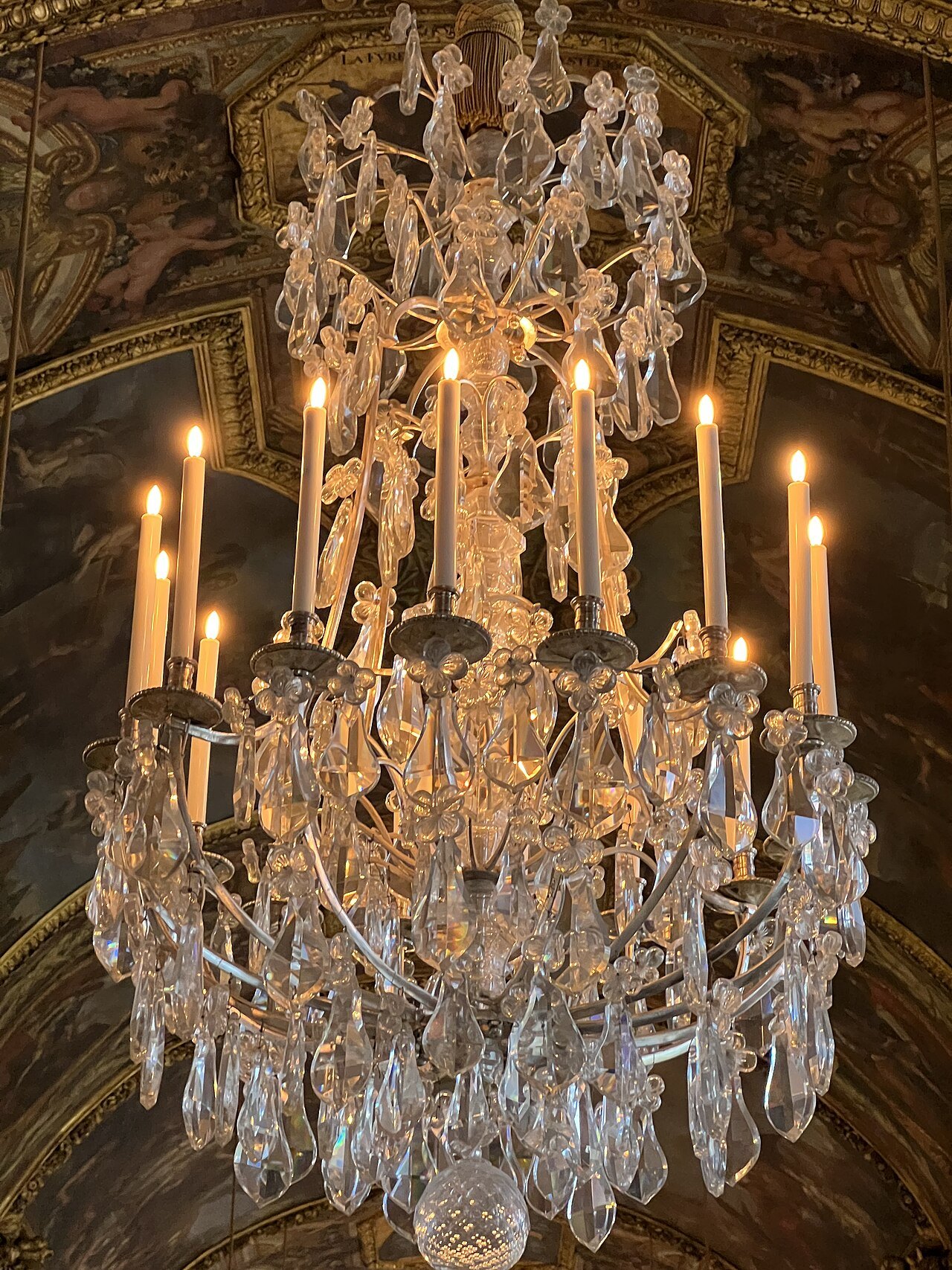
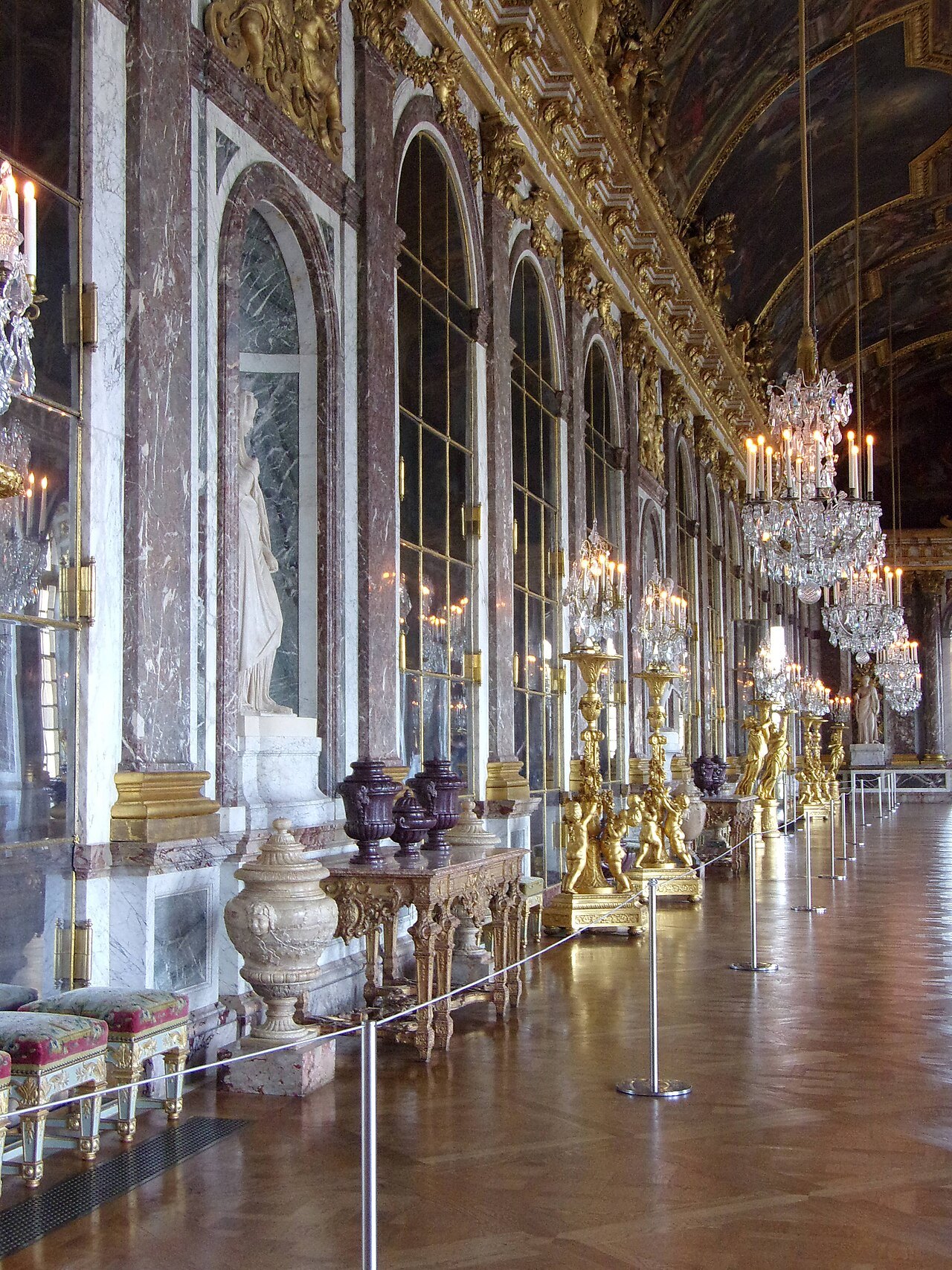
They lead to the Hall of Mirrors, the long gallery facing the gardens, begun in 1678 by Jules Hardouin-Mansart on the site of an earlier terrace. Its 578 mirrors face seventeen windows and multiply their light, and its ceiling, painted by Charles Le Brun, celebrates the first eighteen years of Louis XIV's reign in thirty scenes, most of them military victories. The hall has seen history as well as parties: the German Empire was proclaimed there, and the Treaty of Versailles was signed there in 1919.
Beyond it are the Queen's Apartments, home in turn to three queens of France, the last of them Marie Antoinette; the Royal Chapel, finished under Louis XIV, with its painted vault and its organ of 1709 and 1710; and the Royal Opera, which can sometimes be seen on a guided visit, built almost entirely of wood painted to look like marble for the wedding of the future Louis XVI and Marie Antoinette.
Louis-Philippe's museum survives in the galleries around the royal apartments. The Coronation Room shows Jacques-Louis David's enormous painting of the coronation of Napoleon, and the Hall of Battles, which runs along most of the length of the south wing's upper floor, is lined with huge canvases of French victories, an argument about the nation's history painted at the scale of the palace. To make room for these galleries, Louis-Philippe swept away almost all the palace's old apartments; only those of the king and the queen survived nearly intact, which is why they feel so precious today.
The gardens
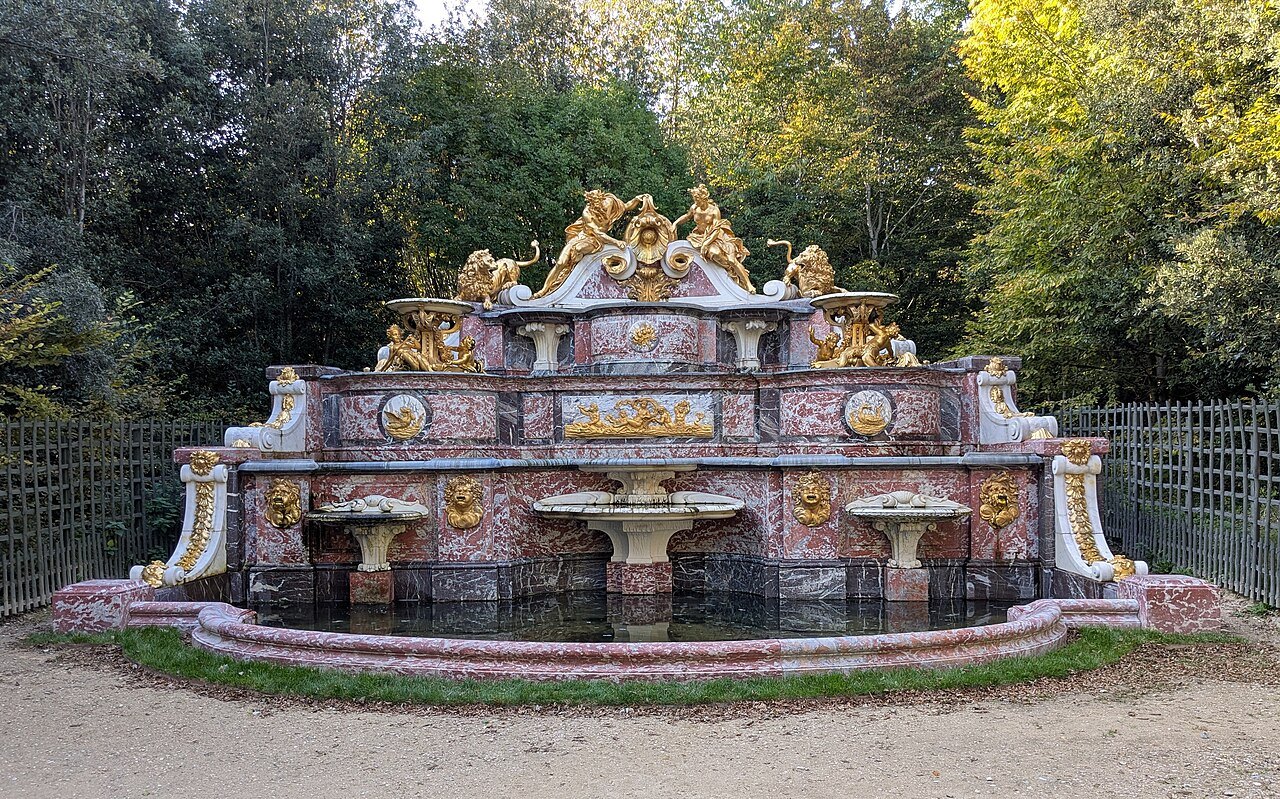
The gardens are the work of André Le Nôtre, who laid them out for Louis XIV along a great east–west axis that was extended, as land was bought and woodland cleared, as far as the eye could see. With their axial paths, clipped hedges, flowerbeds, fountains and pools, they became the model of the French formal garden, imitated across the world. Le Nôtre did not start from nothing: he reworked a simpler garden laid out in the 1630s for Louis XIII, and the result was a collaboration with the painter Le Brun, the minister Colbert and the king himself. The park still covers more than two thousand acres, and the formal gardens alone some 230.
At the end of the main axis lies the Grand Canal, and in the woods on either side are groves, fountains and sculpture. Many visitors spend as long outside as in the palace, and in good weather the gardens are the best part of the day. On certain days in the warmer months the fountains play to music, which the palace announces on its own calendar.
The Trianons and the Hamlet
Near the northern arm of the Grand Canal, Louis XIV built himself a retreat from the court: the Grand Trianon, a single-story pavilion of marble built by Hardouin-Mansart in 1687 in just three months, to replace an earlier one faced in delftware tiles that leaked. Beside it stands the Petit Trianon, a neoclassical house built between 1762 and 1768 for Louis XV. Louis XVI gave it to Marie Antoinette, who remodeled it, relaid its gardens in the English style and formed her own small court there.
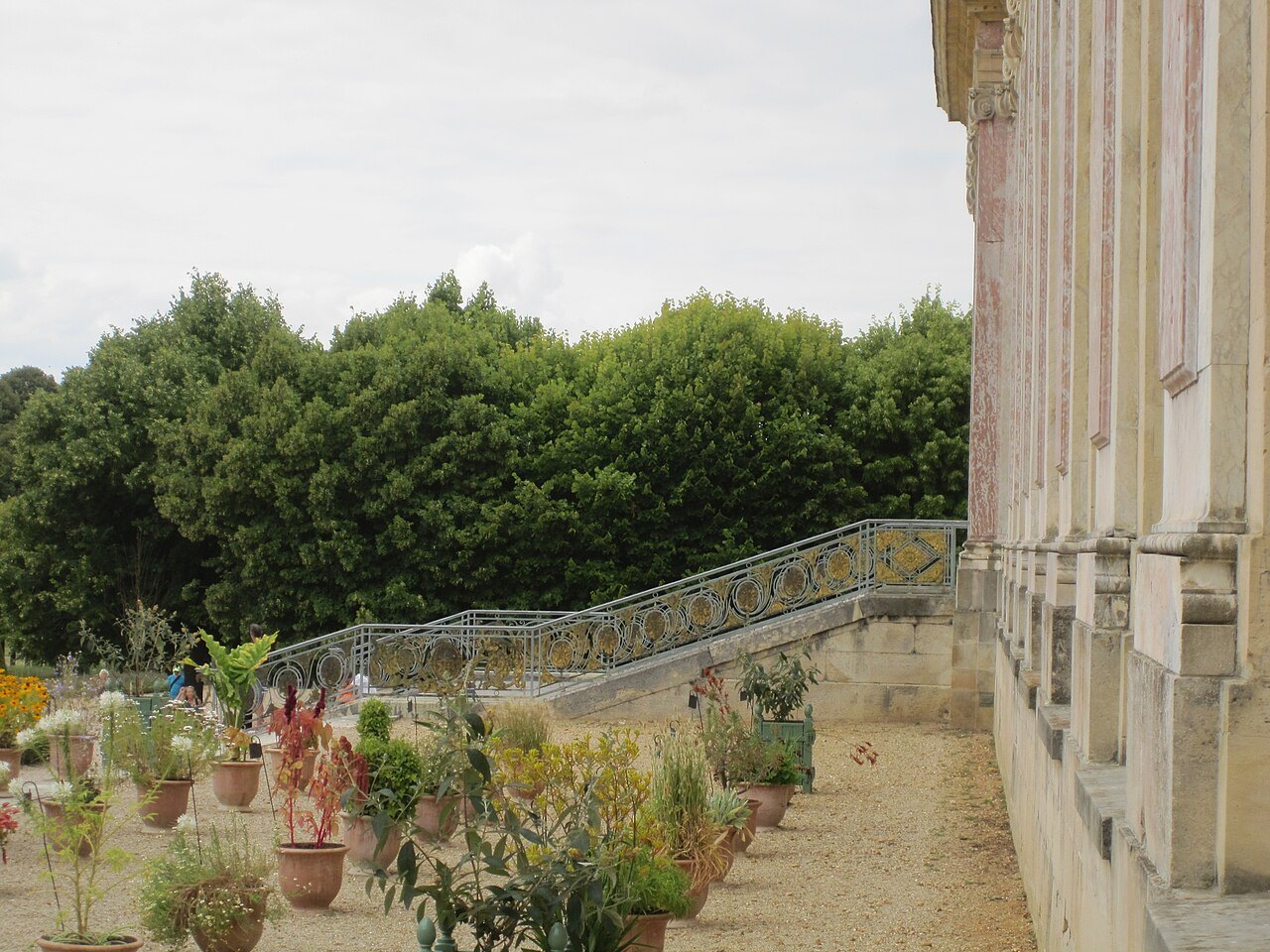
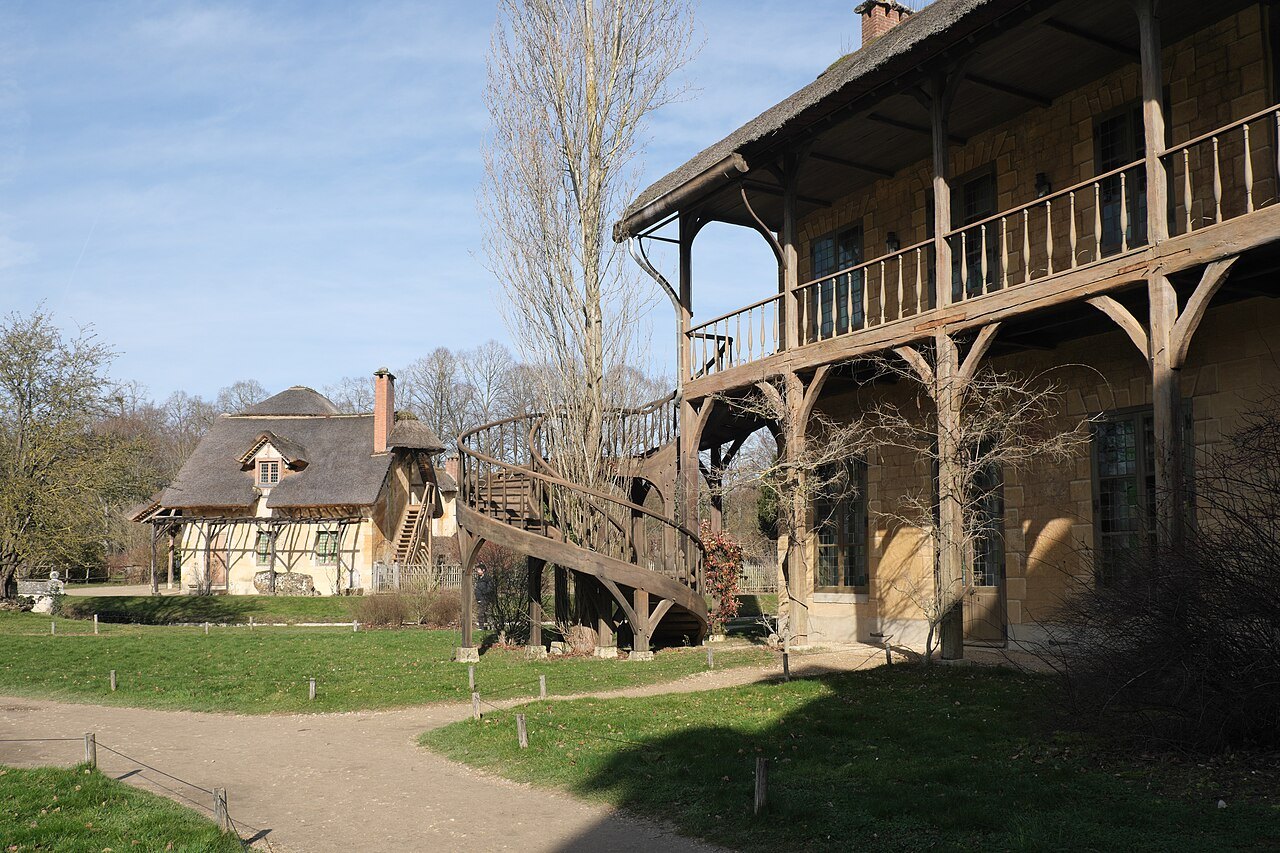
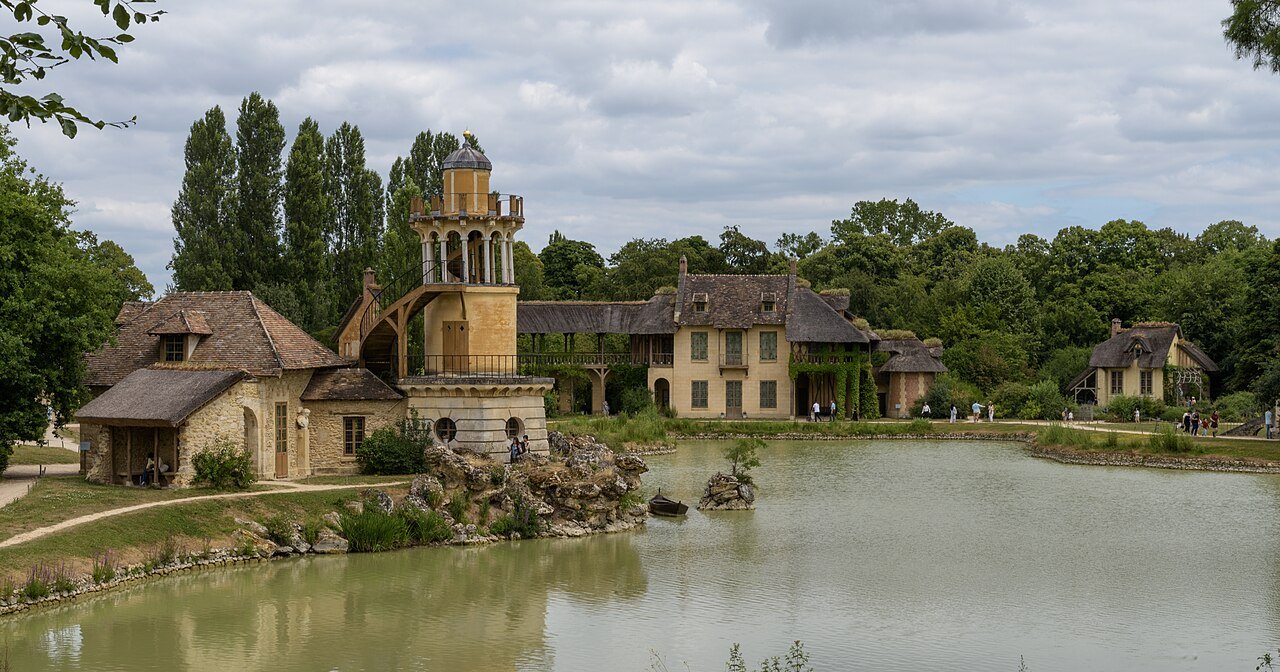
Beyond it lies the Queen's Hamlet, the Hameau de la Reine, a rustic village of cottages around a pond. The Trianons and the Hamlet are a long walk from the palace, and together they make a quieter, more intimate half of the visit.
Pacing the day
Versailles is bigger than most visitors expect. Arrive early, go through the palace at your booked time before the rooms fill, and then give the afternoon to the gardens, the Grand Canal and the Trianons. Wear comfortable shoes; the distances across the estate are long. A picnic in the park breaks the day in two.
Check the return trains before you settle in, and allow time for the walk back to the station at the end of the afternoon. For the other palaces and churches within a day of Paris, see day trips.
Read next
More from the journal
- Getting AroundHow does the Paris Métro work for visitors?Sixteen lines, 321 stations and one simple rule: follow the line's number and the name of the station at the end of it. How to read the signs, change lines, pay, and where the Métro is hard going with luggage or a wheelchair.Read the piece →
- Getting HereHow do you get from Charles de Gaulle Airport to central Paris?Most visitors take the RER B, which runs from the airport's two stations to the Gare du Nord, Châtelet and the Left Bank. How the terminals connect, which train to board, how to handle luggage on a commuter line, and when a taxi makes more sense.Read the piece →
- The Musée d'OrsayHow did a railway station become the Musée d'Orsay?How a Belle Époque railway terminus on the Seine became the world's great home of Impressionist painting.Read the piece →