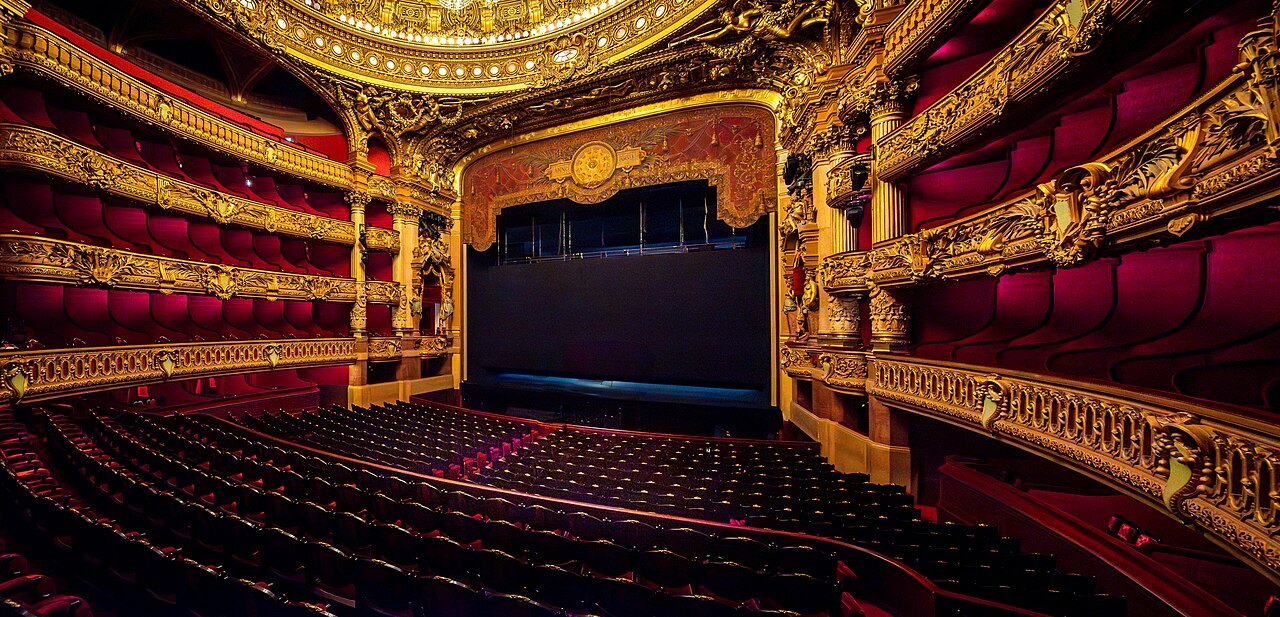
BEHIND THE OPERA'S GREATEST MYTH
Is there really a lake under the Paris Opera?
The truth behind the Palais Garnier's legendary underground lake, and the real engineering hidden beneath its stage.
The answer in full
Read on
A Question Worth Asking
Visitors to the Palais Garnier often ask about the lake said to lie beneath it, the stretch of water across which the masked figure of Gaston Leroux's 1910 novel, The Phantom of the Opera, rows his boat. The image has traveled through the films and the musical that followed, and many arrive at the Place de l'Opéra half expecting to find real water under the building. The truth has more to do with engineering than romance.

The water beneath the building is a cistern, not a lake, and no one has ever rowed a boat through its cellars. What lies under the stage is a vast concrete cistern that Charles Garnier built to solve a crisis that nearly stopped construction before it began. It still holds water today, but it is a reservoir, not a lake, built for a practical purpose rather than a romantic one.
The Palais Garnier earned its reputation as probably the most famous opera house in the world partly through fiction, yet the building itself, standing at the head of the Avenue de l'Opéra in the ninth arrondissement, remains one of the great sights of Paris, lake or no lake, worth a visit even without a ticket to a performance. Its fame rests as much on the staircase and the foyers as on anything that happens on stage.
An Emperor's Problem With Water
Digging for the new opera house began in August 1861, on a site off the Boulevard des Capucines that Baron Haussmann had chosen at the heart of his new boulevards, after an 1858 assassination attempt against Napoleon III outside the old opera house gave the project new urgency. The builders struck groundwater far higher than anyone had expected, turning what should have been a straightforward excavation into a serious obstacle before construction could properly start.
Eight steam pumps ran day and night for months, yet none of them could dry the site. The water kept rising, threatening to undermine the foundations before a single stone of the new opera house could be properly laid, and threatening as well the ambitious timetable that Napoleon III and Haussmann had set for the project.
Charles Garnier, only thirty-five and largely untested on a project of this size, had won the competition to design the opera house on 29 May 1861, beating far more established architects. Faced with water no pump could remove, he had to design his way around the problem rather than fight it, and the solution he found shaped everything that followed, including the legend told today.
Garnier's Real Solution
Rather than fight the groundwater, Garnier designed a double foundation built around an enormous concrete cistern beneath the stage. The cistern relieved the pressure that the water would otherwise have put on the basement walls, acting as a buffer between the wet ground and the structure rising above it, and it let construction continue on solid footing despite the flooding below.
The cistern also had a second, deliberate purpose: it served, and still serves, as a reservoir in case of fire inside the building. From this practical engineering work, built to hold back water and to supply it in an emergency, grew the persistent legend that the opera house stands over an underground lake, the very lake across which Leroux later sent his Phantom rowing.
Work on the building stopped entirely during the siege of Paris in 1870 and 1871, when the unfinished opera house served as a food warehouse and then a hospital, and again during the Commune that followed. The empire that had commissioned it fell before it was complete; the Third Republic borrowed the money to finish the job, and the Palais Garnier finally opened with a gala on 5 January 1875.
The Phantom and the Falling Chandelier
Gaston Leroux published The Phantom of the Opera in 1910, and he drew on real details of the building to make his story convincing: the concrete cistern beneath the stage became the underground lake his masked genius crosses by boat, and an actual accident inside the auditorium became one of the novel's most famous scenes.
That accident happened in 1896, when one of the counterweights holding up the seven-ton bronze-and-crystal chandelier broke loose and crashed through the ceiling into the hall, killing a concierge below. Leroux folded the episode almost directly into his book, lending the Phantom's menace a basis in a real, documented disaster inside the house.
None of this makes the Phantom himself real. The masked figure living in the cellars, however much he owes to the cistern and the falling chandelier, is entirely Leroux's invention, and no evidence supports a hidden lair beneath the Palais Garnier beyond the concrete reservoir that Garnier built for a flood, not for a phantom.
What Is Really Down There
The cistern survives beneath the stage and still holds water today. Firefighters stationed inside the building can draw on it, and it is described as the largest underground reserve available to them inside the Palais Garnier, a resource built into Garnier's design from the start rather than added later. At one point, staff even kept fish living in its water, a detail that fits an engineering tank rather than a lair, let alone a lake.
The only real body of water near the opera house is not under it at all. A genuine buried stream, the Grange-Batelière, flows nearby, but it runs under the Galeries Lafayette department store behind the building, not beneath the Palais Garnier itself, a distinction worth remembering when the legend of the lake comes up.
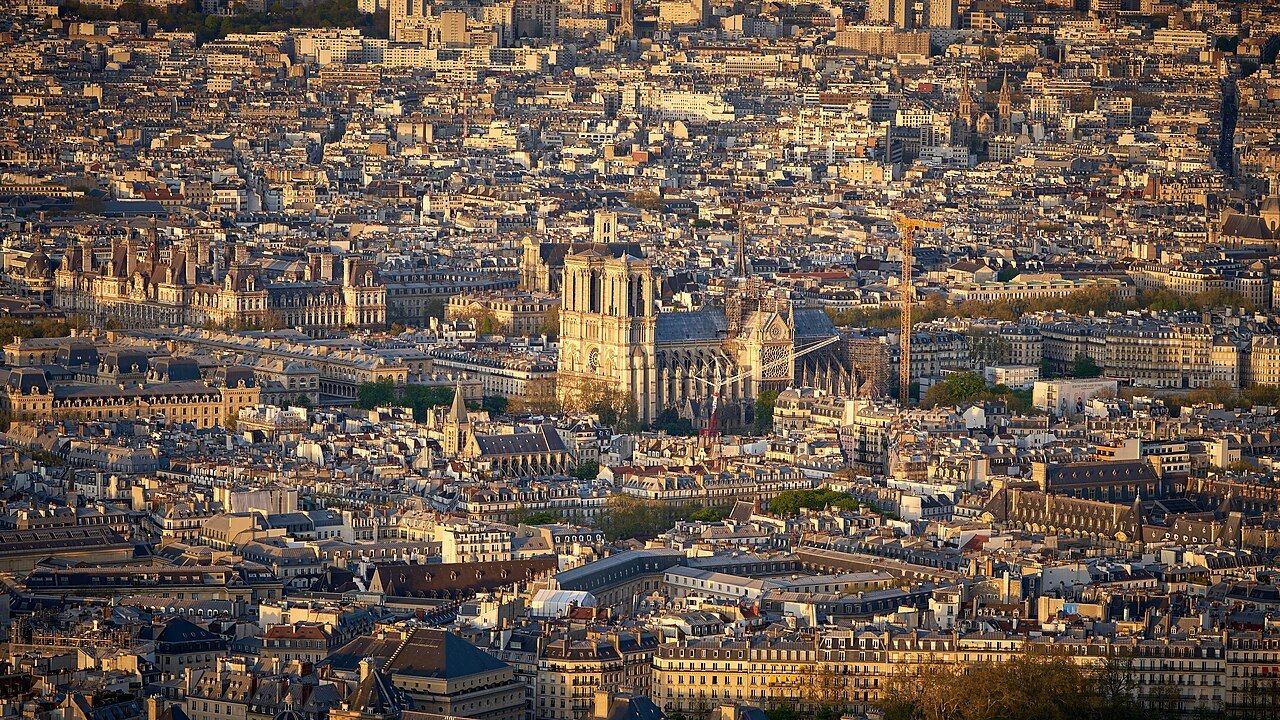
From the steps of the Palais Garnier, the view runs straight down the Avenue de l'Opéra, cut through the old narrow streets between the Louvre and the boulevards in the 1870s, with the Tuileries gardens a short walk beyond. The famous lake belongs only to Leroux's pages and the films that followed, not to the ground underfoot, whatever a visitor standing on the steps might imagine.
Seeing the Building for Yourself
There are two ways to see the Palais Garnier: attend a performance, usually ballet, or visit the building by day on a self-guided basis, which also takes in the Library-Museum of the Paris Opera, housed in the emperor's own pavilion, with its collections of books, posters, set models and costume sketches. Both ways bring visitors past the grand staircase and the cistern's hidden presence below their feet.
Daytime visit tickets must be booked online in advance; none are sold at the door. Rehearsals close the auditorium often and without warning, so holding a ticket does not guarantee a view of the hall itself, and suitcases and large travel bags are not allowed inside the building. Check current conditions with the opera house before arriving.
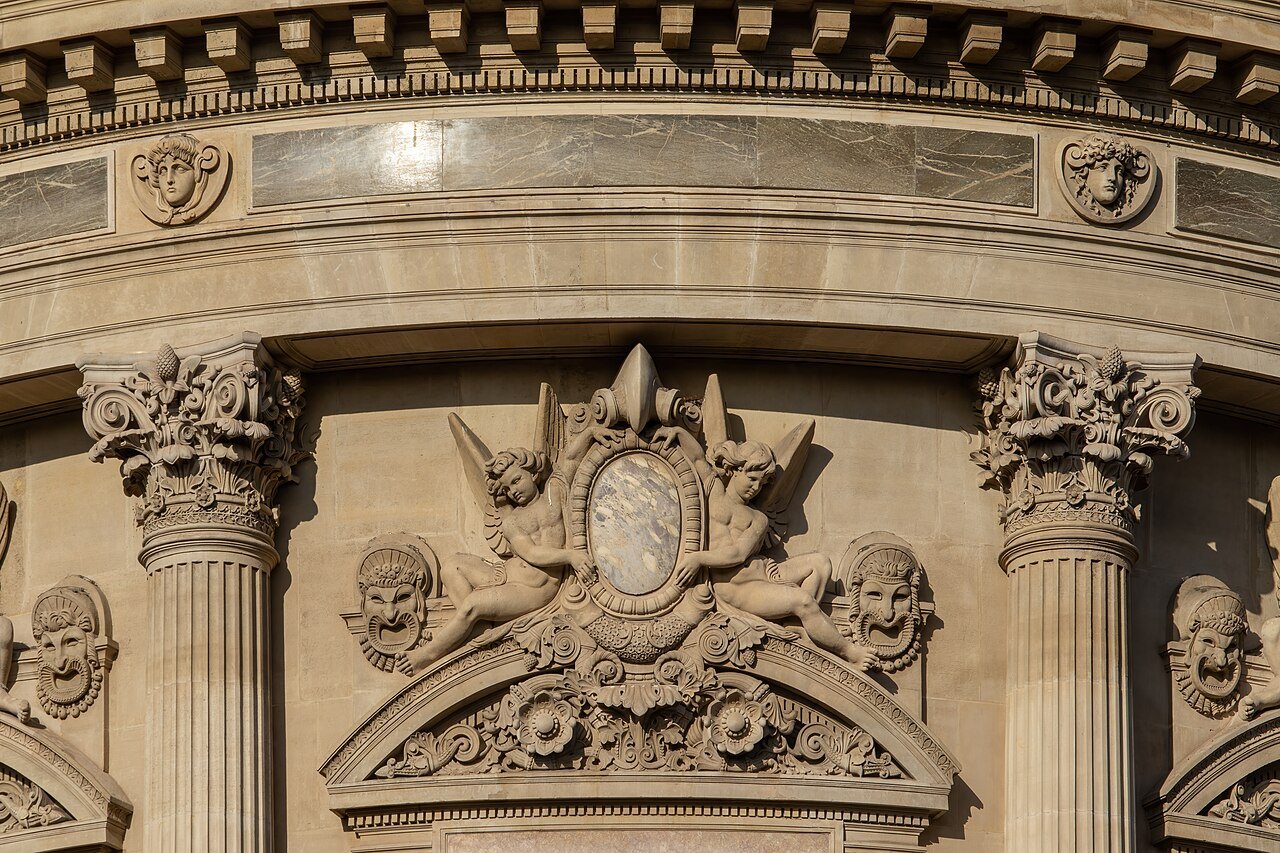
For help with timing a visit, checking what is on, and reserving tickets in advance, see the booking ahead guide. The lake will still not be there, but the staircase, the foyers and the chandelier are reason enough to come, whatever the visit turns out to include once rehearsal schedules are accounted for.
Read next
More from the journal
- The Eiffel TowerHow was the Eiffel Tower built in two years?How Gustave Eiffel's engineers raised the tallest structure in the world in just over two years.Read the piece →
- The Tuileries, the Orangerie and the Place de la ConcordeWhat happened to the Tuileries Palace?How Catherine de' Medici's palace became the Tuileries Garden, and what still stands where it burned in 1871.Read the piece →
- The Musée d'OrsayHow did a railway station become the Musée d'Orsay?How a Belle Époque railway terminus on the Seine became the world's great home of Impressionist painting.Read the piece →