BUILDING THE IRON LADY
How was the Eiffel Tower built in two years?
How Gustave Eiffel's engineers raised the tallest structure in the world in just over two years.
The answer in full
Read on
A design born in a drawing office
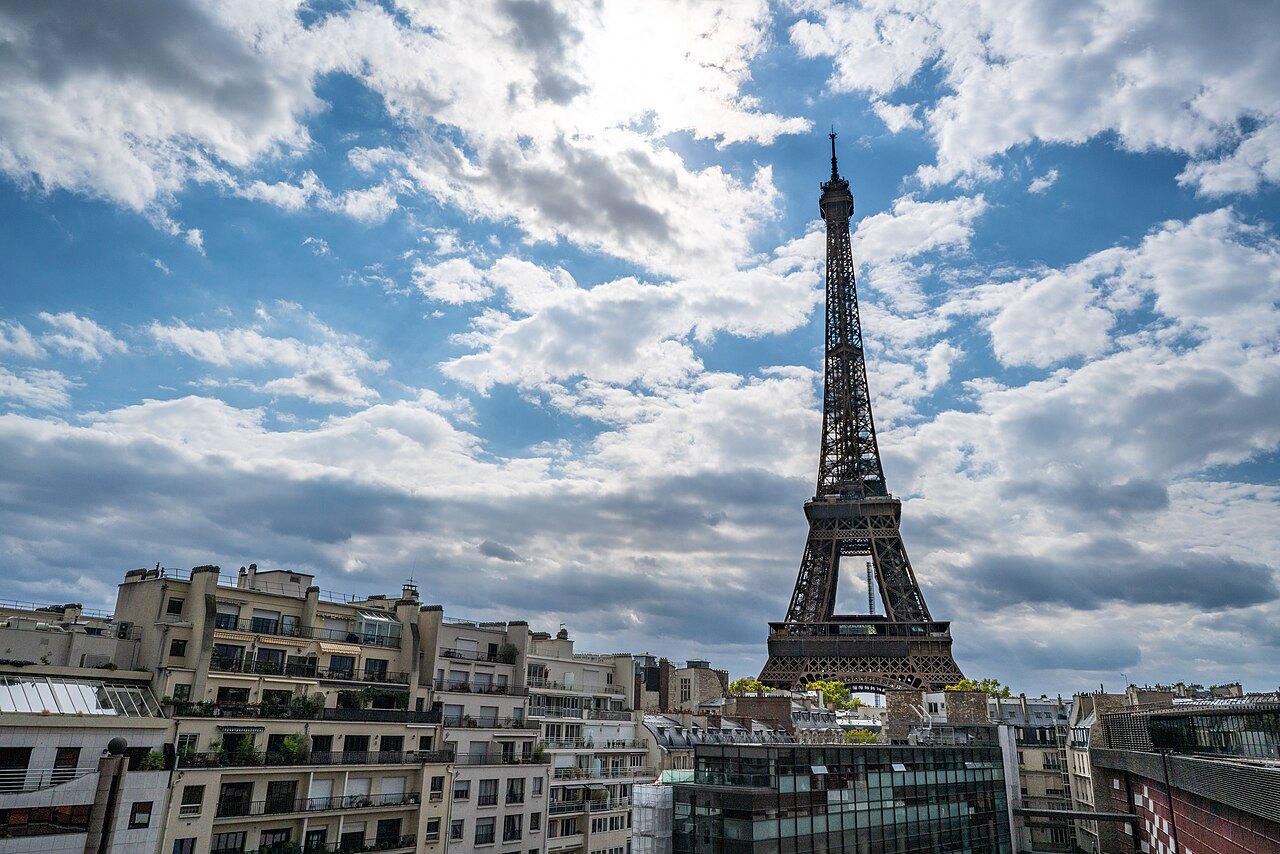
The Eiffel Tower, at the northwest end of the Champ de Mars in the 7th arrondissement, was built in just over two years, from 1887 to 1889, as the centerpiece of the Universal Exposition marking the centenary of the French Revolution. Standing 1083 feet tall with its antennas, it was far taller than anything built before it, a record it held for forty-one years. How a structure of that scale rose so quickly starts with who drew it.
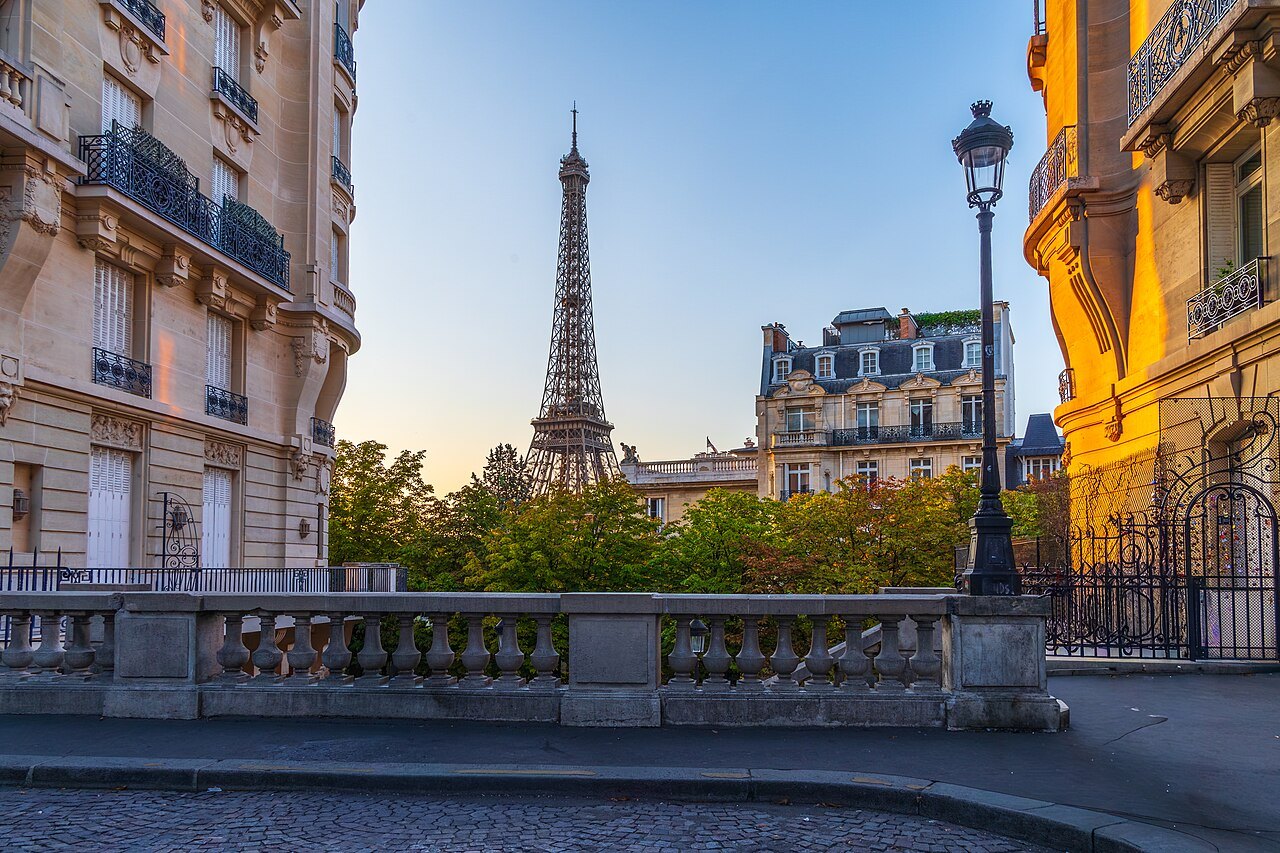
The design began in 1884, not with Gustave Eiffel himself but with two engineers in his company, Maurice Koechlin and Émile Nouguier, who sketched a tall pylon of four lattice girders standing apart at the base and curving together at the top. The company's architect, Stephen Sauvestre, added the decorative arches at the base and a glass pavilion on the first level, turning an engineer's diagram into something a fair committee could accept.
Eiffel was at first unenthusiastic about the idea, but he bought the rights to the design, improved it, and championed it until it was chosen for the exposition. Not everyone agreed: in February 1887, as work began, a petition by artists and writers, among them the architect Charles Garnier, the novelist Guy de Maupassant, and the composer Charles Gounod, condemned it in the newspaper Le Temps as a useless and monstrous tower. Work went ahead regardless.
Thousands of drawings before a single rivet
Work on the foundations started on 28 January 1887. The two legs nearest the Seine needed caissons sunk under compressed air to reach firm ground, while the other two rest on concrete slabs, a foundation built to carry an iron structure far heavier than anything Paris had seen before.
Speed depended on preparation rather than improvisation. The drawing office produced thousands of detailed drawings covering about eighteen thousand separate parts, with every rivet hole positioned to within a millimeter before any piece left the workshop. That precision meant parts could be fitted on site without reworking them, which is much of why the tower took two years rather than many more.
The parts themselves were made away from the site, at Eiffel's workshop in Levallois-Perret, then carried to the Champ de Mars by horse-drawn cart. Each piece arrived ready to be bolted into place, a system closer to assembling a kit than to ordinary construction, letting work on separate sections proceed at the same time.
Raising the legs
On site, the pieces were bolted together first and then riveted permanently, a process that used two and a half million rivets across the whole tower. The four legs rose separately as cantilevers, each held up only by its own structure until they were strong enough to be joined together.
The legs met at the first level at the end of March 1888, a milestone confirming that Koechlin and Nouguier's calculations had been right and that the rest of the tower could safely rise on top of a stable base. From there, construction continued upward at a steady pace toward the summit.
The tower was finished in time for the exposition of 1889 and opened to the public nine days after the fair itself opened, even though its elevators were not yet working. Visitors climbed anyway: by the time the exposition closed, nearly two million people had been up it, a striking total for a structure that had barely existed two years before.
A tower meant to vanish
Speed was not the only unusual thing about the project: the tower was never meant to be permanent. Eiffel held the right to operate it for twenty years, after which, in 1909, ownership would pass to the city of Paris, which was free to take it down.
Eiffel spent the intervening years making the tower useful enough to keep. He ran experiments in meteorology and on the air resistance of falling bodies from its heights, and, more decisively, offered the structure for radio transmission. The tower became a major wireless station, which is the reason it is still standing.
In 1914, at the start of the First World War, its transmitter jammed German radio communications during the advance on Paris, and its station went on to intercept enemy messages, work that settled any doubt about keeping the tower in place.
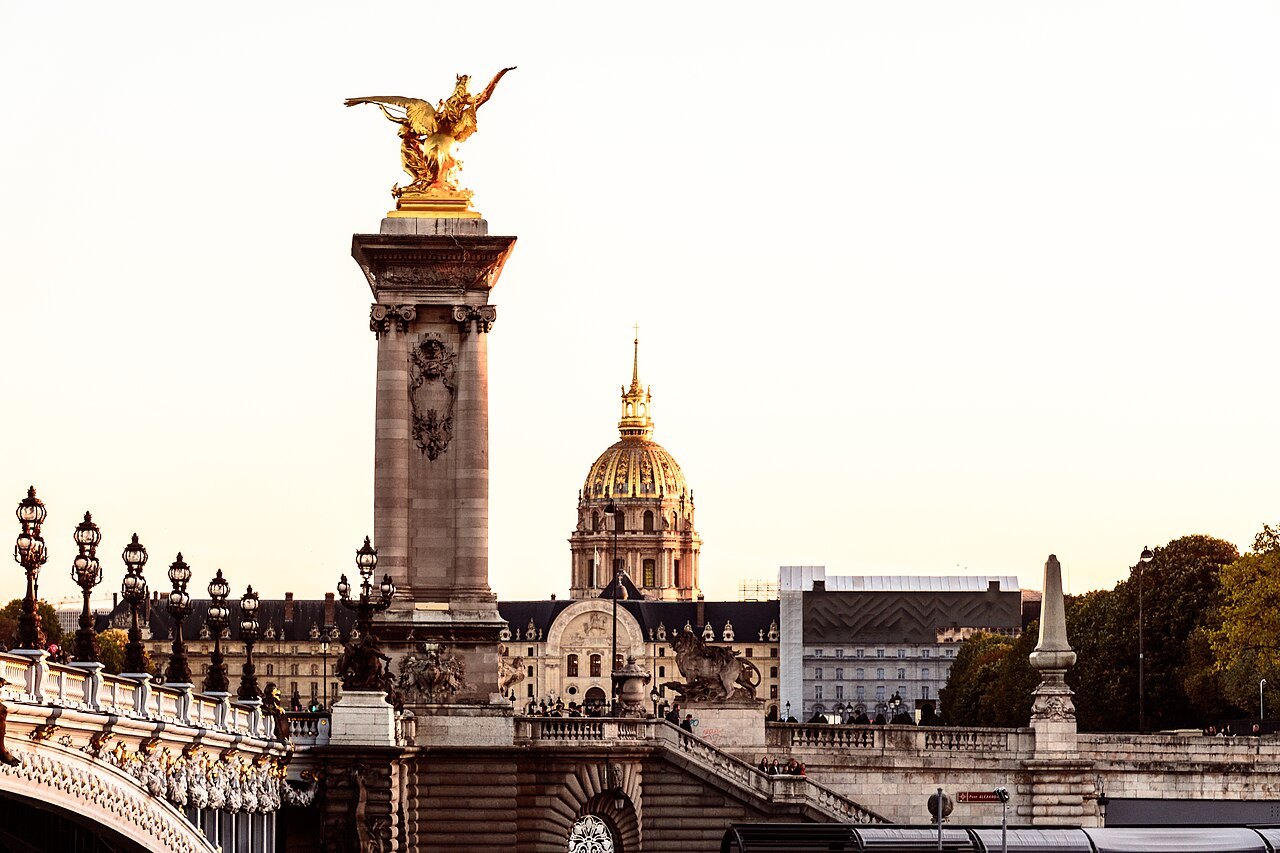
The tower has carried broadcasting antennas ever since; an aerial added in 1957 made it taller than the Chrysler Building in New York, the building that had taken its record for tallest structure in the world. What began as a temporary exhibit for one fair became permanent infrastructure instead.
What two years of work produced
Walking under the tower before going up is the best way to grasp how it was built: the four legs curve upward from their stone bases to meet at the first level, and the mass of crossed iron overhead shows the cantilever principle that let each leg stand before the others were joined to it.
Around the first level, about 190 feet up, runs a frieze bearing the names of seventy-two French scientists, engineers, and mathematicians in gold letters, a tribute to the kind of calculation that made the two-year schedule possible. Part of the first level's floor is glass.
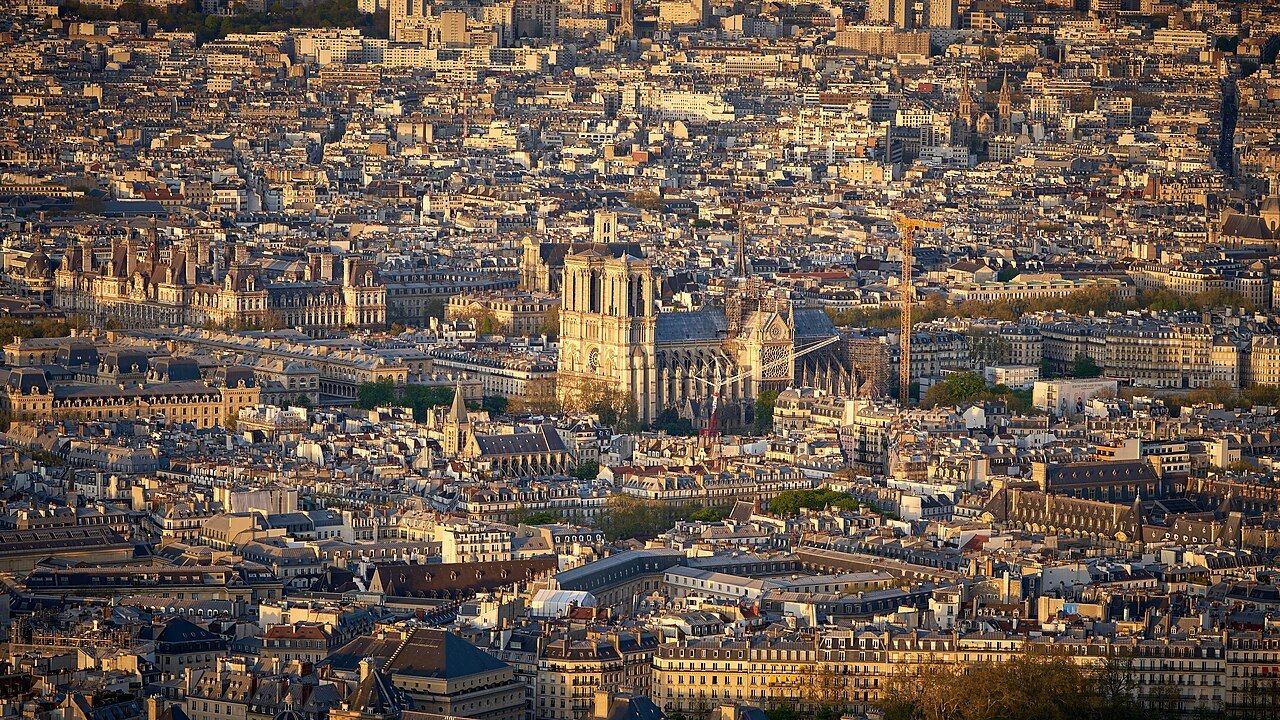
The second level, about 380 feet up, is the height most visitors find best for understanding the city, high enough to take in the layout of streets and the river, low enough to pick out individual buildings. The summit, usually reached only by elevator, has an enclosed deck and an open deck above it, 906 feet up, the highest public observation deck in the European Union.
The ironwork itself is repainted every seven years, roughly sixty tons of paint each time, in three shades of brown, lighter near the top and darker toward the base, a maintenance cycle that has kept the same silhouette recognizable long after the twenty years Eiffel had originally been granted to run it.
How to visit
Elevators remain the main way up, but tickets are also sold to climb the stairs to the first and second levels, a little over three hundred steps to each. The stairs and the summit are not suited to visitors with limited mobility; check current arrangements and buy tickets ahead through the booking ahead guidance.
The classic views of the tower from a distance are from the terrace of the Trocadéro across the river, and from the long lawn of the Champ de Mars behind it. For the whole structure in its setting, walk to the Pont de Bir-Hakeim, the two-level bridge just to the west.
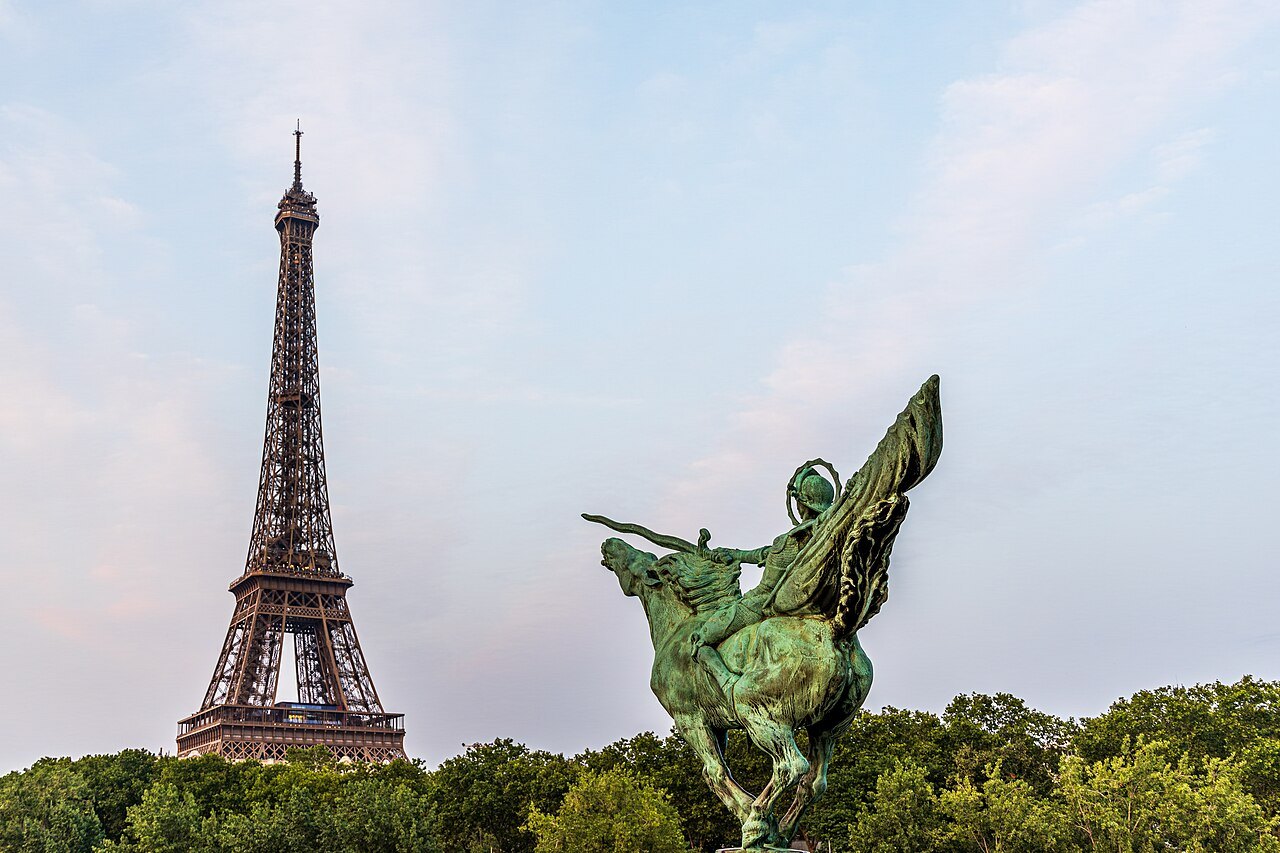
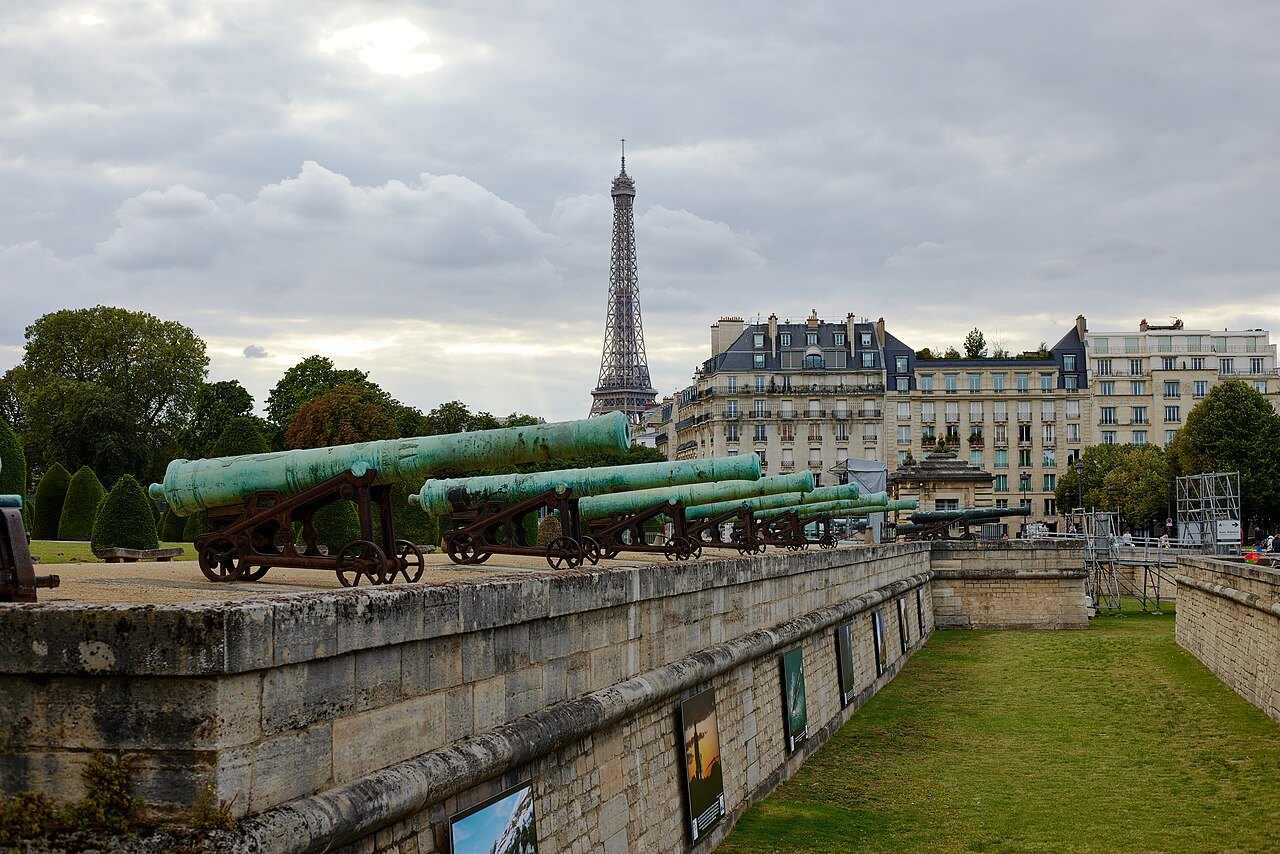
The Invalides stand across the Champ de Mars, within easy reach on foot, and a boat along the Seine departing from the quay below the tower passes most of the river's other landmarks, a way to see from the water what took just over two years to raise from the ground.
Read next
More from the journal
- Les InvalidesHow did Napoleon's body come back to Paris?The story of how Napoleon's remains traveled from Saint Helena to the tomb beneath the Dôme des Invalides.Read the piece →
- The LouvreWhy did the glass pyramid at the Louvre cause such a fight?How I. M. Pei's glass pyramid divided opinion at the Louvre, and what problem it actually solved.Read the piece →
- The Musée d'OrsayHow did a railway station become the Musée d'Orsay?How a Belle Époque railway terminus on the Seine became the world's great home of Impressionist painting.Read the piece →