A KING'S RELIQUARY IN GLASS
What story do the windows of the Sainte-Chapelle tell?
How Louis IX's palace chapel turned the Bible, and his own holy relics, into a wall of thirteenth-century colored glass.
The answer in full
Read on
A reliquary built by a king
King Louis the Ninth, later Saint Louis, built the Sainte-Chapelle to house the relics of Christ's Passion he had acquired, above all the Crown of Thorns, bought from Baldwin the Second, the Latin emperor at Constantinople, for one hundred thirty-five thousand livres, with a further one hundred thousand spent on a silver chest to hold them. The chapel itself cost only forty thousand livres to build and glaze.
Construction began sometime after 1238, and most of the windows were already in place by 1242, six years before the chapel was consecrated on 26 April 1248. No builder's name survives in the records, an unusual silence for a building raised this fast, on the king's own orders, at the heart of his palace.
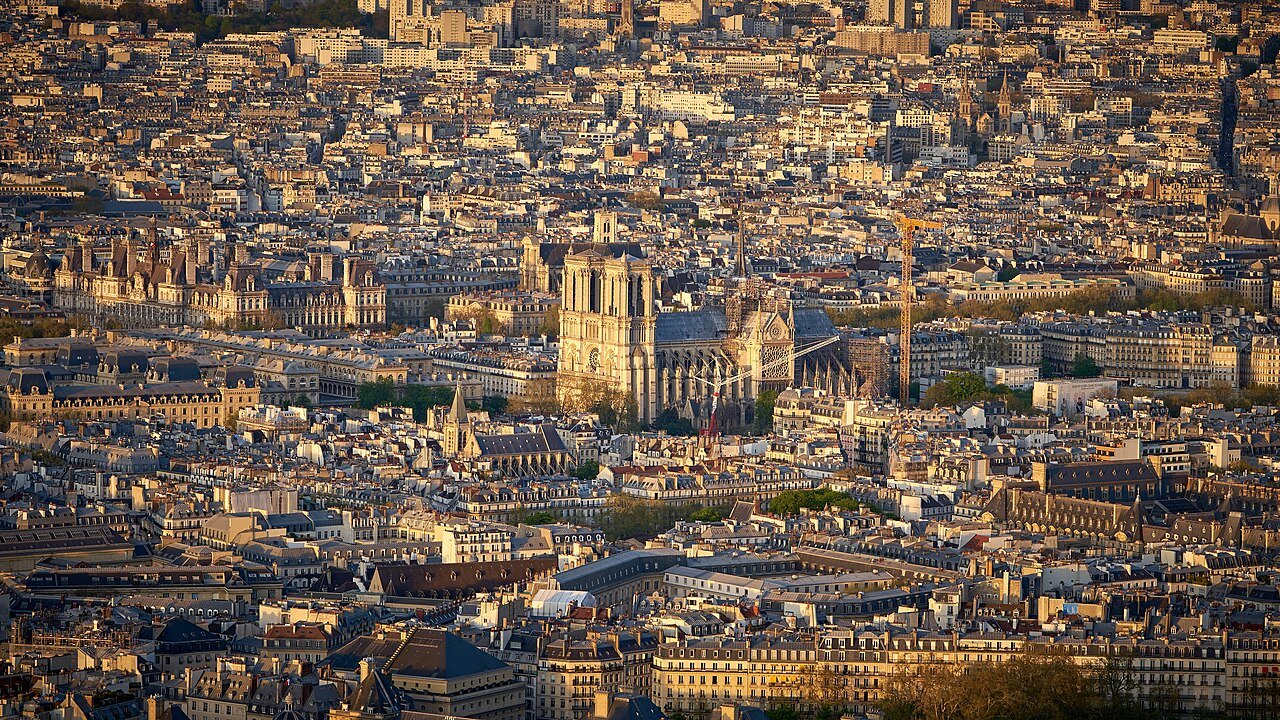
The relics stayed inside the chapel for centuries before being moved. The Crown of Thorns later passed to Notre-Dame, where it survived the fire of 2019, a detail worth recalling while standing beneath windows built specifically to shelter it, long before that later home existed.
Reading the windows
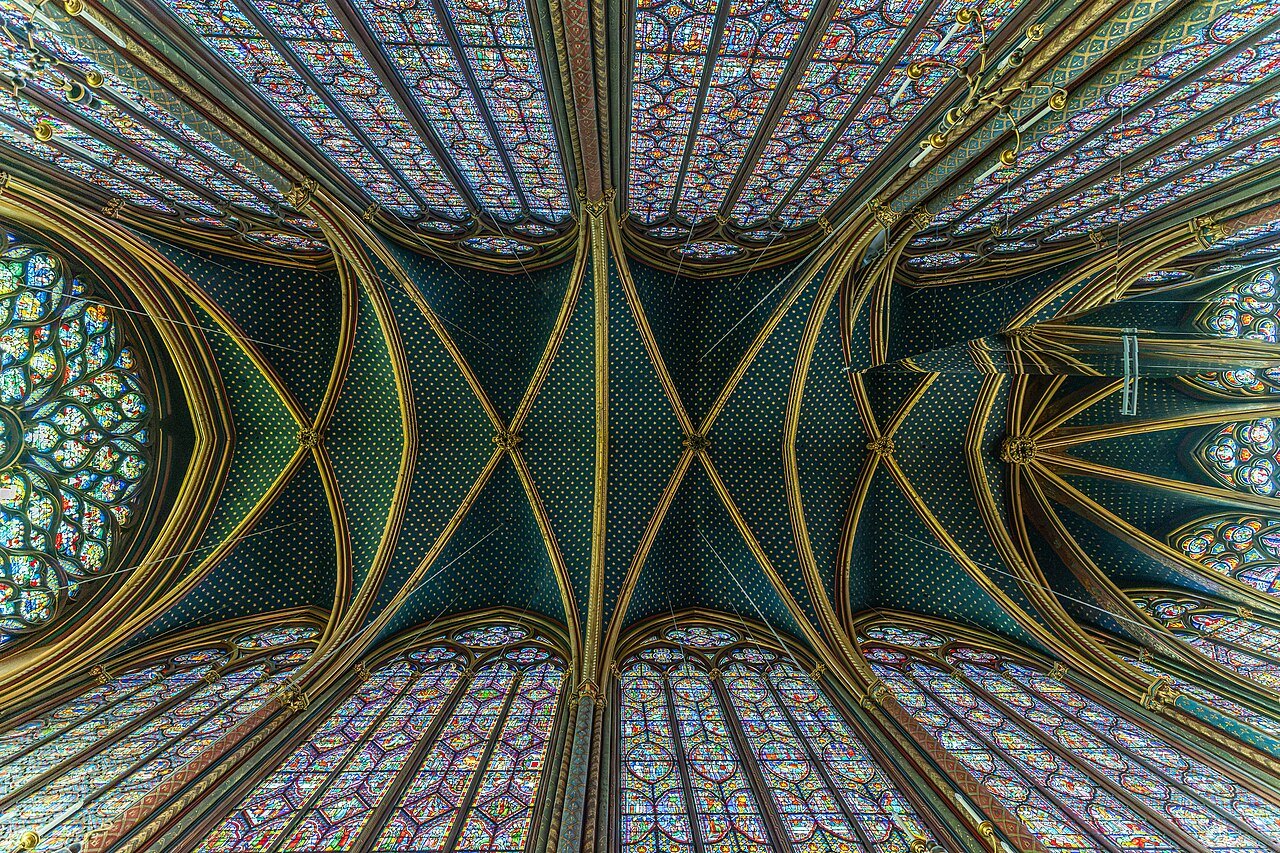
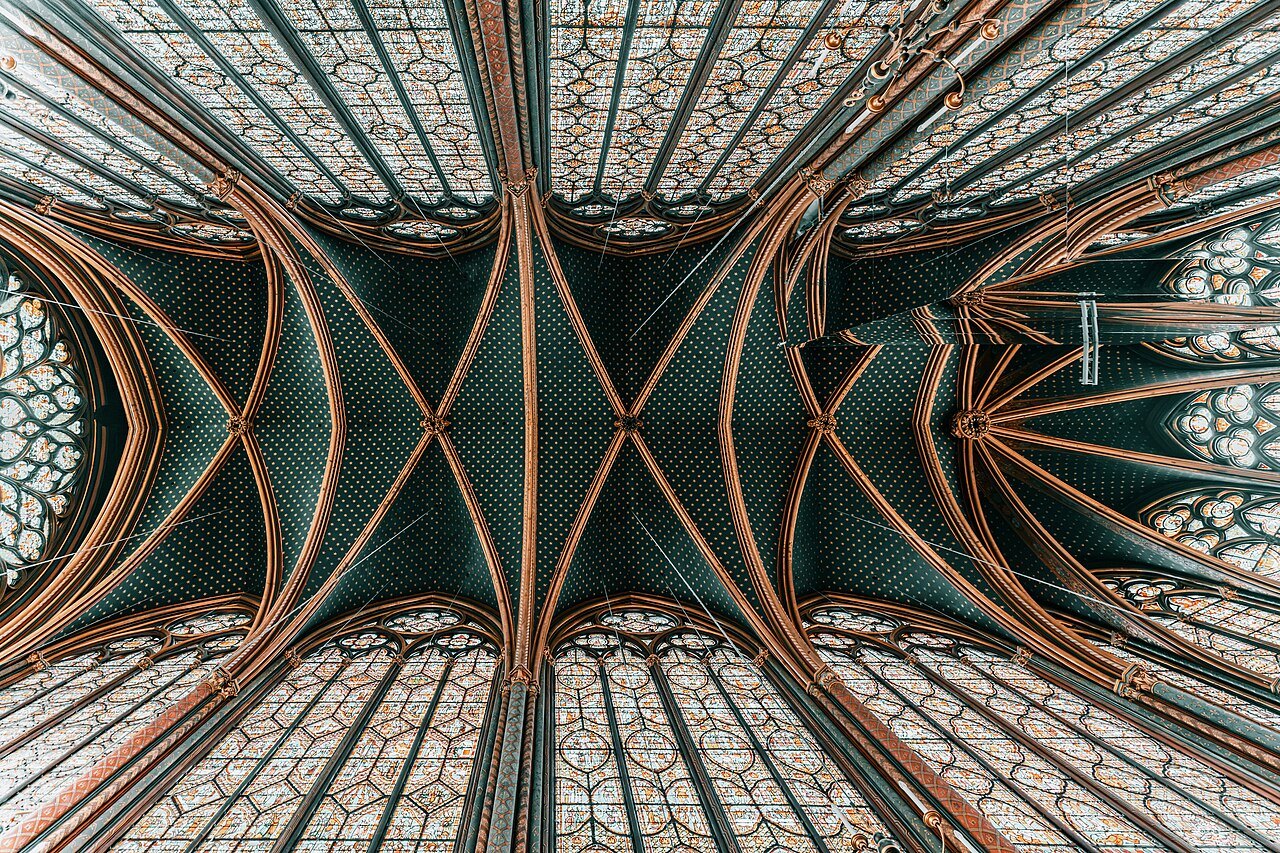
The windows are meant to be read in sequence: starting to the left of the entrance, running around the apse, and finishing back at the entrance wall. Together they tell the story of the Bible, from Genesis to the arrival of the relics themselves in Paris, across thousands of small scenes rendered mostly in deep blue and red.
The upper chapel is a single room roughly one hundred eight feet long and thirty-five feet wide, with vaults rising some sixty-eight feet overhead. Its walls appear to be made almost entirely of glass, about seven thousand two hundred square feet of it across fifteen great windows, not counting the rose set into the far wall.
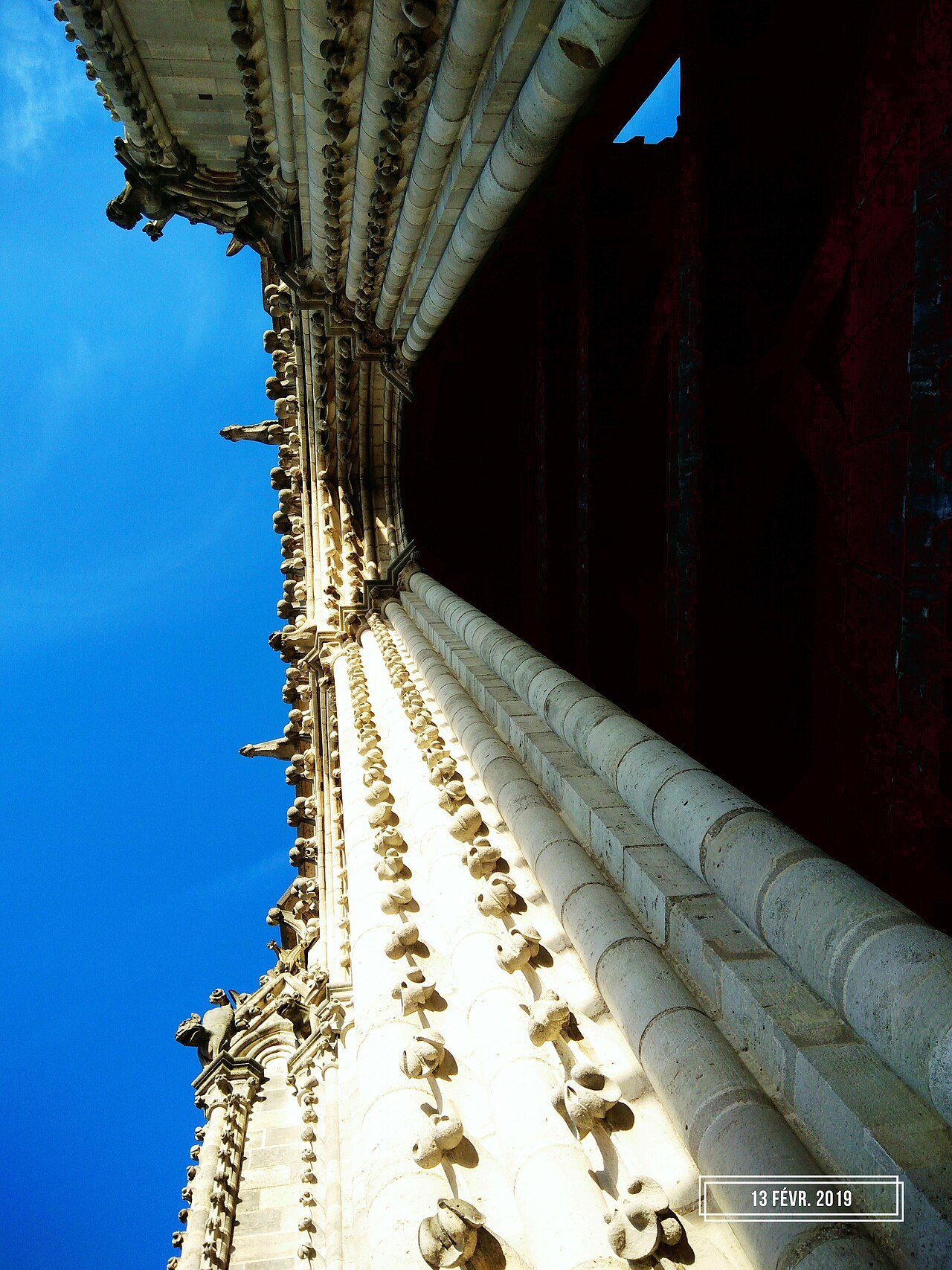
The lightness is a structural trick. Each stone support between the windows is clustered from seven slender shafts, which makes it read as thinner than it is, while two belts of iron chain, hidden behind the bars holding the glass, brace the walls invisibly from outside.
Three separate workshops made the windows. The art historian Louis Grodecki told their hands apart by the shapes of the figures and the fall of their robes, a reminder that this is not one artist's vision but a coordinated campaign carried out under real pressure of time.
The west rose and the Apocalypse
Turn around to face the entrance wall for the west rose, added considerably later, in the final years of the fifteenth century. It measures about thirty feet across, and its eighty-nine panels depict the Apocalypse, a different subject and a different century from the windows surrounding the apse.
Its makers used silver stain, a technique newer than that of the thirteenth-century windows, letting them shade and color the glass itself rather than relying solely on separate colored pieces joined by lead. The rose was cleaned in 2014 and 2015 and now reads very brightly on a sunny afternoon.
The whole upper chapel shifts through the day as sunlight moves around the building, so the apse windows and the rose are rarely at their best in the same hour. Checking the forecast before settling on a visit date is worth the trouble, since bright sun makes a very different room than a gray afternoon.
The lower chapel, easy to rush past
Visitors enter at the lower level, the chapel of the Virgin, which served the ordinary inhabitants of the palace rather than the king himself. It is a modest space, only about twenty-two feet high, with a wide central aisle flanked by two narrower ones, a deliberate contrast with what waits above.
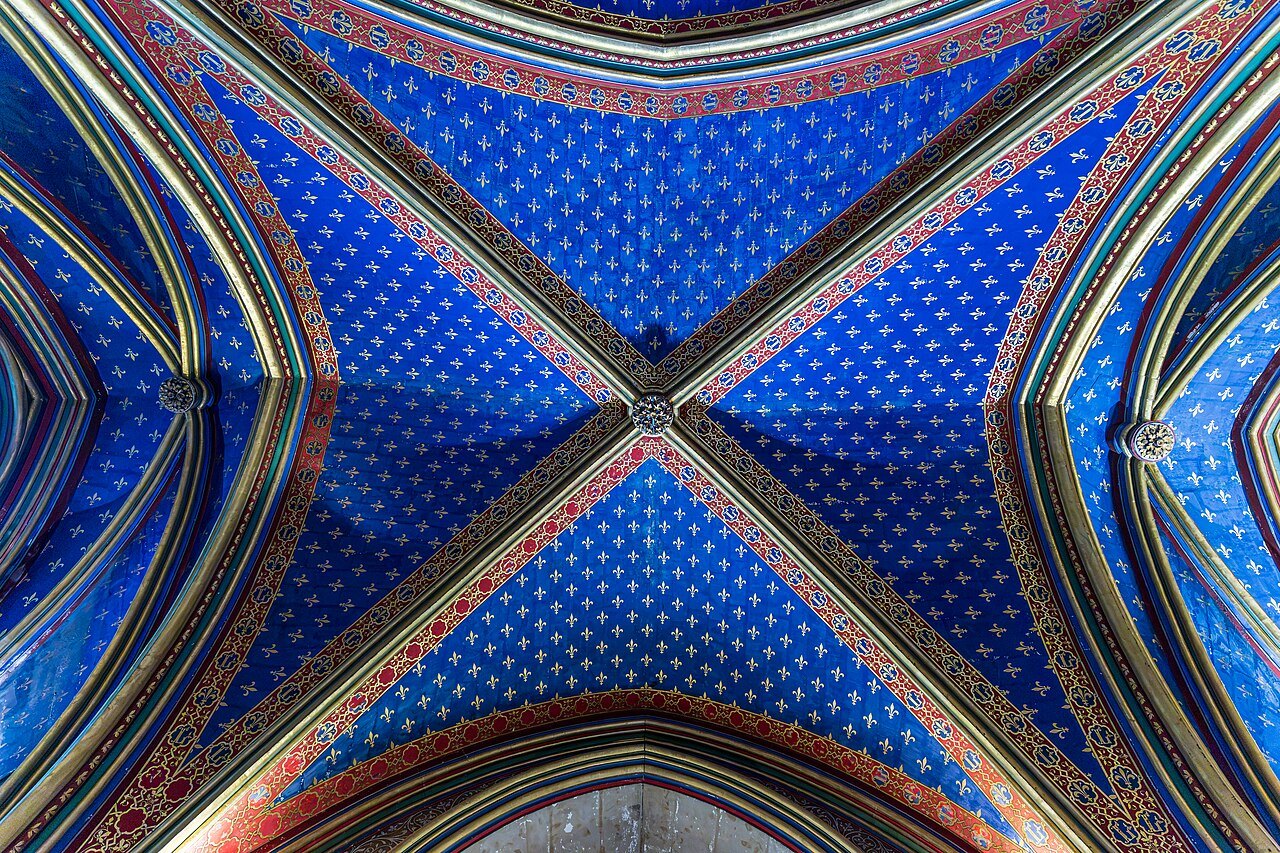
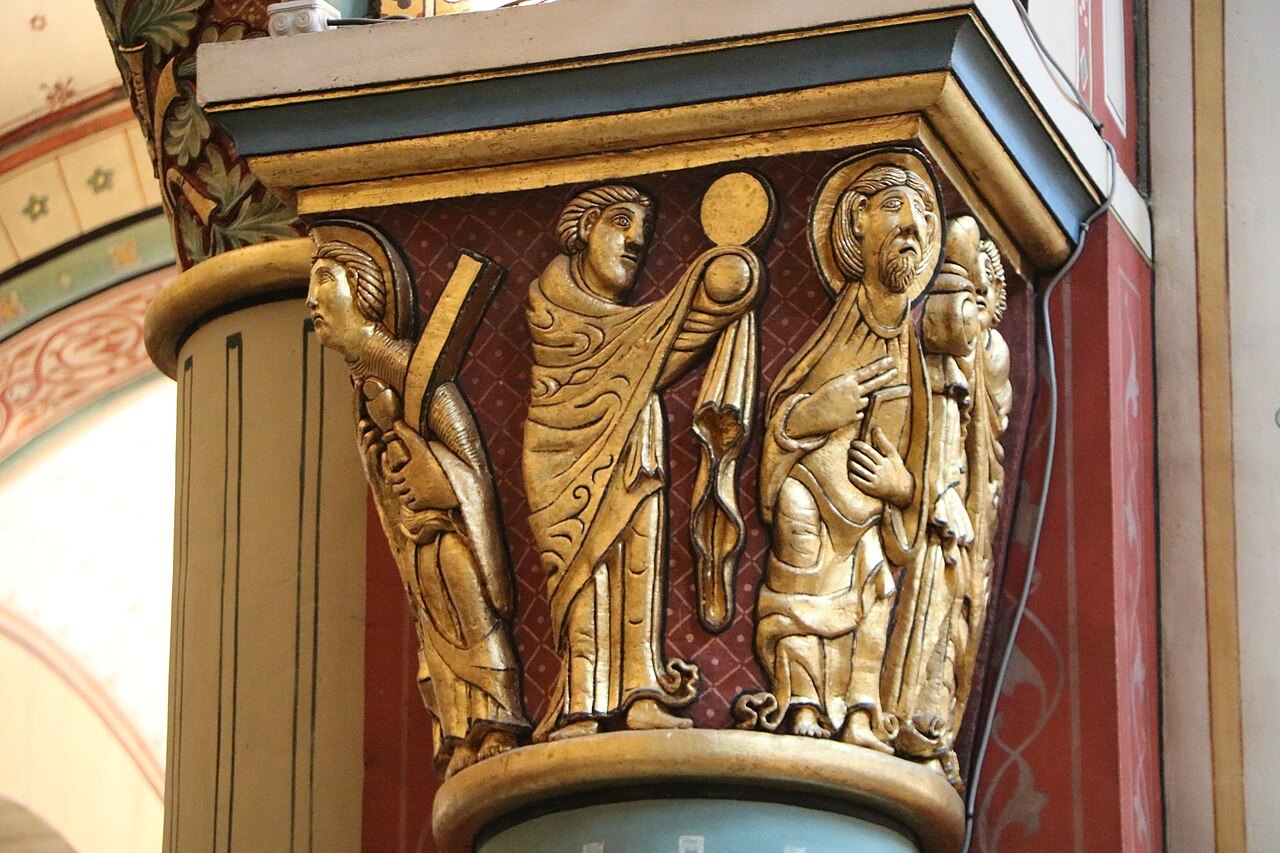
Almost every surface here is painted: the fleur-de-lis of Louis the Ninth and the castle emblem of his mother, Blanche of Castile, picked out in gold on fields of blue and red. The colors visible today date from the nineteenth-century restoration, though the carved acanthus-leaf capitals on the columns are genuinely thirteenth-century.
Many visitors move through quickly on their way to the stairs. The low ceiling is not an oversight; it is part of the design, a deliberate compression meant to be followed by release once the narrow spiral stairs open onto the royal chapel above, where glass and height arrive all at once.
What the Revolution and restoration left behind
The Revolution stripped the chapel of much of its original character. Between 1803 and 1837 the upper chapel served as a store for court archives, and the lowest six or seven feet of glass in each window was removed so clerks working inside could see by daylight. A working archive had little use for stained glass at eye level.
A major restoration ran from 1840 for twenty-eight years, with the young Eugène Viollet-le-Duc among the architects involved. The glass itself was restored between 1846 and 1855; about a third of it, pieces lost or altered earlier, was replaced either with medieval glass brought from elsewhere or with new glass made in the Gothic manner.
The chapel is often called a jewel box, as though it were small, which undersells it: the upper room is taller than many parish churches are long, and its sense of lightness comes from proportion and glass rather than from scale. Eighteen original panels, meanwhile, are kept at the Musée de Cluny rather than in the chapel.
The Conciergerie, around the corner
On the quay side of the same complex, the Conciergerie preserves two great Gothic halls built for King Philip the Fourth early in the fourteenth century. The Hall of the Men-at-Arms, a forest of columns across four aisles, runs about two hundred feet and ranks among the largest secular Gothic halls anywhere in Europe.
It once fed and housed the palace's guards and servants, who numbered somewhere between one thousand and two thousand people. When the kings later moved their household to the Louvre, parts of the old palace were converted into a prison, a change that would define the building's most famous chapter.
During the Revolution, two thousand seven hundred eighty-one prisoners, Marie Antoinette among them, were held, tried, and sentenced here before being taken to the guillotine. A hall of names today lists more than four thousand people condemned by the Revolutionary Tribunal, and a small memorial chapel commissioned by Louis the Eighteenth in 1815 stands on the site of the queen's cell.
How to visit
The Sainte-Chapelle sits inside a working courthouse complex, so entry is through a security check at the palace gate, and the checks run strict and slow. Large bags, suitcases, and scooters are not permitted, and knives, scissors, and glass bottles will be confiscated, so leave anything of the sort at the hotel.
The monument strongly recommends buying a ticket for a specific time slot in advance; without one, visitors at busy times may face a very long wait, or may not get in at all. See booking ahead for how reservations work here and at other Paris sights.
The chapel and the Conciergerie are managed together by the national monuments agency, and a combined visit takes roughly two hours. Choose a bright day if the forecast allows one, since the glass changes character hour to hour with the available light; see when to come for seasonal guidance.
The site is a few minutes' walk from Notre-Dame, and the Pont Neuf marks the western tip of the island, a short stroll away for anyone continuing along the river afterward, making it easy to combine both stops in a single outing on foot.
Read next
More from the journal
- Notre-Dame de ParisWhat happened to Notre-Dame in the fire of 2019?On 15 April 2019 fire destroyed the spire and the medieval oak roof of Notre-Dame; the stone vaults, the towers, the façade and the great windows survived. How the fire spread, how firefighters saved the north tower, how the roof was rebuilt in oak, and what visitors notice since the reopening in December 2024.Read the piece →
- Getting AroundHow does the Paris Métro work for visitors?Sixteen lines, 321 stations and one simple rule: follow the line's number and the name of the station at the end of it. How to read the signs, change lines, pay, and where the Métro is hard going with luggage or a wheelchair.Read the piece →
- Notre-Dame de ParisWhat is the point zero in front of Notre-Dame?The bronze marker set into the parvis of Notre-Dame, and why French road distances are traditionally measured from this spot.Read the piece →