THE LOUVRE'S MOST ARGUED-OVER ENTRANCE
Why did the glass pyramid at the Louvre cause such a fight?
How I. M. Pei's glass pyramid divided opinion at the Louvre, and what problem it actually solved.
The answer in full
Read on
A fortress, then a palace
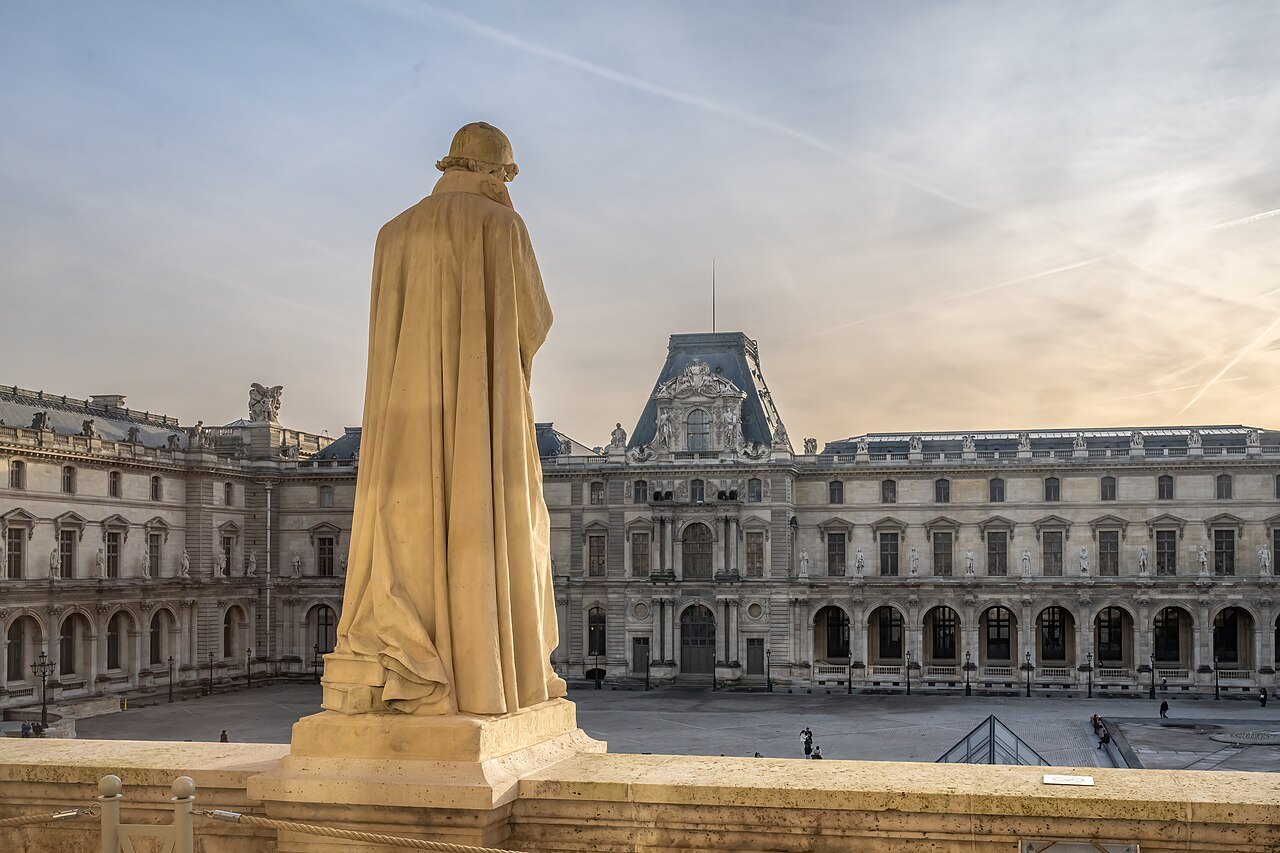
The first Louvre was not a museum or even a palace but a fortress, built at the end of the twelfth century under King Philip II, known as Philip Augustus, to guard the western approach to Paris along the Seine. As the city grew past its walls, the fortress lost its purpose and stood for a time as a reminder of how much smaller Paris once was.
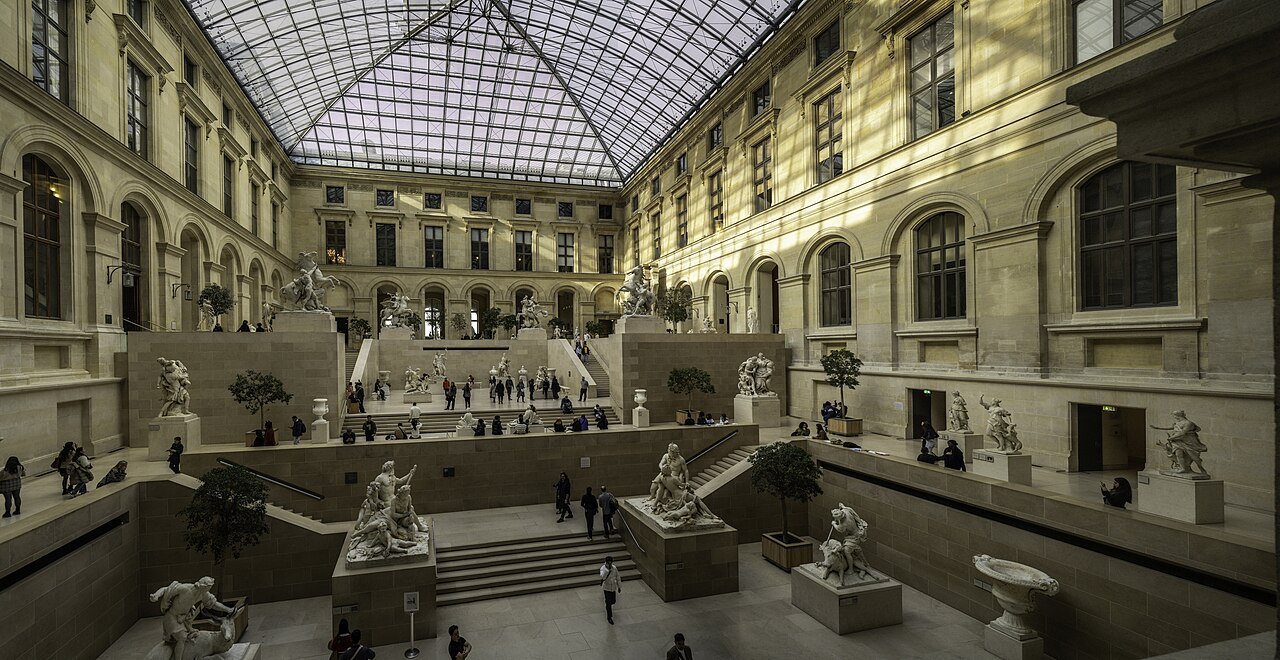
In 1546 Francis I began turning the fortress into the main residence of the French kings, and over the next century and a half almost every reign added to the building, extending it along the river and around new courtyards until it became one of the largest palaces in Europe, a patchwork of styles layered over the original fortress walls.
In 1682 Louis XIV moved his court to Versailles, and the Louvre became home instead to the royal art collections and to the academies; from 1699 the painting academy held its salons, its public exhibitions, inside the palace. The building that had once defended Paris was now where the city came to see pictures.
From royal palace to public museum
The Revolution turned the Louvre into a public museum outright. It opened on 10 August 1793, chosen because it was the first anniversary of the fall of the monarchy, with 537 paintings on its walls, most of them taken from the royal collection or from the church. It was a deliberate date, meant to mark a new order as much as a new museum.
For nearly two centuries the museum grew inside a palace it did not fully occupy. Part of the building, the north wing, housed not art but government: the Ministry of Finance worked there, a civil-service tenant inside a national museum, an arrangement that lasted for most of the twentieth century. It was an odd division for a building meant to hold a nation's art.
That arrangement ended in the 1980s, when a president decided the museum should have the whole palace and commissioned an architect to rethink how visitors found their way in. The result was the most argued-over addition the Louvre has ever received: a glass pyramid set in its main courtyard.
The Grand Louvre plan and Pei's pyramid
President François Mitterrand's Grand Louvre plan, launched in the 1980s, moved the finance ministry out of the north wing and gave almost the whole palace to the museum. To design the project he turned to the architect I. M. Pei, who faced a building with several small, scattered street entrances and no single way to orient a first-time visitor.
Pei's answer was to put the new entrance underground, beneath the main courtyard, the Cour Napoléon, and mark it from above with a structure built entirely of glass: a pyramid 71 feet high, its panes held by a frame of slender metal struts, rising where royal carriages once passed.
The underground hall it covers, the Hall Napoléon, opened to the public on 30 March 1989, becoming the single point from which all three wings of the museum, Sully, Denon and Richelieu, could be reached without crossing back outside.
Why it caused a fight
Setting a glass-and-steel pyramid inside the stone courtyards of a Renaissance and classical palace was always going to provoke an argument, and it did, immediately and loudly. Critics saw a modern, foreign shape dropped into one of France's most historic royal courtyards, out of keeping with the carved facades around it and with the quieter, more complete Renaissance proportions of the Cour Carrée a short walk east.
Supporters argued the opposite: that glass was the one material able to add a large new entrance to the courtyard without hiding the palace behind it, since the pyramid is transparent enough that the surrounding wings remain what a visitor actually sees. A solid structure of the same size, they said, would have overwhelmed the courtyard instead.
Both views were really about the same question: whether a museum of this age should look backward or admit that it is still adding to itself. More than three decades on, the dispute has settled into something closer to affection, though the pyramid still divides opinion among visitors seeing it for the first time.
What the pyramid actually solved
Whatever visitors make of its looks, the pyramid solved a practical problem the Louvre had struggled with for two centuries: too many small, confusing entrances scattered along its half-mile of wings, with no shared starting point. It replaced that with a single grand doorway and the Hall Napoléon beneath it, from which Sully, Denon and Richelieu all open.
That underground hall now does the work of orientation the palace's old doors never could: it holds the ticket areas and the point from which the three wings branch, so a visitor can choose a direction once instead of guessing at street level which door leads where.
There is also a second way in, underground from the Carrousel du Louvre shopping arcade, which connects directly to the Palais Royal–Musée du Louvre Métro station; for how the Métro and RER reach the museum from elsewhere in the city, see getting around.
Myths worth setting aside
The most persistent story about the pyramid is that it is built from exactly 666 panes, the number associated with the beast of the Book of Revelation. The figure comes from an official brochure printed during construction in the 1980s, a simple error that stuck ever since. The museum's own count is 673 panes: 603 diamond shapes and 70 triangles.
A second myth is less about a number than about proportion: that the Mona Lisa is the reason the Louvre exists and everything else is a detour. In truth it is a small painting behind glass in a crowded room, the Salle des États, while many of the finest Italian paintings in the building hang nearby in the long Grande Galerie, where the crowd thins considerably.
Neither myth changes what is actually on view: the museum's collection runs to about thirty-five thousand works across eight departments, far beyond any single painting, however famous, or any single number of panes.
Visiting the pyramid and the palace
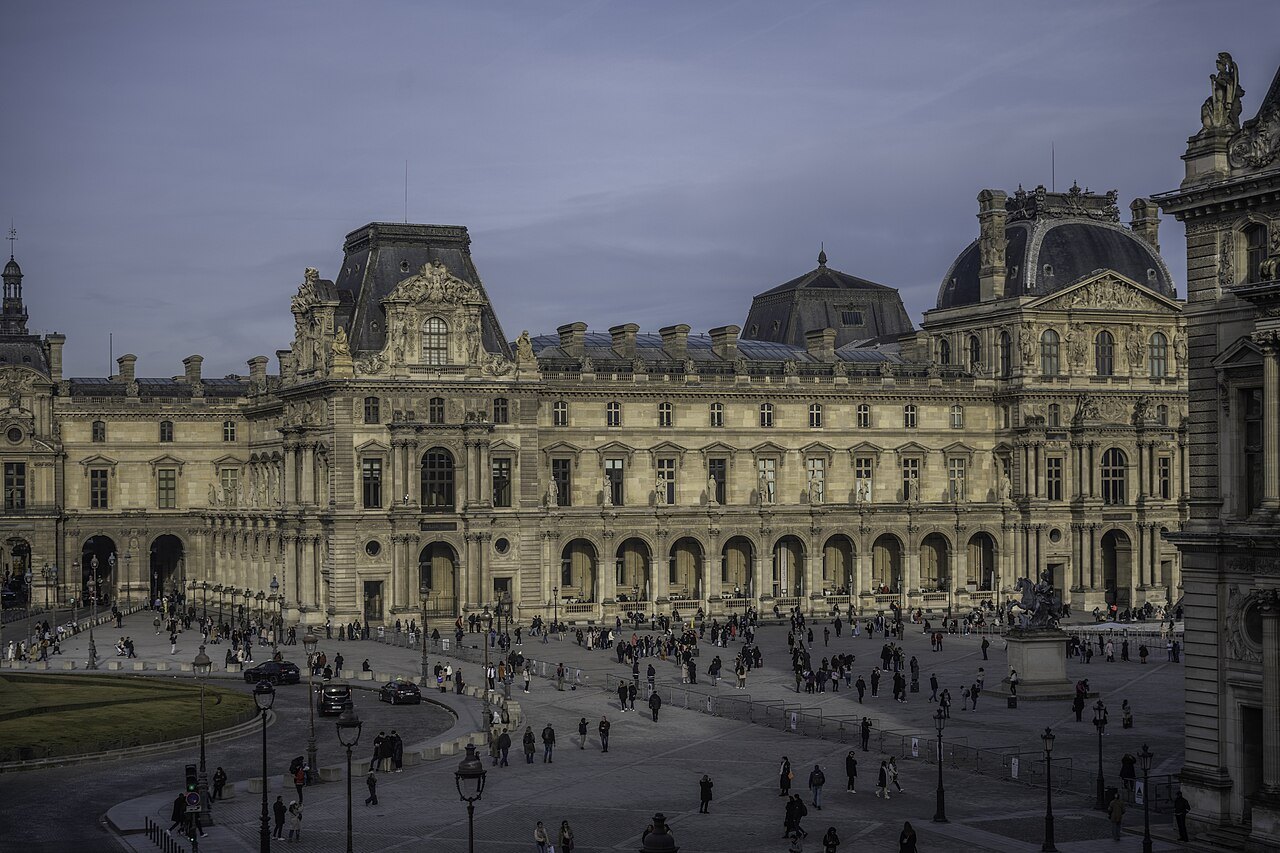
Before going inside, walk the courtyards. The Cour Napoléon, with the pyramid and its fountains, is the wide space open to the west; through the archway of the Pavillon de l'Horloge lies the Cour Carrée, the enclosed Renaissance courtyard, quieter and more complete, whose eastern side, the Colonnade, faces the church of Saint-Germain-l'Auxerrois.
The main entrance is through the pyramid itself. Booking a time slot is recommended for every visitor, including those who enter free, since tickets are sold at the door only when the museum is quiet; buy only from the museum's own ticket site, as fake sites selling Louvre tickets are common. See booking ahead for how.
No one sees the whole Louvre in a day, and trying to is the most common mistake visitors make. Choose one wing, or three or four works to see, and leave the rest for another visit; two to three hours makes a satisfying first stop, with the Mona Lisa seen early or late and the saved time spent in Sully and Richelieu.
The Sainte-Chapelle is a short walk away across the Pont Neuf, a good pairing for an afternoon that starts at the Louvre; see Sainte-Chapelle for what to expect there.
Read next
More from the journal
- The LouvreHow do you see the Louvre in a single day?A practical one-day plan for choosing what to see at the world's largest museum.Read the piece →
- Getting AroundHow does the Paris Métro work for visitors?Sixteen lines, 321 stations and one simple rule: follow the line's number and the name of the station at the end of it. How to read the signs, change lines, pay, and where the Métro is hard going with luggage or a wheelchair.Read the piece →
- The Musée d'OrsayHow did a railway station become the Musée d'Orsay?How a Belle Époque railway terminus on the Seine became the world's great home of Impressionist painting.Read the piece →