CANAL SAINT-MARTIN'S LOCK SYSTEM
How do the locks on the Canal Saint-Martin work?
How nine locks lower the Canal Saint-Martin toward the Seine, and where to watch a boat go through.
The answer in full
Read on
Why the Canal Needs Locks
The Canal Saint-Martin runs for about two and three-quarter miles between the Bassin de la Villette, the broad basin at the Place de Stalingrad, and the Port de l'Arsenal beside the Bastille, where it joins the Seine. Along that short stretch the ground slopes down toward the river, so the water cannot simply run downhill at one level. Nine locks step the canal down by about eighty feet in stages, holding enough water at each level for boats to float and move through.
The canal was built in the early nineteenth century not for pleasure but for drinking water. Old Paris drew on the polluted Seine and the small Bièvre, and epidemics were feared. In 1802 Napoleon, then First Consul, ordered a canal from the river Ourcq, and the prefect Gaspard de Chabrol carried out the plan. King Charles X opened the Canal Saint-Martin on 4 November 1825, and its water fed the city's fountains and washed its streets.
The canal was also a working port. From the nineteenth century to the middle of the twentieth, barges brought grain, building materials and goods into Paris, unloading at the Bassin de la Villette and the Port de l'Arsenal; in 1882 the basin was the fourth busiest port in France. Until the 1920s men on the towpath hauled the barges, and the locks carried this traffic as much as any pleasure boat today.
How a Lock Works
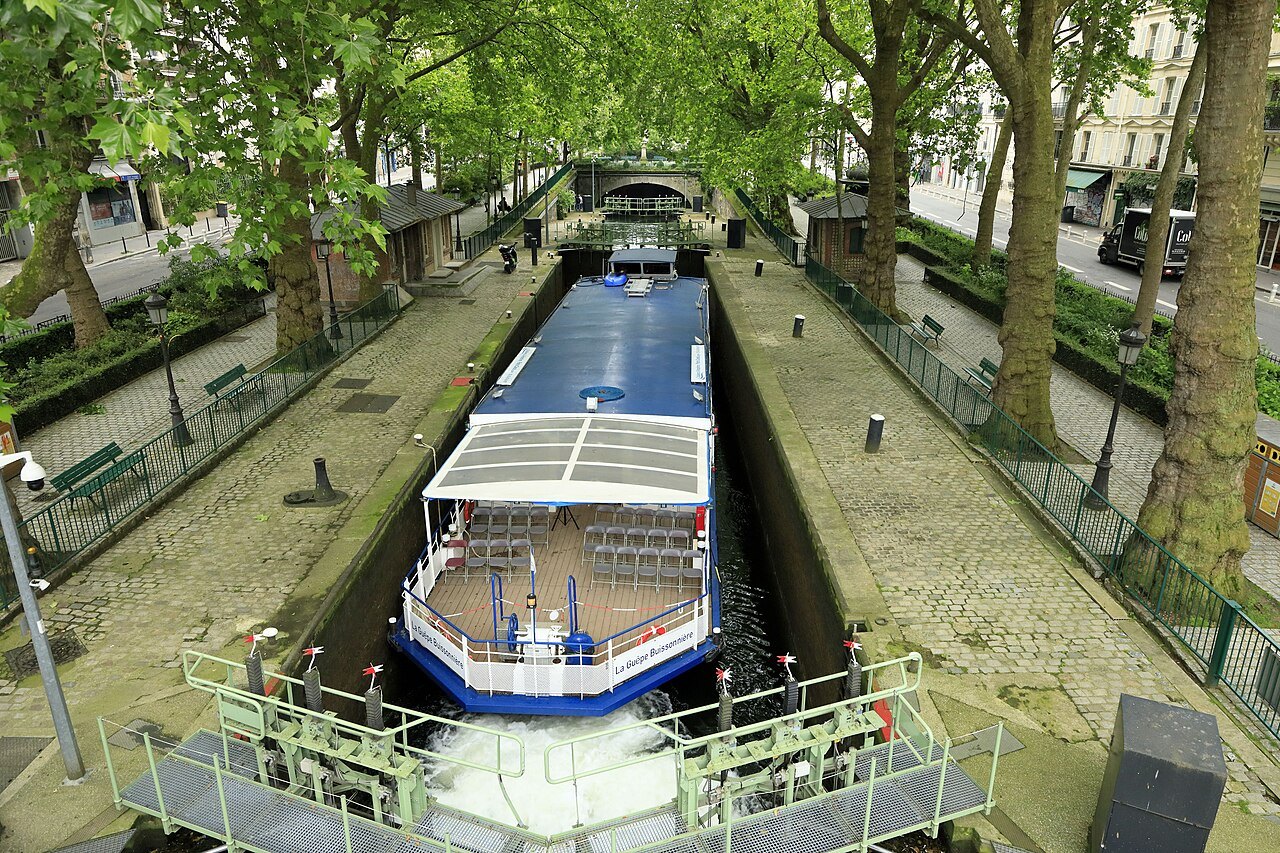
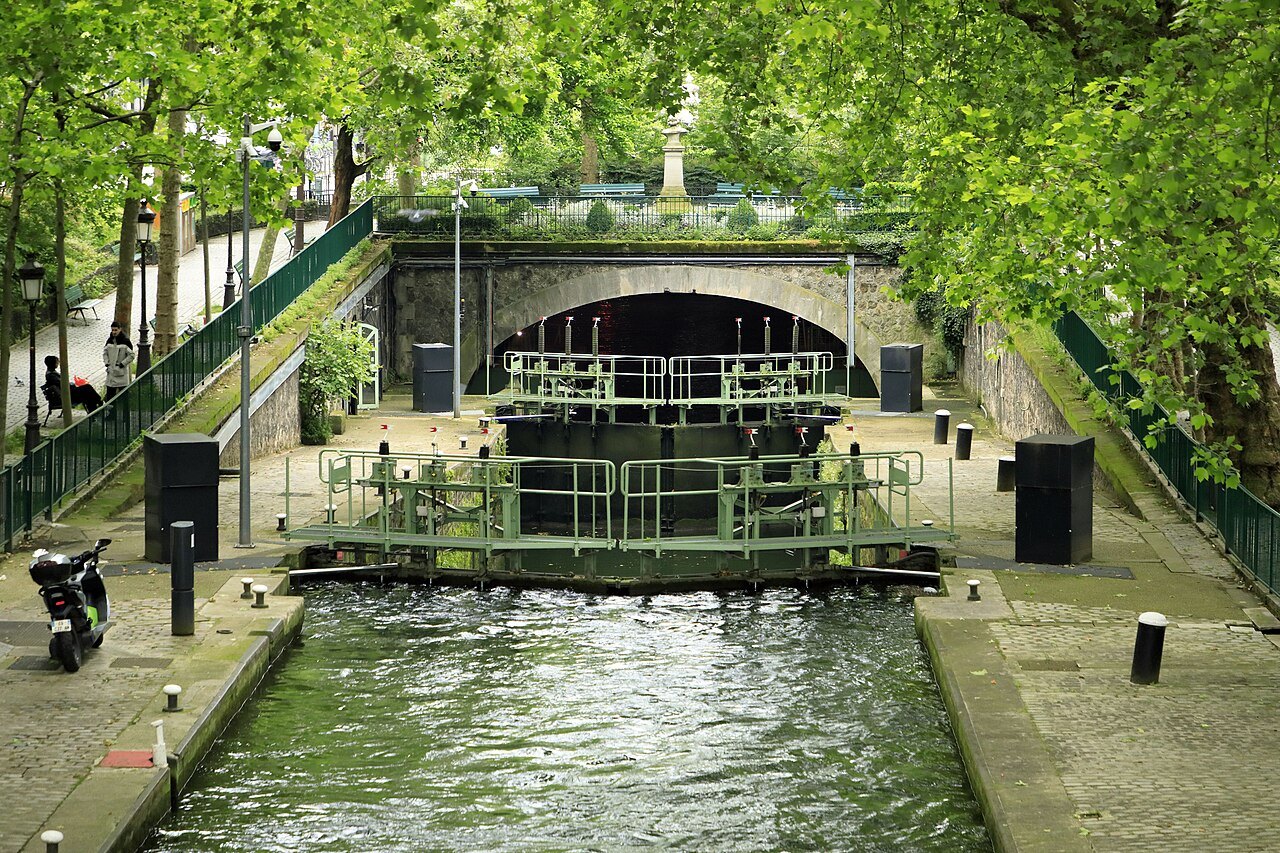
A canal lock is a simple device for moving a boat between two different water levels. Each lock on the Saint-Martin is a chamber with gates at both ends. A boat enters through one gate, which closes behind it; the water in the chamber then rises or falls to match the level on the far side, and the second gate opens to let the boat continue.
Heading south toward the Seine, a boat is lowered: the gates close around it, the water drains out of the chamber, and the boat sinks slowly between the stone walls until it is level with the water downstream. It is one of the more absorbing things to watch along the canal, and anyone can stop on the quay to follow the whole sequence.
The process is unhurried: filling or draining a chamber takes several minutes, and a boat may wait at more than one lock on its way between the Bassin de la Villette and the Seine. Visitors often gather at the railings to watch, especially where a footbridge crosses close to the gates and gives a clear view down into the chamber.
The Locks and Footbridges
The open stretch of canal begins at the double lock of La Villette, by the Place de Stalingrad, where two chambers work in sequence to carry boats down from the basin. From there the canal runs south between two quays, the Quai de Valmy and the Quai de Jemmapes, with plane trees lining the water and locks spaced along the route.
Nine locks in all lower the canal by about eighty feet between the basin and the Seine, and each is crossed close by one of the arched iron footbridges, painted green, that link the two quays. Walking from bridge to bridge is the easiest way to follow the canal and to catch a lock in action as a boat passes through.
On Sundays and holidays the city closes the quays to cars, and the whole stretch belongs to walkers and cyclists, which makes it easier to stop at a lock without competing with traffic. The cafés, bakeries and small shops along the Quai de Valmy and the Quai de Jemmapes are part of the walk; see neighborhoods for more on the surrounding streets.
Swing Bridges Along the Way
Two bridges on the canal are built to move rather than stay still. The Pont de la Grange-aux-Belles and the Pont de la Rue Dieu are swing bridges, turning aside on a pivot to clear the water when a boat needs to pass, then swinging back so pedestrians and traffic can cross as usual.
Seeing one swing open is largely a matter of timing, since it happens only when a boat is due. A visitor who wants to watch should expect to wait, and should not count on it happening during any particular visit; a canal cruise, which schedules its own passage through the locks, is a more reliable way to see the mechanism used.
These two bridges stand on the Quai de Jemmapes and Quai de Valmy stretch, within easy reach of the Hôtel du Nord, the building on the Quai de Jemmapes made famous by Eugène Dabit's novel and by Marcel Carné's 1938 film, though the film itself was shot on a studio set rather than on the canal.
Draining the Canal
Locks need maintenance, and every ten to fifteen years the whole canal is drained so the gates, walls and mechanisms can be inspected and repaired. The draining empties the stone chambers completely, and Parisians turn out along the quays to see what the mud and water give up after years underwater.
The cleaning of 2001 and 2002 brought up about forty tons of rubbish from the bed of the canal. During the draining of 2016 the fish living in the water were caught and moved to safety before the locks were opened and the canal let run dry, work that protects the wildlife as much as the stonework.
A visitor who happens to be in Paris during one of these drainings will see the canal reduced to a muddy trench between its stone walls, with the lock gates standing open and dry; it is an unusual sight and worth a detour, though it follows no fixed calendar and is worth checking for with the city before planning a visit around it.
Watching the Locks as a Visitor
The simplest way to watch a lock at work is to walk the open stretch of the canal, from the Place de Stalingrad south along the Quai de Valmy to the Rue du Faubourg du Temple, crossing back and forth on the footbridges. Boats pass according to their own traffic rather than any fixed schedule, so patience helps, and the double lock at La Villette is a reliable place to linger.
Canal cruises run between the Bastille and La Villette and pass through all nine locks and the tunnel beneath the boulevards, a slow and unusual way to see both the canal and the mechanism from the water itself rather than from the quay; details of routes and schedules should be checked with the boat operators directly. For boats on the river itself, see the Seine.
Below the Rue du Faubourg du Temple the canal disappears under the Boulevard Jules-Ferry and the Boulevard Richard-Lenoir, where round openings in the vault let in light and air; this covered section hides any locks from view, and the canal reappears only at the Port de l'Arsenal, the marina of Paris beside the Bastille.
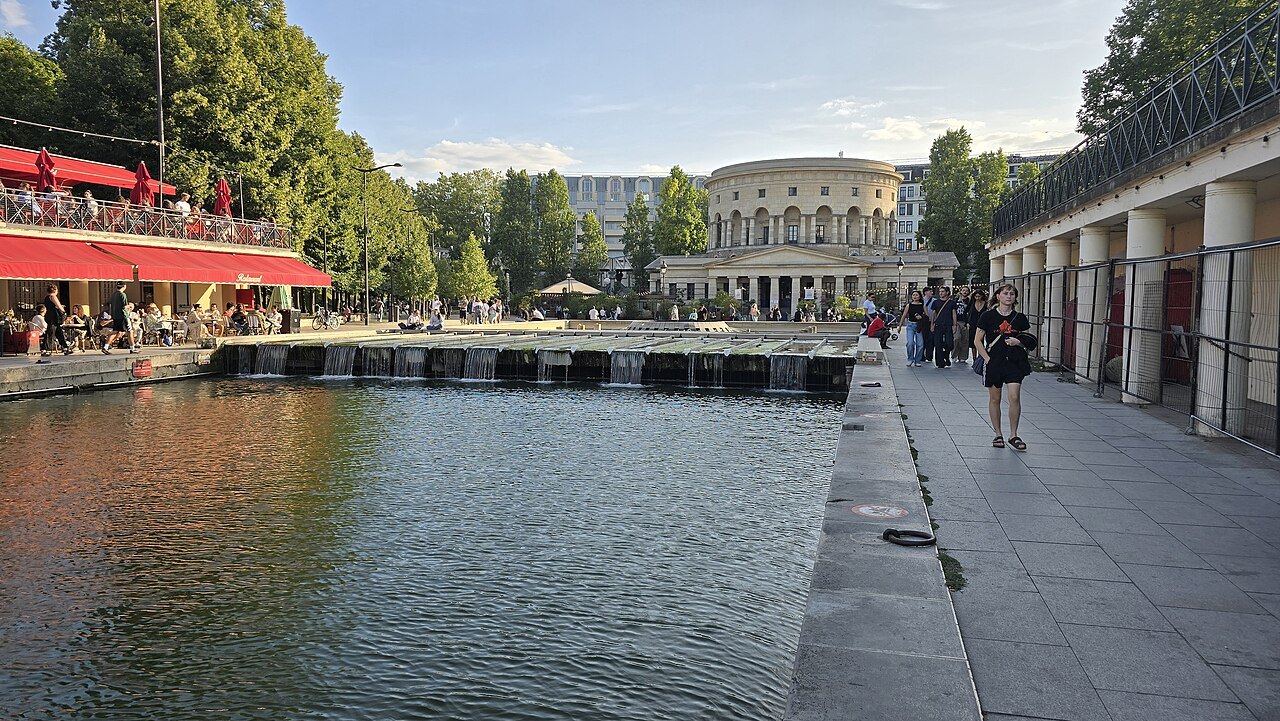
A visitor pressed for time can simply pick one lock, ideally the double lock near the Place de Stalingrad or one of the locks farther south along the Quai de Jemmapes, and wait for a boat; the whole process of filling or emptying a chamber is short enough to fit into a stop on a longer walk through the neighborhood.
Read next
More from the journal
- Getting AroundHow does the Paris Métro work for visitors?Sixteen lines, 321 stations and one simple rule: follow the line's number and the name of the station at the end of it. How to read the signs, change lines, pay, and where the Métro is hard going with luggage or a wheelchair.Read the piece →
- The SeineWho are the booksellers along the Seine?The bouquinistes, some two hundred booksellers who keep about nine hundred green boxes on the stone parapets of the Seine. Where they are, how the trade began on the Pont Neuf, why the boxes are the color they are, and how to browse them.Read the piece →
- The Musée d'OrsayHow did a railway station become the Musée d'Orsay?How a Belle Époque railway terminus on the Seine became the world's great home of Impressionist painting.Read the piece →