STAIRS OR ELEVATOR: THE CHOICE
Should you climb the Eiffel Tower's stairs or take the elevator?
A practical look at climbing the Eiffel Tower's stairs versus riding its elevators to each level.
The answer in full
Read on
Elevator or Stairs: The Basic Choice
The Eiffel Tower rises at the northwest end of the Champ de Mars, beside the Seine in the 7th arrondissement, and most of its visitors ride one of its elevators to the first, second, or summit level. A smaller number buy tickets to climb instead, on foot, up the stairs built into one of the four iron legs. Both routes begin at the same base and reach the same lower levels; only the summit is reached by elevator alone.
The tower was built between 1887 and 1889 by Gustave Eiffel's company, from a design originally sketched by two of his engineers, Maurice Koechlin and Émile Nouguier. It opened to the public nine days after the Universal Exposition began, before its elevators were even finished, so the first visitors went up on foot. The hydraulic elevators arrived soon afterward and have carried the great majority of visitors ever since.
Choosing between the two comes down to fitness, time, and the kind of experience wanted: a close look at the ironwork and the frieze of names on the first level, or a quicker ride straight up with the view arriving all at once. Either way, tickets should be arranged in advance; see booking ahead for how.
Climbing the Stairs
Stair tickets cover only the first and second levels; the stairs do not continue to the summit, which is reached only by elevator. The climb comes to a little over three hundred steps to reach the first level and as many again to reach the second, so roughly six hundred steps in all, each flight inside the curve of one leg.
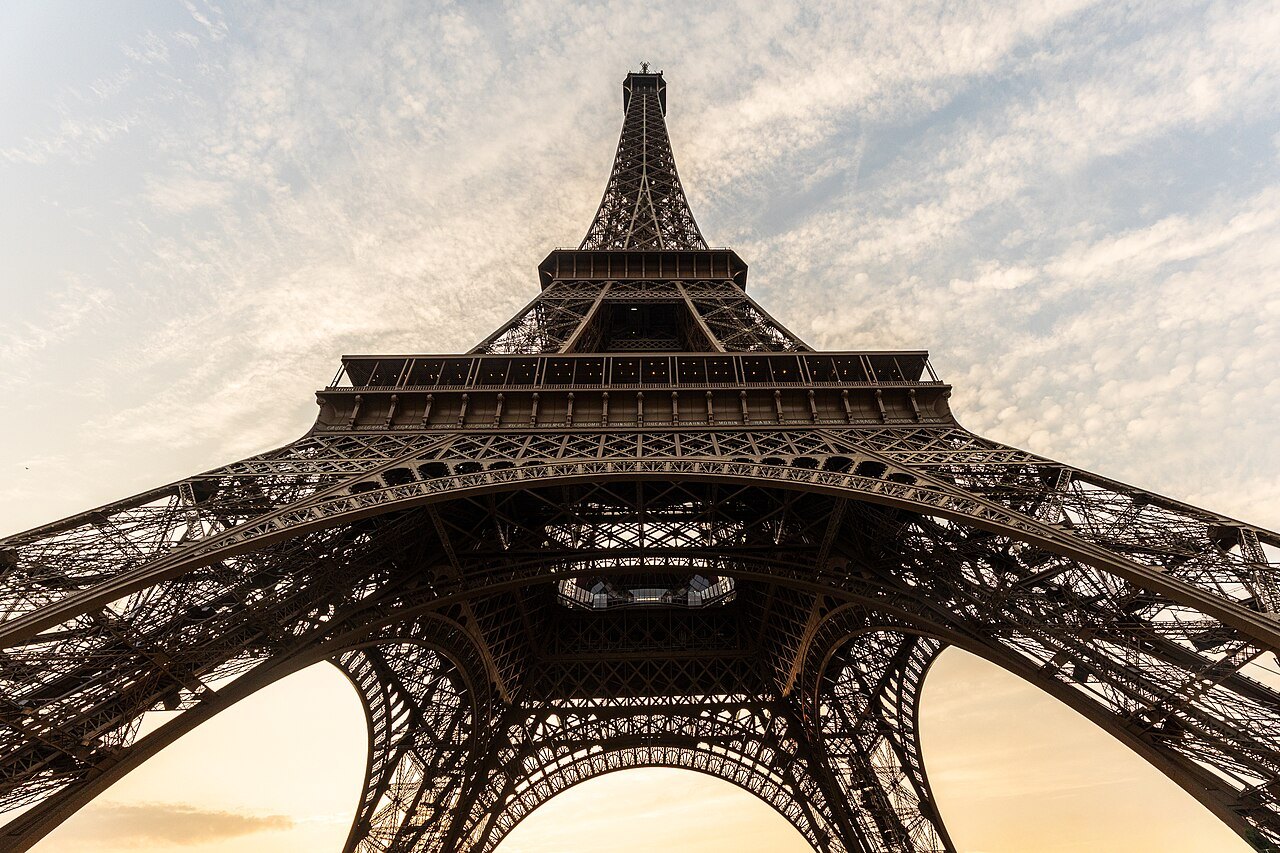
The stairway gives a view of the tower that elevator passengers miss. Walking up through the ironwork, past the point where the four legs curve inward and meet, shows how the lattice of iron carries its own weight, the same structure visible from the ground when looking straight up before starting the ascent.
At the first level, about one hundred ninety feet up, the names of seventy-two French scientists, engineers, and mathematicians run around the frieze in gold letters, easier to read for anyone who has just climbed past them than for someone who arrived straight there by elevator. Part of the first level's floor is glass.
Climbers who want to continue beyond the second level switch to the elevator there, since the stairs end at that point; the summit, with its enclosed deck and the open deck above it, can only be reached that way, whatever route was used to get as far as the second level.
Taking the Elevator
The elevators are the main way up the tower, used by most of the nearly six million people who went up it in 2022, and they are the only way to reach the summit, 906 feet up, the highest public observation deck in the European Union, with an enclosed deck and an open deck above it.
When the tower opened in 1889, nine days after the exposition itself began, the elevators were still being finished, so the earliest visitors went up on foot. By the time the fair closed, nearly two million people had made the ascent, after the elevators themselves were completed and put into service.
Elevator riders pass through the same first and second levels as stair climbers, at about one hundred ninety and three hundred eighty feet respectively, with the chance to get out at each one, look around, and continue upward toward the summit rather than travel straight past without stopping along the way.
For visitors with limited mobility, the elevator is the practical way to see the tower's upper levels at all, since stair tickets are not suited to that purpose and the summit itself is not easy for everyone to reach. Check the tower's own website for current guidance on accessibility before planning a visit.
What Each Level Shows
The first level, about one hundred ninety feet up, is the broadest of the three, with room to walk a full circuit and look down through a section of glass floor. Its frieze carries the gold-lettered names of seventy-two French scientists, engineers, and mathematicians, visible to elevator and stair visitors alike.
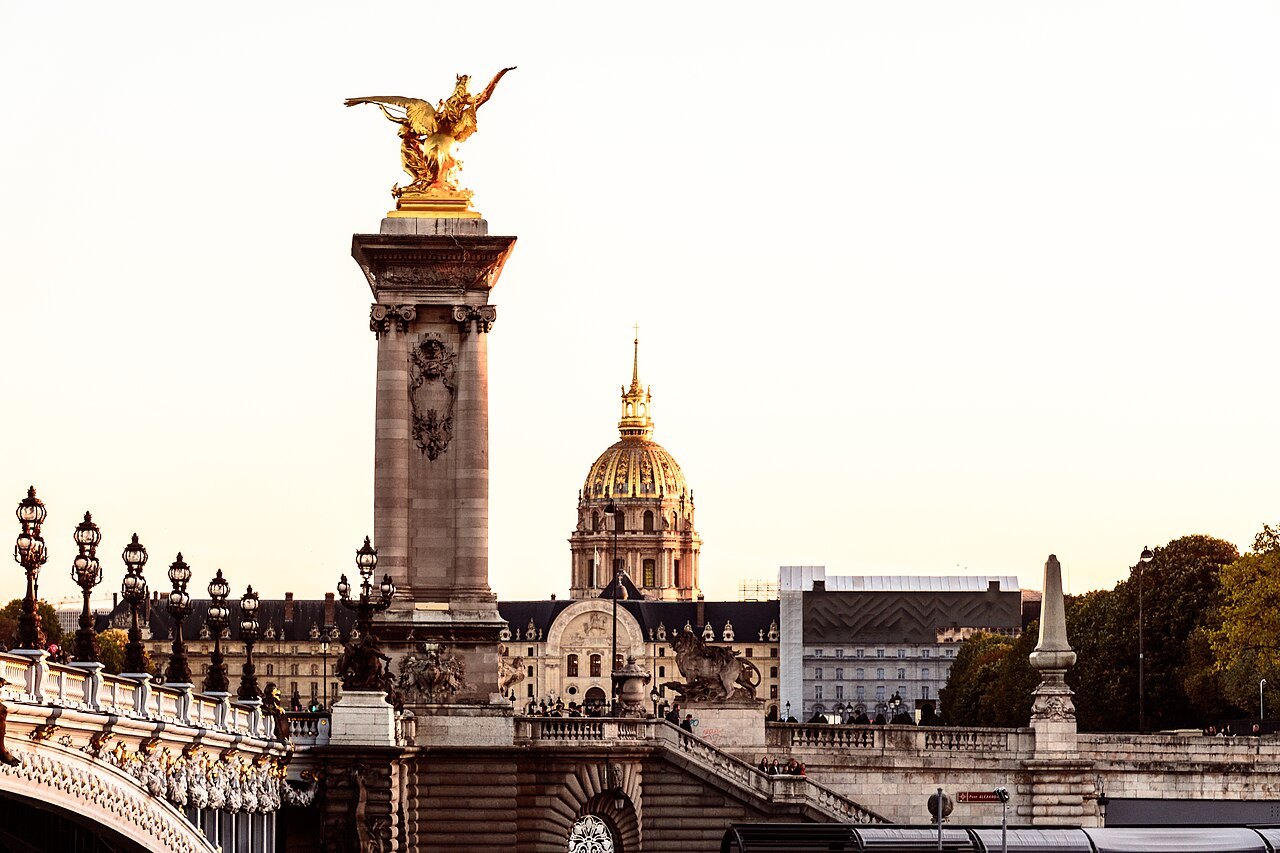
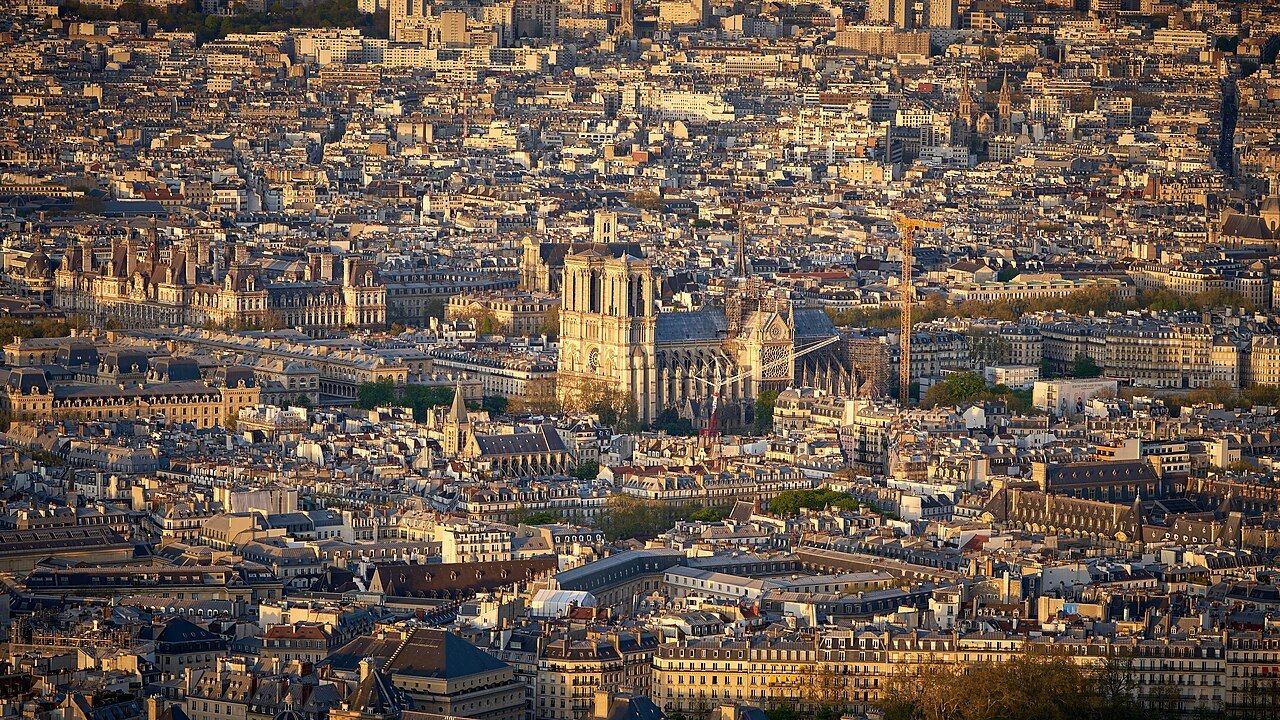
The second level, about three hundred eighty feet up, is the height most visitors find best for understanding the city: high enough to see the pattern of streets, the curve of the river, and the domes of nearby buildings, but still low enough to pick out individual buildings rather than a flattened map.
The summit, usually reached only by elevator, sits 906 feet up and has an enclosed deck below an open deck, the highest public observation point in the European Union. It is the one part of the tower that stair tickets do not include, no matter which level the climb began from or ended at.
The ironwork is repainted every seven years, about sixty tons of paint each time, in three shades of brown, lighter at the top and darker toward the bottom, chosen to complement the Paris sky. Both stair climbers and elevator passengers see this ironwork close at hand on the way up, rather than from a distance.
Deciding Which Way to Go
Time and fitness are the main considerations. The climb to the first level and on to the second totals roughly six hundred steps, done at a visitor's own pace, with the first level's frieze and glass floor along the way. An elevator ride covers the same distance in a few minutes, with no exertion required.
The stairs end at the second level, so anyone who wants to reach the summit needs an elevator for at least the final stretch, whichever way the climb up to that point was made. The stairs also are not suited to visitors with limited mobility, and neither is the summit itself.
Tickets for both the elevator and the stairs are sold online and at the tower. Given the popularity of the monument, close to six million visits in 2022 alone, arranging tickets in advance is worth doing whichever way up is chosen, and well before the day of the visit.
Seeing the Tower from Outside
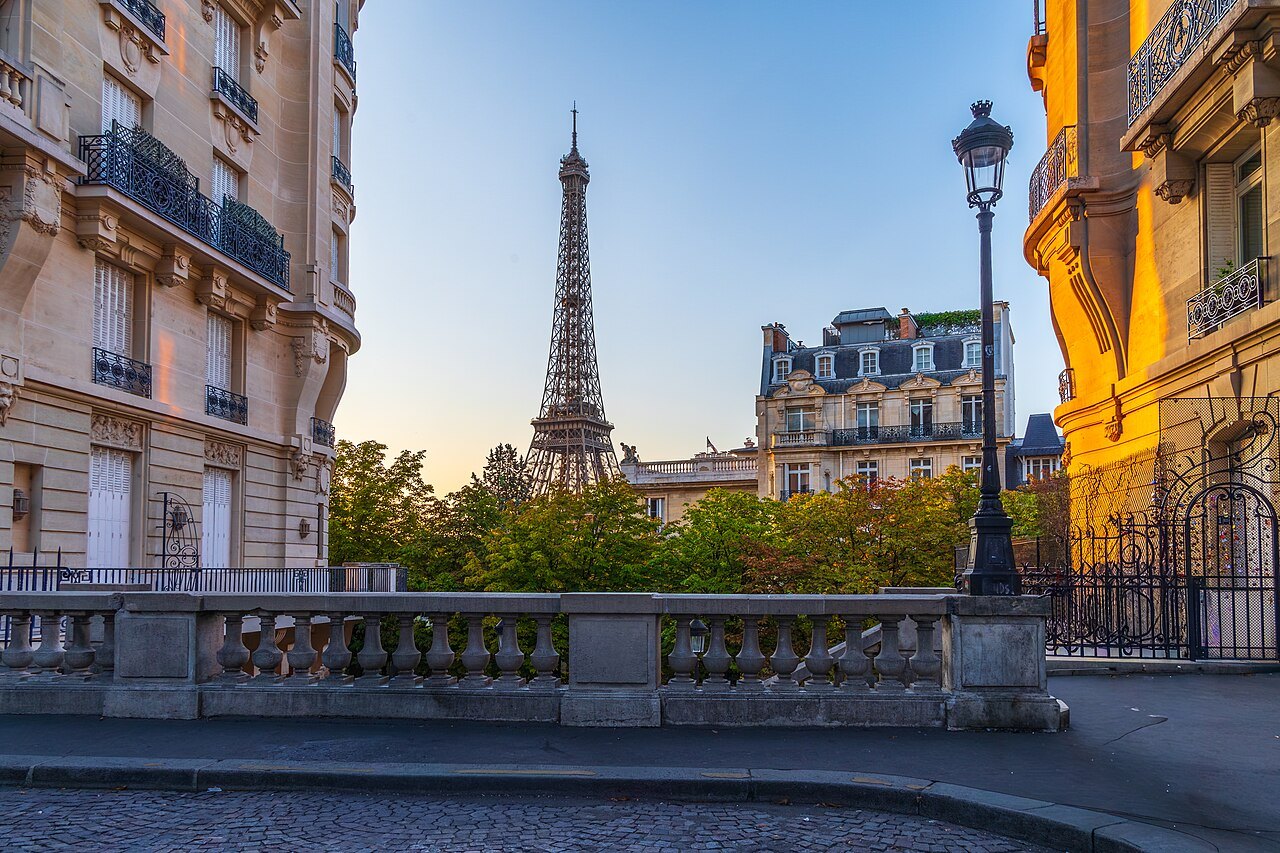
The classic views of the tower are from outside it rather than on it: across the river from the terrace of the Trocadéro, or from the long lawn of the Champ de Mars behind it, both of which show the whole structure, including whichever level visitors happen to be climbing or riding up to at that moment.
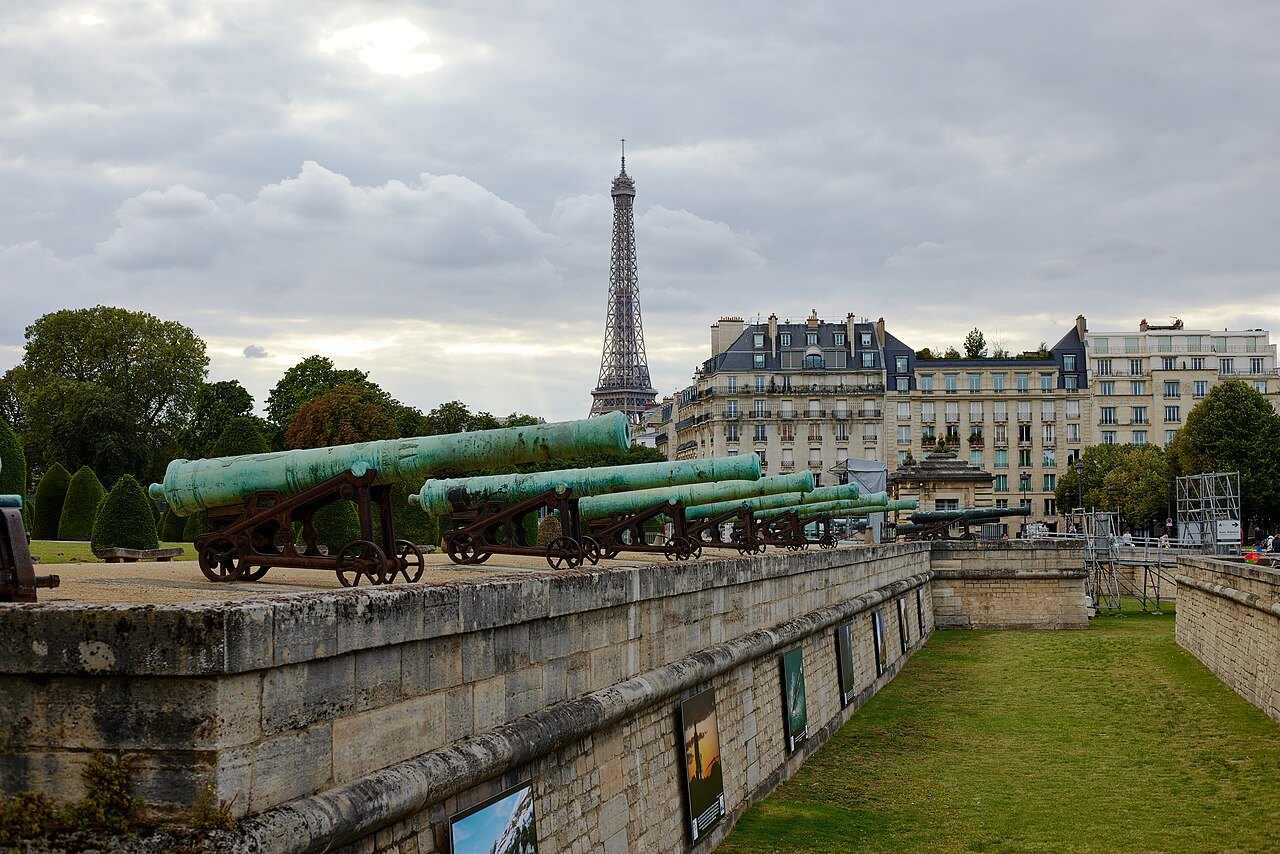
For the tower in its full setting, with the Seine in view, walk to the Pont de Bir-Hakeim, the two-level bridge just to the west. The Invalides stand across the Champ de Mars from the tower, and a boat from the quay below it passes most of the sights along the Seine.
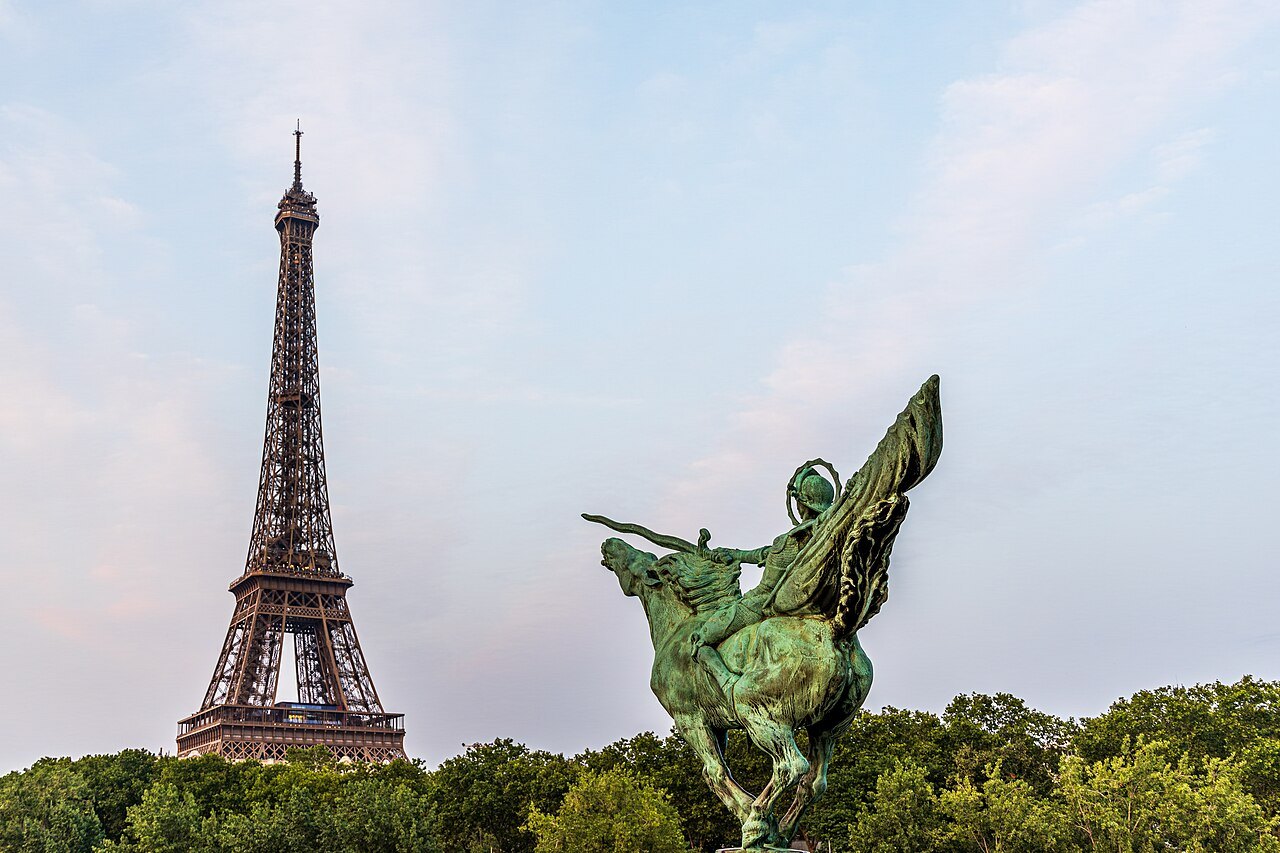
Whichever way up is chosen, stairs or elevator, the tower is best approached on foot through the Champ de Mars or across the bridge, with the walk itself a chance to see the four legs and the ironwork from ground level before committing to either route up. Details on reaching this part of the 7th arrondissement are covered under getting here.
Read next
More from the journal
- The Eiffel TowerHow was the Eiffel Tower built in two years?How Gustave Eiffel's engineers raised the tallest structure in the world in just over two years.Read the piece →
- Getting AroundHow does the Paris Métro work for visitors?Sixteen lines, 321 stations and one simple rule: follow the line's number and the name of the station at the end of it. How to read the signs, change lines, pay, and where the Métro is hard going with luggage or a wheelchair.Read the piece →
- The Musée d'OrsayHow did a railway station become the Musée d'Orsay?How a Belle Époque railway terminus on the Seine became the world's great home of Impressionist painting.Read the piece →