VICTOR HUGO IN THE MARAIS
Where did Victor Hugo live on the Place des Vosges?
Where Victor Hugo's apartment stood on the Place des Vosges, and what the house at number six holds today.
The answer in full
Read on
A house in the southeast corner
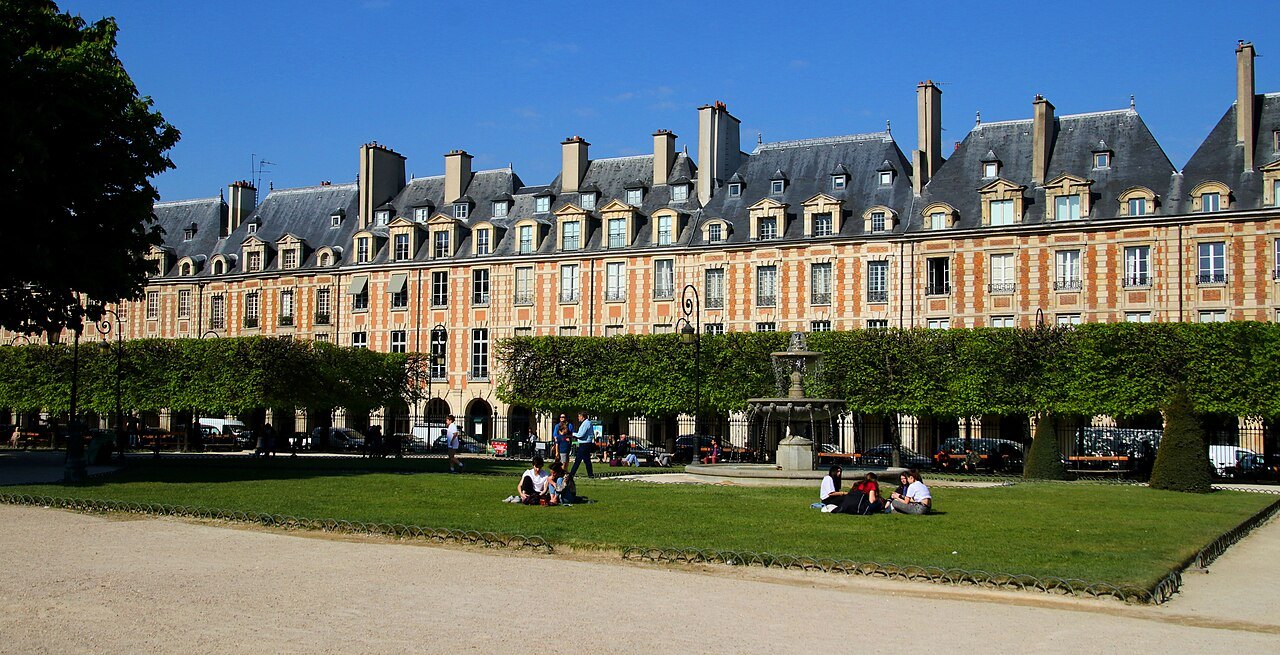
Of the thirty-six houses that close the four sides of the Place des Vosges, one in particular draws visitors for a name rather than its architecture. Number six, in the southeast corner of the square, was Victor Hugo's Paris address for sixteen years, and it survives much as the rest of the square does, behind the same arcades and the same steep slate roof.
Hugo rented a second-floor apartment here with his wife Adèle, moving in during October 1832 and staying until 1848, through the years that produced some of his best-known work. The apartment sat within a house built to the same design as every other on the square: red brick, stone bands at the corners and windows, and a vaulted arcade at street level.
The building is now run by the city as the Maison de Victor Hugo, a museum of his life furnished with his own pieces and hung with his drawings. It is one of several seventeenth-century mansions around the square and through the wider Marais that have been turned into museums, archives, and libraries open to visitors.
A fashionable address
When Hugo took the apartment, the square had already been one of the most sought-after addresses in Paris for two centuries. The houses had originally been sold to courtiers and financiers after the square's completion in 1612, and by the nineteenth century they housed writers and professionals as much as the nobility who first moved in.
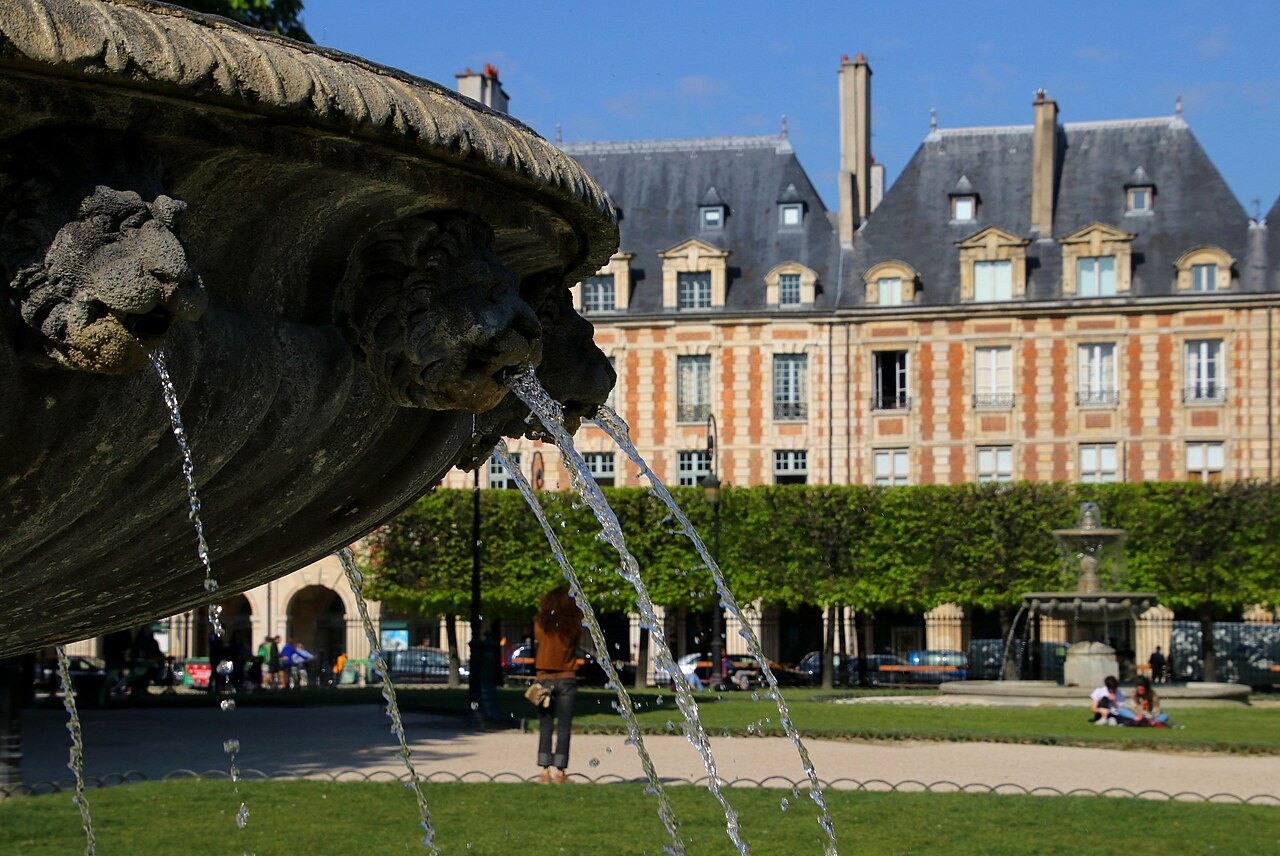
Living on the square put Hugo's household within the vaulted arcades that still run unbroken around all four sides, one of the few covered circuits of its kind in the city. The garden at the center, planted with mature lindens and marked by a fountain in each quarter, would have been his view and his family's daily walk.
The apartment's address placed Hugo close to other figures connected with the square's history: Madame de Sévigné, the letter writer of Louis the Fourteenth's reign, had been born in a house on the north side, and Henry IV's minister Sully had lived a few doors from where Hugo later rented his own rooms.
What the museum preserves
The Maison de Victor Hugo keeps the apartment's rooms arranged with furniture, portraits, and drawings connected to Hugo's life, offering a sense of how a writer of his standing lived on the square in the eighteen-thirties and forties. The museum is free to enter, in keeping with its status as a city museum, though visitors should confirm current arrangements with the operator before planning a visit.
Because the house keeps its original arcade and brick-and-stone facade, visitors can see the exterior Hugo would have recognized before going inside to see the interior as the museum presents it. The building gives no sense from outside of being different from its thirty-five neighbors, which is part of what makes the square itself worth walking in full.
Seeing the apartment alongside the square's arcades and garden takes a modest amount of time, and it pairs easily with the other house museums nearby, since the Marais keeps its major collections within easy walking distance of one another.
Other residents of the square
Sully's own mansion, the Hôtel de Sully, stands just behind the square's southwest corner on the Rue Saint-Antoine, built between 1624 and 1630 with its own gardens and orangery. It was sited there deliberately to give its owner access to the square, and a discreet door at the back of its garden still opens onto the arcade.
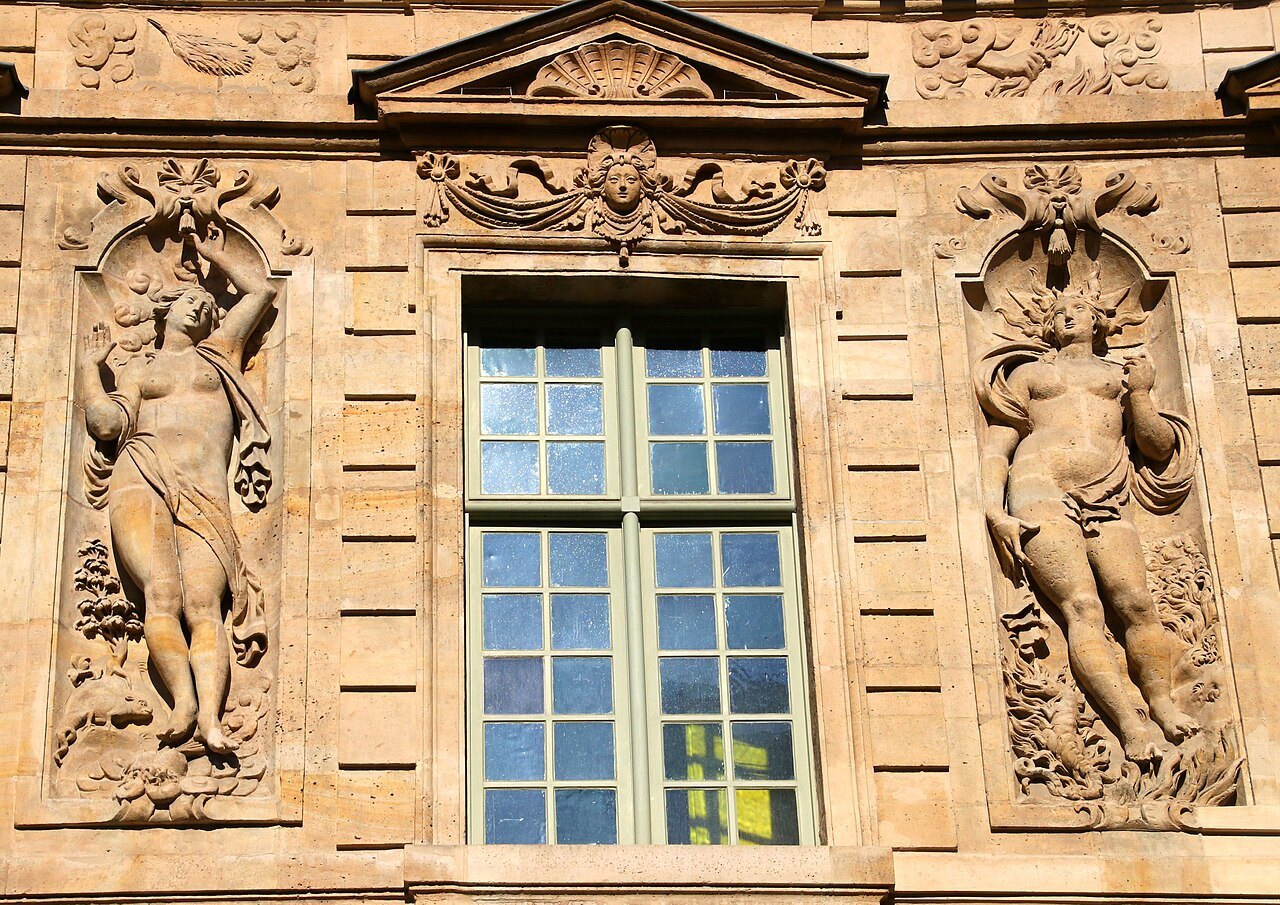
Walking from the Rue Saint-Antoine through the mansion's carved courtyard and garden and out under the arcade gives a sense of how closely the square and its surrounding hôtels particuliers were once connected, long before Hugo's own tenancy began. The carved allegories on the courtyard facades are worth a slow look on the way through.
Together, the Hugo apartment, the Sévigné birthplace, and Sully's mansion give the square three strands of its history within a few hundred feet of one another: a king's planning, a minister's household, and a nineteenth-century writer's rented rooms.
The Marais around the square
West of the square, the streets of the Marais hold one great mansion after another, several of them converted into museums much like Hugo's former apartment. The Hôtel Carnavalet, bought by the city in 1866, is now the Musée Carnavalet, devoted to the history of Paris, and reopened after a long renovation in 2021.
Nearby, the Hôtel Salé houses the Picasso Museum and the Hôtel de Saint-Aignan the museum of Jewish art and history, both within easy reach on foot. A short walk further brings visitors to the Rue des Rosiers, the center of one of the city's Jewish communities since the nineteenth century, known in Yiddish as the Pletzl, with bakeries and counters worth seeking out; see eating and drinking for more on this side of Paris.
This cluster of museums and streets means a visitor interested in Hugo's house can build a morning that also takes in the history of the quarter he lived in, without needing any transport between stops.
Visiting Hugo's house today
The square itself costs nothing to enter and is pleasant at any hour of daylight, quietest early in the day before the lawns and arcades fill on weekend afternoons. The Maison de Victor Hugo sits inside this same rhythm, so an early visit avoids the crowds that build later.
Because opening arrangements and any requirement to book ahead can change, visitors should check the museum's own website before arriving, in the same way they would for any of the Marais house museums; see booking ahead for general guidance on this kind of planning.
A visit to the apartment combines naturally with a full circuit of the square's arcades and garden, and with the short walk to the Hôtel de Sully and the Carnavalet. From the square, the cathedral and the Île Saint-Louis lie a short walk south across the river; see Notre-Dame for that side of a day that starts with Hugo's house.
None of this requires rushing. The square, Hugo's rooms, and one or two of the neighboring mansions make a complete, unhurried morning in a part of Paris built to be walked rather than crossed quickly.
Read next
More from the journal
- Notre-Dame de ParisWhat happened to Notre-Dame in the fire of 2019?On 15 April 2019 fire destroyed the spire and the medieval oak roof of Notre-Dame; the stone vaults, the towers, the façade and the great windows survived. How the fire spread, how firefighters saved the north tower, how the roof was rebuilt in oak, and what visitors notice since the reopening in December 2024.Read the piece →
- The SeineWho are the booksellers along the Seine?The bouquinistes, some two hundred booksellers who keep about nine hundred green boxes on the stone parapets of the Seine. Where they are, how the trade began on the Pont Neuf, why the boxes are the color they are, and how to browse them.Read the piece →
- The SpiralWhy are the arrondissements of Paris numbered in a spiral?Because in 1859 the wealthy residents of Passy refused to live in a new 13th arrondissement, and their mayor suggested a spiral instead. The story of the numbers, from the Revolution's twelve districts to the twenty of today, and how to use them.Read the piece →