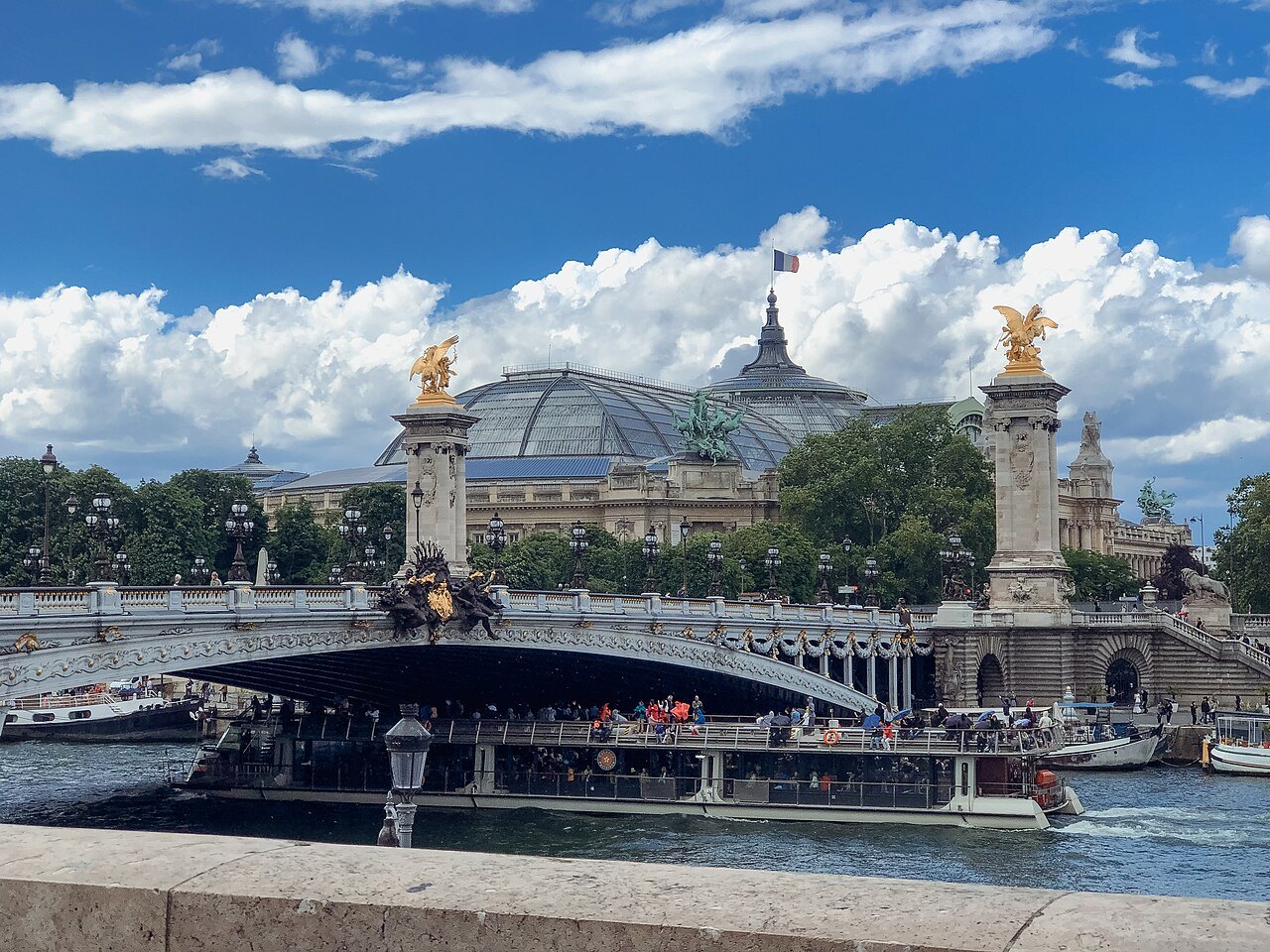
A TSAR'S NAME OVER THE SEINE
Why is the Pont Alexandre III named after a Russian tsar?
How a Paris bridge came to carry the name of a Russian tsar, and what its gilded statues and low arch reveal.
The answer in full
Read on
A Bridge Named for an Alliance
The Pont Alexandre III carries the Avenue Winston-Churchill over the Seine, linking the Grand Palais and the Petit Palais to the gardens in front of Les Invalides. It was built between 1896 and 1900, as part of the grand axis the city created for the Universal Exposition of 1900, and it still draws visitors for one simple reason: it is the bridge people photograph from every angle, with its gilded statues and ornate lamps catching the light.
Its name has nothing to do with Paris history and everything to do with diplomacy. Alexander III was the Tsar of Russia, and the bridge honors a political relationship rather than a person who ever set foot on it. Understanding why requires looking at the alliance between France and Russia that took shape in the final years of the nineteenth century.
The bridge's story, then, runs in two directions: one is political, tied to an alliance between two empires, and the other is purely engineering, since the design had to meet a strict visual rule about the view down the avenue. Both strands together explain the bridge that stands on the Seine today, more than a century after it was completed.
The Franco-Russian Alliance
In 1892, France and Russia concluded the Franco-Russian alliance, a diplomatic and military agreement that bound the two countries together at a time when each sought a counterweight to the other European powers. Naming a new Paris bridge after the reigning tsar was a public, visible way to mark that partnership.
The foundation stone was laid in October 1896, not by Alexander III but by his son, Nicholas II, who had succeeded him as tsar. The ceremony tied the new bridge to the living head of the Russian state as much as to the memory of his father, for whom it was named.
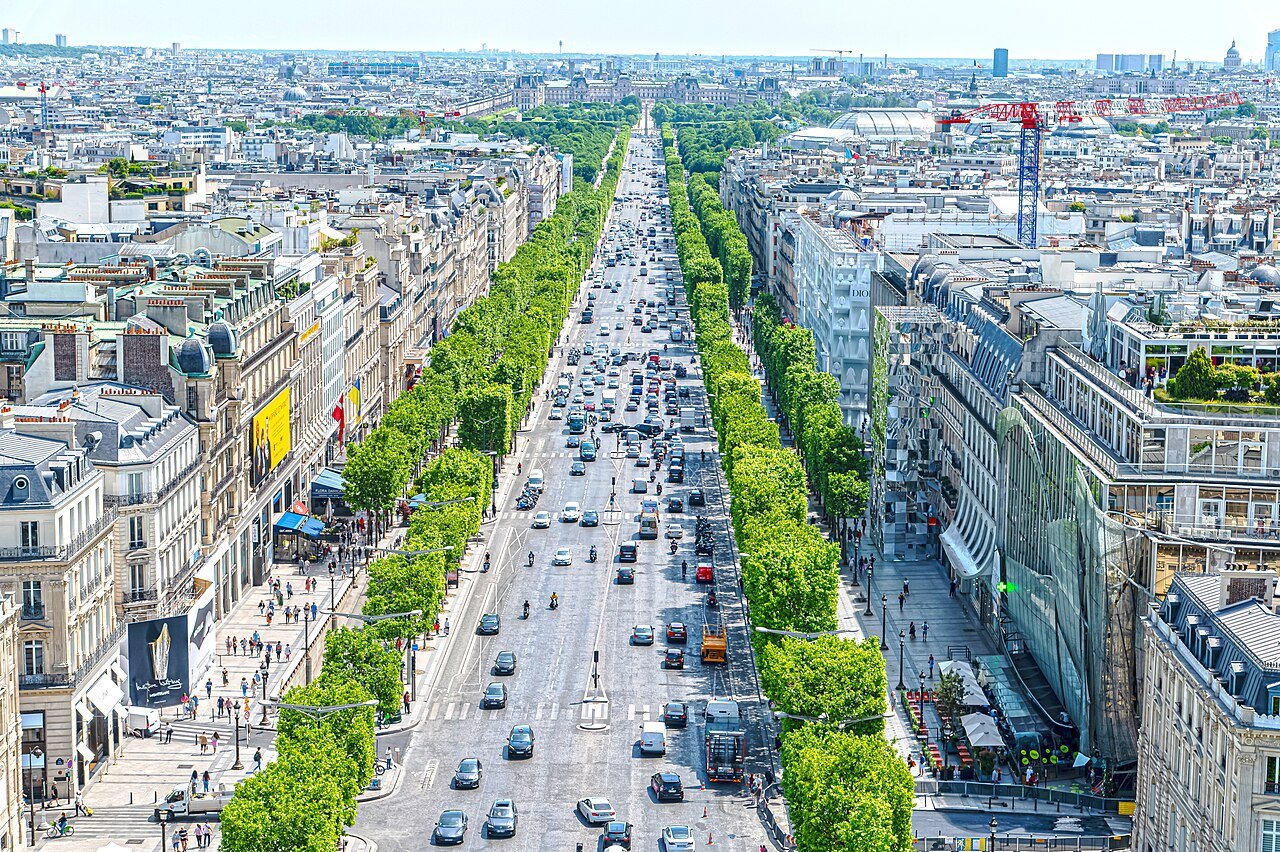
Construction continued over the following years so that the bridge would be ready, together with the Grand Palais and Petit Palais, for the Universal Exposition of 1900. All three structures and the avenue between them formed a single ceremonial route built for that fair and meant to last well beyond it.
A Rule That Shaped the Design
The bridge's engineers worked under an unusual constraint: whatever they built could not block the view from the Champs-Élysées, across the new avenue and the river, to the dome of Les Invalides on the far bank. That single sightline mattered more to the planners than almost any other feature of the crossing.
Their solution was a single steel arch, very low and very wide, rising only about twenty feet above the water. For its time, this flat span over such a wide river was considered a remarkable feat of engineering, since it let the bridge carry traffic without rising into a series of tall piers.
The flatness of the arch meant the forces pushing outward at each end had to be resisted somehow, and the bridge's four stone columns at the corners are not purely decorative: their mass acts as a counterweight, anchoring the arch against the thrust created by its own low, flat curve across the river.
Gilded Statues and River Nymphs
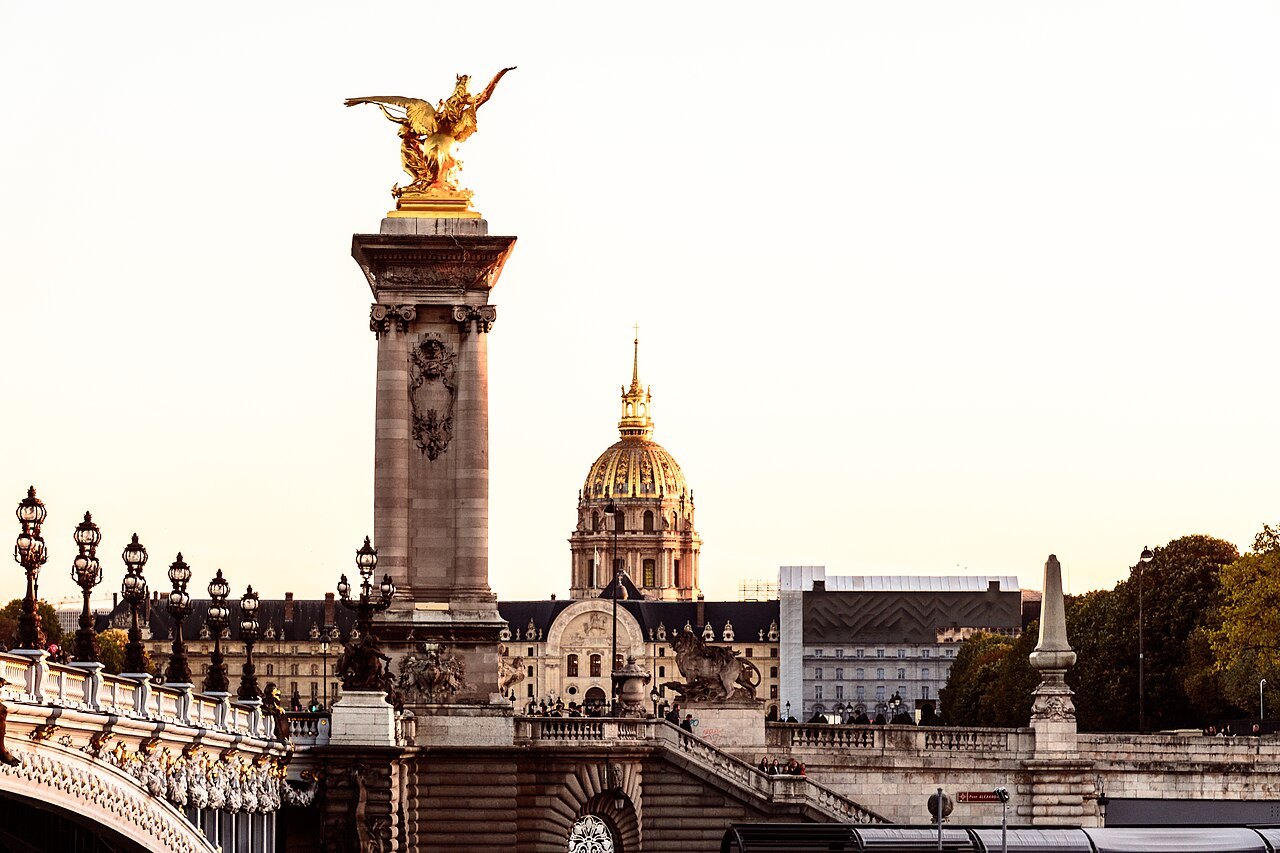
Each of the four corner columns stands about fifty-six feet high and carries a gilded bronze figure of Fame restraining a winged horse, a dramatic silhouette against the sky that has become one of the most recognizable images of the bridge. The gilding catches the light from the river in a way few other Paris monuments do.
Along the balustrades, Art Nouveau lamps mix with cherubs, nymphs and sea creatures in cast bronze, decoration typical of the exposition's taste for ornament applied to new materials and methods. The lamps and figures turn a working river crossing into something closer to an open-air gallery than a simple route for traffic alone.
At the center of each side of the bridge, large relief sculptures depict river nymphs: the nymphs of the Seine on one side, facing Paris, and the nymphs of the Neva, the river that runs through Saint Petersburg, on the other. The pairing quietly repeats the bridge's diplomatic message in stone, linking the two capitals.
Part of a Larger Axis
The bridge was never meant to stand alone. It was conceived as the river crossing for a new avenue built for the 1900 exposition, running between the Grand Palais and the Petit Palais and continuing to the gardens before Les Invalides, so the three structures and the avenue read as one composition.
Across the river, the dome of Les Invalides closes the view to the south, its Ionic lines and golden dome deliberately framed by the low arch of the bridge, exactly as the planners' rule about sightlines intended. Visitors standing at the Paris end of the bridge see the whole composition line up in a single glance, palace, avenue, bridge and dome.
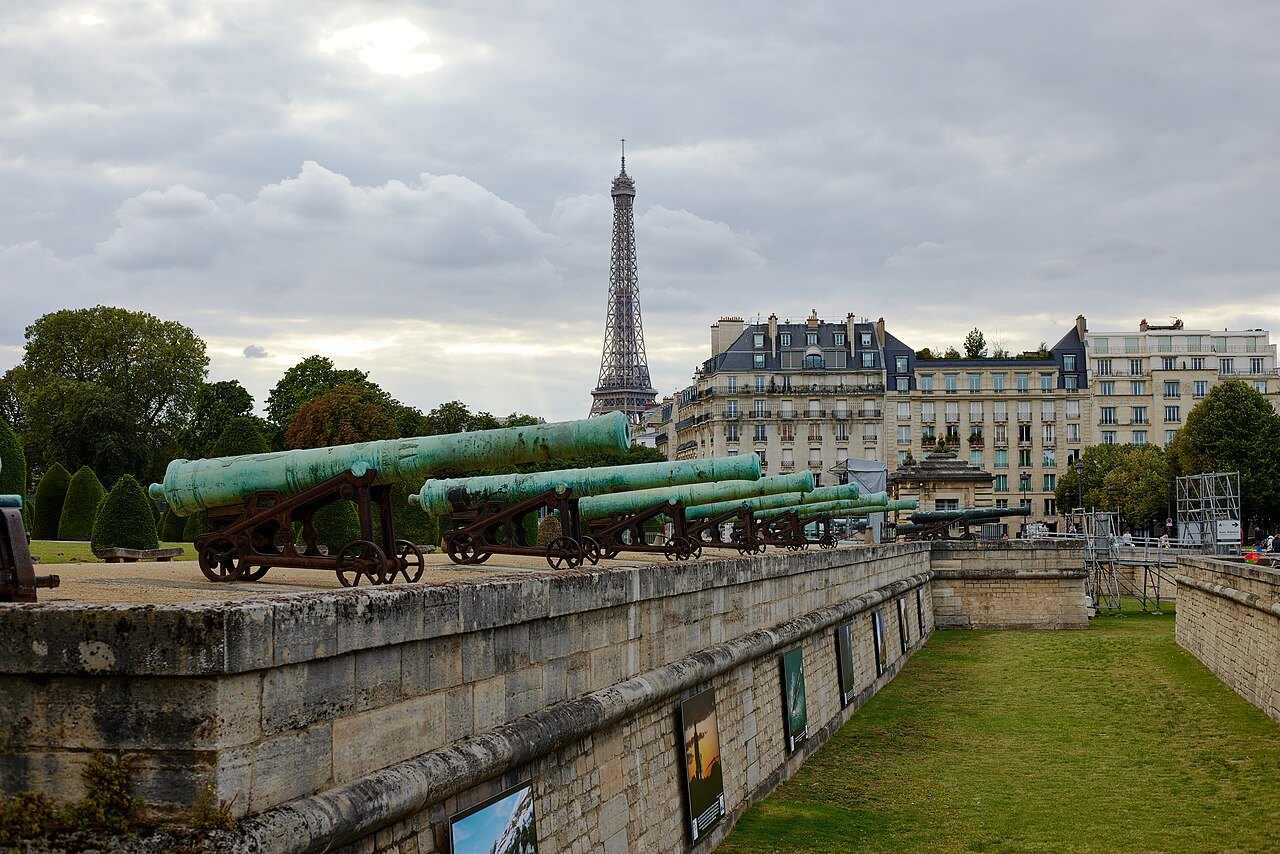
From the middle of the bridge, the Eiffel Tower rises downstream, giving anyone who stops at the railing one of the more complete views of the exposition-era city, with iron, stone and gilded bronze all visible from a single spot above the water, one of the clearest single views of Belle Époque Paris available from any bridge over the Seine.
How to Visit
The bridge is best seen as part of a longer walk rather than a stop on its own: start on the Champs-Élysées, head down the Avenue Winston-Churchill between the two palaces, and cross the bridge toward Les Invalides. Allow about an hour for the walk itself, more if an exhibition is on at the Grand Palais.
Most of the planning for this walk goes into whatever exhibition or museum visit frames it, rather than the bridge itself. For shows with timed tickets, check booking ahead, and confirm current hours for the Grand Palais and Petit Palais with their own websites before setting out on the day.
The approach works well on foot in both directions, and either end makes a natural pause: the gardens around Les Invalides on one side, the Champs-Élysées and the two palaces on the other, with the bridge itself as the hinge between them, close enough to cross on a single afternoon without rushing.
Myths Worth Setting Aside
One persistent idea is that the bridge was a gift from Russia to France, a token of friendship sent across Europe. It was not: the Pont Alexandre III was designed, funded and built entirely by France. The gesture was in the name, not in the construction, which was a purely French undertaking from start to finish.
Naming the bridge after the tsar was a symbolic act, a way of giving physical, permanent form to the Franco-Russian alliance of 1892 at a moment when France wanted that partnership visible to its own public and to the rest of Europe, not evidence that Russia itself paid for the structure.
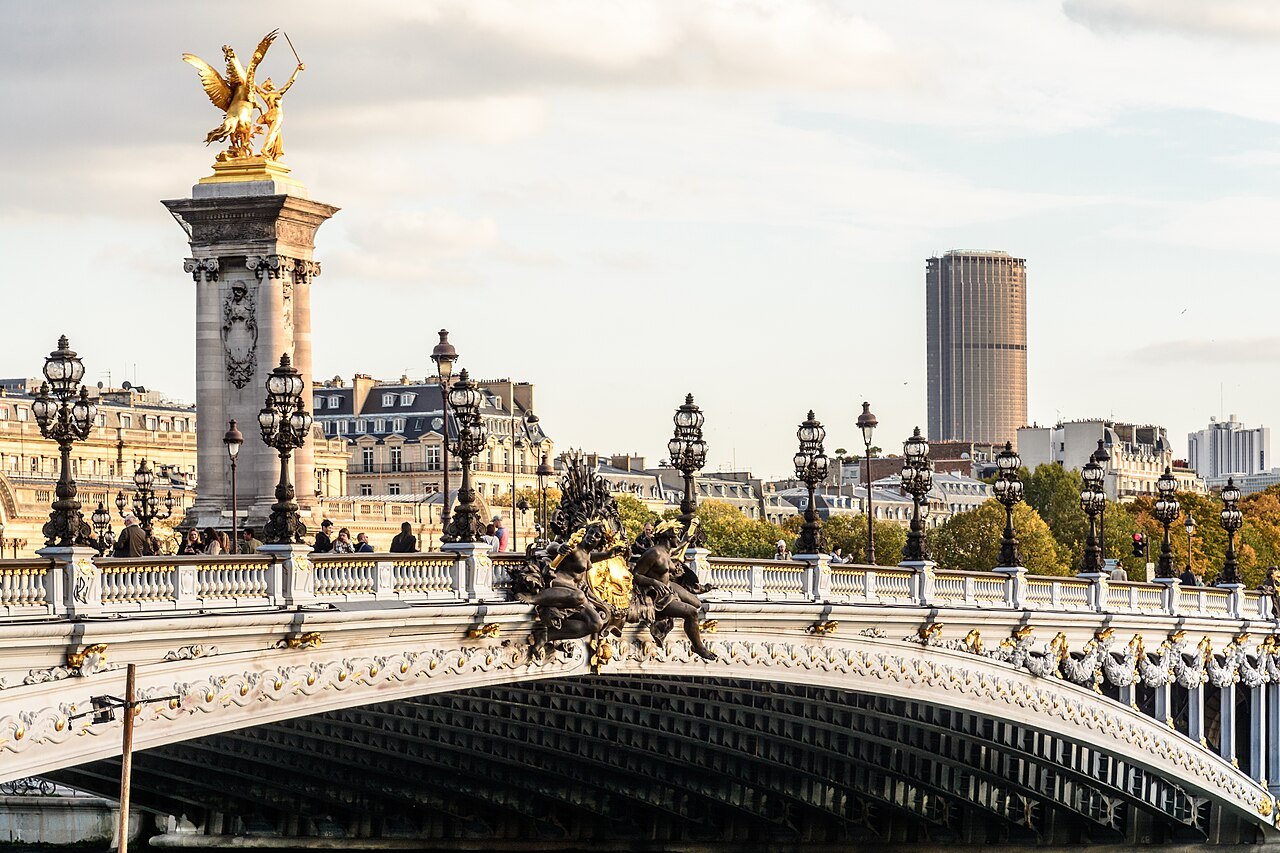
Seen this way, the bridge belongs with the Grand Palais and Petit Palais as another kind of exposition exhibit: not art on display inside a hall, but diplomacy built permanently into the fabric of the city, and still standing more than a century later, outlasting the fair that brought it into being.
Read next
More from the journal
- Les InvalidesHow did Napoleon's body come back to Paris?The story of how Napoleon's remains traveled from Saint Helena to the tomb beneath the Dôme des Invalides.Read the piece →
- The Tuileries, the Orangerie and the Place de la ConcordeWhere did the obelisk in the Place de la Concorde come from?How the ancient Egyptian obelisk at the center of the Place de la Concorde came to stand in Paris.Read the piece →
- The Musée d'OrsayHow did a railway station become the Musée d'Orsay?How a Belle Époque railway terminus on the Seine became the world's great home of Impressionist painting.Read the piece →